Dental health is more than just white teeth and a bright smile. It’s a crucial component of your overall health and wellbeing. Unaddressed dental problems can lead to severe pain, difficulty eating, speech issues, chronic inflammation, and even systemic health complications affecting the heart, lungs, and metabolism.
Yet many people delay dental care — often waiting until pain becomes unbearable. In this article, we will break down dental diseases from first sign to advanced treatment, including:
- Common dental issues explained in simple terms
- Their symptoms and causes
- Prevention advice
- Treatment options
- When surgery becomes necessary
- Practical tips for patients
- Comparison of dental service capabilities
Whether you’re seeking answers for yourself, a family member, or planning dental care as part of medical tourism, this guide gives you clarity, confidence, and direction.
1. Why Dental Health Matters — Beyond the Mouth
Your mouth is the gateway to your body. Poor dental health isn’t just about cavities or gum pain:
- Untreated dental infections can enter the bloodstream and affect organs
- Chronic inflammation in the gums has links to diabetes and heart disease
- Oral pain affects eating, speech, sleep, and quality of life
Understanding dental diseases early leads to better outcomes and lower treatment costs.
2. How Teeth and Gums Work — A Simple Overview
Before we dive into diseases, here’s a quick look at what healthy teeth and gums are supposed to do:
The Main Parts of a Tooth
- Enamel: Hard outer layer protecting the tooth
- Dentin: Layer beneath enamel
- Pulp: Contains nerves and blood vessels
- Root: Anchors the tooth into bone
Supporting Structures
- Gums (Gingiva): Soft tissue that surrounds teeth
- Periodontal Ligament: Holds tooth to bone
- Alveolar Bone: Supports the teeth
Any disruption in these parts can lead to dental disease.
3. The Most Common Dental Diseases — Explained
A. Dental Caries (Cavities / Tooth Decay)
What It Is:
Decay caused by bacterial acids breaking down enamel.
Symptoms:
- White spots on teeth
- Sensitivity to hot/cold/sweets
- Pain when chewing
- Visible holes or dark spots
Causes:
- Poor brushing/flossing
- High sugar diet
- Acidic foods and drinks
- Lack of fluoride
Progression:
If untreated, cavities reach the pulp, leading to infection (abscess) and severe pain.
B. Gingivitis (Early Gum Disease)
What It Is:
Inflammation of the gums caused by plaque buildup.
Symptoms:
- Red, swollen gums
- Bleeding during brushing/flossing
- Bad breath
Causes:
- Plaque and tartar retention
- Inadequate oral hygiene
Note:
Gingivitis reversible with good care and professional cleaning.
C. Periodontitis (Advanced Gum Disease)
What It Is:
A deeper infection affecting bone and supporting structures.
Symptoms:
- Gum recession
- Loose teeth
- Pus between teeth and gums
- Painful chewing
Causes:
- Untreated gingivitis
- Smoking
- Genetic susceptibility
- Diabetes
Periodontitis often causes tooth loss if not treated early.
D. Dental Abscess
What It Is:
A pocket of pus due to bacterial infection at the root or gum.
Symptoms:
- Severe, throbbing pain
- Fever
- Swollen face
- Bad taste in mouth
Causes:
- Untreated cavities
- Gum disease
- Trauma to tooth
Urgency:
This requires urgent intervention to prevent spread.
E. Tooth Sensitivity
What It Is:
Pain triggered by hot, cold, sweet, or acidic foods.
Causes:
- Worn enamel
- Receding gums
- Exposed dentin
Sensitivity is usually a symptom of an underlying issue, not a condition by itself.
F. Oral Thrush
What It Is:
A fungal infection inside the mouth.
Symptoms:
- White patches on tongue or inside cheeks
- Soreness
- Slight bleeding when scraped
Causes:
- Weakened immune system
- Antibiotic use
- Dry mouth
Often treated with antifungal medication.
G. TMJ Disorders
What It Is:
Problems with the jaw joint (temporomandibular joint).
Symptoms:
- Jaw pain
- Clicking or popping sounds
- Limited mouth opening
- Headaches
Causes:
- Grinding teeth
- Incorrect bite
- Injury
Treatment ranges from mouthguards to physical therapy.
4. How Dentists Diagnose Dental Diseases
When you visit a dentist, they will usually perform:
a. Visual Exam
Looking for cavities, gum inflammation, sores, or misalignment.
b. Dental X-Rays
Reveal:
- Hidden decay
- Bone loss
- Impacted teeth
- Root problems
c. Periodontal Charting
Measures gum pocket depths to assess gum health.
d. Bite and Jaw Assessment
For TMJ or alignment issues.
A good diagnosis leads to personalized treatment planning.
5. Treatment Options — What Works and Why
Here’s how dental diseases are treated — from least to most invasive:
A. Preventive & Non-Surgical Care
1. Professional Cleaning (Scaling & Polishing)
Removes plaque and tartar that brushing can’t reach.
2. Fluoride Treatment
Strengthens enamel and prevents decay.
3. Dental Sealants
Protect the chewing surfaces of molars — especially in children.
4. Medication
Antibiotics, antifungals, or anti-inflammatory drugs as needed.
B. Restorative Procedures
1. Fillings
Used to treat cavities before they reach the pulp.
Types:
- Composite (tooth-colored)
- Amalgam (silver)
- Ceramic
2. Root Canal Treatment
When decay reaches the pulp, the infected tissue is removed, the canal cleaned, and sealed.
This saves the tooth and relieves severe pain.
3. Crowns
Caps that restore strength and shape after large fillings or root canal.
C. Periodontal (Gum) Treatments
1. Deep Cleaning (Scaling & Root Planing)
Removes bacteria below the gumline.
2. Gum Grafts
Used when gums have receded significantly.
3. Bone Grafts
Rebuild bone lost to advanced periodontitis.
D. Surgical Interventions
Dental surgery becomes necessary when:
- Teeth are impacted
- Infection cannot be cleared medically
- Structural repair is needed
- Functional restoration is required
Common dental surgeries include:
1. Tooth Extraction
For irreparable damage or impaction.
2. Dental Implants
Replacement of missing teeth with titanium posts and crowns.
3. Oral & Maxillofacial Surgery
For trauma, cysts, TMJ issues, or advanced reconstructions.
Hospital settings with full surgical support are recommended for complex cases.
6. Hospital & Dental Service Comparison
When choosing where to get dental care — especially if surgery may be involved — it’s helpful to compare services.
| Hospital / Dental Center | Routine Dentistry | Periodontal Care | Root Canal & Restorative | Dental Surgery | Implants & Prosthetics |
|---|---|---|---|---|---|
| CityCare Dental & Oral Hospital | Yes | Yes | Yes | Yes | Yes |
| Global Health Dental Center | Yes | Yes | Yes | Yes | Yes |
| Prime Life Dental Institute | Yes | Yes | Yes | Partial | Yes |
| Sunrise Family Dentistry | Yes | Limited | Yes | Limited | Partial |
This table helps patients compare not just price but scope of care and specialist support.
7. Everyday Prevention — What You Can Do Today
Dental diseases are largely preventable — and everyday habits make a huge difference:
1. Brush Twice Daily
Use fluoride toothpaste and a soft bristle brush.
2. Floss Daily
Removes plaque between teeth where brushes can’t reach.
3. Avoid Excess Sugar
Sugar feeds harmful bacteria.
4. Regular Dental Checkups
At least every 6 months (more often if at risk).
5. Quit Tobacco
Smoking increases gum disease and oral cancer risk.
6. Eat a Balanced Diet
Calcium, vitamin D, protein, and antioxidants support oral tissues.
Recognizing Urgent Dental Problems — When to Seek Immediate Help
Seek prompt care if you experience:
- Severe or persistent toothache
- Swelling of face or gums
- Fever with dental pain
- Difficulty breathing or swallowing
- Severe trauma to the mouth
- Uncontrolled bleeding
Delaying urgent dental care can lead to serious complications.
Real Patient Insight — Making Sense of Pain and Recovery
Story:
A young woman noticed intermittent, deep tooth pain that intensified when eating sweets. She ignored it until one morning she couldn’t chew on that side without sharp pain. A dental exam revealed an advanced cavity that had progressed to a pulp infection.
After a root canal and crown, her pain disappeared, but what helped her most was understanding:
- Why the pain happened
- How fast cavities can progress
- That early treatment would have made the process simpler and cheaper
This kind of insight — grounded in real experience — helps others act before pain becomes severe.
Actionable Tips for Dental Appointments
Here’s how to get the most out of your dental visit:
Before Your Visit
✔ List your symptoms and when they began
✔ Note any food or drink triggers
✔ Record pain levels and patterns
✔ List medications you take
During Your Visit
Ask:
• What is the diagnosis?
• What is the most conservative treatment first?
• Are there non-surgical options?
• What are risks vs benefits of surgery?
• What is the expected recovery timeline?
After Treatment
✔ Follow care instructions
✔ Take prescribed medications
✔ Maintain oral hygiene strictly
✔ Watch for signs of infection or unusual pain
Clear communication helps better outcomes.
Positive Testimonial from a MyHospitalNow User
“I used to ignore occasional gum bleeding and assumed it was minor. When it persisted, I finally asked about it in the dental forum. The community helped me request the right tests and discuss symptoms with my dentist. I was diagnosed early with periodontitis and managed it before it led to loose teeth. That changed everything.”
Conclusion: Dental Health Is Health — Not Optional
Dental diseases affect more than your mouth. They influence:
- Nutrition
- Confidence
- Sleep
- Chronic inflammation
- Long-term wellness
Understanding symptoms early and acting promptly leads to:
✔ Less invasive treatment
✔ Lower long-term cost
✔ Better quality of life
✔ Reduced risk of complications
Whether you’re experiencing mild sensitivity or advanced pain, the right information — combined with professional care — makes all the difference.
👉 Continue the conversation and learn from real questions in the
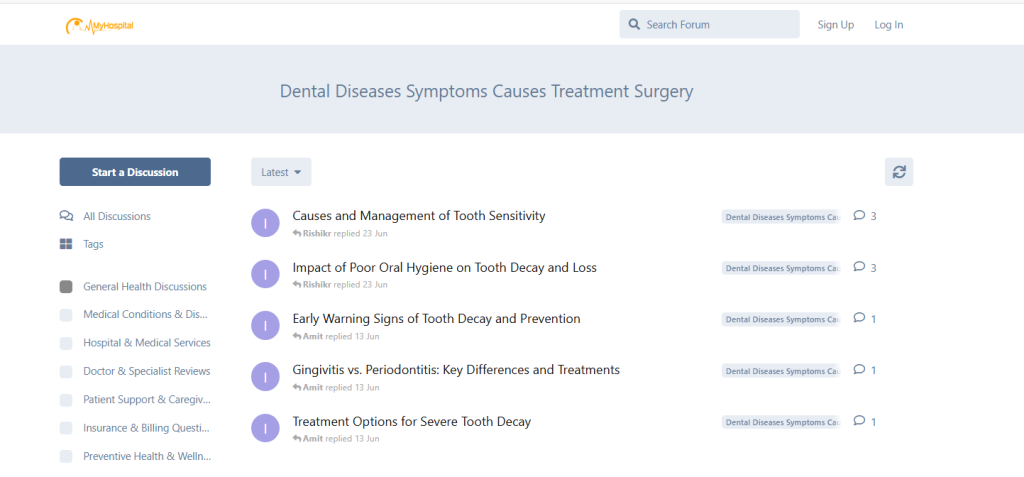
Dental Diseases: Symptoms, Causes, Treatment & Surgery forum:
https://www.myhospitalnow.com/forum/t/dental-diseases-symptoms-causes-treatment-surgery
Your oral health matters — and with the right knowledge and support, you can protect it confidently every day.