Skin is the largest organ of the human body and plays a vital role in protecting us from infections, regulating body temperature, and maintaining overall health. Dermatology diseases are becoming increasingly common due to pollution, lifestyle changes, stress, allergies, infections, and hormonal imbalances. While some skin conditions are mild and temporary, others can be chronic, painful, or even life-threatening if not treated on time.
This comprehensive guide explains dermatology diseases, their symptoms, causes, treatment options, and surgical care, helping patients, caregivers, and medical tourists make informed and confident decisions about skin health.
Understanding Dermatology Diseases
Dermatology diseases include conditions that affect the skin, hair, nails, and mucous membranes. These conditions can occur at any age and may appear suddenly or develop gradually over time. Some dermatology disorders are cosmetic, while others signal deeper health issues inside the body.
Common dermatology diseases include acne, eczema, psoriasis, fungal infections, bacterial skin infections, vitiligo, dermatitis, hair loss disorders, skin allergies, and skin tumors. Early diagnosis is important because untreated skin diseases can spread, worsen, or lead to permanent scarring.
Common Symptoms of Dermatology Diseases
Skin disease symptoms vary depending on the condition, but common signs include persistent itching, redness, rashes, dryness, scaling, swelling, blisters, ulcers, or changes in skin color. Some patients experience pain, burning sensations, or cracking of the skin.
Hair and nail symptoms may include excessive hair fall, patchy hair loss, brittle nails, discoloration, or nail thickening. Sudden changes in moles, non-healing wounds, or rapidly spreading rashes should always be medically evaluated, as they may indicate serious underlying conditions.
Major Causes of Dermatology Diseases
Dermatology diseases can be caused by multiple factors. Infections caused by bacteria, fungi, viruses, or parasites are very common. Allergic reactions to food, medicines, cosmetics, metals, or environmental triggers can also lead to skin problems.
Hormonal changes, stress, poor hygiene, excessive sun exposure, smoking, and nutritional deficiencies contribute to many skin conditions. Genetic factors play a role in diseases such as psoriasis, eczema, and vitiligo. In some cases, autoimmune disorders cause the immune system to attack healthy skin cells.
Real-Life Patient Insight
A 29-year-old patient developed severe itching and red patches on the skin that worsened over months. Initially treated with home remedies, the condition later spread rapidly. After proper diagnosis, the patient was identified with chronic dermatitis and improved significantly with medical treatment and lifestyle changes. This highlights how early dermatology consultation can prevent complications and long-term discomfort.
Diagnosis and Medical Evaluation
Dermatologists diagnose skin diseases through physical examination, patient history, and diagnostic tests such as skin scrapings, blood tests, allergy testing, biopsies, or imaging when required. Accurate diagnosis helps identify whether the condition is infectious, allergic, autoimmune, or genetic in nature.
Early diagnosis ensures targeted treatment, faster relief, and reduced chances of recurrence or scarring.
Treatment Options for Dermatology Diseases
Treatment depends on the type and severity of the skin condition. Mild cases may be treated with topical creams, ointments, medicated shampoos, and lifestyle changes. Chronic or severe conditions often require oral medicines, immune-modulating drugs, phototherapy, or long-term management plans.
Dermatologists also emphasize preventive care, including proper skincare routines, sun protection, hygiene practices, and dietary adjustments. Patient education plays a major role in controlling recurring skin problems.
When Is Dermatology Surgery Required?
Dermatology surgery is recommended when medical treatments are not sufficient. Common dermatology surgical procedures include removal of skin tumors, cysts, moles, warts, scar revision, skin grafting, laser procedures, and cosmetic dermatology surgeries.
Modern dermatology surgery uses minimally invasive techniques, advanced lasers, and precision tools that reduce pain, scarring, and recovery time. Choosing an experienced dermatologist and well-equipped hospital ensures better outcomes and safety.
Hospital Care and Medical Tourism for Dermatology Treatment
Many patients explore medical tourism for dermatology treatment to access advanced technology, experienced specialists, and comprehensive skin care services. Hospitals offering dermatology care usually provide medical, surgical, and cosmetic treatments under one roof.
Detailed Hospital Comparison for Dermatology Disease Treatment
| Hospital Name | City / Region | Total Beds | ICU Beds | Dermatologists | Skin Surgeons | Laser Treatment | Cosmetic Services | Diagnostic Lab | Emergency Care | International Patient Support |
|---|---|---|---|---|---|---|---|---|---|---|
| SkinCare Institute | Metro City | 500+ | 70+ | 30+ | 20+ | Yes | Yes | Advanced Lab | 24×7 | Yes |
| Derma Health Center | Capital Region | 420+ | 60+ | 25+ | 18+ | Yes | Yes | Digital Diagnostics | 24×7 | Yes |
| Apex Skin Hospital | Multi-City Network | 650+ | 90+ | 35+ | 25+ | Yes | Yes | AI-Assisted Lab | 24×7 | Yes |
| Prime Derm Clinic | Urban Hub | 350+ | 45+ | 18+ | 12+ | Limited | Yes | Basic Lab | 24×7 | Partial |
| Harmony Skin Care | Regional Center | 300+ | 40+ | 14+ | 10+ | No | Limited | Standard Lab | 24×7 | No |
This comparison helps patients evaluate hospitals based on specialist availability, treatment options, technology, and international patient support.
Why Patients Trust MyHospitalNow
Patients often share that MyHospitalNow helps them understand skin diseases clearly and without confusion. The platform simplifies medical information, supports treatment planning, and allows patients to learn from real experiences shared by others. Caregivers also find comfort in reading expert-guided discussions before making treatment decisions.
Practical Tips for Healthy Skin
Maintaining good hygiene, staying hydrated, eating a balanced diet, managing stress, and protecting skin from excessive sun exposure are essential for skin health. Avoid self-medication and cosmetic overuse, and consult a dermatologist for persistent or recurring skin problems. Early treatment prevents scarring, infection spread, and emotional distress.
Conclusion: Take Charge of Your Skin Health Today
Dermatology diseases can affect physical comfort, appearance, and emotional well-being if left untreated. Early awareness, correct diagnosis, and expert-guided treatment can restore healthy skin and confidence. Understanding symptoms, causes, and treatment options empowers patients to act early and prevent complications.
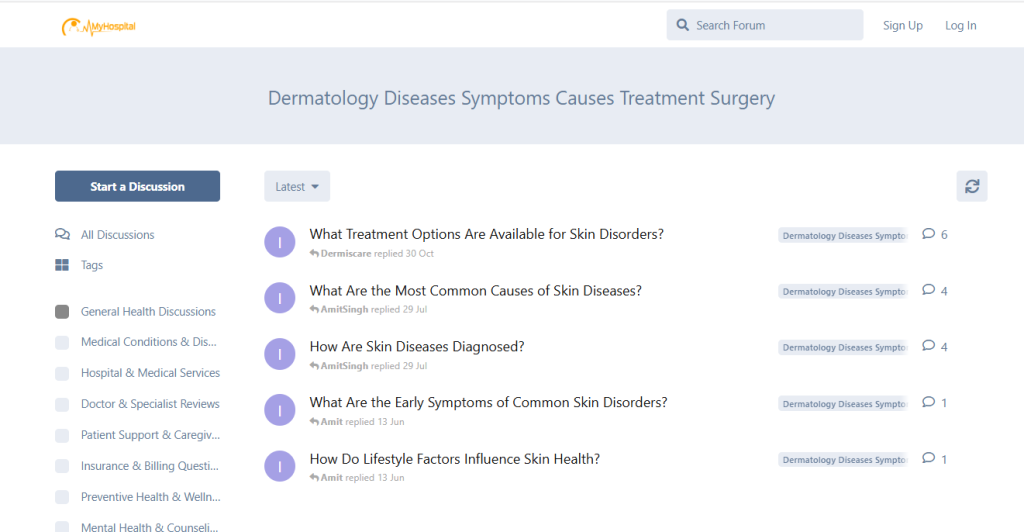
Patients seeking real experiences, expert answers, and guidance related to skin conditions can explore discussions on the Dermatology Diseases Symptoms, Causes, Treatment & Surgery forum on MyHospitalNow:
👉 https://www.myhospitalnow.com/forum/t/dermatology-diseases-symptoms-causes-treatment-surgery
MyHospitalNow continues to stand as a trusted healthcare information hub, helping patients navigate dermatology concerns with clarity, confidence, and care.