Introduction
For many people, glasses or contact lenses are part of everyday life. LASIK eye surgery may be an option for some people who want to reduce their dependence on them and correct certain vision problems. But LASIK is not suitable for everyone, and a careful eye examination is needed before making a decision. Choosing a qualified eye specialist and a properly equipped eye hospital is also an important part of the process. BestEyeHospitals can help readers learn more about eye hospitals and eye-care services. This guide explains LASIK Eye Surgery, how the procedure works, who may be suitable, what recovery can involve, possible risks and what to check when choosing a LASIK surgery center.
What Is LASIK Eye Surgery?
LASIK is a type of refractive eye surgery used to correct certain vision problems. It uses a laser to reshape the cornea, the clear front part of the eye.
LASIK may be used to treat refractive errors such as myopia, hyperopia and astigmatism. The aim is to improve vision and reduce dependence on glasses or contact lenses.
Results are different for each person. Some people may still need glasses for certain activities after surgery, so realistic expectations are an important part of the consultation.
Who May Be Suitable for LASIK?
Not everyone is a suitable candidate for LASIK. A detailed eye examination is needed before the procedure can be considered.
The eye specialist may check whether the vision prescription has been stable and assess the health and shape of the cornea. Medical history, medicines, previous eye problems and other health factors may also be reviewed.
Corneal thickness and other eye measurements are important because the surgeon needs to understand whether laser treatment can be performed safely.
The final decision should be made by a qualified eye specialist after a complete evaluation.
LASIK Evaluation and Consultation
A LASIK consultation usually begins with a detailed eye examination. The specialist checks vision and examines the eyes for conditions that may affect treatment.
Measurements of the cornea and other parts of the eye may be taken using specialized diagnostic equipment. Digital scans or other tests may be recommended depending on the patient’s eyes.
The doctor should also discuss expected results, possible risks, benefits and alternatives. This conversation gives patients an opportunity to ask questions and decide whether LASIK is appropriate for them.
How Does LASIK Eye Surgery Work?
LASIK is usually performed as an outpatient procedure. Before surgery, numbing eye drops are used so that the eye does not feel normal surgical pain during the procedure.
A thin layer of the cornea is carefully prepared to allow access to the area that needs reshaping. A laser then changes the shape of the cornea according to the patient’s eye measurements.
After the laser treatment, the corneal layer is repositioned where applicable. The eye is then allowed to begin healing.
The exact surgical approach can vary depending on the patient’s eyes and the technique selected by the surgeon.
LASIK Eye Surgery Process at a Glance
| LASIK Treatment Stage | What Happens | Main Purpose |
|---|---|---|
| Eye evaluation | Vision and eye health are examined | Check whether LASIK may be suitable |
| Treatment planning | Eye measurements and medical history are reviewed | Create an individual treatment plan |
| Surgery preparation | The eye is prepared and numbing drops are used | Make the procedure comfortable and controlled |
| Laser treatment | The cornea is reshaped using a laser | Correct the targeted refractive error |
| Immediate recovery | The eyes are checked after surgery | Monitor the early recovery period |
| Follow-up | The surgeon checks healing and vision | Track recovery and address concerns |
What Can You Expect After LASIK?
Vision can be blurry or hazy immediately after surgery. Some people may also experience dryness, irritation or increased sensitivity to light during the early recovery period.
Glare or halos around lights may occur in some patients, particularly during the early stages of healing. These symptoms can change as the eyes recover.
Vision may not stabilize immediately. Follow-up appointments allow the eye specialist to check healing and vision and identify any concerns.
Patients should follow the postoperative instructions given by their eye-care team and report unusual or persistent problems.
Possible Risks and Limitations of LASIK
Like any surgical procedure, LASIK has possible risks and limitations. Some patients may experience dry eyes, glare, halos, night-vision difficulties or changes in visual quality.
Under-correction or over-correction can also occur, meaning the desired vision correction may not be fully achieved. In some cases, additional treatment may be considered, but this depends on the patient’s eye health and individual situation.
Serious complications are uncommon but possible. Patients should discuss the risks, benefits and alternatives with their eye specialist before deciding on surgery.
When May LASIK Need Extra Evaluation?
Certain situations may require additional testing or may make LASIK unsuitable.
These can include an unstable vision prescription, certain corneal conditions, some eye diseases, medical conditions or medicines that may affect healing. Pregnancy or breastfeeding may also require special consideration.
Having one of these factors does not automatically mean that LASIK is impossible for every person. The eye specialist needs to assess the individual situation before making a recommendation.
Choosing a LASIK Eye Hospital or Surgery Center
Choosing a LASIK provider should involve more than comparing prices. The qualifications and experience of the ophthalmologist, quality of preoperative testing and level of follow-up care are important considerations.
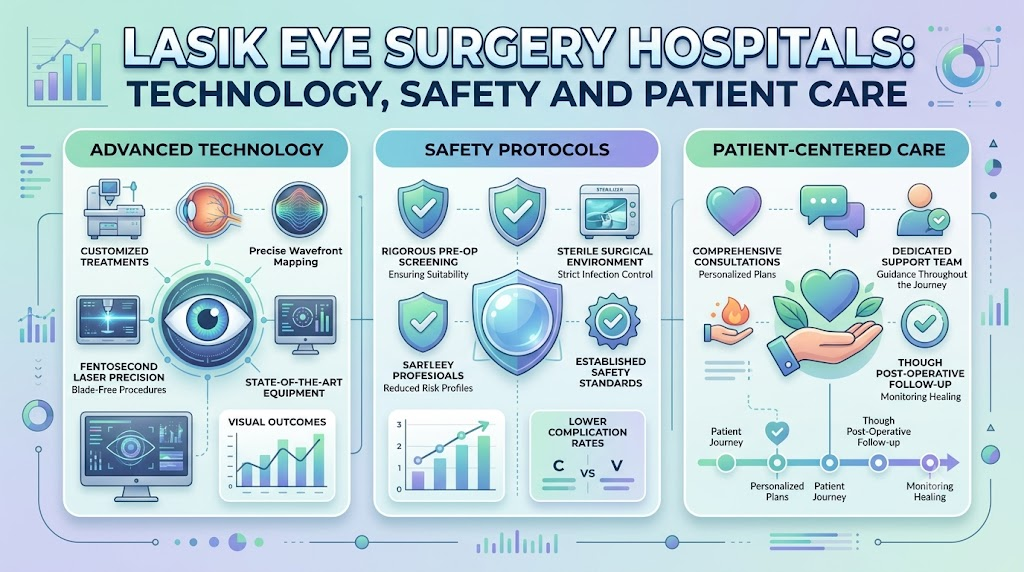
Patients can ask about the diagnostic equipment used to evaluate the cornea and whether the center provides appropriate laser technology for the planned treatment.
It is also useful to ask about informed consent, infection-control practices, emergency support and access to other eye-care services if a problem occurs.
A clear explanation of the procedure, expected results, risks and costs can help patients make an informed decision.
Why LASIK Technology Matters
Different laser systems and surgical techniques have different approved uses and treatment ranges. The most suitable technology depends on the patient’s eye measurements, prescription and treatment needs.
Patients should ask their eye specialist which technology or technique is being recommended and why it is appropriate for their eyes.
A particular laser brand or machine should not automatically be considered better for every patient. Proper screening and treatment planning are more important than choosing technology based only on its name.
LASIK and Other Vision Correction Options
Glasses and contact lenses remain effective options for correcting refractive errors. They do not require eye surgery and may be suitable for people who do not want or cannot have refractive surgery.
Other surgical options, such as PRK, may be considered for some patients. The choice depends on factors such as corneal health, prescription, lifestyle, expectations and the findings of the eye examination.
A qualified eye specialist can explain the differences and help the patient understand which options may be appropriate.
Frequently Asked Questions About LASIK Eye Surgery
1. What is LASIK eye surgery?
LASIK is a type of refractive eye surgery that uses a laser to reshape the cornea. It is used to correct certain vision problems such as myopia, hyperopia and astigmatism.
2. Is everyone suitable for LASIK?
No. Suitability depends on factors such as eye health, corneal measurements, vision stability, medical history and other individual factors. A complete eye examination is needed before surgery.
3. Does LASIK hurt?
Numbing eye drops are used during the procedure, so patients generally do not experience normal surgical pain during treatment. Some irritation, dryness or discomfort may occur during recovery.
4. How long does vision take to stabilize after LASIK?
Recovery varies between patients. Some people notice changes in vision soon after surgery, while vision may continue to change as the eyes heal.
5. Can LASIK cause dry eyes?
Dryness can occur after LASIK in some patients. The eye specialist can discuss the possibility of dry eye and appropriate postoperative care based on the individual’s condition.
6. Are glare and halos possible after LASIK?
Yes. Some patients may notice glare or halos around lights, particularly during the early recovery period. The symptoms can change as healing progresses.
7. Can LASIK guarantee perfect vision?
No. LASIK cannot guarantee perfect vision or complete freedom from glasses and contact lenses. Results vary depending on individual eye health and other factors.
8. What are alternatives to LASIK?
Glasses and contact lenses are non-surgical options. Other refractive procedures, such as PRK, may be considered for some patients depending on their eye condition.
9. How should I choose a LASIK eye hospital?
Consider the ophthalmologist’s qualifications and experience, quality of eye testing, available technology, patient screening, follow-up care and emergency support. Clear communication about risks, alternatives and costs is also important.
10. What should I ask my eye specialist before LASIK?
Ask about your suitability, eye measurements, expected results, possible risks, alternatives, laser technology and recovery. You should also understand follow-up visits and what happens if additional treatment is needed.
Conclusion
LASIK Eye Surgery can reduce dependence on glasses or contact lenses for some people, but it is not suitable for everyone. A detailed eye examination, accurate measurements and careful treatment planning are important before surgery. Choosing a qualified ophthalmologist and a suitable eye-care facility can also support safe and well-planned care. Before making a decision, discuss your eye health, expected results, possible risks, alternatives and follow-up care with a qualified eye specialist. A personal examination is the best way to determine whether LASIK is appropriate for you.