Introduction
An eye surgery cost comparison can help patients understand their expected expenses before choosing a hospital or surgical facility. However, comparing only the final number can be misleading if different hospitals include different services in their estimates. Surgeon fees, facility charges, diagnostic tests, anesthesia, implants, medicines, and follow-up care may all affect the total. BestEyeHospitals can help patients research eye hospitals and understand different treatment options. The right comparison looks beyond price and checks whether the same procedure and similar level of care are being compared. A clear estimate can make financial planning easier while helping patients ask better questions about their treatment, insurance coverage, and follow-up care.
What Does an Eye Surgery Cost Comparison Mean?
An eye surgery cost comparison means looking at the estimated or quoted cost of a similar eye procedure at different hospitals or surgical facilities.
A useful comparison requires more than placing two prices side by side. Patients should check whether the quotes include the same procedure, diagnostic testing, type of lens or implant when applicable, anesthesia arrangement, facility care, medicines, and follow-up services.
A lower initial amount may not represent a lower overall expense if important services are listed separately.
Why Eye Surgery Costs Vary Between Hospitals
Eye surgery costs can differ for many reasons. The type of procedure is one of the biggest factors because different surgeries require different equipment, staff, operating-room arrangements, implants, and follow-up care.
The surgeon or ophthalmologist’s professional fee may also vary. Facility charges, operating-room costs, anesthesia or sedation, diagnostic testing, medical supplies, medicines, and postoperative visits can contribute to the final bill.
The location and type of facility can also affect the cost structure. Some ophthalmic procedures are performed in ambulatory surgical centers, while others may take place in hospital outpatient departments. The care setting and billing structure can therefore influence the overall cost.
The complexity of the patient’s condition matters as well. A routine procedure and a medically complicated case may require different tests, surgical planning, equipment, or follow-up.
Common Types of Eye Surgery Patients May Compare
Patients may compare costs for procedures such as:
- Cataract surgery
- LASIK and other refractive procedures
- Glaucoma surgery
- Retinal procedures
- Corneal surgery
- Selected eyelid or oculoplastic procedures
These procedures should not be compared directly as if they have the same cost structure.
For example, cataract surgery may include an intraocular lens, while other procedures may involve different diagnostic tests, surgical equipment, or postoperative care. Not every hospital offers every type of eye surgery.
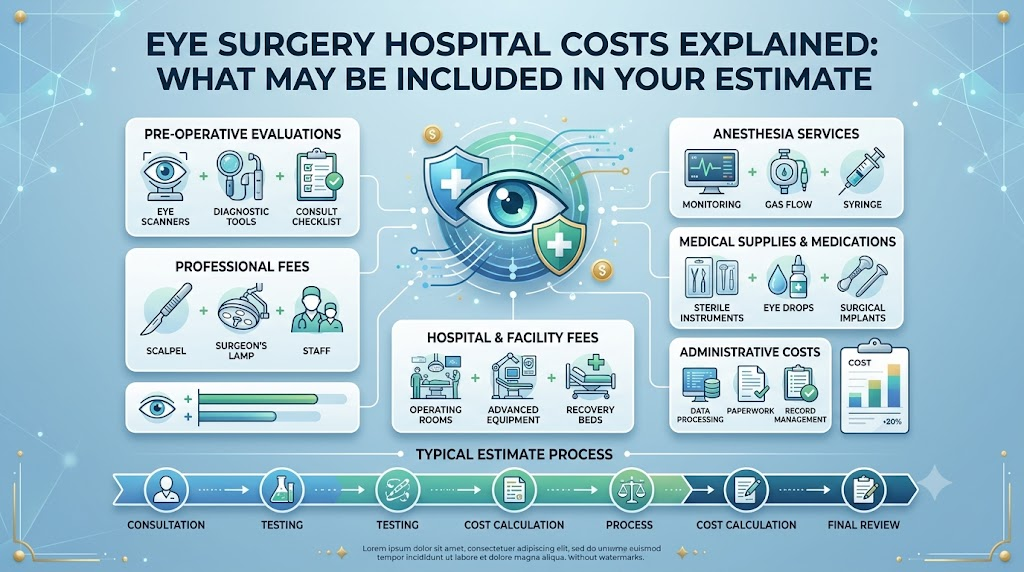
What May Be Included in an Eye Surgery Cost Estimate
An eye surgery quote may include several different services, but the exact package varies between hospitals, countries, insurance systems, and procedures.
Possible components include the ophthalmologist’s fee, facility or operating-room charges, preoperative consultation, diagnostic tests, anesthesia or sedation, surgical supplies, implants or lenses, medicines, and postoperative examinations.
Some facilities provide a bundled estimate, while others list each service separately. Asking for an itemized estimate can make it easier to understand what you are actually being charged for.
Cost Components to Check
| Cost Component | What It May Include | What Patients Should Confirm |
|---|---|---|
| Surgeon fee | Ophthalmologist or surgeon’s professional charge | Whether it is included in the quoted total |
| Facility fee | Operating room, staff, and facility services | Whether hospital or surgical-center charges are separate |
| Diagnostics | Eye examination, imaging, measurements, or testing | Which tests are included and whether additional tests may be needed |
| Implant or lens | Intraocular lens or another device when applicable | Available options and whether upgrades cost more |
| Follow-up care | Postoperative examinations and monitoring | Number of included visits and additional-visit charges |
Additional Costs Patients Should Check
Sometimes an initial estimate does not include every service that may eventually be needed. This does not necessarily mean that a provider is charging an unexpected fee; different facilities simply structure their estimates differently.
Ask whether additional diagnostic tests, upgraded lenses or implants, anesthesia, medicines, extra postoperative visits, special equipment, or further procedures could create additional charges.
Patients should also ask what happens financially if treatment needs to change or a complication requires additional care.
How to Compare Eye Surgery Costs Correctly
Start by confirming that the two quotes are for the same procedure. For cataract surgery, for example, check whether the same type of intraocular lens is being considered.
Next, compare the level of facility care, anesthesia arrangement, diagnostic testing, surgical supplies, and follow-up services. If one quote includes several services and another lists them separately, the two totals are not directly comparable.
An itemized written estimate can make the process much easier.
Eye Surgery Cost and Quality of Care
Cost alone does not measure surgical quality, safety, or suitability.
Patients should also consider the ophthalmologist’s qualifications and experience with the specific procedure, the facility’s safety practices, appropriate diagnostic and surgical equipment, infection-control procedures, emergency support, and postoperative monitoring.
A higher price does not automatically mean better care, and a lower price does not automatically mean poor care. The goal is to understand the complete treatment package and whether it meets the patient’s clinical needs.
Insurance and Payment Considerations
Insurance coverage depends on the procedure, insurance plan, medical need, and local healthcare system. Some medically necessary eye surgeries may be handled differently from elective or refractive procedures.
Before scheduling treatment, check whether the surgeon and facility are covered by your insurance where relevant. Also ask about deductibles, copayments, prior authorization, coverage limits, and services that may need to be paid separately.
Out-of-Pocket Eye Surgery Costs
Depending on the procedure and insurance coverage, patients may need to pay part or all of their eye surgery expenses.
A written estimate can help with financial planning. Ask what is included, what is excluded, and what circumstances could change the final amount.
It is also useful to understand how additional treatment would be billed if the original procedure does not address the problem completely or further care becomes medically necessary.
Why the Type of Eye Surgery Matters
Cataract surgery, refractive surgery, glaucoma surgery, retinal surgery, corneal procedures, and eyelid surgery have different clinical requirements.
They may use different technologies, surgical techniques, equipment, implants, and follow-up schedules. This is why an eye surgery price comparison should focus on similar procedures rather than simply comparing the cost of unrelated surgeries.
Technology and Equipment Costs
Specialized imaging systems, lasers, microscopes, surgical platforms, and implants may contribute to the cost of certain procedures.
However, advanced technology does not automatically guarantee a better result or mean that every patient needs every available device. Technology should be appropriate for the procedure and the patient’s individual clinical needs.
Why the Lowest Price Should Not Be the Only Factor
The lowest quoted amount may represent a different treatment package or exclude services included elsewhere.
Patients should look at the complete care pathway, including diagnosis, surgical expertise, facility safety, appropriate equipment, follow-up, and access to further care if a problem occurs.
Price is one part of the decision, but it should be considered alongside the medical and practical aspects of treatment.
Comparing Eye Surgery Costs Across Hospitals or Countries
Comparing eye surgery hospital costs across different countries can be difficult. Currency differences, healthcare systems, professional fees, insurance arrangements, facility charges, and included services can all affect the comparison.
For international treatment, patients should also consider travel, accommodation, local transportation, postoperative appointments, and the practical challenges of receiving additional treatment after returning home.
A lower quoted medical cost does not necessarily mean a lower total expense.
Cost Estimates Versus Final Bills
An estimate is not always the same as the final bill. Additional findings, tests, changes in treatment, complications, or services outside the original package can affect the final amount.
Before surgery, ask the provider what situations could change the estimate and how those additional services would be charged.
FAQs
1. Why do eye surgery costs differ between hospitals?
Costs can differ because of surgeon fees, facility charges, procedure type, equipment, diagnostic testing, implants, anesthesia, location, and follow-up services.
2. What is normally included in an eye surgery quote?
A quote may include the surgeon fee, facility charges, testing, surgical supplies, implants, medicines, and follow-up care, but the exact package varies.
3. Are surgeon fees included in the quoted price?
Sometimes they are included and sometimes they are listed separately. Patients should confirm this before accepting an estimate.
4. Are diagnostic tests included in eye surgery costs?
Some estimates include required tests, while others charge separately. Ask which tests are included and whether additional testing may be needed.
5. Why can implants or lenses change cataract surgery costs?
Different intraocular lenses may have different costs and may be offered as separate options. Patients should ask what type of lens is included in their estimate.
6. Does insurance cover eye surgery?
Coverage depends on the procedure, insurance plan, medical necessity, and local healthcare arrangements. Confirm coverage directly with the insurer and facility.
7. How should I compare two hospital quotes?
Compare the same procedure and check surgeon fees, facility charges, testing, anesthesia, implants, medicines, and follow-up care. An itemized estimate is useful.
8. Is the cheapest eye surgery option always appropriate?
No. A lower price may reflect a different treatment package or excluded services. Clinical suitability and the complete care pathway also matter.
9. Are follow-up visits included in the surgery cost?
Some hospitals include a set number of follow-up visits, while others charge separately. Confirm the follow-up arrangement before treatment.
10. What should I ask before accepting an eye surgery cost estimate?
Ask for the total expected cost, included services, possible additional charges, insurance coverage, payment terms, and what happens financially if further treatment is required.
Conclusion
An eye surgery cost comparison can help patients plan financially, but the lowest quoted amount should not be the only consideration. A meaningful comparison looks at the complete package, including the surgeon’s fee, facility charges, testing, implants, medicines, and follow-up care. Patients should also consider the ophthalmologist’s qualifications, facility safety, and suitability of the proposed treatment. Before scheduling surgery, ask for a clear written estimate and confirm insurance or payment details. Most importantly, discuss the treatment plan with a qualified ophthalmologist so that cost decisions are considered alongside appropriate medical care.