
Pterygium
Pterygiums are usually caused by dry, hot, windy environments, and are found often in the people who spend a lot of time outside. UV radiation, usually from sunlight is the most common cause of a Pterygium. People who spend significant time in water sports such as surfing or fishing are particularly susceptible to Pterygiums because of the intense exposure to UV that occurs in these environments. A Ptergium is not a dangerous disorder, but can become uncomfortable and the main problem of Ptergium is that they can eventually distort vision due to the fact that they can grow onto the cornea, and eventually even onto the central part of the eye blocking light from entering.
Cream colored growth on the nasal side of the white of the eye.
Foreign body sensation
Painless area of elevated white tissue with blood vessels on the inner and / or outer edge of the cornea
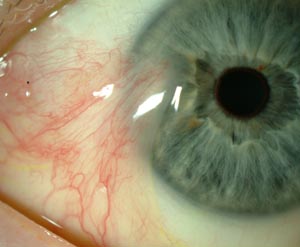
Growth over the central cornea can affect vision
Surgery to remove a pterygium is usually not recommended unless it affects vision. If a pterygium is surgically removed, it may grow back, particularly if the patient is less than 40 years of age. Lubricants are used to reduce the redness and provide relief from the chronic. In Pterygium surgery, the abnormal tissue is removed from the cornea and sclera. Surgery is the only way to remove a pterygium, but the results can be disappointing. The best way of preventing Pterygium is to regularly wear UV 400 rated sunglasses when outdoors in sunny conditions.