
Retinitis Pigmentosa
People with RP experience a gradual decline in their vision because photoreceptor cells (rods and cones) die. With advances in molecular research, it is now known that RP constitutes many retinal dystrophies and retinal pigment epithelium (RPE) dystrophies caused by molecular defects in more than 100 different genes. RP is a collection of many different genetic diseases that lead to progressive photoreceptor loss and associated vision loss; therefore, the etiology is remarkably variable.
In humans there are two types of light sensitive cells in the retina: rod cells and cone cells. Symptoms depend on whether rods or cones are initially involved.
Decreased vision at night or in low light
Loss of side (peripheral) vision
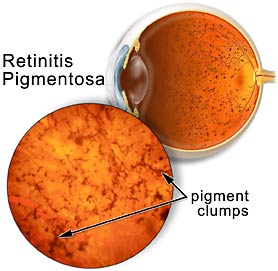
Loss of central vision (in advanced cases)
There is no effective treatment for Retinitis Pigmentosa (RP). The first signs of retinitis pigmentosa usually occur in early childhood, when both eyes typically are affected. The most common type (52%) also appears during the teen years, is typified by severe and progressive peripheral loss, but good central acuity (no worse than 20/50) is maintained until around age 60. Although some practitioners believe that vitamin A may slightly delay vision loss. Visual field testing likely will be done to determine the extent of peripheral vision loss. Individuals with retinitis pigmentosa also might consider the use of low vision devices that can help magnify and illuminate objects in home and work spaces.