
Introduction
Vision correction surgery can help people reduce their need for glasses or contact lenses. Procedures such as LASIK, PRK, and SMILE change the shape of the cornea. The cornea is the clear front part of the eye.
However, surgery is only one part of treatment. Proper recovery care is also important. Patients need clear instructions, follow-up visits, and access to eye specialists.
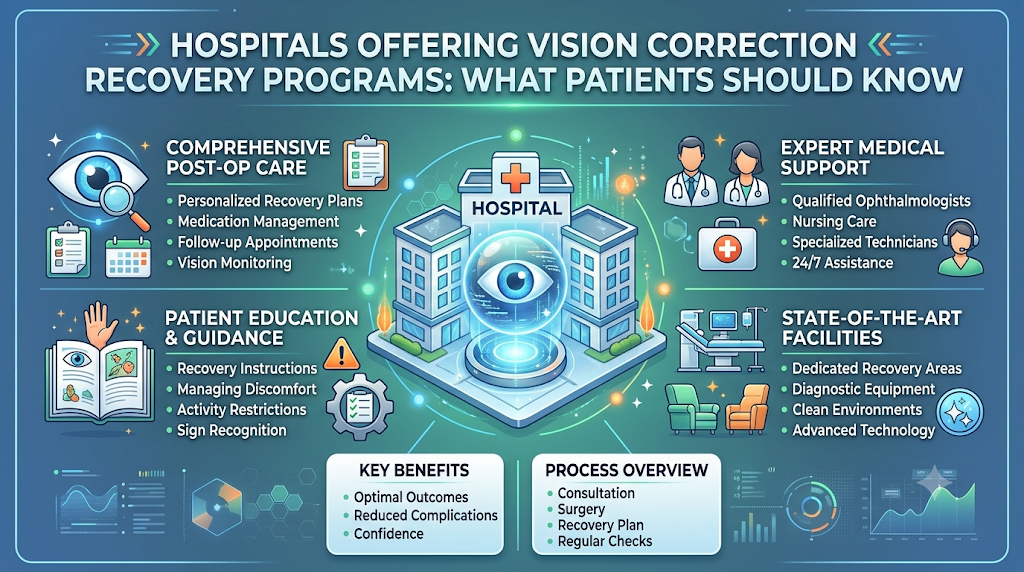
Hospitals Offering Vision Correction Recovery Programs may provide planned support after treatment. These programs can help patients understand healing and manage daily activities. However, services differ between hospitals.
LASIK, PRK, and SMILE also have different healing needs. A procedure that suits one person may not suit another. This article BESTEYEHOSPITALS.COM explains recovery programs, daily care, warning signs, and hospital selection.
What Are Vision Correction Recovery Programs?
A vision correction recovery program is a planned care process after eye surgery. It helps patients follow their surgeon’s instructions during healing.
The program may include several services:
- Post-surgery eye examinations: Doctors check healing and changes in vision.
- Written recovery instructions: Patients receive guidance about daily care.
- Eye drop guidance: The care team explains how to use prescribed drops.
- Activity advice: Patients learn when to return to normal activities.
- Vision monitoring: Doctors check for unexpected changes.
- Follow-up appointments: Planned visits help track recovery.
- Patient support: Patients can ask questions about symptoms or concerns.
Not every hospital provides the same services. Some include several follow-up visits in the treatment price. Others may charge separately for additional care.
Before booking surgery, ask for a written list of included services. Also, confirm how to contact the hospital after treatment.
Common Vision Correction Procedures
Eye specialists use different methods to correct vision. LASIK, PRK, and SMILE are common options. Each procedure changes the cornea in a different way.
LASIK
LASIK uses a laser to reshape the cornea. The surgeon creates a thin flap on its surface. A laser then changes the tissue beneath that flap.
The flap is placed back after treatment. This method often allows early vision improvement. However, healing and visual changes vary between patients.
Early follow-up is important. The doctor checks the cornea and looks for signs of irritation or other concerns. Patients must follow all eye drop and activity instructions.
PRK
PRK is another laser procedure. It reshapes the cornea without creating a flap. Instead, the thin surface layer is removed or moved aside.
That surface layer grows back during healing. As a result, PRK recovery can take longer than LASIK recovery.
Patients may have more discomfort during the early healing stage. Vision can also change while the surface heals. Follow-up visits help doctors check the healing process.
SMILE
SMILE stands for Small Incision Lenticule Extraction. It is a minimally invasive laser vision correction procedure.
The surgeon uses a laser to create a small piece of tissue inside the cornea. This tissue is removed through a small opening. Its removal changes the cornea’s shape.
SMILE does not use the same flap method as LASIK. Recovery experiences differ between patients. The surgeon decides which follow-up checks are needed.
Why a Professional Eye Examination Matters
Not everyone is suitable for every procedure. An eye specialist checks corneal thickness, eye health, vision, and medical history.
Some patients may need another treatment option. Others may need to delay surgery. The surgeon should explain the benefits, risks, and limits of each choice.
What Happens During the First Days After Surgery?
The first days after vision correction surgery can feel different for each patient. Some people notice early changes in vision. Others need more time before their vision feels stable.
Common early experiences may include:
- Blurry or changing vision.
- Mild eye discomfort or irritation.
- Sensitivity to bright light.
- Dry or watery eyes.
- A feeling of something inside the eye.
- The need to rest after treatment.
These symptoms do not affect everyone in the same way. Their duration can also differ by procedure.
Patients should arrange a safe journey home. They may need someone to accompany them after surgery. Driving should wait until the eye specialist confirms it is safe.
Rest is important during the early recovery period. Patients should also attend the first scheduled examination. This visit allows the doctor to check the eyes after treatment.
What Does a Vision Correction Recovery Program Include?
A well-organized recovery program gives patients clear guidance. It also helps the care team monitor healing.
Postoperative Eye Examinations
Postoperative means after surgery. During these examinations, the doctor checks the cornea and vision.
The doctor may look for dryness, irritation, or healing concerns. The number and timing of visits depend on the procedure and patient’s condition.
Prescription Eye Drops
Some patients need prescribed eye drops after surgery. These may help manage dryness, inflammation, or infection risk.
The surgeon explains which drops to use and when. Patients should follow the exact instructions. They should not change or stop prescribed treatment without medical advice.
Personalized Recovery Instructions
Patients need instructions that match their procedure and eye condition. These may cover eye protection, hygiene, rest, and daily activities.
For example, one patient may need different activity limits from another. Patients should ask the care team if any instruction is unclear.
Follow-Up Scheduling
A planned appointment schedule helps patients stay on track. It also gives doctors a chance to identify problems early.
Patients should know the date of each visit before leaving the hospital. They should also ask what to do if they cannot attend.
Patient Support
Questions may arise after patients return home. A clear contact process can help them reach the care team.
Before surgery, ask whether the hospital offers phone support or another contact method. Confirm where to seek help outside normal clinic hours.
Recovery Differences Between LASIK, PRK, and SMILE
Recovery depends on the procedure, eye health, and healing response.
LASIK patients often notice early vision improvement. However, dryness, light sensitivity, and changing vision can still occur.
PRK needs surface healing. The outer corneal layer must grow back. This can lead to more discomfort and a longer early recovery period.
SMILE uses a small opening rather than a LASIK-style flap. Some recovery experiences may differ, but patients still need follow-up care.
Dryness can occur after any of these procedures. Some patients also notice glare or light sensitivity. These symptoms should be discussed with the surgeon, especially if they become worse.
| Procedure | Basic Description | General Recovery Considerations | Follow-Up Needs |
|---|---|---|---|
| LASIK | Laser treatment that reshapes the cornea | Early vision improvement is common, but symptoms can vary | Early examination and later monitoring |
| PRK | Laser treatment that allows the corneal surface to heal | Surface healing can take longer | Monitoring of surface healing and vision |
| SMILE | Minimally invasive laser vision correction | Recovery experiences differ between patients | Follow-up based on the surgeon’s instructions |
There is no single recovery schedule for everyone. The surgeon’s advice should guide each patient’s recovery plan.
Daily Care After Vision Correction Surgery
Good daily care supports the healing process. Patients should follow the instructions given by their own eye specialist.
These general steps may help:
- Avoid rubbing your eyes: Rubbing can disturb healing tissue.
- Use prescribed eye drops: Follow the exact schedule from your doctor.
- Wear protective eyewear: Use it when your surgeon recommends it.
- Keep your eyes clean: Follow instructions about bathing and water exposure.
- Avoid swimming: Wait until your surgeon says it is safe.
- Return to exercise carefully: Get medical approval before restarting sports or heavy activity.
- Use sunglasses when advised: They can help reduce discomfort from bright light.
- Attend every follow-up visit: Do not skip planned examinations.
Patients should ask when they can return to work, reading, and screen use. The answer may depend on the procedure and their symptoms.
Avoid using unprescribed eye products. Do not share eye drops with another person. If a drop causes unusual discomfort, contact the care team.
Warning Signs That Need Medical Attention
Some mild discomfort can occur during recovery. However, certain symptoms need prompt medical attention.
Contact the eye surgeon if you notice:
- Sudden loss or major reduction in vision.
- Severe or increasing eye pain.
- Increasing redness or swelling.
- Unusual discharge from the eye.
- Symptoms that suddenly become worse.
- New or worsening visual disturbances.
Sudden vision loss or severe symptoms need urgent medical assessment. Do not wait for the next planned appointment.
Patients should keep the hospital’s emergency contact details nearby. If the surgeon cannot be reached during a serious problem, seek urgent eye care.
How to Choose Hospitals Offering Vision Correction Recovery Programs
Choosing an eye hospital involves more than comparing surgery prices. Patients should also check the quality of pre-surgery assessment and recovery support.
Here are important points to consider.
Qualified Eye Specialists
Check the qualifications and experience of the ophthalmologist. An ophthalmologist is a doctor who treats eye conditions.
Ask who will perform the procedure. Also, confirm who will handle follow-up examinations.
Proper Pre-Surgery Examinations
A careful eye examination helps doctors assess suitability. It may include checks of corneal thickness, eye pressure, and vision.
The hospital should explain the results in simple language. Patients should have time to discuss treatment options.
Suitable Diagnostic Equipment
Different tests help doctors understand eye structure and health. Ask which examinations are needed before surgery.
The equipment used should match the patient’s medical needs. Patients can ask why each test is important.
Clear Procedure Options
A responsible provider should explain suitable options. The doctor should discuss why one procedure may be better than another.
Patients should also understand possible risks and limitations. Be careful if anyone promises perfect eyesight or guaranteed results.
Written Postoperative Instructions
Ask whether the hospital provides written recovery guidance. It should explain eye drop use, activity limits, and warning signs.
Written instructions can help patients remember important details at home.
Planned Follow-Up Appointments
Find out how many visits are included. Ask when the first examination will take place.
Also, confirm whether extra visits cost more. This can help patients plan their treatment budget.
Clear Contact and Emergency Support
Patients should know how to contact the care team after surgery. Ask how urgent concerns are handled.
The hospital should explain where patients can receive help if the surgeon is unavailable.
Transparent Treatment Costs
Ask for a clear breakdown of the total price. Check whether examinations, medicines, and follow-up visits are included.
Do not compare hospitals based on the surgery fee alone. Recovery care may affect the final cost.
Why Follow-Up Care Matters for Long-Term Eye Health
Recovery does not end when a patient leaves the hospital. The eyes need monitoring as healing continues.
Follow-up examinations help doctors check vision and corneal healing. They can also help identify dryness or other concerns.
Some patients may need extra visits. This can happen when symptoms continue or healing needs closer attention.
Patients should keep their appointment records and follow their specialist’s advice. They should report new symptoms rather than waiting for a routine check.
Vision correction surgery can reduce dependence on glasses. However, it cannot promise perfect eyesight or prevent every future vision change.
Good postoperative eye care supports safer recovery. It also helps patients understand changes in their vision over time.
What to Check in a Vision Correction Recovery Program
| Recovery Support | What Patients Should Check | Why It Matters |
|---|---|---|
| Post-surgery examination | Timing and number of visits | Helps monitor healing |
| Eye drop guidance | Clear written instructions | Helps patients follow their treatment plan |
| Activity guidance | Restrictions on work, exercise, and swimming | Helps reduce avoidable risks |
| Emergency support | Contact details and response process | Helps patients seek timely care |
| Long-term follow-up | Availability of later assessments | Supports ongoing monitoring |
Frequently Asked Questions
1. What is a vision correction recovery program?
A vision correction recovery program provides care after procedures such as LASIK, PRK, or SMILE. It may include eye examinations, prescribed eye drop guidance, activity instructions, and follow-up visits. Services vary between hospitals. Patients should confirm which services are included before choosing a treatment provider.
2. How long does recovery take after LASIK surgery?
Recovery after LASIK differs between patients. Many people notice early vision improvement, but this does not mean healing is complete. Dryness, irritation, or changing vision may continue. The surgeon will explain when normal activities can resume and how long follow-up care is needed.
3. Does PRK take longer to heal than LASIK?
PRK often needs a longer early healing period than LASIK. This is because the surface layer of the cornea must grow back after treatment. Patients may experience more discomfort during this stage. The surgeon will monitor surface healing and explain when activities can safely resume.
4. What should patients avoid after vision correction surgery?
Patients should avoid rubbing or pressing their eyes. They may also need to avoid swimming, certain sports, and activities that expose the eyes to dirt or injury. The exact restrictions depend on the procedure. Follow the surgeon’s instructions instead of using a general recovery schedule.
5. How many follow-up visits are needed after laser eye surgery?
The number of visits depends on the procedure, healing progress, and hospital plan. Patients may need an early examination and later checks. Some people require extra visits if concerns arise. Ask the hospital for the expected schedule before treatment and attend every appointment.
6. Can patients use screens after vision correction surgery?
Screen use may be possible when the surgeon allows it. However, long screen sessions can make dry eyes or discomfort feel worse. Patients should follow their doctor’s advice about rest and screen breaks. Ask when it is safe to return to regular computer or phone use.
7. Is blurry vision normal during the recovery period?
Some patients experience blurry or changing vision after surgery. This can happen while the eyes heal. However, sudden or major vision loss is not something to ignore. Contact the eye surgeon promptly if vision becomes worse or changes unexpectedly.
8. What symptoms should patients report after eye surgery?
Patients should report increasing pain, redness, swelling, unusual discharge, or worsening vision. New visual disturbances also need medical advice. Sudden vision loss or severe symptoms require urgent assessment. Patients should not wait for their next scheduled appointment when serious symptoms appear.
9. How can patients choose a hospital for vision correction surgery?
Check the surgeon’s qualifications, pre-surgery eye tests, procedure options, and recovery support. Ask about follow-up visits, emergency contact details, and total treatment costs. The hospital should explain risks and limitations clearly. A careful eye examination should guide the final treatment choice.
10. Are follow-up appointments included in vision correction treatment costs?
This depends on the hospital and treatment package. Some providers include planned examinations, while others charge separately. Ask for a written cost breakdown before booking. Confirm whether extra visits, medicines, or additional tests may involve separate fees.
Final Thoughts
Choosing an eye hospital means looking beyond the surgery itself. Patients should check the surgeon’s qualifications, recovery instructions, follow-up schedule, and support process.
The right procedure and recovery plan depend on a professional eye examination. Patients should discuss their needs and understand the possible risks before making a decision.
BestEyeHospitals.com can be explored as a platform for eye hospital information. Patients should verify treatment options and recovery services directly with each hospital.