
INTRODUCTION
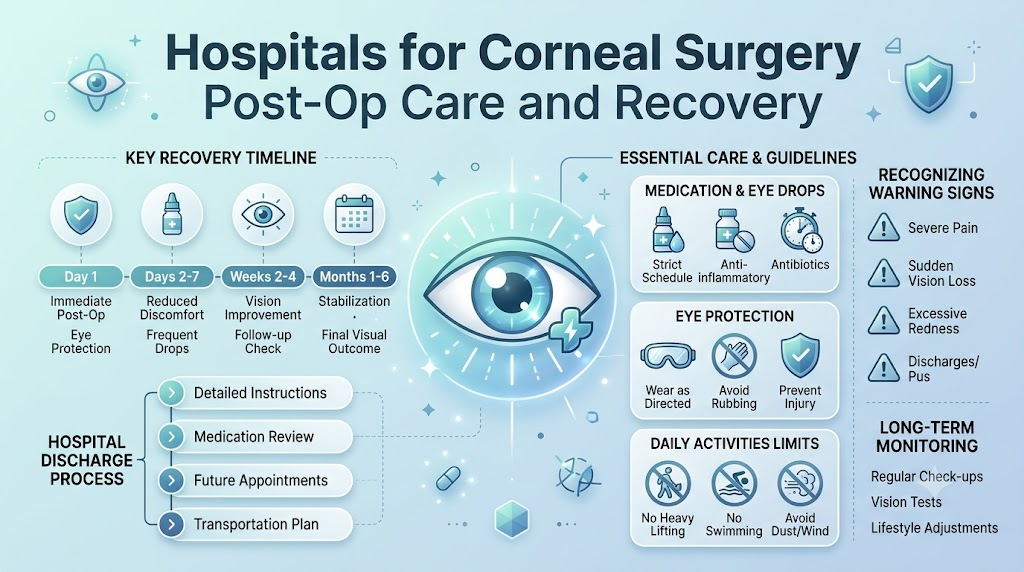
Corneal surgery can help improve vision and protect eye health. However, proper care after surgery is just as important as the procedure itself. Patients need regular check-ups, prescribed eye drops, and simple safety steps during recovery. Good post-operative care helps doctors monitor healing and identify possible problems early. Hospitals for Corneal Surgery Post-Op Care support patients through this important recovery period. They provide medical guidance, follow-up visits, and advice for daily eye protection. BESTEYEHOSPITALS helps patients understand the care services they should look for when choosing a hospital.
What Is Corneal Surgery?
The cornea is the clear front surface of the eye. It helps focus light so we can see clearly. Damage or disease can affect its shape, clarity, and function.
Corneal surgery treats certain conditions that affect this part of the eye. The procedure depends on the patient’s condition and the amount of damage.
Common reasons for corneal surgery include:
- Corneal scarring caused by injury or infection.
- Keratoconus, which changes the shape of the cornea.
- Corneal swelling due to inner-layer damage.
- Severe corneal thinning.
- Corneal disease that affects vision.
- Damage that requires a corneal transplant.
An eye specialist examines the cornea before recommending surgery. The doctor also explains the expected recovery process.
Why Is Post-Operative Care Important?
Recovery does not end when the patient leaves the operating room. The eye needs time to heal after surgery. Regular medical care helps protect the operated eye during this period.
Post-operative care is important for several reasons:
- It helps doctors monitor the healing process.
- It allows early detection of infection or inflammation.
- It helps patients use eye drops correctly.
- It reduces the risk of avoidable eye injuries.
- It allows doctors to check vision changes.
- It helps patients understand when normal activities can resume.
Each patient has different recovery needs. The surgeon provides instructions based on the procedure and the patient’s eye condition.
Types of Corneal Surgery and Their Recovery Needs
Different corneal procedures require different aftercare plans. Some involve replacing damaged corneal tissue. Others help strengthen the existing cornea.
Common procedures include:
Penetrating Keratoplasty (PK): This procedure replaces the full thickness of the damaged cornea with donor tissue.
Deep Anterior Lamellar Keratoplasty (DALK): This procedure replaces damaged front layers while keeping the inner corneal layer.
Endothelial Keratoplasty (DSEK/DMEK): These procedures replace damaged inner corneal layers.
Corneal Cross-Linking: This treatment strengthens corneal tissue and helps slow the progression of keratoconus.
Table 1: Corneal Surgery Types and Post-Operative Care Needs
| Corneal Surgery Type | Purpose | Post-Operative Care Needs |
|---|---|---|
| Penetrating Keratoplasty (PK) | Replaces the full thickness of the damaged cornea. | Regular check-ups, prescribed eye drops, and careful eye protection. |
| Deep Anterior Lamellar Keratoplasty (DALK) | Replaces damaged front layers of the cornea. | Follow-up visits, infection prevention, and healing checks. |
| Endothelial Keratoplasty (DSEK/DMEK) | Replaces damaged inner corneal layers. | Prescribed drops, close monitoring, and positioning instructions when advised. |
| Corneal Cross-Linking | Strengthens corneal tissue and slows keratoconus progression. | Medication as prescribed, avoiding eye rubbing, and follow-up visits. |
The exact recovery plan depends on the procedure. Patients should follow the instructions given by their surgeon.
What Happens During the First Few Days After Surgery?
The first few days are an important part of recovery. Patients may experience mild discomfort, watering, light sensitivity, or blurred vision.
These symptoms can vary depending on the procedure. Some patients need more rest and protection than others.
Doctors may recommend:
- Resting as instructed.
- Using prescribed eye drops.
- Wearing an eye shield when advised.
- Avoiding pressure on the operated eye.
- Keeping follow-up appointments.
- Avoiding activities that may disturb healing.
Patients should not change their medication schedule without medical advice. Sudden or severe symptoms need prompt attention.
Follow-Up Services Provided by Hospitals
Follow-up care helps doctors check whether the cornea is healing properly. Hospitals may arrange several visits after surgery.
These visits can include:
Eye Examination: The doctor checks the operated eye for signs of healing, irritation, or infection.
Vision Assessment: The care team monitors changes in vision during recovery.
Corneal Examination: The specialist examines the cornea and checks for possible complications.
Medication Review: The doctor reviews eye drops and changes the treatment plan when needed.
Recovery Guidance: Patients receive advice about daily activities, eye protection, and future appointments.
The number and timing of visits depend on the type of surgery and the patient’s condition.
How to Use Eye Drops After Corneal Surgery
Eye drops are often an important part of recovery. They may help control inflammation, prevent infection, or keep the eye comfortable.
Patients should follow the prescribed schedule carefully.
Keep these points in mind:
- Wash your hands before using eye drops.
- Follow the correct dosage and timing.
- Avoid touching the bottle tip to the eye.
- Do not share eye drops with another person.
- Do not stop prescribed drops without medical advice.
- Ask the hospital if you are unsure about the instructions.
If several eye drops are prescribed, ask the doctor how much time to leave between them.
Protecting the Eye During Recovery
The operated eye may be sensitive during healing. Proper protection helps prevent accidental injury and irritation.
Patients should avoid rubbing or pressing the eye. They should also follow the surgeon’s advice about wearing protective glasses or an eye shield.
Other useful precautions include:
- Keep the eye shield clean.
- Avoid dusty or smoky places when possible.
- Follow instructions about bathing and washing the face.
- Avoid eye makeup until the doctor allows it.
- Protect the eye from accidental contact.
- Do not use non-prescribed eye products.
Patients should ask their surgeon when they can safely return to normal activities.
Activities to Avoid After Corneal Surgery
Some activities can place pressure on the eye or increase the risk of injury. Doctors may recommend avoiding them during early recovery.
These activities may include:
- Heavy lifting.
- Strenuous exercise.
- Swimming.
- Contact sports.
- Rubbing the operated eye.
- Activities that expose the eye to dust or dirt.
The restrictions depend on the procedure. Patients should not follow a general recovery timeline without checking with their surgeon.
Nutrition and Rest During Recovery
Good nutrition supports general health and normal healing. Patients should eat balanced meals and drink enough water.
A healthy diet can include vegetables, fruits, whole grains, protein-rich foods, and healthy fats.
Rest is also important. Patients should get enough sleep and avoid activities that cause discomfort or strain.
However, food and rest cannot replace medical treatment. Patients must continue their prescribed medicines and follow-up visits.
Warning Signs After Corneal Surgery
Some discomfort may occur after surgery. However, certain symptoms may indicate a problem that needs medical attention.
Contact the hospital or eye surgeon if you experience:
- Severe or increasing eye pain.
- Sudden loss or worsening of vision.
- Increasing redness.
- Unusual discharge from the eye.
- New or worsening light sensitivity.
- Increasing swelling.
- New flashes or floaters.
Do not wait for a scheduled appointment if serious symptoms develop. Seek urgent medical advice.
Long-Term Monitoring After Corneal Surgery
Some corneal procedures require long-term follow-up. This is especially important after corneal transplantation.
Doctors may monitor the corneal graft, eye pressure, vision, and signs of rejection or infection. Patients may also need ongoing medication.
Long-term care can include:
- Regular eye examinations.
- Vision checks.
- Corneal health assessments.
- Medication reviews.
- Monitoring for graft-related problems.
- Guidance about future treatment.
Patients should keep their medical records and attend recommended appointments, even when their vision feels stable.
How to Choose Hospitals for Corneal Surgery Post-Op Care
Choosing the right hospital can make recovery easier to manage. Patients should look beyond the surgery itself and check the quality of follow-up services.
Consider these factors:
Cornea Specialists: Check whether the hospital has eye specialists experienced in corneal diseases and surgery.
Follow-Up Facilities: Ask whether the hospital provides regular post-operative examinations.
Emergency Support: Check how patients can contact the medical team if symptoms develop after discharge.
Clear Instructions: The hospital should explain medication schedules, eye protection, and activity restrictions.
Patient Communication: Doctors and staff should answer questions in simple and clear language.
Medical Records: Ask how follow-up reports and treatment details will be shared.
BestEyeHospitals.com can help patients understand important hospital services and prepare questions before selecting a care provider.
Recovery Checklist After Corneal Surgery
Patients can use a simple checklist to follow their doctor’s instructions. However, the exact care plan should always come from the treating surgeon.
Table 2: Recovery Checklist After Corneal Surgery
| Recovery Area | Recommended Care |
|---|---|
| Eye Drops | Use prescribed eye drops according to the doctor’s schedule. |
| Eye Protection | Wear the recommended eye shield, especially while sleeping if advised. |
| Eye Rubbing | Never rub or press the operated eye. |
| Water Exposure | Follow instructions about bathing and keeping water away from the eye. |
| Physical Activity | Avoid heavy lifting and strenuous exercise until approved. |
| Follow-Up Visits | Attend every scheduled appointment to monitor healing. |
| Warning Signs | Contact the hospital for severe pain, sudden vision changes, increasing redness, or unusual discharge. |
| Daily Routine | Return to work, driving, and other activities only after medical approval. |
This checklist is a general reminder. It does not replace the hospital’s discharge instructions.
Frequently Asked Questions
1. How long does recovery take after corneal surgery?
Recovery time depends on the type of surgery and the patient’s eye condition. Some procedures need longer healing and follow-up than others. The surgeon provides an individual recovery plan.
2. Are follow-up visits necessary after corneal surgery?
Yes. Follow-up visits help doctors check healing, monitor vision, and identify possible complications. Patients should attend every recommended appointment.
3. Can patients use regular eye drops after surgery?
Patients should use only the eye drops approved by their surgeon. Regular or non-prescribed drops may not be suitable after surgery.
4. Is blurred vision normal after corneal surgery?
Some patients experience blurred vision during early recovery. However, sudden or worsening vision changes need prompt medical attention.
5. Can patients watch television after corneal surgery?
This depends on comfort and the surgeon’s advice. Patients should take breaks if their eyes feel tired and follow any activity restrictions.
6. When can patients return to work?
The timing depends on the procedure, healing progress, and type of work. The surgeon should approve the return to work.
7. Can patients exercise after corneal surgery?
Light activities may be allowed at different stages. Heavy exercise, swimming, and contact sports may need to be avoided until the surgeon gives permission.
8. What are the warning signs of a problem after surgery?
Severe pain, sudden vision changes, increasing redness, unusual discharge, or worsening light sensitivity need medical attention.
9. Do all corneal surgery patients need long-term monitoring?
Not every patient needs the same follow-up schedule. Some procedures, especially corneal transplants, may require long-term monitoring.
10. How can patients choose a hospital for post-operative care?
Patients should check specialist experience, follow-up services, emergency support, clear instructions, and access to medical records.
Final Thoughts
Corneal surgery is an important step toward treating certain eye conditions. However, proper aftercare plays a major role in recovery. Patients should use prescribed eye drops, protect the operated eye, and attend every follow-up visit. They should also report unusual symptoms without delay.
Hospitals for Corneal Surgery Post-Op Care should provide clear guidance before and after discharge. Choosing a hospital with suitable specialist support and follow-up services can help patients manage recovery with greater confidence. BestEyeHospitals.com helps patients learn what to consider when exploring eye care facilities.