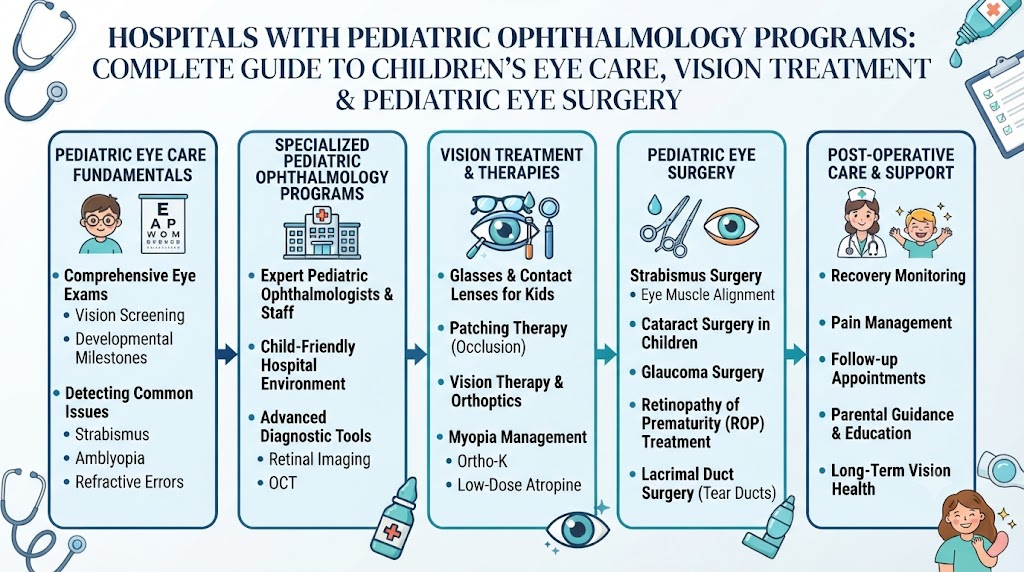
A child’s vision is a crucial window to their world, shaping how they learn, play, and interact with their surroundings. When parents notice signs of eye strain, misalignment, or vision difficulties in their child, it naturally brings up questions and a desire to find the most capable medical care available.At BESTEYEHOSPITALS, we believe that well-informed parents are better equipped to advocate for their children’s health. This comprehensive educational guide explores pediatric eye care, common childhood vision disorders, advanced hospital services, selection criteria, and what to expect during your child’s visit.
What Is Pediatric Ophthalmology?
Pediatric ophthalmology is a specialized medical and surgical branch of eye care dedicated exclusively to the visual health and development of infants, children, and teenagers.While general ophthalmologists care for patients of all ages, pediatric ophthalmologists complete rigorous medical school, general ophthalmology residency, and an intensive fellowship focused entirely on children’s ocular development and complex strabismus management.The difference between pediatric and adult eye care goes beyond room decor. Children cannot always articulate what they see, requiring specialized, child-friendly examination techniques, pediatric-sized instruments, and patience.
Common Conditions Treated
Pediatric eye specialists evaluate and treat a diverse spectrum of congenital and acquired visual disorders. Recognizing symptoms early can safeguard a child’s long-term sight.
Refractive Errors
Nearsightedness (myopia), farsightedness (hyperopia), and astigmatism that affect sharp focusing and clear vision.
Amblyopia (Lazy Eye)
Reduced vision in one eye that occurs when the brain and eye fail to work together properly, often caused by untreated refractive errors or eye misalignment.
Strabismus (Crossed Eyes)
A condition where the eyes do not line up in the same direction, turning inward, outward, upward, or downward.
Congenital Cataracts
Clouding of the eye’s natural lens present at birth or developing in infancy, requiring prompt medical or surgical intervention to prevent permanent vision loss.
Retinopathy of Prematurity (ROP)
A potentially blinding eye disorder that primarily affects premature infants, characterized by abnormal blood vessel growth in the retina.
Blocked Tear Ducts
Common in newborns, causing persistent tearing and eye discharge that usually resolves with gentle massage or medical treatment.
Pediatric Glaucoma
A rare but serious condition involving elevated pressure inside the eye that can damage the optic nerve if left untreated.
Eye Infections
Bacterial, viral, or allergic conditions such as conjunctivitis (pink eye) that require targeted pediatric medication.
Eye Injuries
Traumatic corneal abrasions, foreign objects, or blunt trauma requiring immediate emergency evaluation.
Genetic and Congenital Eye Disorders
Rare structural anomalies inherited from family or developing during embryonic growth.
Pediatric Ophthalmology Services Comparison Table
| Service | Primary Purpose | Benefit |
|---|---|---|
| Comprehensive Pediatric Eye Exam | Evaluate vision and eye health | Early diagnosis of hidden vision problems |
| Vision Screening | Detect early vision abnormalities | Timely intervention during crucial developmental years |
| Strabismus Treatment | Correct eye alignment and muscle balance | Better binocular vision and depth perception |
| Pediatric Eye Surgery | Treat structural eye disorders | Improve eye function and anatomical alignment |
| Retinopathy of Prematurity Care | Manage retinal disease in premature infants | Preserve vision in high-risk newborns |
| Long-Term Vision Follow-Up | Monitor ongoing eye development | Lifelong pediatric eye care support |
Services Offered by Leading Pediatric Ophthalmology Hospitals
Leading children’s hospitals provide a comprehensive, multidisciplinary suite of services designed to handle everything from routine prescriptions to complex surgical interventions.
- Comprehensive Pediatric Eye Examinations: Thorough evaluations of visual acuity, eye muscle function, and internal ocular structures.
- Infant Vision Assessment: Specialized non-verbal testing techniques tailored for babies and toddlers.
- Pediatric Refraction Services: Precise prescription of eyeglasses designed with durable, child-safe frames.
- Strabismus Evaluation and Surgery: Detailed muscle assessments and surgical corrections to align the eyes properly.
- Amblyopia Management: Structured treatment programs utilizing corrective lenses, patching therapy, or eye drops.
- Congenital Cataract Surgery: Delicate surgical removal of clouded lenses and implantation of pediatric intraocular lenses or contact correction.
- Retinopathy of Prematurity (ROP) Screening & Treatment: Urgent bedside examinations and laser treatments in neonatal units.
- Pediatric Retina Services: Specialized care for inherited or acquired retinal dystrophies.
- Pediatric Glaucoma Management: Medical and surgical lowering of intraocular pressure in young patients.
- Pediatric Oculoplastic Services: Reconstructive surgeries for eyelid anomalies, tear duct obstructions, and orbital trauma.
- Long-Term Vision Monitoring: Ongoing surveillance to ensure proper visual maturation throughout school years.
Leading pediatric ophthalmology programs often work closely with neonatologists, pediatricians, pediatric anesthesiologists, and pediatric retina specialists to provide multidisciplinary care for children with complex eye conditions. (Lurie Children’s)
Advanced Technologies Used in Modern Pediatric Eye Care
Advanced medical technology allows specialists to examine delicate pediatric eyes quickly and accurately, minimizing discomfort and anxiety.
- Digital Pediatric Eye Imaging: High-resolution cameras that capture detailed images of the retina and optic nerve without harsh flashes.
- Pediatric Optical Coherence tomography (OCT): Non-invasive cross-sectional scans of retinal layers tailored for young patients.
- Fundus Photography: Captures wide-field pictures of the back of the eye for tracking disease progression.
- Pediatric Visual Acuity Assessment Tools: Age-appropriate charts, games, and digital tools (like Lea symbols or preferential looking cards) for toddlers and infants.
- Retinal Imaging for Premature Infants: Specialized portable cameras designed for bedside NICU screenings.
- Pediatric Surgical Microscopes: High-magnification optical systems used during delicate micro-incisional eye surgeries.
- Child-Friendly Diagnostic Equipment: Designed with calming colors, playful shapes, and rapid measurement capabilities to keep kids relaxed.
How to Choose the Right Pediatric Ophthalmology Hospital
Selecting the appropriate hospital is one of the most important decisions you can make for your child’s visual future. The most appropriate hospital depends on the child’s age, eye condition, overall health, and treatment needs.
Key factors to evaluate when researching hospitals include:
- Experienced Pediatric Ophthalmologists: Board-certified specialists with fellowship training dedicated exclusively to children’s eye care.
- Dedicated Children’s Eye Clinics: Facilities tailored to reduce pediatric anxiety through welcoming environments.
- Child-Friendly Facilities: Waiting rooms and exam areas equipped with toys, books, and engaging decor.
- Advanced Pediatric Diagnostic Equipment: Technology engineered specifically for tiny eyes and non-cooperative patients.
- Pediatric Anesthesia Expertise: Anesthesiologists specialized in safely monitoring infants and children during eye surgeries.
- Multidisciplinary Care Teams: Seamless collaboration with pediatricians, neurologists, and geneticists.
- Emergency Pediatric Eye Services: 24/7 readiness for acute eye trauma or sudden vision changes.
- Long-Term Follow-Up Programs: Structured recall systems to monitor developing visual pathways over years.
Hospital Selection Checklist
| Feature | Why It Matters |
|---|---|
| Experienced Pediatric Ophthalmologists | Specialized expertise in children’s complex visual development |
| Child-Friendly Facilities | Reduces fear and makes examinations more comfortable |
| Advanced Diagnostic Equipment | Ensures accurate diagnosis without prolonged testing |
| Pediatric Eye Surgery Services | Comprehensive surgical treatment capabilities under one roof |
| Multidisciplinary Team | Coordinated care for children with complex medical conditions |
| Long-Term Follow-Up | Monitors visual development through critical growing years |
Diagnostic Evaluation Before Treatment
A thorough diagnostic workup forms the foundation of any successful pediatric vision treatment plan.
- Medical and Birth History: Reviewing gestational age, delivery complications, developmental milestones, and maternal health.
- Family Eye History: Screening for hereditary conditions like strabismus, high refractive errors, or childhood cataracts.
- Comprehensive Eye Examination: Assessing general eye health, pupil reactivity, and external structures.
- Vision Assessment: Measuring visual acuity using age-appropriate symbols, letters, or behavioral responses.
- Eye Alignment Testing: Evaluating corneal light reflexes and cover tests to check muscle balance.
- Retinal Examination: Inspecting the back of the eye using specialized lenses and illumination.
- Imaging Studies (When Indicated): Utilizing OCT, ultrasound, or photography to map structural details.
- Treatment Planning Consultation: Discussing findings with parents, explaining options, and addressing questions thoroughly.
What to Expect During a Pediatric Eye Visit
Knowing the routine of a pediatric ophthalmology clinic helps parents prepare their child and reduces family anxiety.
- Registration and Medical History: Filling out forms detailing your child’s visual concerns and medical background.
- Child-Friendly Eye Examination: Initial assessments by ophthalmic technicians using playful, engaging techniques.
- Vision Testing: Measuring how well your child sees using interactive games or matching charts.
- Eye Alignment Evaluation: Testing how the eyes track and focus together on targets.
- Dilated Eye Examination (When Required): Application of medicated eye drops that temporarily widen the pupils to allow a clear view of the retina. (Note: Drops may cause temporary blurriness and light sensitivity).
- Discussion of Diagnosis: The pediatric ophthalmologist reviews exam results directly with parents in clear, compassionate terms.
- Personalized Treatment Recommendations: Outlining glasses prescriptions, patching schedules, or surgical options if needed.
- Follow-up Scheduling: Setting future appointments to track visual progress.
Treatment Options
Because children’s eyes are actively developing, treatment plans are customized to age, diagnosis, and visual potential. Treatment depends on the child’s diagnosis, age, visual development, and overall health, and may involve both medical and surgical care. (Lurie Children’s)
- Prescription Glasses: Custom-fitted lenses to correct refractive errors and help clear blurred images.
- Eye Patching Therapy: Covering the stronger eye for a prescribed number of hours daily to strengthen vision in a lazy eye (amblyopia).
- Vision Therapy (When Appropriate): Supervised eye exercises and activities to improve focusing and eye-teaming skills.
- Eye Medications: Specialized drops or ointments to treat infections, control inflammation, or manage glaucoma.
- Strabismus Surgery: Microscopic adjustments to extraocular eye muscles to straighten eye alignment.
- Cataract Surgery: Surgical removal of clouded lenses combined with corrective lens fitting.
- Laser Treatment for ROP: Stopping abnormal retinal blood vessel growth in premature infants.
- Ongoing Monitoring: Routine check-ups to evaluate how the visual system is responding to treatment.
Recovery and Long-Term Follow-Up
Vision development continues through childhood, making ongoing monitoring an essential part of care.
- Recovery After Pediatric Eye Surgery: Managing mild postoperative soreness with child-safe pain relievers and protecting healing eyes.
- Medication Adherence: Diligently administering prescribed antibiotic or anti-inflammatory drops according to schedule.
- Protective Eyewear: Ensuring children wear safety glasses during sports or active play when recommended.
- Follow-up Eye Examinations: Attending scheduled post-op and routine check-ups to measure visual progress.
- Monitoring Visual Development: Checking how well both eyes work together as reading and school demands increase.
- School Vision Support: Communicating with teachers regarding seating arrangements or glasses wear in the classroom.
- Family Involvement in Treatment: Encouraging consistency with patching routines and glasses compliance at home.
Long-term follow-up is often important because children’s eyes continue to develop as they grow.
Possible Risks and Complications
Unaddressed eye conditions can impact a child’s learning and lifelong vision. Professional intervention minimizes these risks:
- Delayed Diagnosis: Allowing congenital conditions to progress past critical developmental windows.
- Progressive Vision Loss: Worsening visual impairment when refractive errors or diseases go untreated.
- Persistent Eye Misalignment: Uncorrected strabismus leading to permanent loss of binocular depth perception.
- Amblyopia if Untreated: Brain pathways failing to develop properly for the weaker eye.
- Surgical Risks: Rare complications such as infection, bleeding, or under-correction requiring secondary adjustments.
- Need for Additional Treatment: Growing eyes sometimes require prescription adjustments or follow-up procedures.
Early diagnosis and timely treatment can improve outcomes for many pediatric eye conditions.
How BESTEYEHOSPITALS Helps Patients
Navigating pediatric healthcare can feel overwhelming for busy families. BESTEYEHOSPITALS serves as a trusted educational platform designed to support parents:
- Children’s Eye Hospital Discovery: Helping families understand what features to look for in advanced pediatric eye centers.
- Pediatric Ophthalmology Education: Breaking down complex medical terms into clear, accessible explanations.
- Hospital Comparison: Offering objective criteria to evaluate specialized children’s vision facilities.
- Eye Care Resources: Curating guides on pediatric eye milestones and warning signs.
- Parent Guidance: Equipping caregivers with practical checklists and preparation tips for clinic visits.
- Informed Decision-Making: Empowering families to make confident choices regarding children’s eye healthcare.
Common Mistakes Parents Make
When managing children’s health, well-intentioned parents can sometimes fall into common traps that delay care:
- Ignoring Failed Vision screenings: Assuming school vision tests are inaccurate or unimportant.
- Delaying Specialist Consultation: Waiting until a child complains about vision before seeking care.
- Assuming Children Will Outgrow Eye Problems: Believing crossed eyes or lazy eyes correct themselves naturally.
- Missing Follow-up Appointments: Skipping routine checks once glasses are prescribed.
- Inconsistent Use of Prescribed Glasses or Patching Therapy: Yielding to complaints and letting children skip patching.
- Ignoring Symptoms Such as Eye Misalignment or Frequent Squinting: Dismissing subtle signs of visual fatigue.
Common Myths vs Facts
| Myth | Fact |
|---|---|
| Children don’t need eye exams until school age | Eye problems can develop in infancy and early childhood; comprehensive exams can be performed at any age |
| Strabismus always resolves without treatment | Misaligned eyes rarely straighten on their own and often require professional medical or surgical intervention |
| Children receive the same eye care as adults | Pediatric ophthalmology utilizes specialized techniques, child-friendly equipment, and specialized developmental approaches |
| Wearing glasses weakens children’s eyes | Properly prescribed glasses help support healthy visual development and focus images correctly on the retina |
Real-Life Educational Scenarios
To see how these principles apply in practice, consider these common educational examples:
Scenario 1: Premature Infant ROP Screening
A baby born prematurely is admitted to the neonatal intensive care unit. Following hospital protocols, a pediatric ophthalmologist performs timely retinal screenings for retinopathy of prematurity. Early detection allows for minor laser treatment, successfully preserving the infant’s sight.
Scenario 2: Amblyopia Improvement Through Patching
A toddler is diagnosed with amblyopia (lazy eye) during a routine check. The pediatric ophthalmologist prescribes corrective glasses and a structured patching schedule. With consistent family support and follow-up visits, the child’s visual acuity in the weaker eye improves significantly.
Scenario 3: Strabismus Surgery and Rehabilitation
A school-aged child with significant inward eye misalignment (strabismus) undergoes a comprehensive evaluation. The specialist performs successful strabismus surgery to realign the eye muscles, followed by follow-up care to restore binocular vision and depth perception.
Scenario 4: Multidisciplinary Care Program
A family notices their infant showing signs of unusual visual tracking. They choose a hospital with a multidisciplinary pediatric ophthalmology program. Pediatricians, ophthalmologists, and developmental specialists collaborate to provide a complete diagnostic and supportive care plan.
Frequently Asked Questions
1. What is pediatric ophthalmology?
Pediatric ophthalmology is a subspecialty of medicine focused on the medical and surgical care of children’s eyes, vision development, and ocular disorders.
2. When should children have their first eye examination?
Children should have their first formal comprehensive eye screening during infancy (as recommended by pediatricians), with routine checks before starting school.
3. What conditions do pediatric ophthalmologists treat?
They treat amblyopia, strabismus, refractive errors, congenital cataracts, glaucoma, blocked tear ducts, ROP, and pediatric eye trauma.
4. What is amblyopia?
Amblyopia, or lazy eye, is reduced vision in one eye caused by abnormal visual development early in life.
5. What is strabismus?
Strabismus is a condition where the eyes are misaligned and point in different directions instead of working together.
6. What is retinopathy of prematurity (ROP)?
ROP is an eye disease affecting premature babies where abnormal blood vessels grow in the retina, potentially threatening vision.
7. How are children’s eye exams different from adults’?
They use specialized non-verbal testing methods, child-friendly equipment, patience, and specialized pediatric training.
8. When is pediatric eye surgery recommended?
Surgery is recommended for conditions like congenital cataracts, severe strabismus, blocked tear ducts that do not resolve, or pediatric glaucoma.
9. Are children’s eye surgeries safe?
Yes, when performed by experienced pediatric ophthalmologists supported by specialized pediatric anesthesiologists, children’s eye surgeries are very safe.
10. How often should children have follow-up eye exams?
Frequency depends on the diagnosis; healthy children need checks as recommended by pediatricians, while those with specific eye conditions require more frequent monitoring.
11. How do I choose the right pediatric ophthalmology hospital?
Look for board-certified pediatric ophthalmologists, child-friendly facilities, advanced diagnostic tools, pediatric anesthesia expertise, and robust follow-up care.
12. Can childhood vision problems be corrected?
Many childhood vision problems, especially when diagnosed and treated early, can be successfully corrected or managed.
13. What technologies are used in pediatric eye care?
Technologies include digital retinal imaging, pediatric OCT, fundus photography, and specialized visual acuity testing tools.
14. Why is early diagnosis important?
Early diagnosis allows treatment during critical developmental windows when children’s visual pathways are still forming.
15. How does BESTEYEHOSPITALS help families find hospitals with pediatric ophthalmology programs?
It provides trusted educational resources, hospital selection guidance, comparison checklists, and clear information to help families navigate pediatric eye care decisions.
Final Thoughts
A child’s vision is precious, and taking proactive steps to protect it can shape their entire future. Recognizing the early signs of vision disorders and seeking specialized care makes a profound difference. From experienced pediatric ophthalmologists to advanced child-friendly technologies, specialized children’s hospitals provide the comprehensive care necessary for healthy visual development.We encourage you to explore BESTEYEHOSPITALS for trusted information about pediatric ophthalmology programs, children’s eye hospitals, pediatric eye surgery, and vision care resources. Always consult qualified pediatric ophthalmologists to receive professional medical evaluations and treatment recommendations tailored specifically to your child’s unique visual needs.