Introduction
Accessing an eye specialist can sometimes be difficult because of distance, mobility limitations, busy schedules, or limited local specialist availability. For many individuals, traveling significant distances just to discuss a mild vision concern or review a routine test result can create unnecessary stress.Understanding both the benefits and limitations of remote eye care is essential for making informed healthcare decisions. Platforms like BestEyeHospitals serve as a valuable resource for researching eye hospitals, qualified ophthalmologists, treatments, procedures, and virtual consultation options.
What Is Ophthalmology Teleconsultation?
Ophthalmology teleconsultation, often referred to as teleophthalmology, involves the use of digital communication technology to connect patients with eye-care specialists remotely. It allows healthcare providers to evaluate non-urgent eye conditions, review diagnostic records, and offer expert advice without requiring an immediate physical meeting.
Key elements typically include:
- Secure video consultations providing face-to-face interaction over the internet
- Phone consultations for preliminary discussions when video is unavailable
- Online medical platforms designed for safe health data exchange
- Review of previous eye examination reports, surgical histories, and clinical notes
- Review of photographs, external eye images, or diagnostic scans when appropriate and secure
- Discussion of ongoing symptoms, medication questions, and general eye health
- Specialist guidance on whether further testing or an in-person exam is needed
- Scheduled follow-up consultations to monitor chronic conditions
Teleconsultation is designed to function as one component of a broader, comprehensive eye-care pathway.
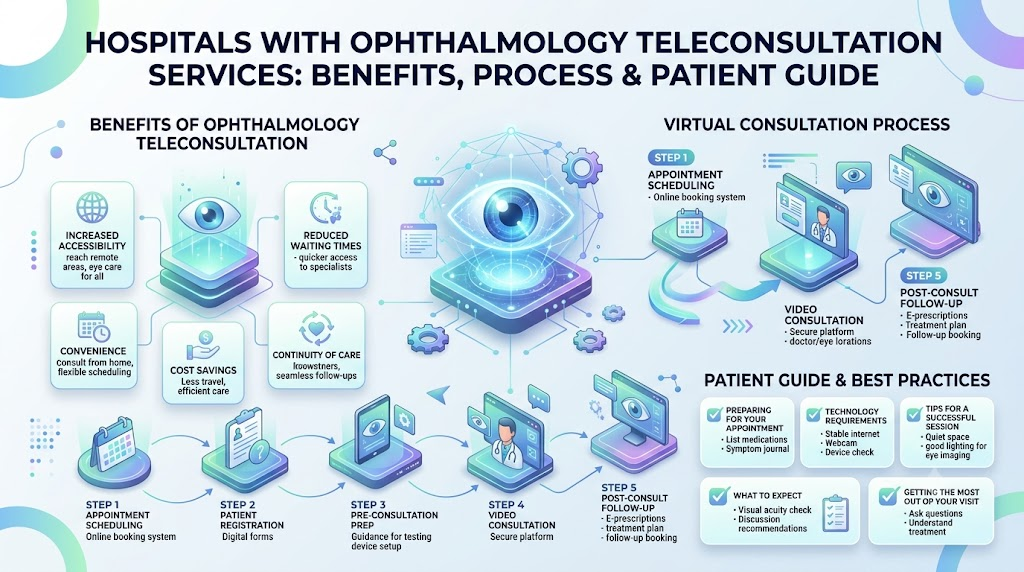
How an Online Eye Consultation Works
Understanding the typical workflow of a virtual eye consultation helps patients prepare effectively and set realistic expectations for the appointment.
The process generally follows these steps:
- Step 1 – Appointment Booking: The patient selects an appropriate ophthalmology teleconsultation service and books a time slot.
- Step 2 – Medical Information: The patient provides relevant personal health data, eye history, and current symptoms prior to the call.
- Step 3 – Virtual Consultation: The patient connects with the ophthalmologist via a secure video or phone link to discuss their concerns.
- Step 4 – Review of Available Information: The doctor examines any previous reports, prescriptions, or diagnostic results provided by the patient.
- Step 5 – Next-Step Guidance: The ophthalmologist explains potential considerations and advises whether an in-person examination or diagnostic test is necessary.
- Step 6 – Follow-Up: A subsequent online review or physical appointment is scheduled based on the clinical guidance provided.
What Eye Problems Can Be Discussed Online?
While many eye conditions require physical testing, several types of inquiries and follow-up discussions are well-suited for virtual formats.
Common topics include:
- General eye symptoms, mild irritation, or environmental discomfort
- Mild dry-eye complaints and general lubrication questions
- Mild, non-emergency redness without accompanying pain or vision loss
- General vision concerns or questions regarding presbyopia
- General questions about glasses, contact lenses, or digital eye strain
- Reviewing previous eye-test reports or discussing past surgical outcomes
- General questions regarding cataracts and surgical expectations
- Routine follow-up discussions for stable glaucoma patients
- Postoperative check-ins where physical suture checks are not immediately required
- Medication or treatment questions concerning an existing, stable condition
Online discussion is exploratory and educational; it does not automatically establish a clinical diagnosis.
Eye Conditions That May Need In-Person Evaluation
Certain symptoms and eye conditions demand immediate physical examination and specialized diagnostic testing that cannot be performed remotely.
Situations requiring an in-person evaluation include:
- Sudden, unexplained loss of vision or rapid visual blurring
- Significant eye injuries, blunt trauma, or chemical splashes
- Suspected retinal detachment, indicated by a curtain-like shadow over the field of vision
- Acute glaucoma symptoms, such as severe eye pain, halos around lights, and nausea
- Severe eye infection, purulent discharge, or corneal ulcers
- Sharp, severe eye pain or deep throbbing discomfort
- Foreign body objects embedded in the eye surface
- Sudden onset of numerous new floaters accompanied by flashes of light
- Conditions requiring precise intraocular pressure measurement (tonometry)
- Conditions requiring high-resolution retinal imaging or slit-lamp biomicroscopy
When these symptoms arise, ophthalmologists will direct patients to seek prompt, in-person clinical evaluation.
Benefits of Ophthalmology Teleconsultation
Teleophthalmology offers several distinct advantages for patients seeking professional guidance for non-emergency eye concerns.
Potential benefits include:
- Exceptional convenience for individuals balancing demanding schedules
- Reduced travel time and associated expenses for routine discussions
- Access to specialized ophthalmologists and advanced medical centers regardless of geographic location
- Valuable support for elderly patients or individuals with mobility limitations
- Easier scheduling for routine follow-up discussions and medication reviews
- Support for international patients seeking preliminary specialist opinions before traveling
- Efficient review of previous reports and diagnostic imaging
- Faster communication regarding non-emergency care questions
- Extended specialist access in rural or underserved areas
While highly beneficial for selected needs, virtual consultation complements rather than replaces in-person comprehensive eye care.
Limitations of Online Eye Consultations
Recognizing the boundaries of remote eye care ensures that patients approach virtual consultations safely and realistically.
Important limitations include:
- Inability to perform a complete, hands-on physical examination of the eye
- Inability to conduct a slit-lamp biomicroscopy examination of internal eye structures
- Restricted capability to measure intraocular pressure remotely
- Inability to perform comprehensive retinal evaluations or specialized visual-field tests
- Heavy dependence on video quality, lighting, and internet connectivity
- Difficulty evaluating fine structural changes in the cornea, lens, or retina
- The absolute requirement for direct clinical instrumentation to diagnose active disease
- Inability to manage acute eye emergencies through a virtual screen
Emphasizing these constraints helps patients understand when an in-person visit is mandatory.
Table 1 – Online Eye Consultation vs In-Person Eye Examination
| Care Area | Online Consultation | In-Person Examination |
| Symptom discussion | Explain in detail | Explain in detail |
| Medical history | Review history | Review history |
| Review of previous reports | Possible | Possible |
| Visual assessment | Limited and condition-dependent | Comprehensive and precise |
| Slit-lamp examination | Generally requires appropriate equipment | Available on-site |
| Eye pressure measurement | Usually requires specialized equipment | Available on-site |
| Retinal imaging | May be reviewed remotely if available | Can be performed when clinically indicated |
| Emergency assessment | Limited to guidance | Appropriate urgent evaluation available on-site |
Preparing for an Ophthalmology Teleconsultation
Proper preparation ensures your virtual meeting with the ophthalmologist is as productive and informative as possible.
Patients should consider preparing:
- A clear description of their main eye symptoms or questions
- The exact timeline of when symptoms first appeared or changed
- Details of any recent changes in visual acuity or blurriness
- Copies of previous eye examination reports and diagnostic summaries
- Exact prescriptions for current glasses or contact lenses
- A complete list of all current systemic medications and eye drops
- A history of previous eye surgeries, laser procedures, or trauma
- Relevant medical history, including hypertension, heart disease, or other conditions
- A detailed history of diabetes, which is vital for evaluating retinal health
- Previous photographs or digital scans if securely available
- A structured list of questions for the specialist
Providing complete and accurate information supports safer clinical guidance.
How to Share Eye Reports and Images Safely
Sharing medical records and diagnostic reports securely is a critical part of a successful teleophthalmology visit.
Best practices include:
- Gathering previous optical coherence tomography (OCT) reports if available
- Compiling visual-field testing summaries and recent prescription records
- Collecting retinal photographs or hospital discharge summaries from past visits
- Ensuring that any shared images are clear, well-lit, and legible
- Transmitting files exclusively through the hospital’s secure online portal or encrypted communication channels
- Avoiding unencrypted public messaging platforms to protect your personal privacy
It is important to remember that casual photographs taken with a smartphone cannot replace professional diagnostic imaging equipment.
Teleconsultation for Cataract Patients
Cataracts are a common age-related condition involving the clouding of the eye’s natural lens. Virtual consultations can support cataract patients in several meaningful ways.
Online sessions may help with:
- Discussing initial symptoms like hazy vision, glare, or faded colors
- Reviewing previous diagnostic reports or optometrist notes
- Discussing general questions about cataract surgery, intraocular lenses, and recovery expectations
- Exploring available treatment pathways and hospital capabilities
- Preparing for an upcoming in-person clinical assessment
- Conducting routine postoperative check-ins when appropriate and stable
However, a definitive cataract diagnosis, surgical grading, and precise intraocular lens measurements require a comprehensive in-person examination and specialized diagnostic testing.
Teleconsultation for Glaucoma Patients
Glaucoma is a group of eye conditions that can damage the optic nerve, often associated with elevated eye pressure. Managing glaucoma requires ongoing vigilance.
Teleophthalmology can support glaucoma care through:
- Holding follow-up discussions to review how a patient is feeling
- Reviewing previously measured eye-pressure trends provided by local clinics
- Discussing visual-field test reports or imaging scans submitted securely
- Addressing patient questions regarding medication adherence and drop routines
- Monitoring general questions about chronic disease management
- Planning necessary in-person clinical assessments and pressure checks
Glaucoma management relies heavily on objective physical measurements and ongoing clinical monitoring that cannot be executed purely online.
Teleconsultation for Retina and Diabetic Eye Conditions
Retinal health and diabetic retinopathy require careful, specialized monitoring to preserve vision over time. Teleophthalmology plays a supportive role in managing these complex needs.
Virtual consultations may assist with:
- Reviewing previously captured retinal imaging reports
- Discussing ongoing follow-up care schedules and lifestyle precautions
- Providing education on diabetes-related eye health and blood sugar control
- Reviewing past test results and explaining specialist recommendations
- Coordinating referrals for comprehensive in-person retinal evaluations
- Discussing treatment follow-up after prior interventions
Comprehensive retinal evaluation requires direct ophthalmoscopy and advanced imaging like OCT, making in-person visits indispensable.
Teleconsultation for Children
Pediatric eye care involves unique developmental considerations, requiring specialized attention from pediatric ophthalmologists.
Virtual consultations for children can help parents with:
- Discussing general observations about a child’s vision or eye alignment
- Asking preliminary questions regarding suspected strabismus (squint)
- Reviewing previous pediatric eye-care screening reports
- Discussing follow-up care or patching schedules recommended by a specialist
- Coordinating referrals for specialized pediatric hospital visits
Children often require specialized in-person eye examinations, visual acuity testing, and sometimes dilation, which cannot be adequately performed via a remote video link.
Teleophthalmology for Older Adults
Older adults frequently experience age-related eye conditions, making convenient access to specialist guidance particularly valuable.
Teleophthalmology supports older adults by:
- Reducing the physical fatigue associated with traveling long distances for routine check-ins
- Facilitating ongoing follow-up discussions for stable chronic conditions
- Allowing family members or caregivers to participate in the consultation easily
- Reviewing existing eye reports and medication questions
However, practical challenges such as technology familiarity, hearing difficulties, vision limitations, and the need for caregiver assistance should be anticipated when arranging virtual visits for older adults.
Teleconsultation for International Patients
International medical travel requires extensive planning, and virtual consultations offer a practical way for patients abroad to connect with specialists before embarking on a journey.
Virtual ophthalmology visits help international patients:
- Discuss complex eye concerns with renowned specialists prior to travel
- Share previous medical records and diagnostic imaging securely
- Understand potential treatment pathways and surgical options
- Identify appropriate subspecialists and hospital facilities
- Prepare for upcoming hospital visits and estimate procedural timelines
- Coordinate postoperative follow-up after returning home
International patients must still undergo a thorough in-person examination upon arrival before any surgical intervention or definitive treatment plan is confirmed.
Second Opinions Through Teleophthalmology
Seeking a second opinion is a common practice when facing major eye surgeries or complex diagnoses. Teleophthalmology can facilitate this process for non-emergency conditions.
Online second opinions allow specialists to:
- Review existing diagnostic reports, visual-field data, and imaging scans
- Discuss alternative treatment approaches or surgical options
- Clarify what risks and benefits are associated with a proposed plan
- Help patients understand whether an additional in-person examination is warranted
A remote second opinion provides valuable perspective but should not replace urgent care when acute symptoms are present.
Table 2 – How to Compare Hospitals Offering Ophthalmology Teleconsultation
| Hospital/Service Factor | What Patients Should Check | Why It Matters |
| Qualified ophthalmologists | Board certification and specialist credentials | Ensures expert clinical guidance and safe recommendations |
| Subspecialist availability | Access to retina, glaucoma, cornea, or pediatric experts | Matches your specific eye condition with the right specialist |
| Consultation format | Secure video software and reliable scheduling | Protects privacy and ensures smooth communication |
| Report/image review | Protocols for securely submitting past medical records | Allows doctors to review relevant clinical history |
| Diagnostic facilities | On-site comprehensive testing infrastructure | Guarantees seamless transition if physical exams are needed |
| In-person availability | Proximity and ease of scheduling physical visits | Essential for hands-on diagnostics and surgical care |
| Follow-up options | Structured long-term monitoring pathways | Supports ongoing management of chronic eye conditions |
| Emergency referral process | Clear protocols for directing acute cases to urgent care | Protects patient safety during sudden visual changes |
| Privacy and data handling | Compliance with healthcare data security standards | Safeguards sensitive personal health records |
| International support | Dedicated coordinators for overseas patients | Eases travel logistics and communication |
| Cost transparency | Clear fee schedules for virtual appointments | Prevents unexpected financial surprises |
| Accessibility | User-friendly interfaces and technical support | Ensures patients can connect without undue stress |
How to Choose Hospitals with Ophthalmology Teleconsultation Services
Selecting an appropriate hospital or medical center for virtual eye care involves evaluating key institutional capabilities.
Important selection factors include:
- Ophthalmologist Qualifications: Look for verified professional registrations and recognized specialist credentials in ophthalmology.
- Subspecialty Access: Consider whether the hospital features experts in cataract care, glaucoma management, retinal disorders, or cornea health.
- Diagnostic Facilities: Verify that the hospital maintains comprehensive on-site diagnostic capabilities for when an in-person visit becomes necessary.
- Follow-Up Coordination: Understand how ongoing care is structured between virtual check-ins and physical visits.
- Emergency Pathways: Check how the service directs patients to urgent in-person care if symptoms are unsuited for teleconsultation.
- Communication Support: Look for clear instructions regarding appointment booking, medical record uploading, and prescription handling.
Cost of Ophthalmology Teleconsultation
Understanding the financial structure of virtual eye care helps patients plan responsibly. Consultation costs can vary based on several factors.
Cost variables include:
- The type of teleconsultation platform and hospital fees
- The level and subspecialty expertise of the ophthalmologist
- The complexity of the case and duration of the review
- Whether follow-up sessions are bundled into an initial package
- Subsequent costs for in-person diagnostic testing or physical exams
- Geographic location and institutional pricing policies
- Health insurance coverage terms
Patients should always ask for a clear explanation of what is included in the teleconsultation fee before booking.
Insurance and Payment Considerations
Navigating health insurance coverage for virtual care requires checking specific policy guidelines.
Important steps include:
- Verifying whether your health insurance plan covers ophthalmology teleconsultations
- Confirming coverage for subsequent diagnostic testing or in-person examinations
- Checking if specialist consultations require a referral from a primary doctor
- Inquiring about out-of-pocket costs and deductible applications
- Reviewing international insurance billing procedures if utilizing overseas care
Confirming coverage directly with your insurer and the hospital’s billing department ensures financial clarity.
Privacy and Data Security in Teleophthalmology
Protecting your personal health information and visual records during digital communication is vital.
Patients should look for services that utilize:
- Encrypted, secure communication platforms that comply with healthcare privacy regulations
- Safe, password-protected portals for uploading medical reports and imaging files
- Clear patient consent protocols outlining how health data is stored and managed
- Strict adherence to medical confidentiality by all attending staff
Avoid using unencrypted public messaging apps or unsecured public Wi-Fi networks when discussing sensitive health matters.
Warning Signs Requiring Urgent Eye Care
Emergency Warning: Certain acute eye symptoms require immediate in-person emergency medical evaluation and should never be delayed for an online consultation. Seek urgent medical care immediately if you experience:
- Sudden, complete, or partial loss of vision in one or both eyes
- Sudden, severe eye pain accompanied by headache, nausea, or vomiting
- A sudden shower of new floaters, dark spots, or flashes of light
- A dark, curtain-like shadow moving across any part of your visual field
- Serious physical trauma, cuts, or blunt injury to the eye
- Accidental chemical splashes or foreign substances entering the eye
- Significant swelling around the eye socket or sudden protrusion
- New neurological symptoms, such as double vision, severe dizziness, or slurred speech accompanying vision changes
Potentially serious eye symptoms must be evaluated immediately at an emergency eye hospital or emergency room.
Common Mistakes Patients Make
When navigating virtual eye care, patients occasionally make missteps that impact their care quality.
Frequent mistakes include:
- Assuming that every eye problem can be accurately diagnosed through a video screen
- Delaying urgent in-person care because an online appointment is scheduled for later
- Sharing blurry, poorly lit photographs or incomplete medical reports
- Failing to mention previous eye surgeries, laser procedures, or trauma
- Leaving out key details about current systemic medications or eye drop regimens
- Ignoring worsening visual symptoms while waiting for a virtual follow-up
- Using someone else’s prescription eye drops to treat sudden irritation
- Choosing a teleconsultation service without verifying the ophthalmologist’s credentials
- Skipping recommended in-person diagnostic testing after a virtual consultation
- Treating teleconsultation as a permanent substitute for comprehensive eye examinations
Step-by-Step Guide to Using Ophthalmology Teleconsultation
Navigating your virtual eye-care journey benefits from a structured, methodical framework:
- Step 1: Identify and document your main eye symptoms, visual changes, and questions.
- Step 2: Gather all previous eye examination reports, prescriptions, and medical histories.
- Step 3: Research and choose a reputable hospital offering secure ophthalmology teleconsultation services.
- Step 4: Book an appointment with an appropriate general ophthalmologist or subspecialist.
- Step 5: Submit your health records and relevant reports securely prior to the call.
- Step 6: Attend the virtual consultation and explain your symptoms clearly to the doctor.
- Step 7: Discuss recommended next steps, limitations, and treatment options.
- Step 8: Complete any required in-person clinical examinations or diagnostic tests if advised.
- Step 9: Follow the specialist’s care plan carefully.
- Step 10: Attend scheduled follow-up consultations as part of your ongoing eye health management.
EXACTLY 15 FAQs
1.What are hospitals with ophthalmology teleconsultation services?
These are medical centers equipped with secure digital platforms and qualified ophthalmologists to provide remote eye-care consultations and follow-ups.
2.How does an online ophthalmology consultation work?
Patients connect with an eye specialist via secure video links to discuss symptoms, review medical records, and receive non-emergency guidance.
3.Can an ophthalmologist diagnose eye problems online?
While doctors can review history and offer guidance, many eye diagnoses require hands-on physical examinations and specialized diagnostic testing.
4.What eye conditions can be discussed through teleophthalmology?
Patients can discuss dry-eye symptoms, mild irritation, glasses questions, cataract education, and routine follow-ups for stable conditions.
5.Can cataract patients have an online consultation?
Yes, cataract patients can discuss early symptoms, surgical questions, and postoperative check-ins online, though pre-surgical measurements require in-person visits.
6.Can glaucoma follow-up be done through teleconsultation?
Stable glaucoma patients can discuss medication adherence and review pressure logs online, though periodic pressure checks require clinic visits.
7.Can retinal scans be reviewed during an online eye consultation?
Yes, secure digital files of retinal scans or OCT reports can often be evaluated remotely by a retina specialist.
8.Do children benefit from ophthalmology teleconsultation?
Parents can discuss initial vision concerns or follow-up questions online, though pediatric exams usually require in-person visits.
9.Can international patients consult an ophthalmologist online?
Yes, international patients frequently use teleophthalmology to review reports and plan travel logistics before visiting a hospital.
10.Can teleophthalmology provide a second opinion?
Virtual consultations can facilitate second-opinion reviews for non-emergency conditions by analyzing existing medical records and imaging.
Conclusion
Ophthalmology teleconsultation can significantly improve access to eye specialists and make selected consultations, report reviews, and routine follow-ups much more convenient. However, successful virtual care relies on choosing medical centers with qualified ophthalmologists, robust diagnostic capabilities, secure data platforms, and clear emergency referral pathways. Teleophthalmology represents a valuable advancement in modern healthcare, but it complements rather than replaces comprehensive, in-person eye examinations when physical assessment and diagnostic testing are required. For sudden or severe visual symptoms, always seek immediate in-person professional care.