Introduction
A corneal transplant replaces damaged cornea tissue with donor tissue. Surgery is only one part of the care process. Care after surgery also plays an important role.Regular eye visits help doctors check healing and vision. Patients may also need eye protection during recovery. Prescribed eye care must follow the doctor’s instructions.Recovery can differ from one person to another. The transplant type and eye health can affect healing. BestEyeHospitals.com provides information about eye hospitals and services. BestEyeHospitals Choosing a hospital with cornea care can be helpful. Patients should also check follow-up and emergency services.
What Is a Corneal Transplant?
The cornea is the clear front part of the eye. It helps focus light so we can see clearly. Some eye conditions can damage or change the cornea.
A corneal transplant replaces damaged corneal tissue. Donor tissue is used for this procedure. The exact surgery depends on the patient’s eye problem.
Some procedures replace the whole cornea. Others replace only certain corneal layers. Your eye doctor decides which approach fits your condition.
Why Recovery Care Matters After a Corneal Transplant
The eye needs time to heal after surgery. Vision may also change during the healing process. Regular checks help doctors follow these changes.
Doctors may check the cornea and eye pressure. They may also look for swelling or inflammation. These checks can help identify problems early.
Feeling better does not mean follow-up can stop. Some problems may appear after the early recovery period. Keep all appointments set by your eye doctor.
Choose a Hospital With Cornea Specialists
A cornea specialist focuses on diseases of the cornea. This type of doctor can provide transplant care and follow-up. Specialist care can be useful during long recovery periods.
Ask who will monitor your transplant after surgery. Also ask how often the hospital provides cornea care. Clear answers can help you understand the care plan.
Do not choose a hospital only because of its name. Look at specialist care and follow-up services too. Your own eye condition should guide the choice.
Check the Hospital’s Follow-Up Services
Good follow-up care helps doctors monitor healing. Patients should ask what checks are available after surgery. Easy access can also make follow-up visits simpler.
Important services may include:
- Regular eye examinations
- Vision checks
- Corneal examinations
- Eye pressure checks
- Graft monitoring
- Eye imaging when needed
- Emergency eye care
- Long-term follow-up
A hospital may offer some services in one place. Ask which services your transplant needs. Your eye doctor can explain the purpose of each check.
| Hospital service | Why it may matter |
|---|---|
| Cornea specialist | Checks the healing transplant |
| Vision testing | Tracks changes in sight |
| Eye pressure checks | Helps monitor eye health |
| Emergency eye care | Supports urgent eye problems |
| Long-term follow-up | Checks graft health over time |
Understand Different Corneal Transplant Types
Corneal transplants can use different surgical methods. Each method replaces a different part of the cornea.
A full-thickness transplant replaces the entire cornea. DALK replaces deeper corneal layers but keeps some tissue. DSEK and DMEK replace selected inner corneal layers.
These names can sound confusing at first. The main difference is which corneal layers doctors replace. Your ophthalmologist will explain which method fits your eye problem.
What Can Recovery Feel Like?
Recovery can feel different for each patient. Some people may have mild discomfort after surgery. Redness or light sensitivity may also occur.
Vision can look blurry or hazy for some time. Vision may also change from day to day. Some patients may feel like something is in the eye.
Not every symptom should be assumed to be normal. New or worsening symptoms need medical attention. Ask your eye doctor what symptoms need prompt care.
Vision Recovery After Corneal Transplant
Vision may improve slowly after a corneal transplant. Swelling can affect sight during healing. Sutures may also affect how clearly the eye sees.
Some patients may need months before vision becomes more stable. Recovery can vary greatly between people. The transplant type can also affect the healing process.
Do not expect the same result as another patient. Your ophthalmologist should check your progress. They can explain how your vision is changing.
Follow Your Eye Doctor’s Care Plan
Your eye doctor will provide a care plan. This plan may include prescribed eye drops. It may also include regular eye checks.
Use prescribed treatment exactly as your doctor directs. Do not change or stop treatment on your own. Ask the eye team before making any changes.
The doctor may adjust care during healing. This can happen as the eye changes over time. Regular visits help guide these decisions.
Protect the Healing Eye
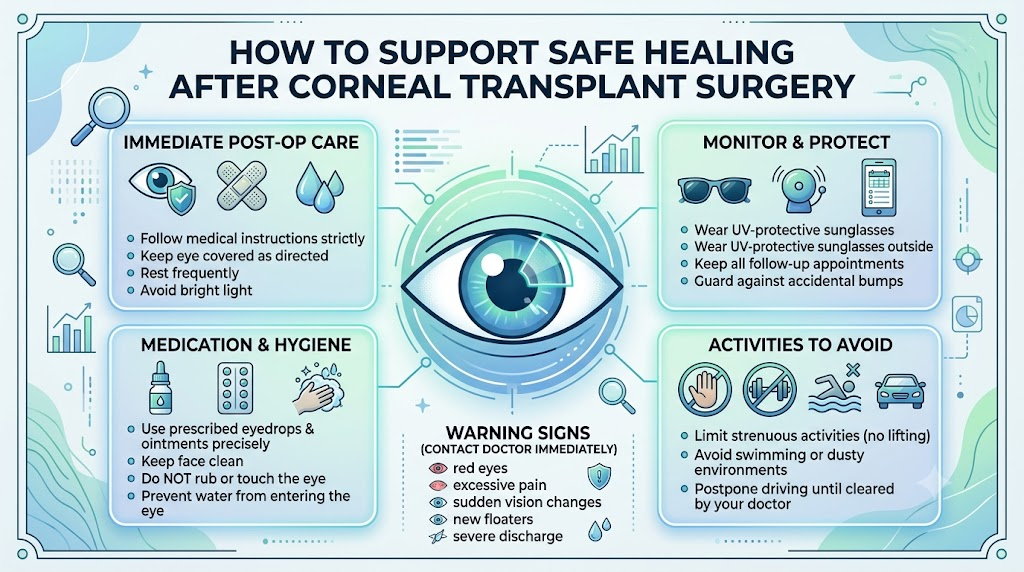
A healing eye needs protection from injury. Avoid rubbing or pressing the eye. Accidental pressure can harm a healing eye.
Your doctor may suggest protective eyewear at certain times. Protection from dust and wind may also be advised. Follow the specific advice given by your surgeon.
Do not create your own activity limits. Your surgeon knows your procedure and healing progress. Ask before returning to activities that may strain or injure the eye.
Daily Activities During Recovery
Daily activities may change during recovery. Reading and screen use may feel different at first. Some people may need more rest between tasks.
Walking may be allowed in many cases. Exercise, swimming, and heavy lifting may need special advice. Driving also depends on safe vision and medical clearance.
There is no single activity plan for everyone. Ask your surgeon when each activity is safe. Follow the limits given for your own recovery.
Why Follow-Up Appointments Are Important
Follow-up visits help doctors check the healing eye. They may test vision and examine the cornea. Eye pressure may also be checked.
Doctors may look for swelling or inflammation. They may also check the health of the donor tissue. These checks can help find changes that need attention.
Follow-up does not prevent every possible problem. However, regular monitoring remains an important part of care. Keep your appointments even when your eye feels better.
Understand Corneal Graft Rejection
A graft is the donor tissue used during transplant surgery. Graft rejection happens when the immune system reacts against donor tissue. It can happen during different stages of recovery.
Possible warning signs include increasing redness or light sensitivity. Vision may also become more hazy or reduced. New or worsening eye pain can also be important.
These signs do not prove rejection. Only an eye specialist can assess the cause. Contact your eye care team quickly if these symptoms appear.
Warning Signs After Corneal Transplant
Some symptoms need prompt medical attention after surgery. Severe or worsening eye pain should not be ignored. Sudden vision loss also needs urgent assessment.
Other warning signs may include increasing redness or new discharge. Major light sensitivity can also need prompt review. Sudden flashes or many new floaters need attention too.
An eye injury after surgery should also be checked. Do not wait for serious symptoms to improve. Contact your eye team or emergency services when needed.
| Warning sign | What to do |
|---|---|
| Sudden vision loss | Seek urgent eye care |
| Severe eye pain | Contact the eye care team |
| Increasing redness | Seek prompt medical advice |
| New discharge | Contact the eye doctor |
| Eye injury | Seek urgent professional care |
Long-Term Care After Corneal Transplant
Corneal transplant care can continue for a long time. Regular eye checks may remain part of your care. These visits help monitor the graft and overall eye health.
Some patients may need ongoing checks for eye pressure. Sutures may sometimes need adjustment or removal. These decisions depend on the transplant and healing.
There is no single schedule for every patient. Your ophthalmologist will set the follow-up plan. Keep checking your eye even after vision improves.
How to Choose a Hospital for Recovery Care
Start by looking for cornea specialists. Then check the hospital’s follow-up and emergency services. Diagnostic equipment may also support ongoing eye checks.
Communication is another important factor. Patients should know who to contact after surgery. Access to medical records can also make care easier.
Consider travel distance when planning repeated visits. Long-term care may require several appointments. The right hospital should fit your medical and practical needs.
Clear hospital information also supports AEO and GEO goals. Direct answers help patients understand their care choices. LLMO and AISEO also favor useful and clear health information. E-E-A-T means using accurate, trusted, and patient-friendly information.
Frequently Asked Questions About Corneal Transplant Recovery
How long does corneal transplant recovery take?
Recovery varies between patients and transplant types. Vision may take months to become more stable.
Is blurry vision normal after a corneal transplant?
Blurry vision can happen during healing. Tell your eye doctor about new or worsening vision changes.
How often are follow-up visits needed?
The schedule depends on your surgery and healing. Your ophthalmologist will decide when checks are needed.
What should I avoid after corneal transplant surgery?
Avoid activities your surgeon has restricted. Do not rub or press the healing eye.
Can I rub my eye after a corneal transplant?
Avoid rubbing the eye after surgery. Ask your surgeon when normal eye contact is safe.
What are the signs of corneal graft rejection?
Warning signs can include redness, light sensitivity, pain, or reduced vision. These signs need prompt professional assessment.
When should I contact my eye doctor after surgery?
Contact your eye team for serious or worsening symptoms. Sudden vision loss and severe pain need urgent attention.
Can vision improve after a corneal transplant?
Vision may improve as the eye heals. The amount and speed of improvement differ between patients.
How do I choose a hospital for corneal transplant recovery?
Look for cornea specialists and strong follow-up services. Also consider emergency care, communication, and convenient visits.
Do corneal transplant patients need long-term follow-up?
Many patients need ongoing eye checks. The exact plan depends on the transplant and healing.
Final Thoughts
Corneal transplant recovery needs patience and regular care. Follow-up visits help doctors check the graft and eye health. Prescribed care should also be followed as directed.Protect the healing eye from rubbing and injury. Watch for changes in pain, redness, or vision. Seek prompt care when serious warning signs appear.Recovery differs from one patient to another. Your ophthalmologist should guide your recovery plan. BestEyeHospitals.com can help patients learn about eye hospitals and corneal care options.