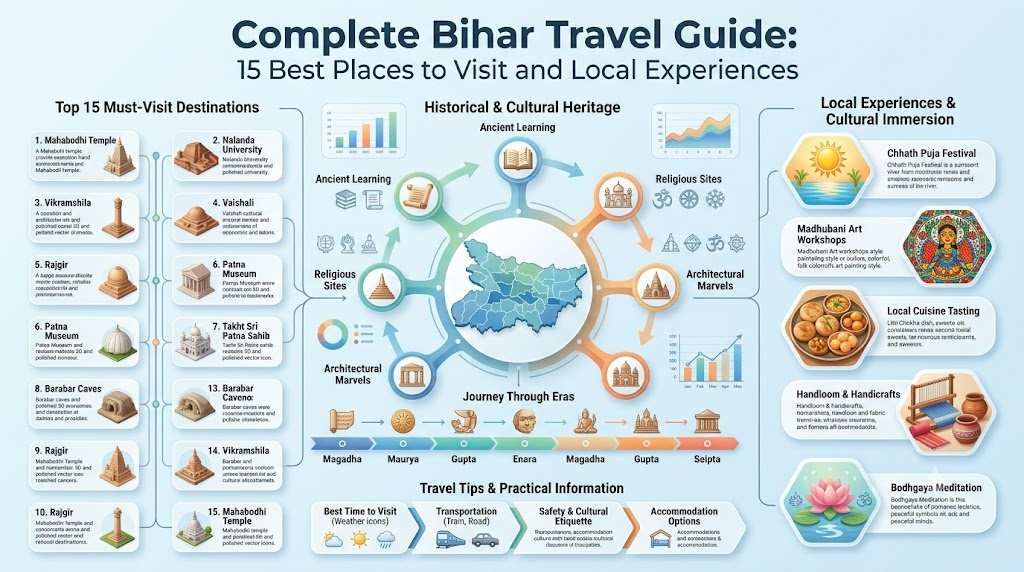
Introduction
Bihar offers a profound journey through ancient empires, sacred heritage, and rich local traditions. As the cradle of Buddhism and Jainism, and the home of the world’s oldest teaching institutions, the state presents a deep connection to human history. Beyond its well-known pilgrimage sites like Bodh Gaya and Rajgir, Bihar features quiet wildlife sanctuaries, impressive riverfronts, distinct regional art forms, and a rich culinary culture. Whether you plan a quick weekend trip or an extended cultural exploration, understanding how to navigate the state’s regions makes all the difference.Planning a trip here requires reliable local insights, realistic travel times, and an understanding of the cultural landscape. At Mera Apna Bihar, we document regional stories, historical destinations, and practical travel routes to help travelers explore the state with clarity and confidence. This travel guide covers top tourist destinations, cultural regions, local dishes, practical itineraries, and essential travel tips for visiting Bihar.
Understanding Bihar’s Travel Regions
To plan an efficient trip, it helps to understand Bihar’s distinct cultural and geographical zones. The Ganga River divides the state into northern and southern halves, each offering a unique landscape and cultural identity.
                  ┌─────────────────────────────────────────┐
                  │               BIHAR STATE               │
                  └────────────────────┬────────────────────┘
                                       │
            ┌──────────────────────────┴──────────────────────────┐
            ▼                                                     ▼
┌───────────────────────┐                             ┌───────────────────────┐
│     NORTH BIHAR       │                             │     SOUTH BIHAR       │
├───────────────────────┤                             ├───────────────────────┤
│ • Mithila Region      │                             │ • Magadh Region       │
│ • Bhojpur (North)     │                             │ • Anga Region         │
│ • Terai / Border Zone │                             │ • Kaimur Plateau      │
└───────────────────────┘                             └───────────────────────┘
- Magadh Region (South-Central): Home to Patna, Bodh Gaya, Rajgir, Nalanda, and Gaya. This is the primary circuit for heritage, ancient history, and spiritual travel.
- Mithila Region (North-East): Famous for Madhubani painting, intricate folk customs, unique festivals, and tranquil rural landscapes like Darbhanga and Madhubani.
- Anga Region (South-East): Encompasses Bhagalpur and Banka, known for silk weaving, riverine ecology, and ancient Buddhist heritage like Vikramshila.
- Bhojpur & Kaimur Region (West): Features the rugged landscapes of the Kaimur hills, historic forts, impressive waterfalls, and distinct folk traditions.
15 Best Places to Visit in Bihar
1. Bodh Gaya
Bodh Gaya is one of the most important Buddhist pilgrimage sites in the world. It is the place where Prince Siddhartha attained enlightenment under the Bodhi Tree and became the Buddha. The central attraction is the UNESCO World Heritage-listed Mahabodhi Temple Complex, featuring a 55-meter-high spire and intricate brickwork dating back to the Gupta and post-Gupta periods.
- Key Sights: Mahabodhi Temple, Bodhi Tree, Great Buddha Statue, and monasteries built by foreign nations (Japan, Thailand, Bhutan, Tibet).
- Travel Tip: The winter months (October to March) offer pleasant weather for exploring the temple grounds. Dress conservatively and carry comfortable walking shoes.
2. Rajgir
Enclosed by five scenic hills, Rajgir served as the ancient capital of the Magadha Empire. It holds immense historical and religious value for both Buddhists and Jains. Lord Buddha spent several years preaching here, while Lord Mahavira spent substantial time in Rajgir as well.
- Key Sights: Vishwa Shanti Stupa (reached via a ropeway), Griddhakuta (Vulture’s Peak), Venu Vana, Bimbisara Jail, and the ancient Cyclopean Wall.
- Travel Tip: The Rajgir Ropeway operates daily except on designated maintenance days. Plan your visit early in the morning to avoid long queues.
3. Nalanda
Located just a short drive from Rajgir, Nalanda houses the archaeological ruins of the ancient Nalanda Mahavihara, one of the greatest centers of learning in the ancient world. Established in the 5th century CE under the Gupta Dynasty, it attracted scholars from across Asia before its destruction in the late 12th century.
- Key Sights: Nalanda Archaeological Ruins, Temple No. 3, Monastic Complexes, and the Nalanda Archaeological Museum.
- Travel Tip: Hiring an official guide at the site entrance is highly recommended to fully appreciate the architectural and historical significance of the ruins.
4. Patna
Bihar’s capital city, Patna, stretches along the southern bank of the Ganga River. Known historically as Pataliputra, it served as the seat of power for the Nanda, Maurya, and Gupta empires. Today, Patna balances ancient heritage, Sikh pilgrimage, and modern urban life.
- Key Sights: Takht Sri Patna Sahib, Golghar, Bihar Museum, Patna Museum, Kumhrar archaeological site, and Sabhyata Dwar.
- Travel Tip: Set aside at least half a day specifically for the Bihar Museum, which houses world-class displays of the state’s art and archaeological finds.
       PATNA HIGHLIGHTS
┌───────────────────────────────┐
│ • Bihar Museum (Art/History) │
│ • Takht Sri Patna Sahib       │
│ • Golghar (River Views)       │
│ • Kumhrar (Mauryan Ruins)     │
└───────────────────────────────┘
5. Vaishali
Vaishali holds a distinct place in world history as one of the earliest known republics, governed by the Licchavi clan. It is also the birthplace of Lord Mahavira, the 24th Tirthankara of Jainism, and the site where Lord Buddha delivered his last sermon.
- Key Sights: Ashokan Pillar at Kolhua, Buddha Relic Stupa, Peace Pagoda, and the Raja Vishal Ka Garh.
- Travel Tip: Vaishali works well as a day trip from Patna, situated roughly 55 km across the Ganga River via the JP Setu or Mahatma Gandhi Setu.
6. Gaya
Located along the banks of the Phalgu River, Gaya is an ancient center for Hindu pilgrimage. Devotees visit throughout the year—and especially during the Pitru Paksha period—to perform Pinda Daan rituals for their ancestors.
- Key Sights: Vishnupad Temple, Mangla Gauri Temple, and the nearby Brahmayoni Hill.
- Travel Tip: Early morning hours are quietest for visiting the Vishnupad Temple and attending rituals along the river ghats.
7. Bhagalpur
Known widely as the “Silk City,” Bhagalpur is famous for its centuries-old Tussar silk weaving tradition. Situated in eastern Bihar, it also offers rich historical sites and unique river ecology along the Ganga.
- Key Sights: Ruins of Vikramshila University, Vikramshila Gangetic Dolphin Sanctuary, and Kuppa Ghat.
- Travel Tip: Take a boat ride with a local guide along the Ganga to catch glimpses of the endangered Gangetic river dolphins.
8. Valmiki National Park
Situated in the West Champaran district along the India-Nepal border, Valmiki National Park is Bihar’s sole Tiger Reserve. It encompasses dense sal forests, riverine grasslands, and rich biodiversity tucked against the foothills of the Himalayas.
- Key Sights: Jungle safaris, bird watching along the Gandak River, and eco-tourism zones near Valmiki Nagar.
- Travel Tip: Advance booking through the official Bihar Forest Department portal is required for safari slots and forest lodge stays.
9. Sasaram
Sasaram, located in southwestern Bihar, is known for its remarkable Indo-Islamic architecture. It served as the seat of Sher Shah Suri, the 16th-century ruler who established the Sur Empire and rebuilt the Grand Trunk Road.
- Key Sights: Tomb of Sher Shah Suri (built in the middle of an artificial lake), Tomb of Hasan Khan Suri, and Rohtasgarh Fort.
- Travel Tip: Visit the tomb during late afternoon when the sunlight reflects off the surrounding lake water.
10. Darbhanga
Darbhanga is widely regarded as the cultural heart of the Mithila region. Renowned for its royal heritage, classical music patrons, and artistic traditions, it offers visitors an authentic view of northern Bihar’s traditions.
- Key Sights: Darbhanga Fort complex, Raj Nagar Palace ruins (nearby in Madhubani district), Shyama Kali Temple, and Chandradhari Museum.
- Travel Tip: Combine your visit to Darbhanga with a trip to nearby rural centers to witness authentic Madhubani art creation.
11. Rohtasgarh Fort & Kaimur Waterfalls
The Kaimur plateau region in western Bihar provides a stark, rugged contrast to the Gangetic plains. The massive Rohtasgarh Fort stands atop the hills, while the surrounding forests host scenic waterfalls and caves.
- Key Sights: Rohtasgarh Fort, Telhar Kund waterfall, Karkat Waterfall, and the Kaimur Wildlife Sanctuary.
- Travel Tip: Monsoons and post-monsoon months (August to November) showcase the region’s waterfalls at their peak volume.
12. Pawapuri
Pawapuri, also known as Apapuri (“the sinless town”), is a major pilgrimage center for Jains. Located near Rajgir, it is the sacred site where Lord Mahavira attained Nirvana in 527 BCE.
- Key Sights: Jal Mandir (a white marble temple situated in the middle of a lotus pond) and Sembhai Temple.
- Travel Tip: Visit during early morning or late evening when the white marble temple glows against the calm lake waters.
13. Sitamarhi
Situated in northern Bihar, Sitamarhi holds immense cultural and religious significance in Hindu tradition as the birthsite of Goddess Sita.
- Key Sights: Janaki Temple at Sitamarhi, Haleshwar Sthan, and Panora Dham.
- Travel Tip: The town sees large gatherings during Vivah Panchami and Ram Navami festivals, making it a lively time for cultural observation.
14. Munger
Munger sits on the banks of the Ganga and is known for its blend of ancient history, yoga heritage, and industrial history. It is world-renowned as the seat of the Bihar School of Yoga.
- Key Sights: Munger Fort, Bihar School of Yoga, Sita Kund hot springs, and Bhimbandh Wildlife Sanctuary.
- Travel Tip: Bhimbandh Wildlife Sanctuary is best visited during winter and features natural hot springs within forest surroundings.
15. Madhubani
Madhubani is globally famous as the home of Mithila or Madhubani painting. Traditionally created by local women on hut walls during festivals, this intricate art form now thrives on handmade paper and canvas.
- Key Sights: Local artisan villages (such as Jitwarpur and Ranti), Kapileshwar Temple, and Regional Craft Centers.
- Travel Tip: Visiting artisan villages directly allows you to purchase authentic artwork directly from local master craftspeople.
Destination Comparison Table
| Destination | Primary Theme | Suggested Duration | Key Highlight | Best Time to Visit |
| Bodh Gaya | Buddhist Pilgrimage / Heritage | 1–2 Days | Mahabodhi Temple Complex | October to March |
| Rajgir | History / Spiritual / Nature | 1–2 Days | Vishwa Shanti Stupa & Ropeway | October to March |
| Nalanda | Ancient History & Archaeology | 1 Day | Ancient University Ruins | October to March |
| Patna | Urban Heritage & Museums | 1–2 Days | Bihar Museum & Takht Sri Patna Sahib | October to March |
| Vaishali | Buddhist & Jain Heritage | 1 Day | Ashokan Pillar & Relic Stupa | October to March |
| Sasaram | Indo-Islamic Architecture | 1 Day | Sher Shah Suri Tomb | October to March |
| Valmiki Reserve | Wildlife & Eco-Tourism | 2 Days | Jungle Safari & Forest Trails | November to March |
| Darbhanga | Mithila Culture & Royal Heritage | 1–2 Days | Darbhanga Fort & Local Arts | October to March |
Bihar Culture and Festivals
Bihar’s cultural landscape is defined by diverse regional languages, artistic traditions, and deeply rooted community celebrations.
- Regional Languages: While Hindi is widely spoken, regional languages reflect distinct cultural spaces—Maithili in the north, Magahi in the south-central belt, Bhojpuri in the west, and Angika in the east.
- Chhath Puja: The most prominent festival in Bihar, celebrated six days after Diwali. Dedicated to the Sun God (Surya) and Chhathi Maiya, it involves rigorous fasting, clean riverbank rituals, and offerings made at sunrise and sunset.
- Art Forms: Madhubani painting is world-famous, but Bihar also boasts Sujini embroidery, Sikki grass craft, and Manjusha art from the Anga region.
- Folk Festivals: Events like Sama-Chakeva in Mithila celebrate sibling bonds and seasonal bird migrations, while regional fairs like the Sonepur Mela highlight rural cattle and livestock trade traditions.
Local Food and Culinary Guide
Bihari cuisine relies on locally grown grains, seasonal vegetables, pulses, and distinct cooking techniques involving mustard oil, panch phoron, and roasted gram flour (sattu).
         BIHARI CULINARY HIGHLIGHTS
┌──────────────────────────────────────────┐
│ • Litti Chokha   (Roasted Gram/Eggplant) │
│ • Sattu Sharbat  (Nutritious Cooling)    │
│ • Khaja          (Layered Crispy Sweet)  │
│ • Dal Pitha      (Steamed Rice Dumpling) │
│ • Malpua         (Traditional Pancake)   │
└──────────────────────────────────────────┘
- Litti Chokha: Whole wheat balls stuffed with spiced sattu (roasted gram flour), roasted over cow dung or charcoal, and served with mashed spiced eggplant, potatoes, and tomatoes (chokha).
- Sattu Beverages: Highly nutritious and cooling, sattu is consumed as a savory drink mixed with cold water, roasted cumin, and lemon, or as a sweet drink.
- Regional Sweets: Khaja from Silao (a crispy, multi-layered sweet with GI tag status), Tilkut from Gaya (made of sesame seeds and jaggery), and Anarsa.
- Traditional Meals: Everyday dishes include Dal Pitha (steamed rice flour dumplings filled with spiced lentils), Fish Curry (in Mithila style, cooked with mustard paste), and seasonal green vegetables.
Practical Travel Itineraries
3-Day Heritage & Circuit Plan (Patna – Nalanda – Rajgir – Bodh Gaya)
DAY 1: PATNA
┌─────────────────────────────────────────┐
│ Morning: Bihar Museum                    │
│ Afternoon: Golghar & River Ghats        │
│ Evening: Takht Sri Patna Sahib          │
└────────────────────┬────────────────────┘
                     │
                     ▼
DAY 2: NALANDA & RAJGIR
┌─────────────────────────────────────────┐
│ Morning: Nalanda Ruins & Museum         │
│ Afternoon: Rajgir Ropeway & Peace Stupa │
│ Evening: Drive to Bodh Gaya             │
└────────────────────┬────────────────────┘
                     │
                     ▼
DAY 3: BODH GAYA
┌─────────────────────────────────────────┐
│ Morning: Mahabodhi Temple & Bodhi Tree │
│ Afternoon: International Monasteries    │
│ Evening: Great Buddha Statue & Departure│
└─────────────────────────────────────────┘
- Day 1: Patna City Tour
- Morning: Arrive in Patna. Visit the Bihar Museum to explore ancient sculptures and Mauryan history.
- Afternoon: Visit Golghar for river views and head to Takht Sri Patna Sahib in the old city.
- Evening: Walk along the Ganga Riverfront at NIT Ghat. Overnight stay in Patna.
- Day 2: Patna to Nalanda & Rajgir
- Morning: Drive from Patna to Nalanda (approx. 85 km / 2.5 hours). Explore the Nalanda Archaeological Ruins.
- Afternoon: Proceed to Rajgir (15 km from Nalanda). Take the ropeway to Vishwa Shanti Stupa and visit Griddhakuta Peak.
- Evening: Drive toward Bodh Gaya (approx. 70 km / 2 hours). Overnight stay in Bodh Gaya.
- Day 3: Bodh Gaya Exploration
- Morning: Visit the Mahabodhi Temple Complex and meditate near the sacred Bodhi Tree.
- Afternoon: Explore international Buddhist monasteries (Thai, Japanese, Bhutanese) and the 80-foot Great Buddha Statue.
- Evening: Depart via Gaya Junction Railway Station or Gaya Airport (12 km away).
Decision-Making Framework for Travelers
To select the right destination for your travel style, consider the following preferences:
- For History & Archaeology Enthusiasts: Focus on Nalanda, Rajgir, Vaishali, and the Bihar Museum in Patna.
- For Spiritual & Pilgrimage Journeys: Prioritize Bodh Gaya (Buddhism), Pawapuri (Jainism), Gaya (Hindu rituals), and Patna Sahib (Sikhism).
- For Nature & Wildlife Seekers: Head to Valmiki Tiger Reserve in West Champaran, Kaimur waterfalls, or Bhimbandh Sanctuary in Munger.
- For Art & Rural Culture Lovers: Plan a circuit through Darbhanga, Madhubani, and Bhagalpur.
How to Reach and Local Transportation
- By Air: Jay Prakash Narayan Airport (Patna) offers direct domestic flights to major Indian cities. Gaya Airport operates seasonal and international flights, catering largely to Buddhist pilgrimage circuits.
- By Rail: Bihar has an extensive railway network connected by major junctions including Patna Junction, Gaya Junction, Pt. Deen Dayal Upadhyaya Junction, Barauni, and Muzaffarpur. Express trains connect these hubs to all corners of India.
- By Road: National Highways (such as NH 19, NH 27, and NH 31) connect major towns. State transport buses, private sleeper coaches, and taxis operate regularly along key tourist routes.
- Local Commute: Within towns, auto-rickshaws, e-rickshaws, and ride-hailing app cabs (available in major cities like Patna) provide convenient point-to-point transit.
Common Travel Mistakes to Avoid
- Overpacking the Itinerary: Trying to cover Patna, Bodh Gaya, Valmiki Nagar, and Madhubani within three days leads to excessive transit time. Focus on geographically grouped circuits.
- Ignoring Seasonal Weather: Visiting during summer peak months (May–June) can involve severe heat. Stick to the cooler winter season (October to March) for sightseeing.
- Not Confirming Site Timings: Archaeological sites, museums, and temples often have specific closing days (for instance, many museums remain closed on Mondays).
- Underestimating Transit Times: While road quality has improved significantly, urban traffic around major towns can slow down travel during peak hours.
Key Takeaways and Practical Travel Tips
- Plan Around Seasons: October through March offers the most pleasant weather for outdoor exploration.
- Verify Site Rules: Carry physical government ID cards, as they are mandatory for hotel check-ins and entrance tickets at key monuments.
- Respect Spiritual Customs: Remove footwear before entering temple premises, dress modestly at sacred sites, and check photography restrictions.
- Sample Local Food from Clean Establishments: Try regional specialties like Litti Chokha and Silao Khaja from reputed vendor shops or established restaurants.
- Keep Physical Cash: While digital UPI payments are widespread in towns, carrying cash helps when traveling through rural hubs or purchasing artisan goods directly.
Frequently Asked Questions (FAQs)
1. What are the top places to visit in Bihar for first-time travelers?
First-time visitors should prioritize the classic heritage circuit: Bodh Gaya, Rajgir, Nalanda, and Patna. This combination offers a comprehensive look into Bihar’s ancient history, Buddhist heritage, architectural ruins, and modern museum collections, all supported by well-established transport links.
2. When is the best time of year to visit Bihar?
The ideal time to visit Bihar is from October to March. During these winter months, temperatures remain pleasant and comfortable for daytime sightseeing, heritage walks, outdoor wildlife safaris, and attending major regional festivals like Chhath Puja and Rajgir Mahotsav.
3. How many days are needed for a comprehensive Bihar trip?
A 5- to 7-day itinerary is sufficient to cover major highlights comfortable without rushing. This allows 2 days for Patna and Vaishali, 2 days for Nalanda and Rajgir, and 2 days for Bodh Gaya and Gaya, including realistic road travel time between destinations.
4. Is Bihar suitable for family vacations and pilgrimage trips?
Yes, Bihar is well-suited for family travel and spiritual trips. Key sites like Bodh Gaya, Rajgir, Patna Sahib, and Pawapuri feature good hotel infrastructure, smooth roads, visitor centers, and accessible pilgrimage paths appropriate for multi-generational families.
5. What local food items should visitors try in Bihar?
Visitors should sample Litti Chokha (spiced sattu-stuffed wheat balls cooked over coals), Silao Khaja (crispy layered pastry), Sattu Sharbat, Dal Pitha, and Tilkut from Gaya. For fish lovers, traditional Mithila mustard-style fish curry is a signature regional dish.
6. How can I reach Nalanda and Rajgir from Patna?
Nalanda and Rajgir sit approximately 85–100 km southeast of Patna. They are easily reached via a 2.5- to 3-hour taxi drive, regular state transport buses, or daily passenger and express train connections between Patna Junction and Rajgir Station.
7. What are the top wildlife destinations in Bihar?
Valmiki National Park in West Champaran is Bihar’s premier wildlife destination, offering tiger reserve safaris and forest trails. Other notable nature spots include the Vikramshila Gangetic Dolphin Sanctuary in Bhagalpur and Bhimbandh Wildlife Sanctuary in Munger.
8. What are some lesser-known travel destinations in Bihar?
Lesser-known highlights include the Tomb of Sher Shah Suri in Sasaram, the waterfall streams of Kaimur (such as Telhar Kund), the ancient monastic ruins of Vikramshila in Bhagalpur, and the traditional artisan villages around Madhubani.
9. Is photography allowed at heritage sites in Bihar?
Photography is permitted at most public monuments, including the Nalanda Ruins and museum grounds, though tripod use or commercial photography may require prior permission. Certain sacred inner sanctuaries and temple premises prohibit cameras; always check posted signage.
10. Where can travelers buy authentic Madhubani paintings?
Authentic Madhubani art is best purchased directly from artisan homes in traditional craft villages like Jitwarpur and Ranti near Madhubani town. Alternatively, government-run emporiums and craft centers in Patna also stock genuine certified works.
Conclusion
Bihar presents an extraordinary journey through centuries of history, deep-rooted spiritual traditions, dynamic arts, and distinct regional cuisines. From meditating under the sacred Bodhi Tree in Bodh Gaya to walking through the ancient monastic classrooms of Nalanda, the state offers immersive travel experiences for history buffs, spiritual seekers, and cultural explorers alike. Planning your journey with realistic transit expectations and local knowledge ensures an authentic and rewarding travel experience. Explore more destination guides, practical travel routes, and regional stories at Mera Apna Bihar to help plan your trip across Bihar.