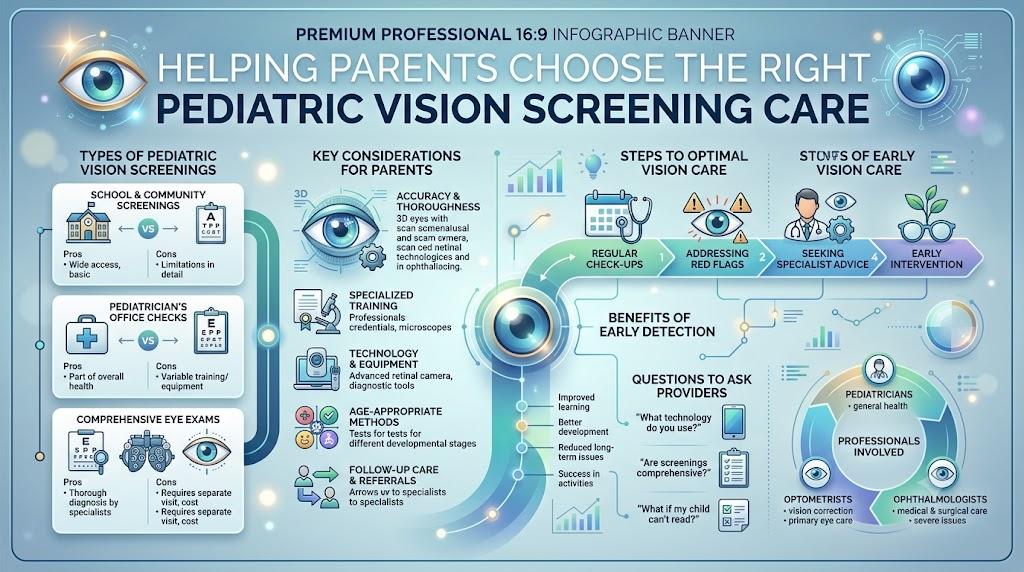
Clear vision helps children learn and enjoy daily life. It helps them read, write, play, and explore. But children may not notice vision problems early. Some children may also find it hard to explain them.
This is why pediatric vision screening can be helpful. It can check for signs of possible vision concerns. Parents can then discuss the results with an eye-care professional. BESTEYEHOSPITALS can help families explore pediatric eye-care options.
What Is Pediatric Vision Screening?
Pediatric vision screening is a basic vision check. It looks for signs of possible eye or vision problems. The process can vary based on the child’s age.
Screening is not always a full eye exam. A screening may show that more testing is needed. A full exam gives a more detailed look at vision and eye health.
Why Vision Screening Matters for Children
Good vision supports many parts of childhood. Children use their eyes during school and play. They also use vision during sports and daily tasks.
Vision supports reading and writing skills. It also helps children follow people and objects. Clear vision can support better visual attention during activities.
Screening can help find possible concerns early. However, screening cannot find every eye problem. It also cannot promise that a child will avoid future vision issues.
When Should Children Have Vision Screening?
Vision screening needs can change with age. They can also change because of health or family history. So, one schedule may not fit every child.
Infants may receive basic eye checks during routine care. Toddlers may need age-friendly vision checks. Preschool children may use pictures or simple symbols.
School-age children may need regular vision screening. Teenagers may also need checks when concerns appear. Parents should follow advice from qualified health professionals.
Signs a Child May Need a Vision Check
Some children show simple signs of vision trouble. Parents may notice these signs during daily activities.
Common signs can include:
- Frequent squinting.
- Sitting very close to screens.
- Trouble seeing the classroom board.
- Frequent headaches.
- Closing one eye while looking.
- An eye turning in or out.
- Trouble reading.
- Poor visual attention.
- Complaints about blurry vision.
These signs can have many causes. They do not always mean an eye problem exists. Still, parents should discuss ongoing concerns with an eye-care professional.
Pediatric Vision Screening vs Full Eye Examination
A screening is usually a quick first check. It looks for signs that may need more attention. The exact tests depend on the child’s age.
A full eye exam is more detailed. It may check vision, focusing, eye movement, and eye health. A professional may also check how the eyes work together.
A child who does not pass screening may need an exam. This does not mean the child has a confirmed problem. Further testing helps the professional understand the concern.
What Happens During Pediatric Vision Screening?
The process should match the child’s age. Staff may explain each step in simple words. This can help the child feel more comfortable.
A child may look at pictures or symbols. Older children may read letters from a vision chart. The professional may also check eye movement and alignment.
Some children may need focusing or refraction checks. Refraction checks how the eyes focus light. Not every child needs every test.
The screening may also include a basic eye health check. The exact process depends on clinical needs. Parents can ask staff about each test.
Common Tests Used in Child Vision Screening
Different tests can help check different parts of vision. Picture charts can help younger children respond easily. Older children may use letter or symbol charts.
A cover test checks how the eyes work together. One eye gets covered during this simple check. The professional watches how the eyes respond.
A light reflex check uses a small light. It helps the professional observe the eyes. Basic focusing checks may also be used.
Refraction tests may be needed in some cases. They help check how clearly the eyes focus. The professional chooses tests based on the child.
What Can Pediatric Screening Help Find?
Pediatric eye screening may show signs of possible concerns. These can include common focusing problems. Such problems may affect how clearly a child sees.
Screening may also identify a risk of amblyopia. Amblyopia is often called a lazy eye. It means one eye may not develop clear vision normally.
Screening can also show signs of strabismus. Strabismus means the eyes may not line up together. Other eye development concerns may also need more testing.
A screening result does not confirm a diagnosis. A full child eye examination may be needed next. Parents should discuss results with a qualified professional.
What Happens If a Child Does Not Pass Screening?
An abnormal screening result can feel worrying. Parents should remember that screening is only an early check. It does not confirm that a child has an eye disease.
The next step may be a full eye exam. The professional may ask about the child’s vision. They may also ask about school or daily activities.
Follow-up is important when more testing is advised. It helps the professional understand the child’s needs. Parents can also ask when the next check should happen.
What Makes a Hospital Suitable for Pediatric Vision Screening?
Parents can compare several practical factors before choosing care. A pediatric eye hospital may offer child-focused eye services. The staff should explain tests in simple language.
Parents can also check for pediatric eye specialists. They can ask about age-appropriate testing tools. A comfortable setting may also help children feel less nervous.
Good follow-up care is another useful factor. Parents should understand what happens after screening. Clear communication can make the care process easier.
Families may also ask about costs and payment options. Insurance rules can vary between plans and locations. Parents should confirm these details before care.
Pediatric Eye Specialists and Their Role
A pediatric ophthalmologist focuses on children’s eye care. This specialist understands eye problems that can affect children. They also assess vision during different stages of growth.
Child-focused care can help staff communicate clearly. Children may need simple words during an eye check. They may also need breaks during some tests.
A pediatric eye specialist can decide when more testing is needed. They can also explain the next steps to parents. The exact care plan depends on each child’s needs.
How to Compare Hospitals Offering Pediatric Vision Screening
Parents do not need to choose by name alone. They can compare the services offered by each hospital. This can make the choice more clear.
Check whether the hospital offers pediatric eye care. Ask if pediatric specialists are available. Also ask which screening methods they use.
Look at the follow-up process after screening. Ask how parents receive results and advice. Clear answers can help families plan the next step.
Families can also compare costs and insurance support. Ask about payment methods before booking care. Also check whether specialist services are available when needed.
BESTEYEHOSPITALS.COM can help families explore these care options. Parents can use the platform to review eye hospitals and services. The goal is to help families research their choices.
| Factor | What Parents Can Check | Why It Matters |
|---|---|---|
| Pediatric specialist | Child-focused eye-care experience | Supports age-appropriate care |
| Screening tools | Child-friendly testing methods | Helps assess vision |
| Hospital setting | Comfortable child-friendly space | May reduce fear |
| Follow-up care | Clear follow-up process | Helps track concerns |
| Parent communication | Easy explanations | Helps families understand next steps |
A Simple Hypothetical Example
Hypothetical example: A school-age child struggles to see the board. The child also squints during classroom work.
The parent chooses pediatric eye screening. The screening shows that more testing may help. The parent then arranges a full eye examination.
The example does not confirm any diagnosis. It shows how screening can guide the next step. A real care plan may differ for each child.
How BESTEYEHOSPITALS.COM Can Help
Finding child-focused eye care can take time. Parents may want to compare hospitals and available services. BESTEYEHOSPITALS.COM can support this research process.
Families can explore eye hospitals and eye specialists. They can also review pediatric eye-care services. Treatment and care options may vary by hospital.
Parents can compare locations and available services. They can then discuss their needs with a qualified professional. BESTEYEHOSPITALS.COM does not provide medical diagnosis.
It also does not guarantee treatment results. The platform is a research resource for families. Parents should use professional medical advice for health decisions.
Supporting Better Parent Questions
Good questions can help parents understand care. Ask what the screening will involve. Ask whether the child may need more testing.
Parents can ask who will perform the screening. They can ask about follow-up after the results. They can also ask about costs and payment options.
These questions can make visits less confusing. They can also help parents prepare the child. Simple preparation can make the visit easier for everyone.
Frequently Asked Questions About Pediatric Vision Screening
What is pediatric vision screening?
Pediatric vision screening is a basic vision check. It looks for signs of possible concerns. More testing may follow when needed.
Why do children need vision screening?
Children use vision for school and daily life. Screening can find signs that need more attention. It does not find every possible eye problem.
At what age should children have vision checks?
Vision checks can start during early childhood. The timing can vary by age and risk. Parents should follow advice from health professionals.
What happens during child vision screening?
A child may look at pictures or symbols. Staff may check eye movement and alignment. Testing depends on age and clinical needs.
Is vision screening the same as a full eye exam?
No. Screening is usually a first-level check. A full eye exam provides a more detailed assessment.
What signs show that a child may have vision problems?
Squinting and blurry vision can be signs. Trouble reading can also be a concern. Parents should discuss ongoing signs with a professional.
What happens after an abnormal screening result?
The child may need a full eye examination. This helps the professional understand the concern. An abnormal screening does not confirm a diagnosis.
Does every child need a pediatric eye specialist?
Not every child needs specialist care. Some children may need further assessment after screening. A qualified professional can advise on the next step.
What should parents check in a pediatric eye hospital?
Parents can check specialists and screening tools. They can also check follow-up care and communication. Cost and location may matter too.
How can BESTEYEHOSPITALS.COM help parents find eye-care options?
BESTEYEHOSPITALS.COM helps families explore eye hospitals and specialists. Parents can review pediatric eye-care options and locations. Medical decisions should still involve qualified professionals.
Final Thoughts
Pediatric vision screening can be a useful first check. Children may not always notice vision problems themselves. Parents should discuss concerns with a qualified eye-care professional.
The right care can depend on age and needs. Parents can compare services before choosing a hospital. BESTEYEHOSPITALS.COM can help families explore pediatric eye-care options.