Introduction
Retinal detachment is a serious eye condition. It needs prompt specialist care. Treatment may help reattach the retina. However, recovery continues after treatment. Follow-up care is also very important. Retina specialists check healing and vision changes. Hospitals may also provide imaging and emergency support. Recovery plans can differ from person to person. The retinal condition also affects the recovery process. BESTEYEHOSPITALS helps readers research eye hospitals and retinal care options.
What Is Retinal Detachment?
The retina is a light-sensitive layer inside the eye. It helps the eye send images to the brain. Retinal detachment happens when the retina moves away. It separates from its normal supporting position. This can affect vision and needs medical attention.
Retinal detachment may happen for different reasons. Some people may notice sudden flashes or floaters. Others may notice a dark curtain in vision. Sudden vision changes should never be ignored. Prompt eye care can help assess the problem.
Why Is Retinal Detachment an Eye Emergency?
Retinal detachment can threaten useful vision. Quick assessment is important when warning signs appear. Symptoms can begin suddenly and may change quickly. They can also vary from person to person.
Important warning signs include:
- Sudden flashes of light
- Many new floaters
- A dark shadow
- A curtain-like area in vision
- Sudden changes in sight
These symptoms need urgent eye assessment. Sudden or severe vision loss needs emergency eye care.
What Does Retinal Detachment Recovery Mean?
Retinal detachment recovery starts after treatment. The eye needs time to heal and settle. Doctors also need to check retinal stability. Vision may change during this period.
The retina may heal before vision improves fully. Some people may have slow visual recovery. Others may have lasting vision changes. The result depends on the retinal condition and treatment. Macular involvement can also affect visual recovery.
Why Specialized Retinal Hospitals May Help
A retinal recovery hospital may offer focused eye care. Some hospitals have retinal specialists and imaging services. They may also provide retinal surgery and follow-up care.
A retinal specialist studies diseases of the retina. A vitreoretinal specialist has focused retinal surgery training. Hospital support may include emergency retinal care. It may also include vision checks and retinal monitoring.
Services can differ between hospitals. Readers should confirm current services before choosing care. BESTEYEHOSPITALS.COM can support early hospital research.
Retinal Detachment Surgery and Recovery
Doctors may use different retinal repair methods. Common methods include vitrectomy and scleral buckle surgery. Pneumatic retinopexy is another possible approach.
Vitrectomy removes the eye’s inner gel when needed. A scleral buckle supports the outer eye wall. Pneumatic retinopexy may use a gas bubble. The choice depends on the retinal problem.
Recovery after retinal detachment surgery also varies. Follow-up visits help doctors check healing. They also help detect new eye problems.
Recovery After Vitrectomy
Vitrectomy recovery can differ greatly between patients. Blurred vision may occur during early healing. The eye may also feel uncomfortable for some time.
Follow-up visits help doctors monitor the eye. Activity limits may also apply during recovery. Some patients may have a gas bubble. Others may have silicone oil in the eye.
The care plan depends on the surgery and eye condition. Patients should follow their surgeon’s instructions closely.
Recovery After Scleral Buckle Surgery
A scleral buckle helps support the eye wall. It can help the retina stay in place. Healing may take time after this procedure.
Vision can remain blurry during early recovery. Eye discomfort may also occur for some patients. Follow-up examinations help check retinal healing.
Recovery needs can vary between patients. The retinal specialist can explain the expected healing process.
Recovery After Pneumatic Retinopexy
Pneumatic retinopexy may use a gas bubble. The bubble helps support the retina during healing. Some patients may also need special positioning.
Positioning needs depend on the retinal problem. They also depend on the treatment used. The retinal specialist gives the exact instructions.
Patients should not create their own positioning plan. They should follow the advice from their eye care team.
Gas Bubble in the Eye
A gas bubble may support the retina after surgery. It can also cause temporary vision changes. Vision may look blurred while the bubble remains.
A gas bubble can also create important restrictions. Air travel may not be safe with some eye gas bubbles. Travel rules depend on the specific gas and treatment.
Patients should follow their retinal specialist’s instructions. They should also tell other healthcare workers about the bubble. This information can matter during other medical care.
Silicone Oil After Retinal Surgery
Silicone oil is used in some retinal surgeries. It can help support the retina during healing. It is not needed for every patient.
Patients with silicone oil may need follow-up care. Doctors check the eye while the oil remains. Further care depends on the retinal condition.
Patients should follow the treatment plan given by their specialist. They should not make changes without medical advice.
Vision Changes During Recovery
Vision may change after retinal surgery. Blurry vision can happen during early healing. Some people may notice gradual improvement.
Final vision depends on several factors. The retina’s condition before treatment can matter. Macular involvement may also affect vision.
The macula is the central part of the retina. It helps provide clear central vision. Your retinal specialist can assess visual changes.
Follow-Up Visits After Retinal Detachment Surgery
Follow-up visits are a key part of recovery. Doctors use these visits to monitor the eye. They may check retinal position and healing.
They may also check eye pressure and inflammation. New retinal problems may also need attention. Vision changes are reviewed during these visits.
The schedule can vary between patients. Patients should keep all planned retinal follow-up visits.
Retinal Imaging During Recovery
Eye imaging can help doctors monitor healing. Different tests may be used for different needs. Retinal scans can show useful details inside the eye.
Doctors may also use other eye tests. The exact test depends on the eye condition. Patients should not try to interpret these scans alone.
BESTEYEHOSPITALS.COM can help readers research hospitals with retinal services. Current imaging services should always be confirmed with the hospital.
Activity During Retinal Recovery
Activity limits can change during recovery. Some patients may need to avoid strenuous activity. Bending, lifting, exercise, or sports may also have limits.
There is no single rule for every patient. The surgery and retinal condition can affect restrictions. Patients should follow their specialist’s advice.
Sleeping and Daily Activities
Some patients may receive special positioning advice. This can happen when a gas bubble is used. The correct position depends on the treatment.
Daily activities may also need temporary changes. Patients should follow their specialist’s exact instructions. A universal sleeping position is not suitable for everyone.
Returning to Work
Return-to-work timing varies after retinal treatment. Desk work may differ from physical work. Vision changes may also affect daily tasks.
Reading and screen use may feel difficult at first. Driving may also be unsafe during vision changes. Patients should ask their eye specialist before resuming normal activities.
Driving After Retinal Detachment Treatment
Retinal surgery can temporarily change vision. This can affect safe driving. Patients should not drive until their specialist says it is safe.
Driving laws can also differ by location. Patients should follow both medical and legal requirements.
Eye Protection During Recovery
The healing eye needs careful protection. Accidental eye injury can affect recovery. Patients should follow advice about protective shields or eyewear.
They should also avoid actions that may harm the eye. The retinal specialist can explain safe daily habits.
Medicines and Eye Drops During Recovery
Doctors may prescribe medicines or eye drops after surgery. These medicines should be used only as prescribed.
Patients should not change doses on their own. They should not start or stop treatment without advice. Questions about medicines should go to the care team.
Warning Signs After Retinal Surgery
Some symptoms after surgery need prompt attention. Patients should contact their eye specialist when these occur.
Important warning signs include:
- Sudden vision loss
- New flashes
- A sudden increase in floaters
- A new dark shadow
- Severe or increasing eye pain
- Increasing redness
- Significant swelling
- Sudden worsening vision
Sudden or severe vision loss needs urgent medical care. Do not wait for a routine appointment.
Risk of Retinal Detachment Recurrence
Retinal problems can sometimes return after treatment. New retinal tears can also develop. Other eye changes may need monitoring.
This is why follow-up care matters. Regular checks help doctors watch the healing eye. Patients should report new vision changes quickly.
Surgery does not guarantee permanent retinal stability. Long-term care depends on the individual eye.
Long-Term Eye Care After Retinal Detachment
Retinal care may continue after early healing. Regular eye checks can help monitor eye health. Patients should also report new symptoms quickly.
Tell future eye doctors about previous retinal surgery. This history can help guide future eye care.
How to Choose a Hospital for Retinal Recovery
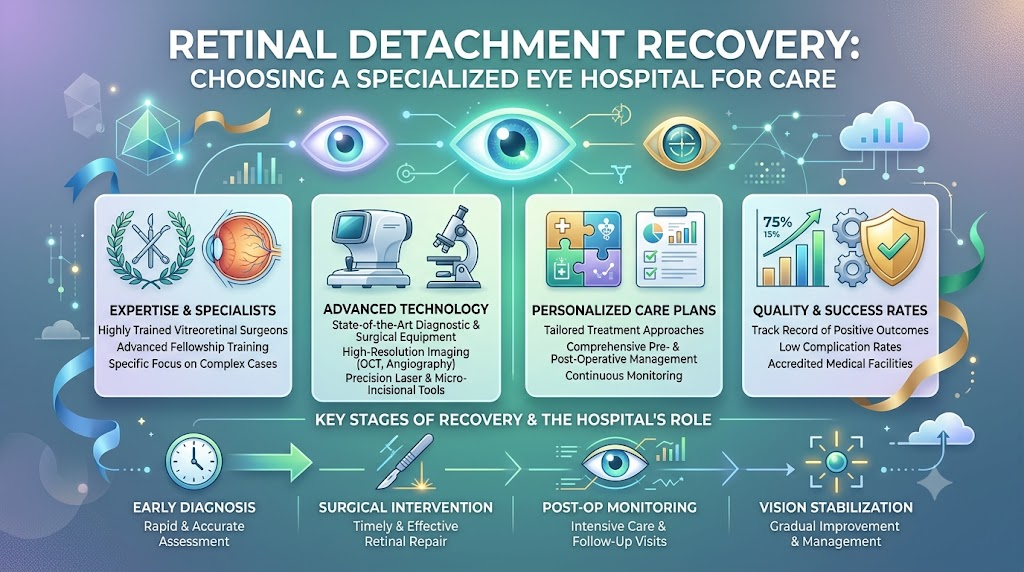
Choosing a retinal care hospital needs careful research. Patients can compare several practical factors.
Look for:
- Retina specialist availability
- Emergency retinal care
- Retinal imaging
- Surgical facilities
- Follow-up services
- Eye surgery experience
- Clear patient communication
- Convenient hospital location
- Access to urgent care
Not every eye hospital offers every service. BESTEYEHOSPITALS.COM can help readers research available options. Always confirm current services directly with the hospital.
Questions to Ask a Retinal Specialist
Simple questions can make hospital visits easier. Patients can ask:
- What type of retinal problem is being treated?
- What follow-up visits are needed?
- What symptoms need urgent attention?
- Will a gas bubble be used?
- Are there activity restrictions?
- When can normal activities resume?
- What vision changes are expected?
- Who should be contacted after hours?
These questions can help patients understand their care plan.
One Simple Comparison Table
| Hospital Factor | What Patients Can Check |
|---|---|
| Retina specialists | Specialist training and experience |
| Retinal imaging | Available eye testing |
| Surgical care | Retinal repair services |
| Follow-up care | Post-surgery monitoring |
| Emergency support | Access to urgent eye care |
Retinal Recovery for Older Adults
Retinal problems can occur more often with age. Older adults may need extra support during recovery. Transport and appointment help can sometimes be useful.
Some people may also need help with daily tasks. Support needs differ between individuals. Families can discuss these needs with the care team.
Retinal Recovery After Eye Trauma
Eye trauma can affect retinal health. Sudden vision changes after an eye injury need urgent assessment.
Do not rely on home treatment for serious eye symptoms. Seek professional eye care after sudden vision changes.
Retinal Recovery With Other Eye Conditions
Other eye conditions may affect retinal recovery. These can include diabetic eye disease and high myopia. Previous eye surgery may also matter.
Glaucoma and eye inflammation can also affect care. The retinal specialist considers the full eye history.
This helps the care team understand the patient’s needs. It also helps guide follow-up planning.
How BESTEYEHOSPITALS.COM Can Help
BESTEYEHOSPITALS.COM helps readers research eye hospitals. The platform can support hospital discovery and retinal care research. It can also help readers explore specialist information.
Hospital services can change over time. Readers should confirm current retinal services directly with each hospital.
The platform does not replace advice from a retinal specialist. Medical decisions should always involve qualified eye care professionals.
Practical Example
A person receives retinal surgery and has blurry vision during early healing. They attend follow-up visits and follow their retinal specialist’s instructions.
The care team checks healing during these visits. They may adjust the recovery plan when needed. This shows why follow-up care matters after retinal treatment.
SEO, AEO, GEO, LLMO, AISEO, and E-E-A-T
Good medical content should answer real questions clearly. It should define medical terms in simple language. It should also use safe and accurate wording.
This article answers common retinal recovery questions directly. It also explains hospital factors patients may compare. Clear information helps readers understand specialized retinal care.
BESTEYEHOSPITALS.COM supports this research process with useful hospital information. Readers should still confirm services with the chosen hospital.
Frequently Asked Questions
1. How long does retinal detachment recovery take?
Recovery varies by surgery and retinal condition. Some people heal faster than others.
2. Can vision improve after retinal detachment surgery?
Vision can improve after surgery for some patients. The amount of improvement varies widely.
3. Is blurry vision normal after retinal surgery?
Blurred vision can happen during recovery. New or worsening vision changes should be reported.
4. What is a gas bubble used for in retinal surgery?
A gas bubble can support the retina during healing. It may also affect vision for some time.
5. Can someone fly with a gas bubble in the eye?
Travel restrictions can apply with an eye gas bubble. The retinal specialist must provide specific travel guidance.
6. When should someone seek urgent help after retinal surgery?
Sudden vision loss needs urgent care. New flashes, many floaters, pain, redness, or swelling also need prompt attention.
7. Why are follow-up visits important after retinal detachment surgery?
Follow-up visits help doctors monitor healing. They can also detect new retinal problems.
8. Can retinal detachment happen again after surgery?
Retinal problems can sometimes return. New retinal changes can also occur, so monitoring remains important.
9. How can patients choose a hospital for retinal recovery?
Compare specialist access, imaging, surgery, follow-up, and emergency care. Location and communication also matter.
10. How can BESTEYEHOSPITALS.COM help with retinal hospital research?
BESTEYEHOSPITALS.COM helps readers research eye hospitals and retinal services. Readers should confirm current services directly with hospitals.
Final Thoughts
Retinal detachment needs prompt specialist attention. Recovery continues after retinal treatment. Healing can take time and can vary widely.
Follow-up visits are an important part of care. Vision changes should also be watched carefully. Sudden flashes, new floaters, dark shadows, or vision loss need urgent assessment.
BESTEYEHOSPITALS.COM can help readers research retinal care hospitals. However, the right care plan depends on each person’s eye condition. Always follow advice from the treating retinal specialist.