Introduction
Glaucoma is an eye condition that can damage the optic nerve, which carries visual signals from the eye to the brain. It is often linked to high pressure inside the eye, but damage can also occur when eye pressure is within the usual range. Without proper care, glaucoma may cause lasting vision loss.
Glaucoma surgery aims to lower eye pressure and help protect the vision a person still has. After surgery, the eye needs careful attention. Prescribed eye drops, pressure checks, and follow-up visits help the care team monitor healing and respond to problems.
Hospitals offering glaucoma surgery recovery programs may provide postoperative examinations, medicine guidance, patient education, and support during healing. However, the services available can differ from one hospital to another. Patients can learn more about eye care options through Besteyehospitals and compare the support they need.
The right recovery plan depends on the type of surgery, the eye’s response to treatment, existing optic nerve damage, and other health needs. This checklist can help patients and caregivers ask useful questions and choose care that fits their situation.
What Is Glaucoma Surgery?
Glaucoma surgery is a treatment that helps lower pressure inside the eye. Lower pressure can reduce the risk of further damage to the optic nerve. The main aim is to protect remaining vision, not to bring back vision already lost because of glaucoma.
Several procedures may be used. Trabeculectomy creates a small drainage path that lets fluid leave the eye. Drainage tube surgery uses a tiny tube to help fluid drain and control pressure.
Minimally invasive glaucoma surgery (MIGS) uses small devices or openings to improve fluid drainage. It may be suitable for some people with mild to moderate glaucoma. Laser procedures can also help fluid drain more easily or reduce the amount of fluid made inside the eye, depending on the type of laser treatment.
Each procedure works differently. Some need more close checks during early healing than others. Surgery may reduce the need for certain glaucoma medicines, but some patients still need eye drops or other treatment. The surgeon will explain which option may suit the patient’s condition.
What Is a Glaucoma Surgery Recovery Program?
A glaucoma surgery recovery program helps patients follow their care plan after an operation. It may include eye pressure checks, vision tests, wound checks, medicine reviews, and advice about daily activities.
The ophthalmologist, or eye doctor, checks how the eye is healing. A glaucoma specialist may adjust the treatment plan if pressure changes or healing does not follow the expected course. Some patients need extra visits or further treatment.
Clear written instructions are important. Patients should know which drops to use, when to use them, which activities to avoid, and whom to call if they have concerns.
Not every hospital calls its service a “recovery program.” The name matters less than the care provided. Ask what is included and whether the plan will be tailored to the procedure and the patient’s needs.
Checklist Item 1: Experienced Glaucoma Specialists
Look for a hospital where an ophthalmologist with glaucoma expertise can plan surgery and monitor recovery. The doctor should understand the patient’s type of glaucoma, how advanced it is, and what the operation is expected to achieve.
Ask who will examine the eye after surgery and who will review pressure readings and test results. It is also useful to ask about the surgeon’s training and experience with the proposed procedure. Do not rely on general claims alone; ask for clear information relevant to your case.
Some complex cases need closer checks or input from other eye care specialists. Patients should understand who is responsible for each part of their care and how to reach the team when questions arise.
Checklist Item 2: Postoperative Examinations and Pressure Monitoring
Eye pressure, also called intraocular pressure (IOP), must be checked after glaucoma surgery. Pressure that is too high or too low can affect healing and may need treatment. The doctor may also check vision, inflammation, and the front parts of the eye.
The first check may take place the day after surgery, but the timing depends on the procedure and the surgeon’s plan. More visits may be needed if pressure changes, the eye is slow to heal, or a complication is suspected.
Ask how follow-up visits are arranged and how urgent examinations can be booked. A suitable hospital should explain the expected schedule and tell patients what to do if they cannot attend an appointment.
Checklist Item 3: Eye Drop Instructions and Medication Support
After surgery, patients may receive drops to reduce inflammation and help prevent infection. The plan may differ from the medicines used before surgery. Some glaucoma drops may be paused, changed, or restarted only when the treating doctor advises.
Ask for written instructions that list each medicine, its dose, timing, and planned duration. Staff should explain how to wash hands, avoid touching the bottle tip to the eye, and use drops correctly. If several drops are prescribed, ask whether there should be a gap between them.
Tell the care team if you have trouble using drops, notice possible side effects, or cannot afford a prescribed medicine. Do not stop, restart, or change any medicine on your own. The treating clinician should guide all changes.
Checklist Item 4: Recovery Facilities and Patient Support
Good aftercare includes clear discharge instructions and a way to contact trained eye care staff. Ask whether the hospital provides written advice about eye protection, hygiene, activity limits, and follow-up visits.
Older adults and people with limited mobility may need extra help getting to appointments or using eye drops. A family member or caregiver can help with medicines, transport, and remembering instructions, especially during the first days after surgery.
Before leaving the hospital, make sure you know whom to contact during clinic hours and what to do if a concern develops after hours. Do not assume that a dedicated recovery service exists unless the hospital confirms what it provides.
Checklist Item 5: Activity Restrictions and Daily Care
The surgeon may advise avoiding heavy lifting, strenuous exercise, deep bending, or other activities that strain the eye for a period after surgery. Rubbing or pressing on the operated eye should be avoided. Some patients may need an eye shield or protective eyewear as directed.
Ask how to bathe, wash your hair, and keep water or soap away from the eye. Reading, watching television, and using digital devices may be possible when comfortable, but the right level of activity depends on the procedure and the doctor’s advice.
Before surgery, ask when you may return to work, drive, exercise, and do household tasks. Do not drive until your vision is safe for driving and your clinician says it is appropriate. Follow your own instructions rather than another patient’s recovery schedule.
Checklist Item 6: Complication Management and Emergency Support
Every patient should know which symptoms need urgent attention and how to get help. Severe or increasing eye pain, worsening redness, reduced vision, unusual discharge, or a new shadow across the field of vision can signal a serious problem.
Ask whether the hospital offers urgent review outside normal clinic hours and where to go if the surgical team cannot be reached. Quick assessment can be important when complications occur.
Do not wait for the next routine appointment if serious warning signs develop. Contact the surgical team or seek urgent eye care. Follow medical advice rather than adding extra drops or other medicines on your own.
Checklist Item 7: Follow-Up Planning and Long-Term Glaucoma Care
Glaucoma needs ongoing care even after surgery. Follow-up may include pressure checks, vision tests, and checks of the optic nerve. The doctor will also decide whether medicines are still needed and whether more treatment is required.
Ask how future appointments will be scheduled and how results will be shared with you or your regular eye doctor. A good plan should connect early postoperative care with long-term glaucoma monitoring.
The number of visits depends on the person’s condition, the procedure, pressure readings, and response to treatment. Keep appointments even when the eye feels comfortable, because glaucoma can progress without obvious symptoms.
Checklist Item 8: Costs, Accessibility, and Appointment Availability
The total cost may include surgery, postoperative visits, eye drops, pressure checks, and extra treatment if needed. Ask for an estimate and check which services are included. Ask whether follow-up tests or urgent visits may lead to additional charges.
Travel distance matters because patients may need several visits. Plan transport in advance, especially if vision is blurred or the doctor advises against driving. Patients coming from another city should ask how long they may need to stay nearby after surgery.
Check whether the hospital has accessible facilities and appointment times that suit your needs. Ask how urgent visits are arranged and whether a caregiver should attend. A higher price does not automatically mean better care; focus on safety, clear communication, and services that match your needs.
Glaucoma Surgery Recovery Checklist
| Recovery stage | What patients should do | Important precaution |
|---|---|---|
| Right after surgery | Follow discharge instructions and arrange safe transport home | Do not drive yourself if advised not to |
| Eye drop use | Use each prescribed drop at the stated time | Do not change medicines without medical advice |
| Eye protection | Use an eye shield or protective eyewear if advised | Do not rub or press on the operated eye |
| Daily activities | Follow guidance on bathing, lifting, bending, and exercise | Restrictions differ by procedure |
| Follow-up visits | Attend all planned eye checks and pressure tests | Do not skip visits because the eye feels fine |
| Warning signs | Contact the care team if symptoms worsen | Seek urgent care for severe pain or reduced vision |
Questions to Ask Before Choosing a Recovery Program
Take these questions to your consultation:
- Which glaucoma procedure do you recommend for my condition, and why?
- Who will monitor my recovery after surgery?
- When will my first postoperative examination take place?
- How often will my eye pressure and vision be checked?
- Which eye drops will I need, and how should I use them?
- What activities should I avoid during recovery?
- Whom should I contact if I develop pain or worsening vision?
- How will long-term glaucoma follow-up be arranged?
- What costs should I expect after the operation?
Bring your current medicine list, earlier eye reports, glasses, and a written list of questions if possible. A caregiver may also help you remember the instructions.
How to Compare Glaucoma Surgery Recovery Programs
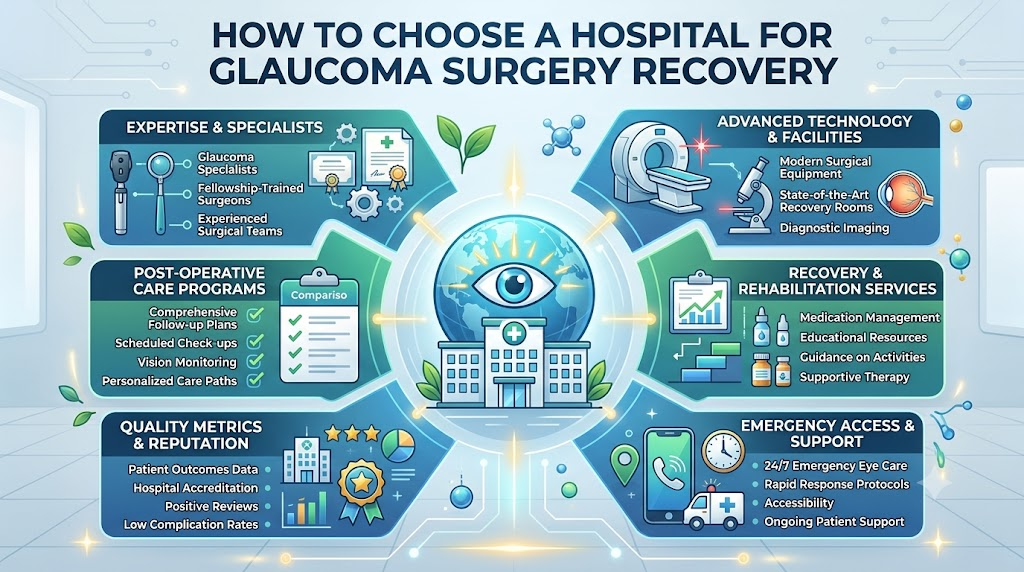
When comparing hospitals offering glaucoma surgery recovery programs, focus on the care you will receive before and after the operation. Check specialist availability, pressure monitoring, medicine guidance, urgent care arrangements, and long-term follow-up.
Ask whether the hospital will coordinate with your regular eye doctor. Make sure you understand how to book visits, receive test results, and get help if symptoms change. Clear communication is important because the care plan may need to change as the eye heals.
A second opinion may be helpful if you are unsure about the proposed treatment and your condition allows time to seek another view. Compare the reasons given for treatment, the expected benefits and risks, and the follow-up plan. No single hospital is the right choice for every patient.
Comparing Glaucoma Surgery Recovery Programs
| Comparison factor | What patients should check | Questions to ask |
|---|---|---|
| Specialist availability | Access to a doctor experienced in glaucoma care | Who will manage my recovery? |
| Postoperative examinations | Planned eye checks after surgery | When is my first visit? |
| Pressure monitoring | Regular checks of eye pressure | How often will pressure be measured? |
| Medication guidance | Clear, written drop instructions | Who can help if I struggle with drops? |
| Urgent care | A clear route to urgent eye assessment | Whom do I call after hours? |
| Long-term follow-up | Ongoing pressure and optic nerve checks | How will future visits be planned? |
| Accessibility | Transport, mobility support, and appointment options | Can my caregiver attend with me? |
| Costs | Clear estimate of visits, medicines, and tests | Which services are included in the price? |
When to Seek Urgent Medical Help After Glaucoma Surgery
Seek urgent medical assessment for severe or increasing eye pain, sudden or worsening vision loss, marked redness, or thick discharge. New flashes, a sudden increase in floaters, or a shadow across your vision also need urgent eye assessment.
Mild discomfort or blurred vision can happen after some procedures, but worsening symptoms should not be ignored. Contact your surgical team or seek emergency eye care if serious symptoms occur. Do not wait for a routine visit.
Do not stop prescribed drops or add extra medicine without medical guidance. If you are unsure whether a symptom is serious, contact your care team promptly and explain what has changed.
Frequently Asked Questions About Glaucoma Surgery Recovery Programs
- How long does it take to recover from glaucoma surgery?
Recovery varies by procedure, healing response, and individual health needs. Some people feel better within days, while full healing and pressure control may take longer. Follow your surgeon’s advice. - What happens during a glaucoma surgery recovery program?
It may include eye examinations, pressure checks, vision checks, medicine guidance, activity advice, and follow-up planning. The exact services depend on the hospital and your needs. - How often are follow-up visits needed after glaucoma surgery?
The first visit may be the next day, with more visits as needed. Your surgeon will set the schedule based on the procedure, pressure readings, healing, and risk of complications. - Will I still need glaucoma eye drops after surgery?
Possibly. Surgery may reduce the need for some medicines, but it does not always remove the need for drops. Use them only as directed by your treating clinician. - Which activities should I avoid after glaucoma surgery?
You may need to avoid heavy lifting, strenuous exercise, deep bending, and rubbing the eye for a period. Ask your surgeon when you can safely return to normal activities. - Is blurred vision normal after glaucoma surgery?
Temporary blurred vision can occur after some procedures. However, sudden or worsening vision changes need urgent assessment, especially if they occur with pain or marked redness. - What symptoms require urgent medical attention after surgery?
Severe pain, worsening redness, reduced vision, unusual discharge, or a new shadow in your vision needs urgent assessment. Contact your surgical team or seek emergency eye care. - Can glaucoma surgery restore vision that has already been lost?
Usually not. Surgery aims to lower eye pressure and reduce the risk of further optic nerve damage. It generally cannot restore vision already lost from glaucoma. - How do I choose a hospital for glaucoma surgery recovery?
Compare glaucoma expertise, follow-up visits, pressure monitoring, medicine support, urgent care, accessibility, and costs. Choose a plan that fits your procedure and medical needs. - Why is long-term follow-up important after glaucoma surgery?
Glaucoma can continue to affect vision even after surgery. Regular checks help the care team monitor pressure, optic nerve health, and the need for further treatment.