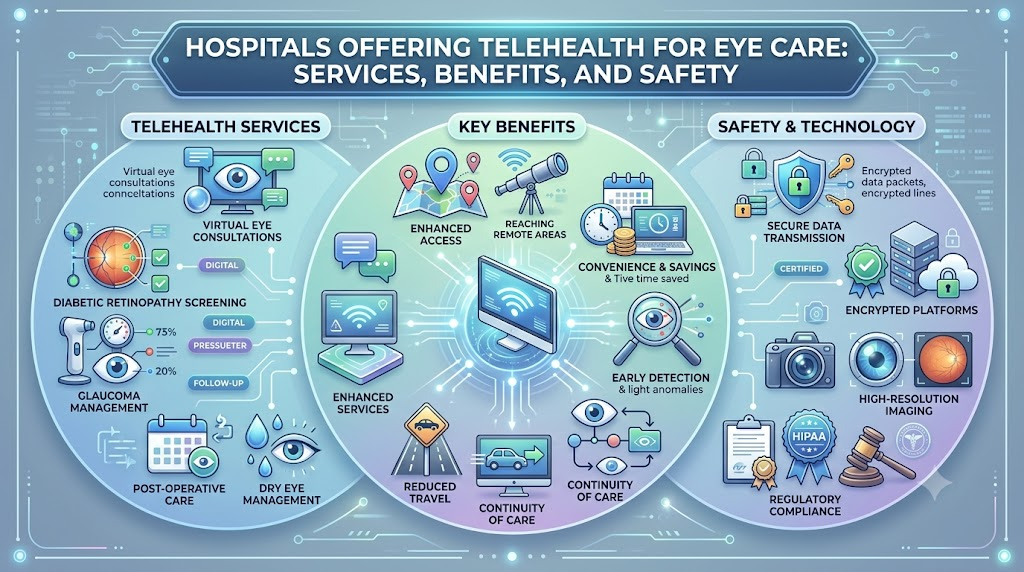
Telehealth makes it easier to speak with an eye care professional without always visiting a hospital. Hospitals offering telehealth for eye care may provide online consultations, follow-up visits, and advice about selected eye problems.
Patients can use video calls or phone calls to discuss symptoms, review test results, and learn about their next steps. This can help people who live far from a specialist or have trouble traveling.
However, online eye care cannot replace every eye examination. Some problems need special tests or a direct check of the eyes. Sudden vision loss, severe eye pain, and serious eye injuries need urgent in-person care.
Readers can explore eye care services through besteyehospitals and prepare questions before choosing a hospital. A qualified eye care professional can explain whether an online visit is suitable for their needs.
What Is Telehealth for Eye Care?
Telehealth for eye care uses digital tools to connect patients with eye care professionals. It is also called teleophthalmology in many settings.
Hospitals may offer these services through video calls, phone calls, secure messages, or systems that share eye test results. The exact services depend on the hospital, the clinician, and the patient’s needs.
Telehealth may help patients:
- Discuss eye symptoms and general concerns.
- Review test results and medical records.
- Ask questions about an existing treatment plan.
- Attend selected follow-up visits.
- Find out whether an in-person examination is needed.
An online consultation can help guide care. However, a phone or video call cannot show every part of the eye or provide every test an eye specialist may need.
How Does an Online Eye Consultation Work?
An online eye consultation lets patients speak with an eye care professional from a suitable location. The process is often simple.
- Book an appointment: Follow the hospital’s approved booking process.
- Join the consultation: Use the instructions provided by the hospital.
- Share your details: Explain your symptoms, medical history, current medicines, and known allergies.
- Discuss your concerns: The clinician asks questions and may use video to check visible signs.
- Review the next steps: You may receive advice, need further tests, or be asked to attend an in-person visit.
Keep any relevant reports, eye prescriptions, and test results nearby. Tell the clinician when your symptoms began and whether they have changed.
An online visit may help assess what to do next. It cannot provide every measurement or test required for a full eye examination.
Which Eye Care Services May Be Available Through Telehealth?
Hospitals may offer several types of remote eye care. However, not every service is available at every hospital. The right choice depends on the symptoms and the information the clinician needs.
General Eye Care Advice
An eye care professional may discuss mild symptoms, screen-related discomfort, and general eye health. They may also explain simple steps to protect your eyes.
The clinician can help decide whether you need further care. However, online advice cannot safely rule out every serious eye condition.
If your symptoms are new, severe, or getting worse, explain this clearly. The clinician may recommend an in-person examination.
Follow-Up Appointments
Telehealth can make some follow-up visits easier. Patients may discuss their recovery, report changes, and ask questions after treatment.
An online visit may suit a review that mainly involves discussing symptoms or care instructions. However, some follow-ups require a direct eye examination.
Your specialist may need to check eye pressure, examine the retina, or perform other tests. Follow the hospital’s advice about attending these visits in person.
Review of Test Results and Medical Records
An eye specialist may review existing reports, scans, retinal images, and other records during a remote consultation.
This can help patients understand their results and discuss the next steps. It may also help another specialist review an existing diagnosis.
The records must be clear, complete, and suitable for the question being asked. Old or incomplete results may not provide enough information to guide care.
Diabetes-Related Eye Care
Telehealth may support eye care for people with diabetes. A specialist may review suitable retinal images or screening results collected through an appropriate service.
This can help with care planning and deciding whether more tests are needed. However, a video call alone cannot reliably detect or rule out diabetic eye disease.
Patients may still need retinal imaging, a dilated eye examination, or other tests. Follow the schedule recommended by your eye care professional, even when your eyes feel normal.
Advice About Glasses and Contact Lenses
An online consultation may help patients discuss an existing glasses prescription or contact lens concerns. A clinician may also discuss lens comfort and general eye care.
However, a complete eye examination may require special equipment and accurate measurements. Not every glasses or contact lens prescription can be provided through a video call.
If your vision has changed or your lenses cause pain, redness, or blurred vision, ask whether you need an in-person assessment.
Second Opinions and Specialist Guidance
Telehealth may help patients discuss an existing diagnosis or treatment plan with another qualified eye specialist.
The specialist may review reports, scans, images, and previous treatment records. This can help explain the available options.
Some questions still require an in-person examination. The specialist should tell you if the available information is not enough to give a useful opinion.
Pediatric Eye Care
Telehealth may help parents discuss selected eye concerns about their children. It can also help them review records and learn which tests may be needed.
However, children may need age-appropriate vision tests and a direct eye examination. A video call cannot replace every part of a child’s eye check.
Do not delay urgent care if a child has sudden vision changes, severe eye pain, or a serious eye injury. Seek prompt in-person medical help.
Eye Care Services That May Be Suitable for Telehealth
| Service or concern | What telehealth may help with | When an in-person visit may be needed |
|---|---|---|
| General eye care advice | Discuss mild symptoms and eye health | Symptoms need direct examination |
| Follow-up visits | Review progress and answer questions | Eye pressure or other tests are needed |
| Test result reviews | Explain existing reports and scans | More tests or updated images are needed |
| Diabetes-related eye care | Review suitable retinal images and care plans | Retinal imaging or a dilated exam is needed |
| Glasses or contact lenses | Discuss existing prescriptions and lens comfort | A full exam or new prescription is needed |
| Second opinions | Review records and discuss treatment choices | Direct examination is needed for a sound opinion |
Telehealth is most useful when remote information can answer the patient’s main questions. The clinician should arrange in-person care when needed.
Benefits of Telehealth for Eye Care
Telehealth can make some eye care services easier to access. Its benefits depend on the patient’s condition and the type of consultation.
Possible benefits include:
- Less travel: Patients may avoid a trip for a suitable follow-up discussion.
- Better access: People in remote areas may speak with specialists who are far away.
- Convenient follow-ups: Patients can discuss progress without always traveling to the hospital.
- Easy record review: Clinicians can discuss available reports and test results online.
- Support for people with travel needs: Remote visits may help older adults or people who find travel difficult.
- More time for questions: Patients can ask about results, care plans, and next steps.
These benefits do not mean every visit should happen online. Some patients need tests, treatment, or a physical examination.
Telehealth also depends on reliable technology and access to a suitable clinician. The hospital should offer a clear way to arrange an in-person visit when needed.
Limitations of Online Eye Consultations
Online eye consultations have important limits. A camera cannot show every part of the eye in enough detail for diagnosis.
An eye specialist may need special tools to measure eye pressure, examine the retina, or test vision accurately. These checks usually require suitable equipment and may need an in-person appointment.
Other challenges include:
- Poor internet or video quality.
- Missing or outdated medical records.
- Difficulty seeing small changes through a phone camera.
- Lack of testing equipment at home.
- Privacy risks when using shared devices or unsafe networks.
- Delays if a patient relies on online care when urgent treatment is needed.
A responsible clinician should explain when remote care is not enough. Patients should follow advice to attend an in-person visit, even if travel takes extra time.
Eye Symptoms That Need Urgent In-Person Care
Some eye symptoms may signal a serious problem. Do not wait for an online appointment if your vision may be at risk.
Seek immediate in-person medical assessment for:
- Sudden loss of vision or a major change in sight.
- A sudden increase in floaters or flashes of light.
- A dark curtain or shadow across your vision.
- Severe eye pain.
- An eye injury or suspected chemical exposure.
- A red, painful eye with blurred vision.
- Sudden double vision or another sudden change in sight.
These symptoms need prompt assessment because some causes can threaten vision. Do not use a video call to decide whether it is safe to wait.
If a chemical enters the eye, rinse it immediately with clean running water while arranging urgent medical help. Do not delay rinsing to book an appointment. Follow emergency guidance and seek prompt medical care.
For severe symptoms or a serious injury, contact local emergency services or go to an appropriate emergency department. Do not wait for a routine online consultation.
How to Prepare for a Telehealth Eye Appointment
Good preparation can help you use your appointment well. It also helps the clinician understand your concerns.
Before the consultation:
- Choose a quiet, private place.
- Check your internet connection, camera, microphone, and battery.
- Keep your glasses prescription and recent eye reports ready.
- Write down your symptoms and when they began.
- Note whether your symptoms are changing or getting worse.
- Prepare a list of medicines and known allergies.
- Write down questions about tests, treatment, and follow-up.
- Ask a trusted caregiver to help if needed.
During the call, describe your symptoms honestly. Tell the clinician if you have pain, blurred vision, redness, or sudden changes.
Do not rely only on photographs or online vision tests to decide whether an eye problem is serious. Follow the clinician’s advice about further assessment.
Privacy and Safety During Online Eye Care
Online eye care may involve personal health details, photographs, and medical reports. Protecting this information is important.
Use the hospital’s approved consultation method. Confirm the clinician’s identity and ask about their qualifications if you are unsure.
Share reports through the hospital’s recommended channels. Avoid discussing private health information where others can hear it. When possible, use a private device and a trusted internet connection.
You can also ask:
- How will my medical records and images be stored?
- Who can access my consultation notes?
- How will I receive prescriptions or care instructions?
- What should I do if I cannot join the video call?
No online system is completely free from risk. A hospital should explain how it handles patient information and helps protect privacy.
How to Choose a Hospital Offering Telehealth for Eye Care
Choose a hospital that offers suitable remote services and can arrange an in-person examination when needed. A clear care plan matters more than convenience alone.
Use this checklist when comparing hospitals:
- Qualified professionals: Check whether the hospital provides access to suitable eye care professionals.
- Clear services: Confirm which concerns the team can handle online.
- Easy booking: Look for clear appointment instructions and technical support.
- Privacy protection: Ask how the hospital protects your records and images.
- Report sharing: Check how to send test results and medical records safely.
- Urgent referrals: Make sure the team can explain where to seek urgent care.
- In-person visits: Ask how to arrange physical examinations and tests.
- Follow-up support: Check how you can ask questions after the consultation.
- Clear fees: Confirm the consultation fee and any extra charges.
Do not choose a hospital based only on advertising. Confirm its services directly and ask who will conduct your consultation.
Questions to Ask Before Booking an Online Eye Consultation
Ask a few simple questions before booking. These can help you decide whether remote care suits your needs.
Questions to Ask Before Choosing a Telehealth Eye Care Hospital
| Topic | Question to ask | Why it matters |
|---|---|---|
| Clinician qualifications | Who will conduct my consultation? | Helps you check the clinician’s role and training |
| Service availability | Can you assess my eye concern online? | Confirms whether the service suits your needs |
| Privacy | How will you protect my records? | Helps you understand how your data is handled |
| Preparation | Which reports should I share? | Helps the clinician review useful information |
| Fees | What is the total consultation fee? | Helps you plan for the cost |
| Urgent referrals | What should I do if symptoms worsen? | Helps you know where to seek prompt care |
| In-person follow-up | Can you arrange an eye examination if needed? | Supports safe and timely care |
Also ask how you will receive your care instructions. Find out whether you may need extra tests or another appointment.
You should understand the limits of online care before you agree to a consultation. A good provider will answer your questions clearly and explain when a physical visit is necessary.
How BESTEYEHOSPITALS Can Help Readers
Finding suitable eye care can feel confusing, especially when several services are available. An eye hospital information platform can help readers learn about care options and prepare for consultations.
BESTEYEHOSPITALS can serve as a starting point for exploring eye hospital services. Readers can use the information to prepare questions and contact hospitals about their needs.
Confirm the available services, consultation fees, clinician qualifications, and privacy practices directly with the hospital. A listing does not guarantee that a specialist is available or that a particular treatment will be suitable.
Frequently Asked Questions
1. What is telehealth for eye care?
Telehealth for eye care lets patients speak with eye care professionals through video calls, phone calls, or other approved digital tools. It can support advice, follow-up visits, and reviews of existing records.
2. Can an eye doctor examine my eyes through a video call?
A doctor can discuss symptoms and assess some visible signs through video. However, a video call cannot replace every eye test or direct examination.
3. Which eye problems can be discussed online?
Patients may discuss mild symptoms, follow-up concerns, existing test results, glasses questions, and treatment plans. The clinician decides whether an online consultation is suitable.
4. Can telehealth replace an in-person eye examination?
No. Some conditions need special equipment, accurate measurements, or a direct examination. Your clinician will advise when you need an in-person visit.
5. Can diabetic eye disease be checked through telehealth?
Telehealth may support the review of suitable retinal images and screening results. However, a video call alone cannot reliably detect or rule out diabetic eye disease.
6. How should I prepare for an online eye consultation?
Check your device and internet connection. Keep your eye reports, medicines list, symptoms, and questions ready. Choose a private place for the call.
7. Is telehealth suitable for children who have eye problems?
It may help parents discuss selected concerns and review records. Children may still need direct examinations and age-appropriate vision tests. Urgent symptoms need prompt in-person care.
8. What eye symptoms require urgent medical attention?
Sudden vision loss, severe eye pain, new flashes with many floaters, a dark shadow across vision, and serious eye injuries need urgent assessment. Do not wait for an online appointment.
9. How can I choose a hospital offering telehealth for eye care?
Check clinician qualifications, available services, privacy practices, fees, and follow-up options. Choose a hospital that can arrange in-person care when needed.
10. How much does an online eye consultation cost?
Fees vary by hospital, clinician, consultation type, and any extra tests or services. Ask for the full expected cost before booking.
Conclusion
Telehealth can make some eye care services more convenient. It may help patients review existing records, discuss treatment plans, and attend suitable follow-up visits without always traveling to a hospital.
However, online eye consultations cannot replace every examination or test. Sudden vision changes, severe pain, and serious injuries need urgent in-person care.
When comparing hospitals offering telehealth for eye care, look for qualified professionals, clear privacy practices, transparent fees, and reliable follow-up support. Ask questions and make sure you understand when an in-person examination is needed.