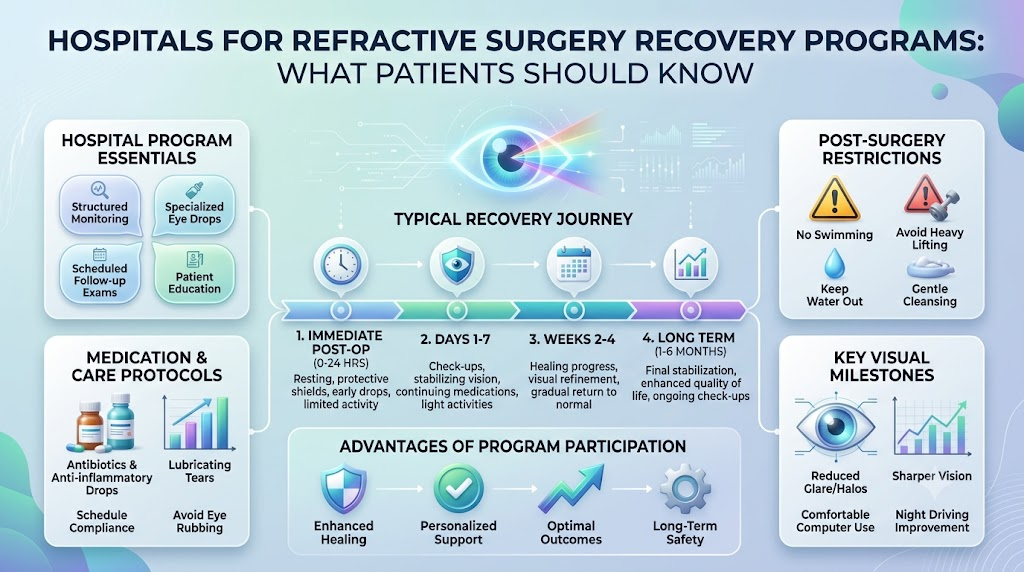
Refractive surgery can help people see clearly with less need for glasses or contact lenses. However, proper care after surgery remains important. Follow-up visits help eye doctors check healing and spot problems early.
Hospitals for refractive surgery recovery programs may offer eye exams, vision checks, and clear aftercare advice. These services can help patients understand each step of recovery. They can also help patients know when to seek medical care.
The right recovery plan depends on the procedure and each person’s eye health. Patients should follow their surgeon’s advice and attend every planned visit. For help comparing eye care services, visit Besteyehospitals.
What Is Refractive Surgery?
Refractive surgery aims to reduce the need for glasses or contact lenses. It changes how light enters the eye and focuses on the retina. The retina is the light-sensitive layer at the back of the eye.
These procedures often treat the cornea, the clear front part of the eye. The cornea helps focus light so people can see clearly. Changes to its shape can improve how light reaches the retina.
Common types of refractive surgery include LASIK, PRK, and SMILE. Each procedure changes the cornea in a different way. They also have different healing needs.
LASIK
LASIK uses a laser to reshape tissue inside the cornea. The surgeon first creates a thin flap in the cornea. The flap is then placed back after the laser treatment.
Many people notice clearer vision soon after LASIK. Still, dryness, blurry vision, or mild discomfort may occur. Follow-up visits help the surgeon check healing and vision changes.
PRK
PRK reshapes the cornea after removing its thin outer layer. This surface layer grows back as the eye heals. The healing process often takes longer than after LASIK.
Patients may have more discomfort and blurry vision during early recovery. The surgeon may use a soft contact lens to protect the healing surface. Patients must follow instructions about eye drops and follow-up visits.
SMILE
SMILE uses a laser to create a small piece of tissue inside the cornea. The surgeon removes this tissue through a small opening. This changes the cornea’s shape and helps correct vision.
SMILE recovery differs from person to person. Some people notice quick changes, while others need more time. Follow-up care remains important after this procedure.
No single procedure suits every patient. An ophthalmologist, or eye doctor, can explain which options fit a person’s eyes and needs.
Why Is Recovery Care Important?
Surgery is only one part of vision correction. The eyes also need time and care to heal. Recovery visits help the surgeon check this process.
A follow-up exam can show how well the cornea is healing. The care team may also check vision, dryness, and irritation. These checks can help the team decide whether more care is needed.
Prescribed eye drops may help protect the eyes or ease symptoms. Patients should use them as directed by their surgeon. They should not stop or change treatment without medical advice.
Clear aftercare advice helps patients know what to do at home. It can explain when to rest, protect the eyes, and return to normal activities. It should also explain which symptoms need urgent attention.
Recovery programs cannot promise perfect vision or prevent every problem. Their purpose is to support safe healing and timely medical care. Patients still need to follow their surgeon’s advice.
What Do Refractive Surgery Recovery Programs Include?
Hospitals and eye centers may offer several services after vision correction surgery. The exact services depend on the provider and procedure. Patients should confirm what their chosen program includes before booking.
Common services may include:
- Follow-up eye exams: These help the surgeon review healing after surgery.
- Vision checks: Staff may test how clearly each eye can see.
- Corneal healing checks: The surgeon checks the treated area when needed.
- Eye drop guidance: Staff explain how to follow the prescribed plan.
- Dry eye support: The team may discuss dryness, burning, or irritation.
- Light sensitivity advice: Patients may receive tips for handling bright light.
- Protective eye care: Staff explain when shields or protective glasses are needed.
- Help with questions: Patients can ask about symptoms and daily activities.
- Urgent review: The provider should explain how to seek prompt care when problems arise.
Some programs include several planned visits. Others may charge for extra tests or urgent reviews. Patients should ask for a clear list of included services.
A good program also explains how to contact the care team. Patients should know whom to call if symptoms change after a visit. This can make recovery less confusing.
Recovery After LASIK, PRK, and SMILE
Each procedure has its own healing process. Your age, eye health, and healing response can also affect recovery. Your surgeon will explain what to expect after your procedure.
LASIK Recovery
Many people notice better vision within the first day after LASIK. Some still have blurry vision, dry eyes, or mild discomfort. These effects may change as healing continues.
Avoid rubbing or pressing on your eyes. Follow the advice about eye drops and protective shields. Attend follow-up visits, even when your vision feels clear.
PRK Recovery
PRK needs more time because the outer corneal layer must grow back. Early recovery may bring soreness, watering, light sensitivity, and blurry vision. Vision may improve slowly as the surface heals.
Your surgeon may check the healing surface during follow-up visits. Do not remove a protective contact lens yourself if one was placed. Follow the care team’s instructions about its removal.
SMILE Recovery
Some people return to daily tasks soon after SMILE. Others may need more time for their vision to settle. Mild dryness or blurry vision can still occur.
Keep all planned appointments and report any worsening symptoms. Do not assume that a small incision means no follow-up care is needed. Your eye doctor will guide your return to normal activities.
How Hospitals Monitor Healing
The eye care team may check several parts of your recovery. The exact tests depend on your procedure and symptoms.
- Visual clarity: Staff check how clearly you can see.
- Corneal healing: The surgeon looks for signs of normal healing.
- Eye surface health: The team checks for dryness or irritation.
- Signs of infection: The doctor looks for signs of infection or swelling.
- Changes in vision: Staff ask whether your sight has changed.
- Need for more care: The surgeon may plan extra checks when needed.
Attend all scheduled visits, even when your eyes feel fine. Some problems may not cause clear symptoms at first. Regular checks help your care team decide whether your recovery needs more support.
Your follow-up plan may change over time. Your surgeon may ask you to return sooner if a concern appears. Always ask how to get help between planned visits.
How to Choose a Hospital for Recovery Care
A suitable hospital should offer clear advice and access to trained eye care staff. It should also explain how it supports patients after surgery. The right choice depends on your needs, not just the size of the hospital.
Consider these points when comparing providers:
- Qualified staff: Ask who will check your eyes after surgery.
- Procedure experience: Ask whether the team cares for patients after your specific procedure.
- Clear instructions: Check whether you will receive written aftercare advice.
- Eye tests: Ask which tests are available during follow-up visits.
- Visit schedule: Find out when your checks will take place.
- Warning signs: Ask which symptoms need an urgent call or visit.
- Contact options: Check how to reach the care team after you go home.
- Clear costs: Ask what the package covers and what costs extra.
- Urgent care plan: Find out where to go if a serious problem occurs.
Do not judge a provider by its size alone. Good care depends on trained staff, suitable tests, clear advice, and timely access. A smaller eye center may meet your needs if it offers the care you require.
Before booking, ask for the recovery plan in writing. Make sure you understand the costs and the steps for urgent help. This can help you make a more informed choice.
What to Compare in Refractive Surgery Recovery Programs
| Program Feature | What to Ask | Why It Matters |
|---|---|---|
| Follow-up visits | How many visits are included? | Helps patients plan their care |
| Vision checks | Which eye tests are provided? | Helps track healing and vision |
| Aftercare guidance | Are written instructions provided? | Helps patients follow care steps |
| Urgent support | How can patients report problems? | Helps them seek timely advice |
| Total cost | Which services are included? | Helps avoid unexpected charges |
Common Symptoms During Recovery
Some people notice mild discomfort, dry eyes, tearing, or sensitivity to light. Blurry vision may also occur during early healing. These symptoms can change as the eyes recover.
The type of surgery affects which symptoms may occur and how long they last. People also heal at different rates. Do not assume that every symptom is normal.
Contact your eye surgeon if symptoms worsen or fail to improve as expected. Explain when the symptoms began and how they have changed. Your care team can advise whether you need an examination.
Tips for Safe Recovery at Home
Your actions at home can support the recovery plan. Follow the instructions given by your eye surgeon. Do not copy another person’s care routine.
Use these simple steps:
- Follow every instruction from your eye care team.
- Use prescribed eye drops as directed.
- Do not rub or press on your eyes.
- Wear protective shields or glasses when advised.
- Rest as your surgeon recommends.
- Protect your eyes from dust and injury.
- Avoid swimming and contact sports until cleared.
- Ask when it is safe to drive again.
- Attend every planned follow-up visit.
- Ask before using new eye drops or eye products.
Your surgeon may give extra advice based on your procedure. Follow that advice even if it differs from general tips. Do not change prescribed treatment without speaking to your clinician.
Helpful Habits During Refractive Surgery Recovery
| Topic | Helpful Action | What to Avoid |
|---|---|---|
| Eye care | Follow the surgeon’s instructions | Rubbing or pressing the eyes |
| Eye drops | Use them as prescribed | Changing treatment without advice |
| Outdoor activity | Use eye protection when advised | Ignoring dust or bright light concerns |
| Sports | Return when the surgeon allows | Swimming or contact sports too soon |
| Follow-up | Attend scheduled checkups | Skipping visits because vision feels better |
Risks and Warning Signs After Surgery
Complications can occur even when surgery goes well. These may include infection, ongoing inflammation, severe dryness, or changes in vision. Prompt care may help the doctor assess the cause.
Contact your eye surgeon urgently if you have severe pain, worsening redness, or vision that suddenly gets worse. New or worsening symptoms need prompt medical review. Do not wait for your next routine visit.
Sudden vision loss or severe eye pain requires emergency assessment. Seek emergency care rather than waiting for a reply or scheduled appointment. This article cannot replace an eye exam or personal medical advice.
Recovery Program Costs
The cost of recovery care can vary between hospitals and eye centers. It may depend on the procedure, follow-up visits, eye tests, and medicines. Extra visits may also add to the final bill.
Ask for a written cost estimate before you book. Check whether routine visits, urgent reviews, and prescribed eye drops are included. Also ask whether extra tests will cost more.
The cheapest program may not include every service you need. Compare the full package, contact options, and follow-up plan. Choose care that meets your needs and fits your budget.
Frequently Asked Questions
1. What is a refractive surgery recovery program?
It is a plan for care after vision correction surgery. It may include eye exams, vision checks, and aftercare advice.
2. Why is follow-up care important after LASIK?
Follow-up visits help the surgeon check healing and vision. They also help identify problems that may need further care.
3. Is PRK recovery different from LASIK recovery?
Yes. PRK requires the cornea’s outer layer to heal. This can cause more early discomfort and slower vision improvement.
4. How long does recovery from refractive surgery take?
Recovery time depends on the procedure and your eye health. Follow your surgeon’s advice rather than expecting a fixed timeline.
5. What symptoms are common after laser eye surgery?
Some people notice dryness, mild discomfort, tearing, or light sensitivity. Contact your surgeon if symptoms worsen or do not improve as expected.
6. Can I use my phone after refractive surgery?
Your surgeon can advise when and how to use your phone. Take breaks if your eyes feel tired, dry, or uncomfortable.
7. When can I drive after vision correction surgery?
Do not drive until your surgeon confirms it is safe. Your vision and recovery must support safe driving.
8. What activities should I avoid during recovery?
Avoid rubbing your eyes and protect them from injury. Ask your surgeon when you can swim, play sports, and return to exercise.
9. When should I contact my eye surgeon?
Contact your surgeon urgently for severe pain, worsening redness, or worsening vision. Sudden vision loss needs emergency assessment.
10. How do I choose a hospital for refractive surgery recovery?
Compare staff skills, follow-up visits, eye tests, contact options, and costs. Choose a provider with a clear plan for recovery and urgent concerns.
Conclusion
Good recovery care supports healing after refractive surgery. Clear instructions, regular checkups, and prompt attention to warning signs all matter.
Compare recovery services before choosing a hospital or eye center. Discuss your needs with a qualified ophthalmologist and follow their advice. Careful planning can help you approach recovery with greater confidence.