Introduction
Employee well-being can affect how people feel, work, and interact with their teams. Busy schedules, long periods at a desk, and limited breaks can make it difficult for employees to take part in healthy workplace activities.
Businesses can encourage better habits through optional wellness sessions, walking groups, stretching breaks, or health education events. However, these activities need thoughtful planning. Managers must consider work responsibilities, employee availability, and the needs of different teams.
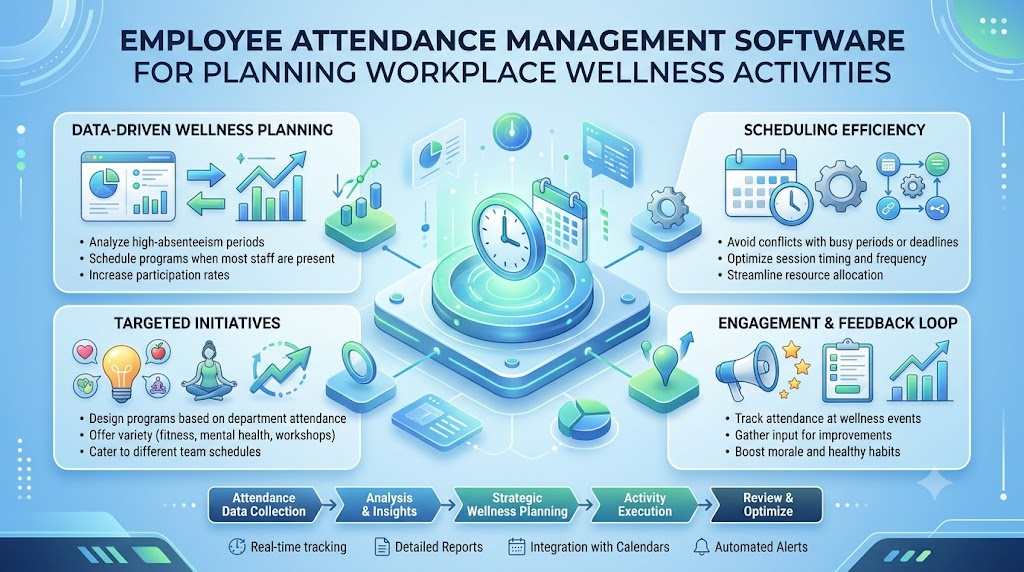
Employee Attendance Management Software can help businesses organize attendance records while planning wellness activities. Managers can review relevant schedules before choosing suitable times. This can help them arrange activities without creating unnecessary disruption to daily operations.
Attendance records do not measure employee health or prove that an activity improved well-being. Wellness participation should be handled separately and respectfully.
InOrOff focuses on employee attendance and leave management. Organized workforce records can support the scheduling of workplace activities while businesses maintain appropriate boundaries around personal information.
What Are Workplace Wellness Activities?
Workplace wellness activities are initiatives that encourage employees to take part in activities that support their general well-being. Businesses can offer simple options that fit their workplace and employee interests.
These activities do not need to be expensive or complicated. Some can happen during existing breaks, while others may require a planned session.
Examples include:
- Optional walking groups.
- Short guided stretching sessions.
- Workshops about healthy work habits.
- Team activities that encourage movement.
- Discussions about managing everyday work pressure.
- Ergonomic demonstrations for desk workers.
- Voluntary health education sessions.
- Social activities that help coworkers connect.
Every activity should suit the workplace and respect employee choice. Some employees may prefer quiet activities, while others may enjoy group participation.
Businesses should avoid treating wellness activities as a test of commitment. Employees have different preferences, responsibilities, and personal circumstances.
A good program provides useful options without forcing people to share private health information or take part in activities they do not want.
Why Wellness Activities Need Better Scheduling
A wellness activity can lose its value when employees cannot attend at a suitable time. A walking session may conflict with customer service duties. A workshop may overlap with an important team meeting.
Different departments may also have different busy periods. One activity time may suit office staff but not employees working on the floor or supporting customers.
Employee Attendance Management Software can help managers review attendance information when planning activities. They can use relevant schedules to identify possible times when employees are available.
Managers should also consider shift patterns, planned leave, and essential staffing needs. A wellness event should not leave a department unable to complete important work.
Clear planning makes activities easier to attend. It also helps managers avoid repeatedly changing dates at the last minute.
The aim is to make wellness opportunities accessible and practical, rather than adding another source of pressure to the workday.
Employee Attendance Management Software for Wellness Scheduling
Wellness activities often involve employees from different teams. Managers need a reliable way to plan dates and communicate the details.
Employee Attendance Management Software helps businesses organize attendance information. Depending on the platform’s features, managers may use it to review working schedules and recorded attendance before arranging activities.
The software should not be treated as a wellness tracking system unless it specifically supports those functions. Its role is to support the attendance and scheduling process.
A simple planning process can include:
- Choosing an activity that suits the workplace.
- Identifying the employees who may want to participate.
- Checking relevant work schedules.
- Confirming the time and location.
- Sharing participation details in advance.
- Explaining whether participation is optional.
- Recording any necessary operational information separately.
Managers should avoid collecting unnecessary personal details. A list of session arrangements usually does not need information about an employee’s medical history.
A clear schedule helps employees make an informed choice. It also allows managers to organize activities without confusing attendance administration with personal wellness information.
Employee Check In Check Out Software and Activity Attendance
Some businesses may want to understand how wellness events fit into the working day. For example, an optional group activity may take place before a team begins its normal duties.
Employee Check In Check Out Software can record arrival and departure information when supported by the platform. These records may help managers review normal work attendance around planned activities.
However, ordinary check-in information does not confirm that an employee joined a wellness session. An employee may be present at work but choose not to participate.
Businesses should decide whether they need a separate event attendance record. If attendance is necessary for organizing the activity, they should collect only the information required for that purpose.
Participation should not automatically be treated as a performance measure. Managers should explain how event records will be used and who can access them.
This keeps the process transparent. It also prevents routine attendance information from being used to make unsupported assumptions about employee health or motivation.
Employee Leave Management Software for Wellness Events
Employees may have approved leave during a planned wellness event. Others may be away for personal reasons or assigned to different work duties.
Employee Leave Management Software helps businesses organize leave requests and absence records. Managers can review relevant information before confirming event dates.
For example, a department may plan a group activity on a day when several employees are unavailable. The manager can consider another date or offer more than one session.
Businesses should not pressure employees to change approved leave just to attend an optional activity. The event should fit the work schedule as far as practical.
Useful planning steps include:
- Checking known absences before selecting dates.
- Offering alternative sessions when practical.
- Sharing event details early.
- Explaining whether the activity is optional.
- Avoiding unnecessary changes to approved leave.
- Providing suitable alternatives for employees who cannot attend.
These steps can help wellness activities remain accessible without disrupting normal work arrangements.
Leave records should remain private and should not be shared with event participants unnecessarily.
Attendance and Leave Management System for Company-Wide Activities
A company-wide wellness event may involve several departments or office locations. Different teams may have different working hours, staffing needs, and operational responsibilities.
An Attendance and Leave Management System can help managers review attendance and leave information when arranging such events. This information may support decisions about timing and staffing.
The system does not automatically manage every part of a wellness program. Businesses may still need a shared calendar, an event organizer, and a clear communication process.
Before confirming an event, managers should decide which teams can participate at the same time. They should also consider whether the activity needs multiple sessions.
A practical plan should identify:
- The activity’s purpose.
- The intended participants.
- The date and duration.
- The responsible organizer.
- Any work coverage arrangements.
- The method for sharing updates.
- Any accessibility needs that participants choose to communicate.
Managers should keep personal wellness details out of general attendance records. Only the information needed to organize work and the event should be collected.
A clear process supports coordination while respecting individual privacy.
Leave Approval Workflow Software and Event Planning
Wellness activities may be planned weeks in advance. During that time, employees may submit leave requests that affect the event’s expected attendance.
Leave Approval Workflow Software helps organize leave requests and approval steps, depending on the platform’s features. Managers can review relevant information when checking whether a proposed event date is practical.
For example, a team may plan a wellness workshop during a busy week. Several leave requests could affect staffing, so the manager may need to review other dates before confirming the event.
Pending requests should not be treated as approved absences. Managers should follow the normal approval process and update event plans when decisions are confirmed.
If an event changes, participants should receive the revised details promptly. Clear communication prevents employees from relying on an outdated calendar invitation.
Leave approval should also remain separate from wellness participation. An employee’s decision not to attend an optional event should not influence an unrelated leave decision.
This approach helps businesses plan responsibly without mixing personal choices with administrative approvals.
PTO Tracking Software for Wellness Calendar Planning
Some businesses run wellness activities throughout the year. They may organize monthly walks, regular movement breaks, or occasional learning sessions.
PTO Tracking Software helps maintain paid time off records when supported by the selected system. Managers can review planned absences while choosing dates for recurring events.
A recurring calendar should allow reasonable flexibility. If a session falls during a busy period or many employees are unavailable, the organizer can consider another date.
Businesses can also offer more than one opportunity to participate. This may help employees who work different shifts or have varying responsibilities.
PTO records should be accurate and current. Managers should distinguish between requested leave, approved leave, and changes to existing plans.
The purpose is to support better scheduling, not to encourage employees to rearrange personal plans for optional activities.
A flexible wellness calendar helps employees choose suitable opportunities while allowing the business to maintain its normal operations.
Employee Leave Balance Tracker and Personal Time Planning
An Employee Leave Balance Tracker helps employees and managers review available leave information when supported by the platform. It may help employees plan time off around work commitments and scheduled activities.
However, wellness activities should not normally require employees to use personal leave just to participate in a work-organized event. Businesses should explain whether an activity takes place during normal working hours or outside them.
Employees should also have a clear way to ask questions about scheduling. If an event conflicts with a personal commitment, the organizer can consider alternatives where practical.
Leave balance information should not be used to make assumptions about an employee’s interest in wellness activities. Employees may have many reasons for choosing not to participate.
An Employee Leave Balance Tracker serves a leave management purpose. It does not measure well-being or indicate whether an employee needs support.
Keeping leave records separate from wellness participation helps businesses respect personal boundaries and maintain clear administrative practices.
Time and Attendance Software for Small Business Wellness Programs
Small businesses may not have a dedicated human resources team. Owners or supervisors may organize workplace activities alongside their daily responsibilities.
Time and Attendance Software for Small Business can help managers review employee schedules when planning optional wellness sessions. This can make it easier to choose suitable times without leaving essential tasks uncovered.
A small business can start with a simple approach:
- Ask employees which activities interest them.
- Choose a practical activity and location.
- Review schedules before confirming the date.
- Explain whether participation is optional.
- Assign someone to coordinate the event.
- Share updates through an approved communication channel.
- Ask for general feedback afterward.
The business does not need to collect personal health information to arrange a walking group or stretching session.
Managers should also consider employees who cannot take part in certain activities. Suitable alternatives can make the program more inclusive.
Time and Attendance Software for Small Business supports attendance administration. A separate calendar can manage the wellness program itself.
Office IP Attendance System and On-Site Wellness Activities
Some workplaces use an Office IP Attendance System to support attendance recording through approved office networks. This may help manage attendance rules for employees working at a designated location.
However, network access does not prove that an employee joined a wellness activity. It also cannot show whether the activity was helpful or appropriate for that person.
An on-site event may take place in a meeting room, shared space, or outdoor area. Employees should follow the normal attendance process required by the workplace.
If the activity happens away from the office, businesses should explain any relevant attendance arrangements in advance. They should not assume that an office-based attendance method can record every event detail.
A separate event list may be useful when the organizer needs to estimate participation or arrange materials. The list should contain only necessary information and have appropriate access controls.
An Office IP Attendance System should be used for its supported attendance functions, not as a measure of employee wellness.
Payroll Ready Attendance Software and Wellness Activity Records
Businesses may need to maintain accurate attendance records when wellness activities take place during the workday. These records can help managers review working time and prepare information for an external payroll process.
Payroll Ready Attendance Software is a search phrase used by businesses looking for attendance records that may support payroll preparation. It does not mean every attendance platform includes payroll processing.
InOrOff.com focuses on employee attendance and leave management rather than functioning as payroll software. Businesses should confirm the current reporting and export options before using attendance records elsewhere.
Wellness participation should not be mixed unnecessarily with payroll information. A record of an optional activity does not automatically establish working hours or pay treatment.
If an activity takes place outside normal working hours, businesses should follow their established procedures and applicable requirements.
Keeping the records separate helps managers review attendance accurately while protecting personal wellness choices.
Tools at a Glance
| Tool Type | What It Does | Who It Helps |
|---|---|---|
| Attendance platform | Organizes employee attendance information | HR teams and managers |
| Leave management tool | Maintains leave requests and records | Employees and supervisors |
| Shared calendar | Lists wellness activities and dates | Event organizers and employees |
| Event checklist | Tracks preparation tasks | Wellness coordinators |
| Feedback form | Collects general activity suggestions | Employees and organizers |
| Communication channel | Shares event updates and instructions | Workplace teams |
Businesses can often begin with tools they already use. A shared calendar and a simple checklist may be enough for a small wellness program.
Before adopting another platform, identify the actual problem that needs solving. The selected tools should support the activity without collecting unnecessary personal information.
Common Mistakes in Workplace Wellness Planning
A wellness program can become less useful when it ignores employee needs or creates extra pressure. Businesses should avoid these common mistakes.
1. Scheduling activities without checking availability
A session may conflict with important work duties. Review schedules before confirming the date and time.
2. Making participation feel compulsory
Employees have different interests and personal circumstances. Explain whether the activity is optional and avoid treating participation as a performance measure.
3. Collecting unnecessary health information
A simple workplace activity rarely requires detailed personal health information. Collect only what is genuinely needed and follow suitable privacy practices.
4. Ignoring approved leave
Some employees will be unavailable on the event date. Offer alternatives when practical rather than pressuring them to change personal plans.
5. Choosing activities that exclude people
Not every employee can or wants to take part in the same physical activity. Consider suitable alternatives and invite general feedback.
6. Confusing work attendance with event participation
Being present at work does not mean someone joined the event. Maintain separate records when participation needs to be counted.
7. Failing to communicate changes
Employees may arrive expecting an activity that has moved. Share updates promptly through an approved channel.
8. Disrupting normal work coverage
An event may leave essential tasks unattended. Plan staffing arrangements before inviting employees.
9. Making unsupported claims about results
Attendance at an activity does not prove improved health or productivity. Review feedback carefully and avoid promising specific outcomes.
10. Forgetting employee feedback
An activity may not suit everyone’s needs. Ask what employees found useful and use the responses to improve future planning.
A Simple Example of Wellness Activity Planning
Imagine a small office that wants to offer an optional lunchtime walking group. The manager first asks employees whether the activity interests them and identifies a suitable route.
Before choosing a date, the manager reviews team schedules and known absences. The organizer then shares the meeting time, expected duration, and participation details.
Employees who want to join can respond through the chosen communication channel. Those who are busy can continue with their normal duties without pressure.
The manager keeps a simple event checklist and updates the calendar if plans change. The attendance platform continues recording normal work attendance according to company procedures.
After the activity, the organizer asks for general feedback. The business uses these suggestions to decide whether another session would be useful.
This approach keeps the activity easy to organize. It also separates ordinary attendance records from optional wellness participation and personal health information.
How InOrOff Can Help
InOrOff focuses on employee attendance and leave management. These functions can help businesses organize workforce records and review employee availability when planning workplace activities.
Managers may use relevant attendance and leave information to choose practical times for optional wellness sessions. They can also account for known absences when planning staffing and communicating event dates.
A separate calendar can manage activity details, while an event checklist can track preparation tasks. General feedback can help organizers understand which activities employees may prefer in the future.
Businesses should confirm the current features available in InOrOff before relying on specific reports, exports, or integrations. The platform should be used according to its supported attendance and leave management functions.
An organized Attendance and Leave Management System can support the administrative side of wellness planning. Clear communication, voluntary participation, and respect for privacy remain essential.
Frequently Asked Questions
1. What is Employee Attendance Management Software?
Employee Attendance Management Software helps businesses organize employee attendance information. Depending on the platform, it may support check-in records, check-out records, working hours, and attendance reviews. Managers can use relevant information when planning workplace wellness activities. Participation in those activities should be recorded separately when necessary.
2. Can Employee Check In Check Out Software track wellness participation?
Employee Check In Check Out Software records arrival and departure information when supported by the system. It does not automatically confirm that an employee joined a wellness event. Businesses can use a separate event record when participation needs to be counted, while keeping normal attendance information separate.
3. How does Employee Leave Management Software support wellness planning?
Employee Leave Management Software helps businesses organize leave requests and absence records. Managers can review this information before selecting event dates. If several employees are unavailable, organizers may consider another date or additional sessions. Leave records should remain private and should not be used to pressure employees into participating.
4. What is an Attendance and Leave Management System?
An Attendance and Leave Management System organizes employee attendance and leave information through a shared process or platform. Managers can use relevant records to review availability when planning workplace activities. A separate calendar or event checklist can handle wellness arrangements, participation details, and preparation tasks.
5. Is Time and Attendance Software for Small Business useful for wellness activities?
Time and Attendance Software for Small Business can help managers review employee schedules before planning activities. Small businesses can combine it with a shared calendar and a simple checklist. This helps organizers choose suitable times, maintain normal work coverage, and communicate event details without creating unnecessary administration.
6. How can Leave Approval Workflow Software help event organizers?
Leave Approval Workflow Software organizes leave requests and approval steps, depending on the platform’s features. Managers can review relevant scheduling conflicts before confirming an event. Pending requests should not be treated as approved absences. If plans change, organizers should communicate the updated date and details clearly.
7. Can PTO Tracking Software support recurring wellness programs?
PTO Tracking Software helps maintain paid time off records when supported by the selected system. Managers can review planned absences while scheduling recurring activities. This can help them choose practical dates or offer alternative sessions. The tool supports availability planning but does not measure employee health or wellness outcomes.
8. What does an Employee Leave Balance Tracker show?
An Employee Leave Balance Tracker helps employees and managers review available leave information, depending on the system’s features. It supports leave planning but does not indicate whether an employee wants to join a wellness event. Businesses should respect personal choices and keep leave information separate from event participation records.
9. What should businesses know about Payroll Ready Attendance Software?
Payroll Ready Attendance Software describes attendance tools that may provide records for an external payroll process. It does not guarantee that payroll processing is included. Businesses should check reporting and export options. Wellness event participation should not automatically be treated as proof of working time or pay treatment.
10. Can InOrOff manage a complete workplace wellness program?
InOrOff.com focuses on employee attendance and leave management. These functions can help managers review availability when planning workplace activities. A complete wellness program may also need a calendar, event checklist, and feedback process. Businesses should check the platform’s current features before deciding which tasks it can support directly.
Final Thoughts
Workplace wellness activities can give employees useful opportunities to connect, learn, and take a break from routine tasks. However, these activities need practical schedules and respectful communication.
Employee Attendance Management Software can help managers review attendance information when planning events. Employee Leave Management Software can support scheduling around known absences. A separate calendar can keep activity details organized.
Start with activities that fit the workplace and invite employee feedback. Make participation expectations clear, provide suitable alternatives, and protect personal information. Do not use attendance at wellness events as a measure of employee health or commitment.
With thoughtful planning, businesses can offer useful activities while keeping normal work responsibilities and employee privacy in mind.