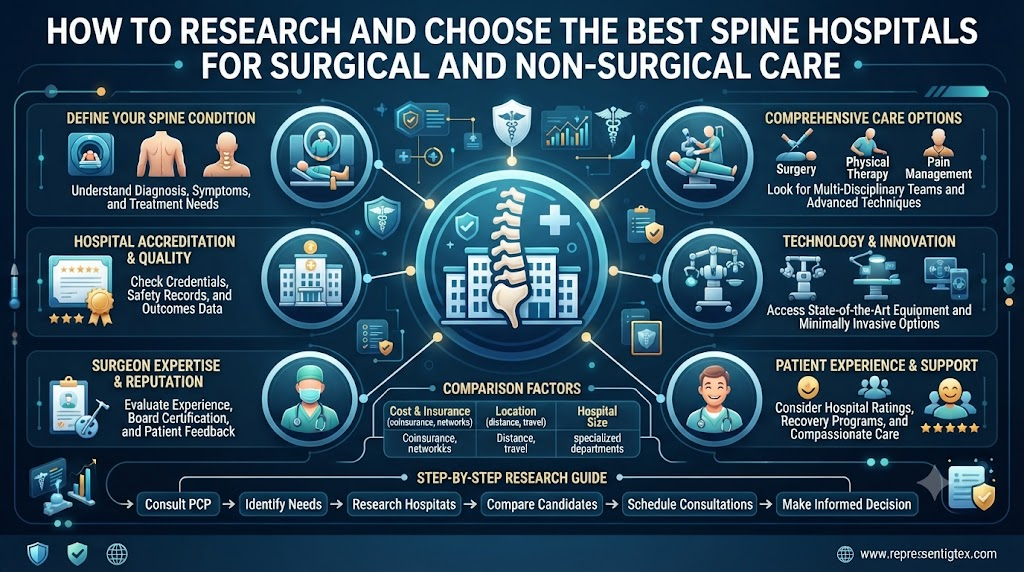
Dealing with persistent back discomfort, neck pain, or a diagnosed spinal condition can significantly affect daily life, mobility, and overall well-being. Spinal health plays a central role in human movement, nerve function, and overall quality of life. When spinal issues arise, finding appropriate medical care becomes a priority. Spine problems range from mild muscle strain and minor disc bulges to complex conditions like severe spinal stenosis, progressive scoliosis, or traumatic spinal injury. Because spinal conditions vary greatly in severity and complexity, different patients require different levels of care, diagnostic evaluation, and treatment expertise.Choosing where to seek treatment is an important healthcare decision. Hospitals and specialized medical centers differ in their clinical expertise, diagnostic technology, surgical infrastructure, non-surgical capabilities, and rehabilitation programs.
Understanding Spine Care
Spine care encompasses a broad spectrum of medical services designed to evaluate, diagnose, manage, and treat disorders affecting the vertebral column, spinal cord, spinal nerves, and supporting soft tissues. The spine is a complex structure made up of vertebrae, intervertebral discs, facet joints, muscles, ligaments, and sensitive nerve roots. Because of this structural complexity, symptoms originating in the spine can manifest in various ways, ranging from localized discomfort to radiating pain, numbness, or weakness in the arms or legs.
Patients seek spine care for a wide variety of conditions. Common spinal disorders include:
- Chronic Back and Neck Pain: Persistent discomfort resulting from muscle imbalances, joint arthritis, posture issues, or structural degeneration.
- Herniated or Slipped Discs: Conditions where the soft inner gel of an intervertebral disc pushes through its outer ring, potentially compressing nearby nerve roots.
- Spinal Stenosis: A narrowing of the spinal canal or nerve passageways that places pressure on the spinal cord or exiting nerves, often causing leg pain or weakness while walking.
- Scoliosis and Spinal Deformities: Abnormal lateral or rotational curvatures of the spine that can occur in children, adolescents, or adults.
- Degenerative Disc Disease: Age-related wear and tear of the intervertebral discs leading to reduced shock absorption, stiffness, and pain.
- Spinal Injuries and Fractures: Damage caused by trauma, sports injuries, or underlying conditions like osteoporosis.
- Nerve Compression and Radiculopathy: Pressure on spinal nerve roots causing pain, tingling, or weakness that radiates along the nerve path into the limbs.
Care approaches for these conditions vary significantly depending on the underlying cause, symptom severity, patient age, and diagnostic imaging findings. Medical management generally begins with conservative, non-surgical approaches. These can include detailed clinical evaluations, diagnostic imaging such as magnetic resonance imaging or computed tomography, targeted physical therapy, structured exercise programs, activity adjustments, non-invasive pain management, and therapeutic injections when clinically indicated.
Surgery is not necessary for every spinal condition. In fact, many spinal issues respond well to non-surgical treatment methods over time. Surgical intervention is typically considered only when conservative treatments have not provided adequate relief, when structural instability exists, or when progressive nerve compression threatens neurological function. Treatment decisions should always be made through careful consultation with qualified medical professionals who can evaluate individual health profiles and diagnostic results.
What to Look for When Choosing the Best Spine Hospital
Evaluating potential healthcare facilities requires looking closely at key clinical factors, structural capabilities, and care delivery standards. Identifying the best spine hospital for your needs involves looking beyond general reputation and focusing on specific capabilities related to your condition.
First, examine the hospital’s clinical specialties and medical staff. A high-quality facility typically maintains a dedicated spine care department staffed by board-certified orthopedic spine specialists, neurosurgeons, physical medicine and rehabilitation physicians, and pain management experts. The presence of a multidisciplinary team allows for comprehensive evaluation, where specialists can collaborate to create balanced, patient-specific treatment plans.
How to Compare the Best Spine Surgery Hospitals
When surgical intervention is under consideration, comparing specialized facilities requires a focused evaluation of surgical infrastructure, clinical team expertise, and patient safety standards. Comparing the best spine surgery hospitals involves examining several specific areas:
- Surgical Specialization and Expertise: Look at whether the hospital regularly performs the specific procedure recommended for your condition. Surgical experience with specific techniques, such as microdiscectomy, spinal fusion, laminectomy, or complex deformity correction, contributes significantly to procedure safety and care quality.
- Operating Theater Capabilities: Advanced surgical suites equipped with intraoperative imaging, navigation systems, neuromonitoring technology, and specialized surgical instrumentation allow surgeons to perform precise procedures with greater safety margins.
- Anesthesia and Critical Care Support: Complex spine surgery requires dedicated neuro-anesthesiology support and access to fully equipped intensive care or high-dependency units for immediate postoperative monitoring.
- Preoperative Assessment Protocols: Reputable surgical centers conduct thorough pre-admission health screenings, cardiac evaluations, and medical consultations to identify and manage potential surgical risks before entering the operating room.
- Postoperative Monitoring and Pain Management: Dedicated surgical recovery units with staff experienced in spine care help manage immediate post-surgical pain, monitor neurological function, and watch for early complications.
- Integrated Rehabilitation Services: Early mobility and structured physical therapy following surgery are vital for recovery. High-standard surgical centers begin rehabilitation planning well before surgery takes place.
Surgical suitability varies widely from patient to patient. A procedure that is appropriate for one person may not be suitable for another with similar symptoms. Choosing a hospital that prioritizes patient education, provides transparent information about surgical risks and benefits, and supports thorough pre-surgical consultations ensures that you can make fully informed decisions with your surgical team.
How to Choose the Best Hospital for Spine Surgery
When a surgeon or physician recommends evaluating surgical options, taking a structured approach to selecting a facility helps protect your health and peace of mind. Choosing the best hospital for spine surgery involves verifying both institutional capabilities and individual surgeon qualifications.
Start by evaluating the surgical team’s experience with your specific diagnosis. Spine surgery includes a diverse array of procedures, ranging from simple decompression surgeries to intricate multi-level spinal fusions and reconstructive deformity surgeries. Ensuring that the facility routinely handles cases of similar complexity helps ensure that the operating room team, nursing staff, and support personnel are well-versed in the necessary protocols.
Inquire about the surgical techniques available at the facility. Modern spine surgery utilizes a variety of approaches, including traditional open techniques, minimally invasive approaches, and motion-sparing options like artificial disc replacement. A hospital equipped with multiple surgical technologies allows the surgical team to choose the approach that best fits your specific anatomical and clinical requirements, rather than forcing a single technique on every patient.
Finding the Best Spine Hospital Near Me
Location is a practical and often crucial factor when planning medical treatment. Searching for the best spine hospital near me allows patients to evaluate care options that are accessible without creating undue travel stress. However, balancing geographic convenience with clinical expertise is essential for optimal healthcare decisions.
Proximity matters for several practical reasons:
- Ease of Travel for Appointments: Multiple visits are often required for initial consultations, diagnostic scans, physical therapy sessions, and follow-up checks. Long journeys can be uncomfortable for individuals dealing with acute back or neck pain.
- Postoperative Travel Comfort: Traveling long distances immediately following a surgical procedure or spinal intervention can cause discomfort and unnecessary strain on a healing spine.
- Family Support Network: Receiving treatment close to home makes it easier for family members or caregivers to offer assistance during hospital stays, transportation, and home recovery.
- Emergency Access: Having a quality facility nearby provides reassurance if sudden symptom flare-ups, severe pain increases, or post-treatment concerns arise.
While convenience is important, the closest facility may not always be the most appropriate choice for complex or highly specialized spinal conditions. For rare deformities, complex revision surgeries, or specialized minimally invasive procedures, traveling further to reach a hospital with specific expertise may be beneficial. Patients should consider both geographic convenience and clinical suitability when making final care decisions.
How to Find the Best Spine Surgeons
The expertise, skill, and judgment of your treating physician play a central role in your treatment outcome. Identifying the best spine surgeons involves evaluating professional credentials, clinical focus, communication style, and patient care philosophies.
When researching potential surgeons, verify their formal medical qualifications and board certifications. Spine surgeons typically complete primary residency training in either orthopedic surgery or neurosurgery, followed by subspecialty fellowship training dedicated specifically to spine care. Fellowship training provides advanced instruction in complex spinal procedures, specialized surgical tools, and non-surgical management strategies.
Consider the surgeon’s experience with your specific condition. Ask about their daily practice focus, how frequently they perform the procedure under consideration, and their approach to conservative treatment prior to recommending surgery. A highly qualified surgeon will gladly discuss their experience, explain why a particular approach is recommended, outline potential risks, and discuss non-surgical alternatives.
Understanding Spine Surgery Hospitals and Their Services
Specialized facilities dedicated to comprehensive spinal care offer a complete spectrum of medical services designed to manage spinal disorders from initial diagnosis through long-term recovery. Understanding what specialized spine surgery hospitals offer can help you navigate your care more effectively.
Comprehensive facilities generally integrate the following services:
- Diagnostic Imaging and Evaluation: On-site magnetic resonance imaging, computed tomography, digital X-rays, and diagnostic nerve conduction studies to identify structural problems accurately.
- Surgical Consultation and Second Opinions: In-depth clinical evaluations by experienced specialists to review medical histories, interpret imaging, and discuss treatment pathways.
- Preoperative Planning and Risk Assessment: Comprehensive medical check-ups, blood work, cardiac clearings, and health optimizations to ensure patient safety prior to surgery.
- Specialized Spine Surgery: Operating theaters equipped with specialized surgical beds, intraoperative navigation systems, microscopes, and endoscopes for precise surgical execution.
- Pain Management and Interventional Care: Non-surgical pain relief procedures, including epidural steroid injections, facet joint blocks, radiofrequency ablation, and medication management.
- Inpatient and Outpatient Rehabilitation: Physical therapy programs, occupational therapy, core stabilization training, and mobility restoration guidance tailored to spinal recovery.
- Long-Term Postoperative Follow-Up: Scheduled progress checks, repeat imaging assessments, and ongoing physical monitoring to ensure stable healing over time.
Because service availability can vary between institutions, patients should confirm that a facility offers the specific diagnostic, therapeutic, or rehabilitative services required for their care plan.
Minimally Invasive Spine Surgery
Minimally invasive spine surgery represents a significant technological advancement in surgical care. Unlike traditional open surgery, which typically requires larger incisions and muscle displacement to access the vertebral column, minimally invasive techniques utilize smaller incisions, specialized tubular retractors, tiny surgical cameras, and computer-assisted guidance.
These techniques allow surgeons to reach the affected area of the spine while minimizing disruption to surrounding muscles and healthy soft tissues. Minimally invasive methods can be used for selected procedures, such as microdiscectomy for herniated discs, spinal decompression for stenosis, and targeted spinal fusion procedures.
When evaluating the best hospital for minimally invasive spine surgery, patients should understand that these techniques offer potential benefits but are not suitable for every clinical situation. Potential advantages can include smaller surgical scars, reduced postoperative muscle discomfort, shorter hospital stays, and quicker initial return to daily activities for appropriate candidates.
Choosing the Best Hospital for Scoliosis Surgery
Scoliosis is a complex spinal condition characterized by an abnormal lateral curvature and rotation of the spine. It can affect individuals of all ages, from infants and adolescents to adults experiencing degenerative changes. Because scoliosis involves three-dimensional structural alterations, treating it effectively requires specialized medical knowledge and advanced hospital infrastructure.
Treatment approaches for scoliosis depend on several factors:
- Patient Age and Growth Stage: Skeletal maturity plays a primary role in determining whether observation, bracing, or surgical correction is appropriate for younger patients.
- Severity of Spinal Curvature: Mild curvatures are typically monitored regularly, moderate curves may require customized bracing, and severe or progressive curves may warrant surgical evaluation.
- Symptom Progression and Pain: In adult scoliosis, severe back pain, nerve compression, or functional limitations often guide treatment decisions alongside curve measurement.
- Impact on Internal Organs: Severe chest wall or thoracic deformities can potentially affect lung capacity and cardiac function, requiring specialized evaluation.
When researching the best hospital for scoliosis surgery, look for institutions with dedicated pediatric or adult spinal deformity centers. These specialized units feature experienced deformity surgeons, advanced intraoperative spinal cord monitoring systems, specialized intensive care support, and custom rehabilitation protocols. Surgery for scoliosis is a major procedure, and treatment decisions should always be guided by comprehensive, long-term care plans established by specialized clinical teams.
Choosing the Best Hospital for Slipped Disc Treatment
A herniated disc—commonly referred to as a slipped disc—occurs when the soft, gelatinous core of an intervertebral disc bulges or leaks through its tough outer cartilage layer. This condition can lead to local back or neck pain, as well as radiating symptoms along affected nerve pathways.
Common symptoms associated with a slipped disc include sharp or burning pain extending into the arms or legs, localized numbness, tingling sensations, and muscle weakness in specific muscle groups. These symptoms occur when the disc material presses directly against or causes inflammation around nearby spinal nerve roots.
When evaluating options for the best hospital for slipped disc treatment, look for facilities that offer a balanced, step-by-step approach to care. Most slipped disc cases improve with conservative, non-surgical therapies. Essential non-surgical approaches include:
- Targeted Physical Therapy: Exercises designed to strengthen core support muscles, relieve pressure on nerve roots, and restore spinal mobility.
- Medication Management: Short-term use of anti-inflammatory medications, muscle relaxants, or nerve pain medications as prescribed by a physician.
- Activity Modification: Learning safe movement patterns and body mechanics to avoid further irritation while the disc heals.
- Epidural Steroid Injections: Therapeutic injections delivered directly near affected nerve roots to reduce localized inflammation and relieve severe pain.
Surgical intervention, such as microdiscectomy, is typically reserved for cases where conservative treatments fail to relieve severe pain after several weeks, or where progressive neurological deficits—such as worsening leg weakness—are present. A high-quality healthcare center prioritizes thorough conservative treatment before considering surgical options.
What Makes the Best Spine Treatment Hospitals Different?
Distinguishing high-performing healthcare institutions involves looking beyond basic facilities to examine how care is coordinated and delivered. The best spine treatment hospitals differentiate themselves through a strong commitment to comprehensive, patient-centered care.
Integrated multidisciplinary collaboration is a primary hallmark of leading centers. Rather than operating in isolation, orthopedic surgeons, neurosurgeons, physiatrists, physical therapists, pain specialists, and radiologists review complex cases together. This collaborative framework ensures that treatment recommendations draw on multiple medical perspectives, reducing the risk of unnecessary procedures and improving diagnostic accuracy.
Advanced technological integration also sets top facilities apart. From high-resolution diagnostic imaging to advanced intraoperative navigation and robotic-assisted surgical systems, state-of-the-art technology supports greater precision, safety, and efficiency across every phase of care.
How to Prepare for a Spine Consultation
A specialist consultation is an ideal opportunity to gain clarity about your spinal health, discuss diagnostic findings, and explore suitable treatment options. Preparing thoroughly for your visit helps ensure that you receive the most accurate evaluation and make efficient use of your time with the physician.
Bring Relevant Medical Records
Organize and bring all existing medical documentation related to your spine condition. Essential materials include:
- Diagnostic Imaging: Physical copies or digital CDs of recent MRI scans, CT scans, and X-rays, along with their written radiologist reports.
- Previous Treatment Details: Records of past physical therapy sessions, chiropractor care, or interventional procedures such as spinal injections.
- Surgical History: Notes or summaries from any prior back, neck, or major medical surgeries.
- Medication Lists: A complete list of current prescription medications, over-the-counter drugs, and nutritional supplements, including exact dosages.
Describe Symptoms Clearly
Be ready to explain your symptoms accurately during the examination. Consider tracking the following details in advance:
- When your symptoms first started and whether they began suddenly or developed gradually over time.
- The exact location of your pain, and whether it stays in one spot or travels into your shoulders, arms, buttocks, or legs.
- The specific nature of the discomfort, such as whether it feels like a dull ache, sharp stabbing, burning sensation, numbness, or tingling.
- Specific activities, postures, or times of day that make your symptoms better or worse.
- Any noticeable muscle weakness, difficulty walking, or changes in balance and coordination.
Prepare Questions
Write down a list of priority questions before your appointment so you do not forget important points during the conversation. Asking thoughtful questions helps you understand your diagnosis, evaluate treatment pathways, and clarify expectations.
Share Relevant Medical History
Provide a complete overview of your general medical background. Be sure to mention underlying conditions such as diabetes, cardiovascular disease, high blood pressure, osteoporosis, autoimmune disorders, or bleeding tendencies, as these factors can influence diagnostic decisions and treatment suitability.
Ask About Treatment Options
Inquire about the full range of available management strategies. Ask your specialist to explain both conservative non-surgical approaches and surgical options, detailing the expected benefits, potential risks, timeframes, and recovery requirements for each approach.
Questions to Ask a Spine Surgeon
When meeting with a spine surgeon to discuss potential treatment, asking specific, structured questions can help you make well-informed decisions. Key questions to consider asking include:
- What is the primary cause of my current symptoms based on physical exams and imaging scans?
- Are there non-surgical treatment options that we have not yet explored, and could they still offer relief?
- What specific surgical procedure are you recommending, and why is it appropriate for my condition?
- What are the primary goals, expected benefits, and potential risks associated with this procedure?
- How many times have you performed this specific procedure, and what are typical outcomes for patients in my age group and health status?
- What type of surgical technique do you plan to use, and why is it preferred over alternative methods?
- How long is the expected hospital stay following surgery, and what kind of post-surgical assistance will I need at home?
- What is the anticipated recovery timeline, and when can I expect to return to work, driving, and physical activities?
- What physical therapy or rehabilitation program will be necessary after the procedure?
- What is the expected long-term outcome if I decide to postpone or decline surgical intervention at this time?
Common Mistakes to Avoid When Choosing a Spine Hospital
Navigating healthcare decisions can feel overwhelming, leading patients to make choices based on incomplete information. Being aware of common pitfalls can help you choose a medical facility more effectively:
- Relying Solely on Online Search Rankings: Assuming that the first hospital appearing in search results is automatically the most appropriate choice for your specific medical needs.
- Equating Cost with Quality: Believing that higher treatment costs or luxury hospital amenities guarantee superior clinical care or better surgical outcomes.
- Failing to Verify Specialist Credentials: Selecting a facility without checking whether their spine specialists possess specific fellowship training and experience relevant to your condition.
- Focusing Exclusively on Surgery: Choosing a facility that favors immediate surgical intervention without thoroughly evaluating conservative, non-surgical care options first.
- Overlooking Rehabilitation Capabilities: Neglecting to evaluate post-treatment physical therapy and rehabilitation infrastructure, which are crucial for long-term recovery.
- Depending Entirely on Unverified Online Reviews: Making major care decisions based solely on brief online user ratings rather than objective clinical credentials and professional evaluations.
- Ignoring Practical Travel and Follow-Up Needs: Choosing a distant facility without considering the difficulty of traveling for mandatory post-treatment follow-up appointments and ongoing physical therapy.
- Believing Unrealistic Claims: Trusting marketing promises that offer guaranteed surgical success, pain-free outcomes, or immediate recovery times.
- Delaying Professional Evaluation: Postponing medical consultations while relying on self-diagnosis through online searches, allowing severe conditions to progress unchecked.
How BestSpineHospitals Can Help Patients Research Their Options
Navigating healthcare information can be complex, especially when searching for specialized medical care. BestSpineHospitals provides a dedicated research platform designed to help patients explore, compare, and evaluate spine care facilities, medical specialists, and treatment options in an organized, patient-centric environment.
Through BestSpineHospitals, patients can access clear, objective information regarding specialized spine hospitals, qualified spine surgeons, available surgical and non-surgical procedures, and post-treatment rehabilitation programs. The platform allows users to research healthcare options based on critical factors such as location, specialized treatment needs, hospital infrastructure, and physician expertise.
The Role of Rehabilitation in Spine Care
Rehabilitation plays a central role in both non-surgical spine management and post-surgical recovery. Regardless of whether a patient undergoes conservative therapy or surgical intervention, structured rehabilitation is essential for restoring function, improving strength, and protecting long-term spinal health.
A comprehensive rehabilitation program typically includes:
- Physical Therapy and Core Strengthening: Targeted exercises designed to build endurance and strength in the abdominal, back, and pelvic muscles, which provide structural support to the spine.
- Flexibility and Mobility Exercises: Controlled stretching routines aimed at improving joint range of motion, reducing muscle stiffness, and easing tension on spinal nerve roots.
- Postural and Ergonomic Training: Guidance on maintaining proper spinal alignment during daily tasks, sitting, lifting, and working to prevent ongoing strain.
- Gait and Balance Restoration: Exercises aimed at improving walking patterns, stability, and coordination, particularly for patients recovering from nerve compression or surgery.
- Gradual Activity Resumption: Structured protocols that guide patients safely back to work, sports, and recreational activities without risking re-injury.
Rehabilitation requirements vary based on individual conditions, overall health, and treatment history. Adhering to a tailored physical therapy program under professional guidance is one of the most effective steps patients can take toward lasting recovery and long-term spinal wellness.
The Growing Role of Digital Healthcare Research
Digital health platforms and online research tools have changed how patients manage their healthcare journeys. Today, individuals facing spinal conditions can research medical conditions, compare hospital capabilities, review physician qualifications, and understand potential treatment pathways from home.
Digital tools offer valuable resources, including online hospital directories, physician profiles, digital appointment scheduling, educational content, and secure document-sharing platforms. These resources empower patients to become active participants in their healthcare decisions, facilitating more meaningful discussions during medical consultations.
Frequently Asked Questions About Spine Hospitals and Spine Treatment
1.How Do I Choose the Best Spine Hospital?
Choosing an appropriate spine hospital involves evaluating clinical expertise, specialist qualifications, diagnostic facilities, available non-surgical and surgical options, post-treatment rehabilitation programs, and post-care support. Consider facility experience with your specific diagnosis, safety standards, location accessibility, and communication quality. Selecting a center with a collaborative, multidisciplinary care team ensures a well-rounded approach tailored to your medical requirements.
2.What Should I Look for in the Best Spine Surgeons?
When researching spine surgeons, verify board certification, primary residency training in orthopedic surgery or neurosurgery, and subspecialty fellowship training in spine care. Look at their experience with your specific condition, the volume of procedures they perform, their communication style, and their willingness to explain risks, benefits, and non-surgical alternatives. A good surgeon prioritizes thorough diagnostic evaluations and supports shared decision-making.
3.How Can I Find the Best Spine Hospital Near Me?
Finding a quality local spine hospital involves researching regional medical centers, checking specialist credentials, and reviewing available services. Consider both geographic convenience for travel and follow-up visits and clinical capability. While proximity is helpful for appointments and rehabilitation, ensuring the facility possesses appropriate expertise for your specific condition is essential.
4.When Is Spine Surgery Usually Considered?
Spine surgery is typically considered when conservative treatment approaches—such as physical therapy, medication, and targeted injections—have not provided adequate relief after an appropriate period. Surgery may also be evaluated when structural instability exists, or when progressive nerve compression threatens neurological function, causing significant muscle weakness or loss of bowel or bladder control. Treatment recommendations should always be made by qualified spine specialists following thorough clinical assessments.
5.Is Minimally Invasive Spine Surgery Suitable for Everyone?
Minimally invasive spine surgery is appropriate for selected conditions and patients, but it is not universally suitable. Eligibility depends on individual spinal anatomy, the specific diagnosis, the overall extent of structural disease, and the surgeon’s clinical judgment. While minimally invasive techniques offer advantages such as smaller incisions and reduced tissue disruption, traditional open surgical methods may still be necessary for complex deformities or extensive reconstructions.
6.How Do I Choose a Hospital for Scoliosis Treatment?
Choosing a hospital for scoliosis treatment requires looking for facilities with specialized spinal deformity centers and experienced scoliosis surgeons. Evaluate whether the institution offers age-appropriate care for pediatric, adolescent, or adult patients, advanced diagnostic imaging, intraoperative neurological monitoring, and comprehensive rehabilitation support. Long-term follow-up capabilities are also crucial for managing scoliosis care over time.
7.What Should I Consider When Choosing a Hospital for Slipped Disc Treatment?
When seeking care for a herniated or slipped disc, look for a facility that emphasizes conservative care options alongside surgical capabilities. A suitable hospital should offer comprehensive diagnostic imaging, dedicated physical therapy, pain management services, and specialized microdiscectomy surgical options if conservative care proves insufficient.
8.Do All Spine Problems Require Surgery?
No, the majority of spine conditions do not require surgical intervention. Many spinal issues, including disc herniations, muscle strains, and mild spinal stenosis, manage well with conservative treatments such as structured physical therapy, activity adjustments, medication management, and therapeutic injections. Surgery is generally considered a secondary option when non-surgical care fails to relieve severe, persistent symptoms.
9.What Should I Bring to a Spine Consultation?
For a spine consultation, bring physical or digital copies of recent imaging scans along with radiologist reports, relevant past medical and surgical records, a complete list of current medications and dosages, a detailed written description of your symptoms and pain patterns, and a prepared list of questions for the specialist.
10.Can BestSpineHospitals Help Me Research Spine Hospitals and Surgeons?
BestSpineHospitals helps patients research, compare, and evaluate spine care facilities, medical specialists, treatments, and procedures. By consolidating relevant information regarding hospital capabilities, physician qualifications, and geographic availability, the platform assists users in exploring their care options and preparing for meaningful consultations with qualified healthcare professionals.
Conclusion
Navigating spinal health challenges requires careful research, clear communication with healthcare providers, and thoughtful consideration of treatment options. Spinal conditions range from manageable disc issues to complex deformities, and finding the right medical environment is a crucial step in your care journey. Evaluating hospitals based on specialist experience, diagnostic capabilities, non-surgical approaches, surgical expertise, and rehabilitation infrastructure helps ensure that you receive care tailored to your unique needs.While technical capabilities and surgeon credentials are key factors, practical considerations like location, accessibility, and post-treatment follow-up care also play vital roles in supporting a comfortable recovery. Utilizing digital platforms like BestSpineHospitals allows patients to explore, compare, and understand healthcare facilities, specialist backgrounds, and treatment approaches in an organized manner before making medical decisions.