Introduction
Laser-assisted in situ keratomileusis (LASIK) is a widely performed refractive surgery designed to reshape the cornea and reduce reliance on glasses or contact lenses. While the laser procedure itself takes only a few minutes per eye, the surgical journey does not end when you leave the laser suite. The immediate post-procedure period initiates a complex corneal healing response that requires structured clinical oversight.During early recovery, patients frequently experience temporary fluctuations in visual acuity, mild eye dryness, light sensitivity, glare, or halos around lights. While these sensations are standard aspects of early corneal tissue healing, proper postoperative monitoring is critical to distinguish typical healing from early signs of inflammation, infection, or flap-related irregularities.Resources like BESTEYEHOSPITALS help patients research eye care facilities, understand standard aftercare services, and prepare informed questions for their surgical and follow-up care teams.
What Is LASIK Post-Operative Care?
LASIK post-operative care encompasses the series of scheduled medical examinations, therapeutic drug regimens, lifestyle adjustments, and clinical evaluations that occur throughout the corneal healing process following refractive surgery.
┌─────────────────────────────────────────────────────────────────┐
│                  CORE COMPONENTS OF LASIK AFTERCARE             │
├─────────────────────────────────────────────────────────────────┤
│ • CLINICAL EXAMINATIONS   (Slit-lamp evaluation of the flap)    │
│ • VISUAL TESTING          (Uncorrected & best-corrected acuity) │
│ • MEDICATION MANAGEMENT   (Prophylaxis & inflammation control)  │
│ • OCULAR SURFACE CARE     (Aggressive dry eye lubrication)      │
│ • INTRAOCULAR PRESSURE    (Monitoring post-steroid IOP changes) │
│ • COMPLICATION SCREENING  (Early detection of striae or DLK)    │
└─────────────────────────────────────────────────────────────────┘
Key Aftercare Pillars
- Clinical Monitoring: Evaluating how the microscopic corneal flap is settling, verifying interface clarity, and checking for signs of infection or inflammation.
- Symptom Management: Prescribing and adjusting topical antibiotic drops, anti-inflammatory corticosteroids, and artificial tears to support comfort and tissue repair.
- Visual Tracking: Measuring changes in visual acuity over time to assess how the cornea is stabilizing.
- Patient Guidance: Reinforcing strict protocols regarding eye protection, hygiene, activity restrictions, and emergency escalation signs.
Professional Standard: As detailed in guidelines published in the Ophthalmology journal (American Academy of Ophthalmology), postoperative management is an integral component of refractive surgery care, requiring timely initial evaluations and individualized follow-up care to ensure optimal ocular health.
Why Is Follow-Up Care After LASIK Important?
Postoperative follow-up visits are structured safety checkpoints designed to evaluate subtle tissue changes that patients cannot feel or see on their own.
                  ┌──────────────────────────────────────────┐
                  │    Core Objectives of Follow-Up Visits   │
                  └─────────────────────┬────────────────────┘
                                        │
      ┌──────────────────┬──────────────┴───────────────┬──────────────────┐
      ▼                  ▼                              ▼                  ▼
┌───────────┐    ┌──────────────┐              ┌───────────────┐    ┌──────────────┐
│ Corneal   │    │ Infection &  │              │ Dry Eye &     │    │ Flap Integrity│
│ Healing   │    │ Inflammation │              │ Surface Care  │    │ & Stability  │
└───────────┘    └──────────────┘              └───────────────┘    └──────────────┘
- Verifying Flap Alignment: Ensuring the micro-thin corneal flap remains smooth, centered, and free of microscopic wrinkles (striae) or displaced edges.
- Controlling Inflammation: Identifying conditions like Diffuse Lamellar Keratitis (DLK)—a non-infectious inflammatory response beneath the flap—before it impacts visual quality.
- Preventing Infection: Monitoring the corneal interface to catch rare infectious keratitis early when it responds best to targeted therapies.
- Managing Ocular Surface Health: Assessing the tear film to treat postoperative dry eye, which directly influences visual clarity and patient comfort.
- Tracking Visual Stabilization: Confirming that visual acuity is following a expected trajectory toward stability.
When Should the First LASIK Follow-Up Visit Take Place?
The timing of your initial postoperative visit is critical for verifying immediate flap stability and early tissue response.
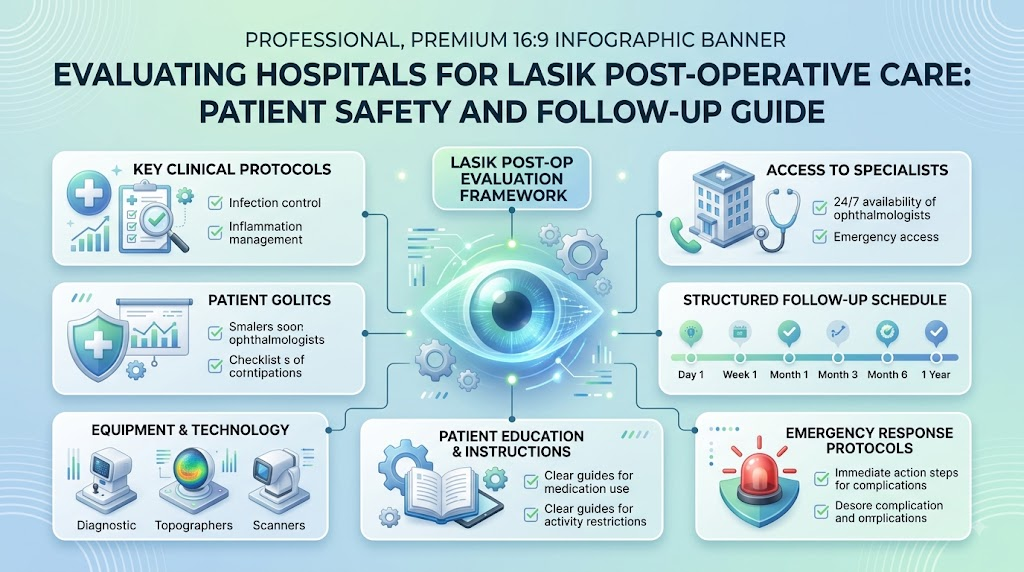
┌────────────────────────────────────────────────────────────────────────┐
│                   Standard Post-LASIK Follow-Up Schedule               │
├────────────────────────────────────────────────────────────────────────┤
│ • First Visit: 24 to 48 Hours Post-Surgery (Mandatory Baseline Check)  │
│ • Second Visit: 1 to 2 Weeks Post-Surgery (Early Healing Check)        │
│ • Third Visit: 1 Month Post-Surgery (Surface & Medication Review)      │
│ • Fourth Visit: 3 Months Post-Surgery (Visual Stability Check)         │
│ • Fifth Visit: 6 Months Post-Surgery (Long-Term Outcome & Stability)   │
└────────────────────────────────────────────────────────────────────────┘
The Initial 24–48 Hour Window
FDA guidance recommends that every LASIK patient undergo an initial clinical examination within 24 to 48 hours after surgery. During this visit, the surgeon or qualified care provider removes protective eye shields, measures uncorrected visual acuity, and conducts a slit-lamp biomicroscopic examination to inspect the flap interface.
Note: Your specific examination schedule may be adjusted by your surgeon based on your corneal healing rate, pre-existing conditions, or unexpected symptoms.
What Does the Doctor Check During Follow-Up Visits?
Postoperative checks involve a series of targeted clinical evaluations using specialized ophthalmic instruments.
[ Visual Acuity Testing ] ──> Evaluates distance/near sharpness and vision balance
[ Slit-Lamp Biomicroscopy ] ──> Inspects flap edges, interface clarity, and cornea
[ Ocular Surface Exam ] ────> Measures tear breakdown time and corneal epithelial smooth
[ IOP Tonometry ] ──────────> Monitors eye pressure (especially while on steroid drops)
[ Refractive Assessment ] ──> Tracks remaining refractive error as the cornea heals
Detailed Evaluation Areas
- Visual Acuity: Assesses how well you see at distance and near, tracking daily or weekly progress.
- Corneal Flap Position & Interface: Checks under high magnification for flap alignment, microscopic folds (striae), epithelial debris, or fluid collection.
- Inflammation & Infection Screening: Examines the cornea for white blood cell accumulation (DLK) or localized infiltrates indicating infection.
- Eye Surface Integrity: Evaluates the health of the surface cell layer (epithelium) and assesses dry eye patches.
- Intraocular Pressure (IOP): Measures internal eye pressure to ensure it remains within a safe range, as topical corticosteroid eye drops can occasionally cause temporary IOP elevations in sensitive individuals.
Normal Early Symptoms vs. Signs Requiring Attention
Experiencing temporary visual changes and mild discomfort is a standard part of early corneal recovery. However, understanding what is expected versus what requires escalation is key to patient safety.
┌─────────────────────────────────────────────────────────────────────────┐
│                      EXPECTED EARLY SYMPTOMS                            │
├─────────────────────────────────────────────────────────────────────────┤
│ • Temporary blurry or hazy vision                                       │
│ • Mild grittiness, itching, or burning sensation                        │
│ • Watery eyes or mild light sensitivity                                 │
│ • Mild redness on the white part of the eye (sclera)                    │
│ • Temporary glare, halos, or starbursts around nighttime lights         │
└─────────────────────────────────────────────────────────────────────────┘
Distinguishing Symptoms
While mild grittiness and visual halos are common during the first few weeks, symptoms should follow a general trend of gradual improvement. A common symptom should never be ignored if it suddenly worsens or is accompanied by sharp pain.
Understanding and Managing LASIK-Induced Dry Eye
Dry eye syndrome is one of the most frequent temporary side effects following LASIK surgery.
[ LASIK Creation of Corneal Flap ]
               │
               ▼
[ Temporary Disruption of Superficial Corneal Nerves ]
               │
               ▼
[ Reduced Feedback to Tear-Producing Glands ]
               │
               ▼
[ Decreased Tear Production & Altered Tear Film Stability ]
               │
               ▼
[ Temporary Dryness, Grittiness, & Fluctuating Vision ]
Clinical Management Protocols
- Preservative-Free Lubricating Drops: Frequently applied throughout the day to keep the ocular surface hydrated and smooth.
- Ophthalmic Ointments or Gels: Used at bedtime to provide extended lubrication overnight.
- Punctal Plugs: Tiny, temporary biocompatible plugs inserted into tear ducts by an ophthalmologist to preserve natural tears on the eye surface.
- Targeted Prescription Therapies: Anti-inflammatory drops or immunomodulators prescribed by your doctor for persistent dry eye cases.
Resource Reference: Detailed clinical descriptions of postoperative dry eye mechanisms and surface care management are published on EyeWiki (American Academy of Ophthalmology).
Prescribed Eye Drops: Protocols and Guidelines
Topical medications are essential after LASIK to prevent infection, control inflammation, and support corneal healing.
┌─────────────────────────────────────────────────────────────────────────┐
│                    POSTOPERATIVE EYE DROP CATEGORIES                    │
├───────────────────┬─────────────────────────────────────────────────────┤
│ Drop Type         │ Primary Clinical Purpose                            │
├───────────────────┼─────────────────────────────────────────────────────┤
│ Topical Antibiotics│ Short-term prophylaxis to prevent bacterial infection│
├───────────────────┼─────────────────────────────────────────────────────┤
│ Corticosteroids   │ Controls post-surgical corneal inflammation         │
├───────────────────┼─────────────────────────────────────────────────────┤
│ Artificial Tears  │ Hydrates the ocular surface and smooths tear film    │
└───────────────────┴─────────────────────────────────────────────────────┘
Essential Rules for Eye Drop Administration
- Follow Exact Schedules: Always use prescribed drops exactly as directed by your eye doctor.
- Never Alter Dosing Independently: Do not stop, reduce, or extend the use of antibiotic or steroid drops without explicit instructions from your surgeon.
- Maintain Sterility: Wash your hands thoroughly before applying drops, and never let the dropper tip touch your eye, eyelashes, or fingers.
- Space Multiple Drops: Wait 5 to 10 minutes between applying different types of eye drops to prevent washing out the previous medication.
Eye Protection Protocols After LASIK
Protecting your eyes from physical trauma and environmental contaminants is vital during early flap healing.
                  ┌──────────────────────────────────────────┐
                  │      Post-LASIK Protective Measures      │
                  └─────────────────────┬────────────────────┘
                                        │
      ┌──────────────────┬──────────────┴───────────────┬──────────────────┐
      ▼                  ▼                              ▼                  ▼
┌───────────┐    ┌──────────────┐              ┌───────────────┐    ┌──────────────┐
│ Strictly  │    │ Sleep        │              │ Wear Protective│   │ Avoid Contam-│
│ NO Eye    │    │ Goggles/     │              │ Eyewear       │    │ inated Water │
│ Rubbing   │    │ Shields      │              │ Outdoors      │    │ Exposure     │
└───────────┘    └──────────────┘              └───────────────┘    └──────────────┘
- Do Not Rub Your Eyes: Mechanical pressure or rubbing can displace, fold, or wrinkle the delicate corneal flap, requiring surgical repositioning.
- Wear Sleep Shields: Use protective clear shields or goggles while sleeping for the initial period recommended by your surgeon (typically 1 to 2 weeks) to prevent accidental rubbing.
- Sunglasses for UV & Wind Protection: Wear UV-blocking sunglasses outdoors to minimize light sensitivity and shield your eyes from dust and wind.
Activity Restrictions During Recovery
Allowing the corneal surface to heal requires temporary adjustments to daily routines.
┌─────────────────────────────────────────────────────────────────────────┐
│                    TYPICAL RECOVERY ACTIVITY TIMELINE                   │
├───────────────────────┬─────────────────────────────────────────────────┤
│ Activity              │ Recommended Waiting Period*                     │
├───────────────────────┼─────────────────────────────────────────────────┤
│ Driving               │ Resume only after confirmed safe by doctor      │
│ Non-contact Work      │ Typically 1 to 3 days (varies by comfort)       │
│ Eye Makeup / Creams   │ Avoid around eyes for at least 1 to 2 weeks     │
│ Swimming / Hot Tubs   │ Avoid for 2 to 4 weeks (prevents infection)     │
│ Contact Sports        │ Avoid for 4 to 6 weeks (unless using protection)│
└───────────────────────┴─────────────────────────────────────────────────┘
*Exact timelines vary based on surgeon preference, flap creation method, and individual healing rates.
Corneal Flap Care and Stability
The creation of a corneal flap—whether using a mechanical microkeratome or a femtosecond laser—is central to LASIK. Understanding flap security helps set expectations.
[ Laser Creation of Flap ] ──> [ Flap Repositioned After Reshaping ] ──> [ Natural Cell Adhesion Begins ]
                                                                               │
                                                                               ▼
                                                                [ Full Matrix Anchoring Over Months ]
Critical Flap Factors:
- Adhesion: In the first 24–48 hours, osmotic pressure holds the flap in place while epithelial cells bridge the edge. Over subsequent months, deeper stromal collagen remodeling secures the flap.
- Flap Striae: Microscopic wrinkles or folds in the flap that can occasionally occur during early healing. If they affect vision, your surgeon can gently smooth them out.
- Displacement Risk: Direct eye trauma or vigorous rubbing can dislodge the flap. Emergency management by an ophthalmologist can successfully reposition a shifted flap.
Understanding Possible LASIK Complications
While modern LASIK has a strong safety profile, complications can occasionally occur. Qualified aftercare centers are fully equipped to identify and treat these issues promptly.
┌─────────────────────────────────────────────────────────────────────────┐
│                   POSTOPERATIVE COMPLICATION OVERVIEW                   │
├────────────────────────┬────────────────────────────────────────────────┤
│ Complication           │ Brief Clinical Description                     │
├────────────────────────┼────────────────────────────────────────────────┤
│ Diffuse Lamellar       │ Non-infectious inflammatory white blood cell    │
│ Keratitis (DLK)        │ accumulation under the flap ("Sands of Sahara") │
├────────────────────────┼────────────────────────────────────────────────┤
│ Epithelial Ingrowth    │ Surface tissue cells growing beneath the flap  │
├────────────────────────┼────────────────────────────────────────────────┤
│ Flap Striae            │ Microscopic folds or wrinkles in the flap tissue│
├────────────────────────┼────────────────────────────────────────────────┤
│ Infectious Keratitis   │ Microbial infection of the corneal tissue      │
├────────────────────────┼────────────────────────────────────────────────┤
│ Post-LASIK Ectasia     │ Rare progressive corneal thinning & steepening │
└────────────────────────┴────────────────────────────────────────────────┘
Clinical Fact: According to EyeWiki, early detection during scheduled postoperative checkups allows most complications—such as DLK or micro-striae—to be managed effectively using targeted medical drops or minor clinical procedures.
Red-Flag Warning Signs: When to Seek Immediate Care
Certain symptoms indicate potential complications that require urgent evaluation by an ophthalmologist. Do not wait for your next scheduled checkup if you experience these signs.
┌─────────────────────────────────────────────────────────────────────────┐
│                      URGENT ESCALATION WARNING SIGNS                    │
├─────────────────────────────────────────────────────────────────────────┤
│ 🚨 Severe or rapidly worsening eye pain                                │
│ 🚨 Sudden, marked drop in visual acuity or dark spots in vision         │
│ 🚨 Worsening eye redness, purulent discharge, or extreme swelling       │
│ 🚨 Direct physical injury or impact to the eye                          │
│ 🚨 Sudden appearance of intense light sensitivity with severe throbbing │
└─────────────────────────────────────────────────────────────────────────┘
FDA Safety Notice: The U.S. Food and Drug Administration advises patients experiencing severe eye pain, sudden worsening of vision, or signs of infection to contact their refractive surgeon or eye care emergency facility immediately rather than waiting for a scheduled follow-up visit.
Managing Expectations: Vision Fluctuations and Stabilization
Visual recovery after LASIK is a gradual process rather than an instantaneous overnight shift.
Day 1 to Week 2          Month 1 to Month 3       Month 3 to Month 6
┌──────────────────┐    ┌──────────────────┐    ┌──────────────────┐
│ Rapid acuity     │───>│ Gradual surface  │───>│ Final visual     │
│ improvement with │    │ stabilization;   │    │ stabilization &  │
│ minor haziness   │    │ halos decrease   │    │ refraction firm  │
└──────────────────┘    └──────────────────┘    └──────────────────┘
- Early Fluctuations: Vision may shift between morning and evening, often linked to tear film changes and temporary dry eye.
- Nighttime Visual Symptoms: Starbursts, halos, and glare around streetlights or headlights are common early on and typically lessen over 3 to 6 months as corneal swelling resolves.
- Patience in Stabilization: The FDA notes that full refractive stabilization can take between 3 and 6 months depending on pre-surgery prescription strength and individual corneal healing rates.
Refractive Stability and LASIK Enhancement Considerations
In a small percentage of cases, residual refractive error (mild nearsightedness, farsightedness, or astigmatism) may remain after initial healing.
                  ┌──────────────────────────────────────────┐
                  │    Evaluating Readiness for Enhancement  │
                  └─────────────────────┬────────────────────┘
                                        │
      ┌──────────────────┬──────────────┴───────────────┬──────────────────┐
      ▼                  ▼                              ▼                  ▼
┌───────────┐    ┌──────────────┐              ┌───────────────┐    ┌──────────────┐
│ Document  │    │ Minimum 3-6  │              │ Comprehensive │    │ Adequate     │
│ Refractive│    │ Month Healing│              │ Ocular Surface│    │ Residual     │
│ Stability │    │ Period       │              │ Health Check  │    │ Stromal Thickness│
└───────────┘    └──────────────┘              └───────────────┘    └──────────────┘
Key Principles for Enhancements:
- No Premature Decisions: Surgeons recommend waiting at least 3 to 6 months to ensure refractive measurements are completely stable before considering any secondary procedure.
- Thorough Re-Evaluation: Corneal thickness, topography, and dry eye status must be thoroughly re-checked.
- Realistic Expectations: Enhancement procedures correct residual focus issues, but they may not eliminate non-refractive symptoms like light sensitivity or dry eye.
How to Choose a Hospital for LASIK Post-Operative Care
Selecting an eye hospital or aftercare facility with robust diagnostic capabilities ensures safe and supportive long-term monitoring.
┌────────────────────────────────────────────────────────────────────────┐
│               LASIK Aftercare Hospital Selection Checklist             │
├────────────────────────────────────────────────────────────────────────┤
│  1. Specialist Team: Board-certified ophthalmologists & corneal experts │
│  2. Diagnostic Suite: Advanced slit-lamps, topographers, & tonometers  │
│  3. Emergency Availability: Dedicated 24/7 hotline for urgent concerns │
│  4. Clear Schedules: Structured written follow-up care pathways         │
│  5. Dry Eye Management: Specialized tools (e.g., punctal plugs, IPL)   │
│  6. Transparent Billing: Clear pricing for checkups & unexpected care   │
│  7. Seamless Transfer: Smooth record sharing between surgeons & clinics│
│  8. Responsive Communication: Accessible staff for daily medication queries│
└────────────────────────────────────────────────────────────────────────┘
The Role of the Operating Surgeon vs. Co-Managing Providers
Continuity of care is vital throughout your recovery process.
┌─────────────────────────────────────────────────────────────────────────┐
│                      MODELS OF LASIK AFTERCARE                          │
├───────────────────────────────────┬─────────────────────────────────────┤
│ Care Model                        │ Operational Description             │
├───────────────────────────────────┼─────────────────────────────────────┤
│ Direct Surgical Aftercare         │ Operating surgeon conducts all      │
│                                   │ postoperative checks directly       │
├───────────────────────────────────┼─────────────────────────────────────┤
│ Formal Co-Management              │ Initial check by surgeon; routine   │
│                                   │ visits with qualified optometrist/  │
│                                   │ ophthalmologist near patient's home │
└───────────────────────────────────┴─────────────────────────────────────┘
If your postoperative care is co-managed, verify that direct lines of communication exist between your local eye doctor and your operating refractive surgeon in case specialized intervention is required.
Understanding Costs Associated with LASIK Aftercare
Postoperative care financial structures can vary significantly depending on hospital policies and surgery packages.
┌─────────────────────────────────────────────────────────────────────────┐
│                    POSTOPERATIVE COST BREAKDOWN                         │
├───────────────────────┬─────────────────────────────────────────────────┤
│ Cost Component        │ Coverage & Billing Considerations               │
├───────────────────────┼─────────────────────────────────────────────────┤
│ Routine Follow-Ups    │ Commonly bundled into global surgery package    │
│ Prescribed Eye Drops  │ Typically out-of-pocket or covered by pharmacy  │
│ Advanced Dry Eye Care │ Punctal plugs or specialized drops may cost extra│
│ Unplanned Imaging     │ Corneal OCT or topography for complex healing   │
│ Enhancement Procedures│ May be covered under package warranties or fee-based│
└───────────────────────┴─────────────────────────────────────────────────┘
Insurance and LASIK Aftercare Coverage
Because refractive surgery is generally classified as an elective procedure:
- Routine Follow-Ups: Usually included within the all-inclusive surgical package offered by eye centers.
- Complication Management: Medical treatments for complications (such as severe infection or secondary pressure spikes) may be eligible for coverage under standard medical eye insurance.
- Verification Step: Always request a clear, written breakdown of what care is included in your global surgical fee versus what could generate separate medical charges.
How to Compare Two Eye Hospitals for LASIK Aftercare
Use this practical comparison table when assessing prospective aftercare centers:
| Evaluation Criteria | Hospital A | Hospital B | Verification Notes |
| Specialist Availability | General Optometry | Corneal & Refractive Specialists | On-site corneal experts speed up complex care |
| Emergency Coverage | Office hours only | 24/7 Dedicated Ophthalmic Hotline | Crucial for urgent weekend or late-night pain |
| Dry Eye Protocols | Basic artificial tears | Advanced dry eye therapies (e.g., plugs) | Important for patients prone to dry eyes |
| Diagnostic Tech | Standard Slit-Lamp | Corneal Topography & OCT on-site | Allows detailed structural corneal checks |
| Fee Inclusions | 90-day bundled care | 1-year comprehensive aftercare | Check duration of included follow-up visits |
| Co-Management Protocol | Informal referral | Formalized shared care protocol | Ensures clear communication between doctors |
Red Flags When Choosing a LASIK Aftercare Center
Stay cautious if an eye center exhibits any of these warning signs:
┌─────────────────────────────────────────────────────────────────────────┐
│                           WARNING RED FLAGS                             │
├─────────────────────────────────────────────────────────────────────────┤
│ ✖ Claiming "zero risk," "100% perfect vision," or "no recovery needed"  │
│ ✖ Offering no structured follow-up schedule or skipping the 24-hr check │
│ ✖ Lacking 24/7 emergency contact details for urgent post-op pain         │
│ ✖ Dismissing worsening pain or vision loss as "just normal healing"    │
│ ✖ Pressuring patients into premature enhancement procedures (<3 months)  │
│ ✖ Unclear pricing structures for aftercare visits or complications     │
│ ✖ No access to board-certified ophthalmologists or corneal specialists  │
└─────────────────────────────────────────────────────────────────────────┘
Myths vs. Medical Facts in LASIK Recovery
┌─────────────────────────────────────────────────────────────────────────┐
│                           MYTHS VS. FACTS                               │
├───────────────────────────────────────────┬─────────────────────────────┤
│ MYTH                                      │ FACT                        │
├───────────────────────────────────────────┼─────────────────────────────┤
│ "LASIK care ends the moment laser         │ "Follow-up exams over 3-6   │
│  treatment is finished."                  │  months are vital for safety."│
├───────────────────────────────────────────┼─────────────────────────────┤
│ "Clear vision on Day 1 means you can      │ "Routine follow-up checks   │
│  skip your follow-up checkups."           │  verify underlying stability."│
├───────────────────────────────────────────┼─────────────────────────────┤
│ "Rubbing your eyes after LASIK is fine    │ "Eye rubbing can displace   │
│  if done gently."                         │  or wrinkle the corneal flap."│
├───────────────────────────────────────────┼─────────────────────────────┤
│ "Postoperative dry eye means the surgery  │ "Dry eye is a common,       │
│  was unsuccessful."                       │  manageable recovery phase."│
├───────────────────────────────────────────┼─────────────────────────────┤
│ "Every patient with minor residual error  │ "Enhancements require careful│
│  should get an enhancement immediately."  │  healing & stable refraction."│
└───────────────────────────────────────────┴─────────────────────────────┘
Common Patient Mistakes to Avoid
- Skipping the 24–48 Hour Checkup: Assuming that good initial vision eliminates the need for early clinical flap inspection.
- Rubbing Eyes Prematurely: Dislodging or wrinkling the corneal flap due to subconscious rubbing.
- Changing Drop Schedules: Stopping anti-inflammatory or antibiotic drops early without medical advice.
- Ignoring Escalation Signs: Waiting for a regular appointment when experiencing severe eye pain, sudden dimming of vision, or discharge.
- Early Swimming or Water Exposure: Exposing vulnerable corneal tissues to untreated pool, lake, or hot tub water before getting clinical clearance.
How BESTEYEHOSPITALS Can Support Your Search
Navigating refractive surgery and aftercare options requires access to clear, trustworthy information. BESTEYEHOSPITALS.COM offers patient-focused resources to help you:
- Locate Eye Care Facilities: Discover leading ophthalmology centers and refractive surgery units.
- Understand Aftercare Standards: Learn what to expect during postoperative checkups and visual recovery.
- Prepare Consultations: Access downloadable question lists for your surgical and aftercare providers.
- Explore Eye Health Guides: Read clear, evidence-based articles on corneal care, dry eye management, and vision correction options.
Frequently Asked Questions (FAQs)
1.What is LASIK post-operative care?
LASIK post-operative care includes the scheduled eye checkups, prescribed medicated drops, surface hydration, protective habits, and clinical evaluations that support corneal healing after laser surgery.
2.Why are follow-up visits necessary after LASIK?
Follow-up visits allow your ophthalmologist to evaluate corneal flap alignment, monitor for signs of inflammation or infection, track visual stabilization, and manage dry eye symptoms safely.
3.When should I have my first post-LASIK checkup?
The initial follow-up exam is recommended within 24 to 48 hours after surgery to verify flap placement and evaluate early tissue healing.
4.What does the eye doctor check during follow-up visits?
The doctor evaluates visual acuity, inspects the corneal flap using a slit-lamp biomicroscope, checks intraocular pressure, measures surface lubrication, and screens for inflammation.
5.Is blurry vision normal during early LASIK recovery?
Yes. Mild haziness, visual fluctuations, light sensitivity, and halos around lights are common during early healing as the corneal surface stabilizes.
6.How long does LASIK recovery take?
Initial functional vision recovery often occurs within 24 to 48 hours, while full corneal flap settling, dry eye resolution, and visual stabilization take approximately 3 to 6 months.
7.How long does post-LASIK dry eye typically last?
Dry eye symptoms are most noticeable during the first few weeks to months after surgery. They usually lessen gradually as corneal surface nerves recover, managed with artificial tears.
8.Can I rub my eyes after LASIK surgery?
No. You must avoid rubbing your eyes for several weeks after LASIK to prevent dislodging, wrinkling, or shifting the micro-thin corneal flap.
9.When can I return to exercising after LASIK?
Light non-contact activities (like walking or stationary cycling) can often resume within a few days, but high-impact sports, heavy lifting, or activities with risk of eye contact require approval from your doctor.
10.When is it safe to swim after LASIK?
Patients are generally advised to avoid pools, hot tubs, lakes, and ocean swimming for 2 to 4 weeks after surgery to protect against microbial infection.
11.What are the urgent warning signs after LASIK?
Contact your eye doctor immediately if you experience severe or worsening pain, a sudden drop in vision, increasing redness, eye discharge, or direct eye trauma.
12.What should I do if my vision suddenly worsens after LASIK?
Sudden vision loss or significant dimming is not a standard recovery symptom. Seek urgent clinical evaluation by your refractive surgeon or an emergency eye care provider.
13.When can a LASIK enhancement procedure be considered?
Enhancements are evaluated only after visual measurements have remained completely stable for at least 3 to 6 months and corneal health is re-confirmed.
14.How much does LASIK post-operative care cost?
Routine follow-up examinations within the first 3 to 12 months are often included in global refractive surgery fees. Extra charges may apply for specialized dry eye therapies or prescriptions.
15.How do I choose a hospital for LASIK aftercare?
Select an eye center with qualified ophthalmologists, advanced slit-lamp diagnostic tools, clear aftercare schedules, specialized dry eye care, and 24/7 emergency contact options.
Final Conclusion
Visual recovery after LASIK is a gradual, step-by-step process that relies on consistent postoperative monitoring. Attending scheduled checkups, following prescribed eye drop regimens, wearing eye protection, and allowing time for visual stabilization help protect your surgical investment.