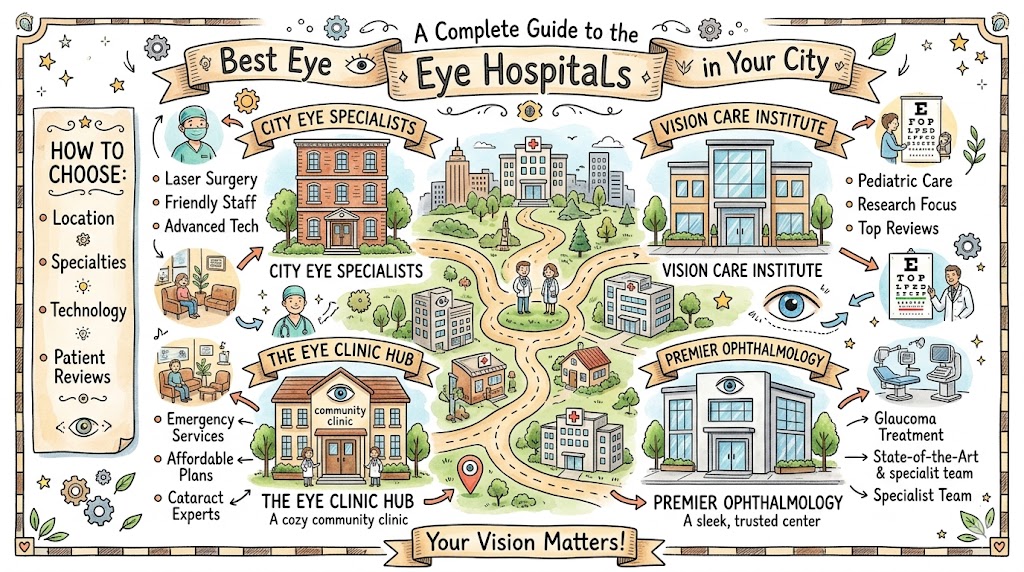
Experiencing sudden vision changes or persistent eye irritation often drives patients to seek immediate answers on public forums. Unfortunately, typing visual symptoms into a standard search engine regularly exposes individuals to misleading internet health information. This unstructured browsing frequently breeds deep confusion from self-diagnosis, tempting patients to buy over-the-counter eye drops that might mask more critical conditions.When professional triage is absent, relying on unvetted articles easily results in dangerous complications or delayed treatment for progressive visual disorders. Protecting your long-term sight requires learning how to identify the top eye hospitals in your city using verified digital networks. This concept means looking past basic commercial advertisements and utilizing structured online medical frameworks to locate accredited local ophthalmic surgical facilities.
Consequently, this extensive guide provides an educational breakdown designed to transform you into an informed and highly analytical medical consumer. We will analyze the evolution of modern virtual healthcare, showing how initial telehealth consultations can safely optimize your pre-operative planning. Furthermore, you will learn to interpret clinical performance tracking, analyze core telemedicine metrics, and explore professional digital workflows.Securing optimal vision outcomes relies on combining early digital clinical consultations with elite, fully equipped physical surgical facilities. If you want to evaluate certified healthcare networks and locate specialized local eye care facilities right now, browse BESTEYEHOSPITALS to discover premium patient support systems. Let us examine how modern digital medical tools can help you safely identify top-tier physical hospitals in your area.
The Evolution of Online Healthcare Services
Early Challenges in Digital Healthcare
The initial expansion of public internet spaces created a disorganized digital archive filled with unvetted medical opinions and commercial advertisements. Individuals searching for solutions to blurry vision or corporate eye strain regularly encountered unmonitored chat rooms and biased blog posts. This complete absence of verified medical guidance exposed patients to massive misinformation, as search algorithms often prioritized engaging marketing stories over scientific accuracy.
As a direct result, these unregulated channels contributed to extensive self-medication risks, with patients purchasing unverified herbal washes or corrective lenses without prescriptions. Because public platforms failed to provide true patient-centered evaluation, users consistently underestimated the serious risks associated with unmanaged intraocular pressure. This reliance on unverified internet search results caused severe delayed treatment, as individuals attempted to fix structural retinal issues using generic advice.
Moving Toward Trusted Telemedicine Platforms
To counteract the rapid spread of dangerous digital health myths, certified medical organizations began building secure, dedicated telehealth portals. The subsequent rise of online doctor consultation platforms completely transformed how the public approaches initial visual assessments and preventative health education. Instead of relying on anonymous forum responses, individuals gained the ability to share high-resolution visual data directly with credentialed clinicians.
These modern platforms utilize strict identity verification measures, guaranteeing that every participating professional holds proper specialty licensing and active clinical privileges. Patients quickly learned to utilize these encrypted portals to discuss sudden symptom developments, therapeutic side effects, and pre-surgical anxieties. This milestone dramatically improved general digital healthcare accessibility, empowering users to obtain precise clinical definitions before stepping into a local physical facility.
Expansion Across Modern Healthcare Ecosystems
Over the last few years, virtual medical services have grown beyond basic video consultations into a deeply integrated worldwide network. Modern telemedicine infrastructure now connects individual patients, local primary practices, elite eye specialty hospitals, and digital health records into a single framework. This system expansion allows complex diagnostic files, such as detailed optical coherence tomography scans, to travel securely between authorized care teams.
Today, digital health platforms operate as an essential pillar of regional and international medical delivery infrastructure. They successfully lower geographic barriers for rural populations, eliminate local waiting room congestion, and optimize pre-operative screening processes across borders. This ongoing technological integration ensures that patients can evaluate regional hospital capabilities, review specialized clinical resources, and arrange care without facing operational delays.
Defining Reliable Medical Advice Online
Core Structure of Online Medical Guidance
Authorized online medical advice relies on a strict digital framework designed to mimic the clinical safety of a physical hospital. These modern platforms utilize advanced patient intake portals where individuals input their complete medical history, active prescriptions, and lifestyle habits. This digital profile undergoes systematic triaging to route the patient to the appropriate medical specialist immediately.
Once a connection is established, the interaction occurs over encrypted video, audio, or text channels protected by medical privacy regulations. The consultation follows standard clinical workflows, where the doctor interviews the patient, evaluates visual data, and reviews past records. This structural approach ensures that every piece of advice issued stems from systematic clinical evaluation rather than generic guesswork.
Daily Responsibilities of Online Healthcare Providers
The day-to-day operations of an online medical network involve diverse healthcare professionals working together to maintain continuous care quality. Practicing virtual doctors spend their shifts reviewing digital intake charts, conducting live video evaluations, and constructing personalized treatment plans. They assess acute symptoms, manage long-term chronic conditions, and issue digital prescriptions directly to local pharmacies.
Simultaneously, clinical advisors and quality assurance teams review random session transcripts to ensure adherence to established medical guidelines. Support staff manage patient schedules, assist with platform navigation, and coordinate follow-up care with local clinics when required. These constant clinical operations keep the virtual ecosystem safe, accurate, and responsive around the clock.
Local Clinics vs. Online Healthcare Platforms
Understanding the operational differences between physical clinics and virtual platforms helps patients choose the right care setting for their needs:
- Physical Clinics: Require travel and waiting room time, provide hands-on physical examinations, offer immediate lab testing, and handle severe traumatic injuries.
- Virtual Healthcare Platforms: Eliminate travel times completely, offer rapid appointment scheduling, provide visual symptom assessments, and lower exposure to contagious illnesses.
- Care Scope: Traditional clinics excel at tactile diagnostics and emergencies, whereas online portals optimize triage, routine checkups, and prescription management.
The Patient-Centered Digital Healthcare Mindset
The shift toward virtual medical delivery requires an active, informed approach from the patient. Utilizing digital portals effectively means moving away from passive consumption of health data toward proactive, organized communication. Patients must accurately document their health timelines, track baseline vital signs, and present clear questions during virtual sessions.
This modern, patient-centered approach transforms individuals into active collaborators in their own recovery process. Enhanced digital access allows you to seek expert clarity the moment a symptom appears, removing the stress of prolonged uncertainty. Embracing this disciplined mindset ensures that online medical tools serve to protect and improve your long-term wellness.
The 7 Core Principles of Top Eye Hospitals in Your City
1. Verified Medical Information
Every piece of health guidance delivered online must originate from credentialed, board-certified medical professionals. Reliable systems completely bar unverified opinions, ensuring all recommendations reflect current scientific consensus and peer-reviewed clinical research.
2. Patient Safety & Privacy
Virtual care systems must utilize top-tier data encryption standards to safeguard sensitive personal health information. Maintaining absolute patient confidentiality builds the foundational trust required for individuals to share accurate medical histories openly during remote consultations.
3. Reducing Delays in Medical Guidance
Digital consultation platforms aim to eliminate systemic bottlenecks, cutting down the hours spent traveling or waiting in physical clinics. Providing rapid access to clinical professionals helps patients receive timely guidance before minor issues escalate into severe emergencies.
4. Healthcare Visibility & Transparency
Trustworthy digital platforms provide transparent, detailed profiles of all participating clinicians, including their licensing, specialties, and professional histories. This open visibility empowers patients to make informed choices regarding the specific experts managing their medical care.
5. Healthcare Automation & Accessibility
Modern systems employ automated scheduling, intelligent symptom intake forms, and direct digital prescription routing to simplify patient workflows. These automated layers reduce administrative confusion, making it easy for users of all technical levels to navigate the platform.
6. Reliable Virtual Medical Support
A professional telemedicine platform maintains redundant servers and constant technical monitoring to prevent system downtime. Ensuring uninterrupted platform availability guarantees that critical health consulting channels remain open whenever a patient needs advice.
7. Simplified Healthcare Consultation Experience
The digital user interface must remain clean, clear, and highly intuitive for diverse populations. Removing technical friction from the registration and booking processes allows sick or stressed individuals to connect with real doctors without facing annoying technical hurdles.
Key Healthcare Concepts You Must Know
Online Consultation vs. Self-Diagnosis vs. Professional Medical Advice
Navigating the digital health landscape safely requires drawing clear lines between different forms of health discovery:
- Self-Diagnosis: Occurs when an untrained individual browses public search engines to guess their condition, which frequently leads to unnecessary panic or inappropriate self-treatment.
- Online Consultation: The formal digital process of meeting a certified doctor via video or chat to evaluate active symptoms systematically.
- Professional Medical Advice: The personalized, legally binding clinical diagnosis and prescription plan provided exclusively by a licensed healthcare practitioner.
Healthcare Performance Tracking
To maintain safety at scale, digital health networks constantly monitor their operations using specific clinical performance data. They measure how quickly a doctor responds to an open portal message, track diagnostic accuracy, and audit patient compliance with advice. Reviewing these operational metrics ensures that remote clinical encounters consistently match or exceed the safety standards of standard brick-and-mortar facilities.
Digital Healthcare Challenges
Despite massive technical progress, modern virtual platforms must constantly fight against the rapid spread of online medical misinformation. AI-generated blogs and viral social media posts often spread inaccurate remedy recommendations that lack scientific backing. Patients must remain careful, validating every internet health claim through certified, professional medical channels before modifying their daily healthcare routines.
Medical Escalation & Emergency Coordination
Virtual care portals serve as excellent tools for initial triage, but they have distinct physical limitations. When a virtual clinician detects high-risk symptoms during a chat, the system must trigger immediate emergency coordination protocols. Understanding when an online consultation is enough and when hospital care is necessary is vital to preserving human life.
Capacity Planning in Telemedicine
During seasonal disease spikes or regional health crises, online medical platforms experience massive surges in incoming user traffic. Effective digital networks use automated load balancing and flexible shift scheduling to distribute patient requests evenly across their provider network. This proactive capacity management prevents platform crashes, reduces patient wait times, and maintains clinical care quality during high-demand events.
Four Critical Healthcare Metrics
| Metric Name | Operational Definition | Direct Impact on Patient Care |
| Patient Response Time | The minutes elapsed between an initial consultation request and live doctor connection. | Minimizes patient anxiety and prevents the early worsening of acute symptoms. |
| Consultation Quality | The measure of a clinician’s adherence to official medical review guidelines. | Ensures diagnostic accuracy and limits the risk of clinical prescription errors. |
| Patient Satisfaction | Post-consultation user survey scores measuring clarity and overall platform comfort. | Drives long-term patient engagement and builds trust in digital care. |
| Accessibility Efficiency | The technical ease with which diverse users can successfully book an appointment. | Lowers technical barriers for elderly or remote populations seeking care. |
Online Healthcare Technology vs. Traditional Healthcare Systems
The Healthcare Philosophy Difference
Traditional medicine focuses on localized, physical presence, relying on tactile examinations and hands-on clinical interventions within a dedicated building. Conversely, digital healthcare emphasizes immediate accessibility, data-driven tracking, and patient comfort. Virtual medicine shifts the point of care away from the hospital directly into the patient’s home, removing geographic barriers to optimize preventive wellness.
Roles & Responsibilities Compared
Online Doctors
- Conduct systematic virtual symptom reviews using live high-definition video feeds.
- Analyze submitted digital imagery, lab documents, and historical patient medical profiles.
- Issue electronic prescriptions and formulate comprehensive home recovery strategies.
Healthcare Advisors
- Educate registered users on interpreting public health guidelines and preventative care plans.
- Guide patients through complex medical documentation and systemic clinical insurance requirements.
- Provide continuous lifestyle and nutritional coaching to support primary treatment pathways.
Telemedicine Support Teams
- Manage incoming patient queues and optimize clinical scheduling across time zones.
- Resolve live connection errors during active patient-doctor video consultations.
- Collect post-consultation feedback to improve general platform performance.
Patient Coordinators
- Organize seamlessly integrated transitions between online consultations and physical clinic visits.
- Gather external physical lab results and upload them directly into the patient’s electronic chart.
- Follow up with patients post-consultation to verify prescription collection and recovery progress.
Healthcare IT Teams
- Maintain end-to-end data encryption across all live voice, video, and text channels.
- Update interactive intake portals to protect user data against security threats.
- Integrate electronic health record systems to ensure seamless data updates across clinics.
Can Both Healthcare Systems Work Together?
Modern medical infrastructure functions best when physical facilities and digital platforms blend into a single hybrid system. Patients can use online portals for initial symptom assessment, receiving rapid guidance on whether they need an in-person evaluation. If a physical visit occurs, the resulting lab work and imaging reports flow back into the digital profile for convenient, long-term virtual monitoring. This cooperative loop eliminates disconnected care gaps, lowers patient costs, and keeps electronic records accurate across all providers.
Which Healthcare Model Should Patients Choose?
Selecting the correct care model depends on the severity and nature of your active medical situation. For minor issues like skin rashes, seasonal allergies, prescription renewals, or mental health checkups, online consultation platforms offer unmatched convenience and safety. However, for sudden chest pain, deep physical trauma, or severe breathing difficulties, you must bypass the internet completely and head to a physical emergency department.
Real-World Use Cases of Online Medical Advice
How Patients Use Online Healthcare Platforms
Millions of individuals interact with online medical spaces daily to manage routine health matters efficiently. Parents use virtual consults to show pediatricians childhood skin rashes late at night, avoiding stressful emergency room visits. Busy professionals use text-based portals during work breaks to secure quick refills for maintenance medications without missing shifts. This direct convenience helps people stay consistent with their treatment plans while fitting healthcare seamlessly into daily life.
Emergency & Critical Care Coordination
When a patient logs into an online portal presenting severe symptoms like slurred speech or numbness, the platform shifts into an active triage coordinator. The attending virtual doctor immediately instructs the patient to stop the call and dial local emergency services. While the patient acts, the platform can transmit the user’s saved health profile directly to the nearest hospital triage desk. This quick electronic data sharing ensures that arriving trauma teams already know the patient’s allergies and medical history, saving vital minutes during critical care windows.
Managing Healthcare at Large Scale
During widespread regional flu outbreaks or seasonal health disruptions, physical emergency rooms frequently become overwhelmed with patients seeking basic testing. Digital platforms step in to absorb this massive volume, letting thousands of individuals consult with doctors simultaneously from home. This digital distribution keeps crowded hospital lobbies clear for highly critical cases, balancing the patient load across the entire regional healthcare network.
High Availability in Digital Healthcare
A child spiking a high fever at midnight requires immediate medical evaluation, long after local primary clinics have closed their doors. High-availability telemedicine networks solve this issue by keeping verified doctors online through rolling night shifts. This constant availability ensures that families can access professional guidance at any hour, preventing frantic, unguided internet searches or expensive, unnecessary hospital trips.
Efficient Healthcare Support for Rural Areas
Residents of isolated agricultural or mountain communities often live hours away from the nearest specialized medical center. Telemedicine platforms bridge this geographic gap by bringing elite medical specialists directly to the patient’s local computer screen. Rural individuals can manage complex chronic conditions, receive specialized advice, and review lab reports without the stress of long, costly travel.
Common Mistakes in Online Healthcare
Mistake 1 — Trusting Unverified Medical Information
Many internet users read anonymous advice on public social media feeds or lifestyle blogs, assuming the suggestions are medically sound. Following unverified health trends can lead to dangerous interactions with existing medications or cause organ damage. Always check that your health information comes from a licensed, practicing clinician operating on an authorized medical platform.
Mistake 2 — Ignoring Serious Symptoms
People sometimes use mild online articles to downplay persistent, worsening pains, hoping their symptoms will disappear on their own. Assuming a chronic cough or chest pressure is just standard acid reflux can result in life-threatening complications. Virtual platforms should serve as a quick path to professional care, never as a tool to ignore serious bodily warnings.
Mistake 3 — Depending Only on Internet Searches
Typing symptoms into a generic search engine produces an unranked list of possibilities based on algorithm popularity rather than clinical reality. This unfiltered data access causes unnecessary panic or a false sense of security, neither of which protects your physical health. Search engines lack the specialized clinical diagnostic training required to understand the nuances of your unique biology.
Mistake 4 — Sharing Incomplete Medical Information
When starting an online consultation, some patients hold back details about their herbal supplements, lifestyle habits, or past medication reactions. Omitting these key pieces of health data makes it difficult for a virtual physician to build a completely safe treatment plan. Providing a complete, accurate health history ensures your online doctor can issue safe prescriptions without causing accidental interactions.
Mistake 5 — Delaying Emergency Care
Attempting to schedule a routine virtual consultation while experiencing classic signs of a stroke or heart attack is a dangerous misuse of technology. Telehealth systems are explicitly built for non-emergency guidance and lack the physical tools required to treat acute life-threatening situations. Recognizing when your body needs immediate, physical emergency interventions saves lives.
Mistake 6 — Ignoring Data Privacy
Registering on unverified forums or entering your medical history into sketchy health tools exposes your private data to hackers. Unregulated websites regularly sell personal data to third-party advertisers, compromising your digital security and patient privacy. Protect your medical history by using only certified platforms that strictly adhere to official medical data encryption laws.
Essential Healthcare Tools & Technologies
Telemedicine Platforms
The modern virtual consult relies on specialized software built specifically to support high-definition video connections and real-time medical chat. These encrypted platforms let doctors examine physical symptoms visually, share educational diagrams, and interview patients clearly without connection drops. They function as safe virtual examination rooms, protecting patient privacy while delivering clear communication.
Emergency Coordination Systems
Behind the scenes of major health portals sit specialized escalation tools designed to handle critical patient safety issues. If a doctor notes dangerous vital signs during a virtual chat, these systems allow them to locate the patient’s GPS coordinates instantly. The platform can then patch the doctor directly into the patient’s local emergency dispatch center, ensuring help arrives quickly.
Healthcare Automation Platforms
Modern digital health portals rely on automated back-end systems to handle time-consuming administrative tasks efficiently. These tools automatically manage patient scheduling, send text appointment reminders, and route digital prescription orders straight to local pharmacies. Automating these steps removes human error from paperwork, allowing medical staff to focus completely on treating the patient.
Smart Healthcare Monitoring
The growing use of wearable health devices allows patients to sync their daily physiological data directly into their clinical profiles. Smartwatches and home blood pressure cuffs record heart rates, blood oxygen levels, and blood pressure patterns continuously over time. Doctors can review these clear digital logs during online consultations, basing their long-term treatment changes on accurate home data rather than a single reading.
Healthcare Performance Tracking
To maintain high clinical standards, digital medical networks utilize advanced software to monitor the quality of every remote interaction. These analytical tools track average patient waiting times, review user satisfaction surveys, and flag unusual prescription patterns automatically. Gathering this data allows clinical directors to optimize care delivery, keeping patient satisfaction high and wait times short.
How to Become a Digital Healthcare Expert — Career Roadmap
Skills Every Healthcare Professional Must Have
Succeeding within the fast-growing virtual care industry requires building a specialized blend of clinical knowledge and technical skills:
- Healthcare Communication: The ability to explain complex diagnoses clearly and warmly over video or text channels.
- Patient Support: Empathically guiding anxious individuals through both technical setups and personalized recovery instructions.
- Digital Healthcare Understanding: Mastering data privacy laws, secure platform workflows, and digital chart management.
- Medical Terminology: Fluently using precise clinical language to ensure digital medical notes remain accurate across clinics.
- Telemedicine Workflow Knowledge: Skillfully navigating intake triaging, virtual scheduling systems, and electronic prescription networks.
Professional Learning Path
Your journey into digital healthcare administration begins by earning a foundational degree in health informatics, nursing, or business administration. Early on, focus on mastering traditional hospital administrative workflows and understanding patient data privacy laws thoroughly. As you gain experience, transition into studying advanced health data analytics, remote clinic management, and virtual user experience design. Finally, step into leadership roles by mastering global telehealth regulations, building remote care teams, and designing large-scale digital health deployment strategies.
Certifications Worth Pursuing
Professionals looking to advance should earn respected industry credentials to validate their technical expertise. Securing a Certified Professional in Healthcare Information and Management Systems (CPHIMS) designation demonstrates advanced mastery of health data infrastructure. Additionally, completing specialized telehealth coordinator certificates confirms you understand how to run remote patient clinics safely and efficiently.
Educational Resources with BESTEYEHOSPITALS.COM
Staying ahead in this fast-evolving industry requires constant exposure to updated operational guides, changing compliance laws, and fresh technical case studies. Aspiring digital health leaders should actively explore the deep library of educational resources, industry insights, and career training materials available at [suspicious link removed]. Studying these practical health resources helps professionals refine their remote communication style and master the complex clinical workflows used in top-tier virtual care networks globally.
The Future of Online Healthcare
AI & Automation in Telemedicine
The next phase of virtual care will integrate artificial intelligence directly into patient intake workflows to assist human doctors. Advanced AI tools will analyze a patient’s initial text descriptions, compare symptoms against vast medical databases, and organize charts before the doctor joins the call. This automated sorting will help physicians diagnose conditions faster, catch rare drug interactions, and give patients highly accurate care pathways.
Smart Healthcare & Virtual Consultations
The rapid growth of interconnected home health ecosystems will soon turn the traditional annual physical into a continuous tracking experience. Safe, implantable bio-sensors and advanced smart home devices will monitor vital health metrics around the clock, catching early signs of illness before symptoms surface. When a metric fluctuates dangerously, the system will automatically arrange a virtual checkup, allowing doctors to adjust treatments early and prevent hospitalizations.
Cloud-Based Healthcare Systems
Modern global healthcare infrastructure relies heavily on secure, scalable cloud storage systems to manage massive amounts of patient data. These encrypted systems let authorized doctors retrieve a patient’s complete medical history instantly from anywhere in the world during an emergency. Moving away from localized physical paper files reduces administrative clutter, prevents lost medical records, and keeps care consistent when traveling.
Future Skills That Will Matter Most
As digital health systems scale globally, the industry will highly value professionals who can blend human empathy with advanced technical fluency. Succeeding in tomorrow’s medical field requires mastering these core capabilities:
- Digital Healthcare Communication: Conveying deep clinical empathy and precise medical advice through video, audio, and text platforms.
- Telemedicine Operations: Designing and managing scalable virtual clinic queues to reduce patient waiting times globally.
- Healthcare Analytics: Reading complex continuous health data streams from wearables to spot regional health trends early.
- Patient Experience Optimization: Simplifying virtual platform interfaces so users of all ages can access care easily.
FAQ SECTION
- How do I verify if an online doctor consultation platform is safe and legally certified to provide medical advice?A safe and legitimate platform will clearly list the licensing credentials, active board certifications, and physical operational addresses of its medical network. Trustworthy platforms require detailed medical intake forms, secure password-protected portals, and full compliance with regional healthcare privacy regulations, never dispensing prescriptions based on a generic, unchecked questionnaire.
- Can a virtual doctor accurately diagnose complex health conditions without performing a physical, hands-on examination?Virtual doctors can accurately diagnose a wide variety of acute and chronic conditions by analyzing high-definition video feeds, review images, and detailed patient symptom histories. They utilize targeted clinical interviewing techniques and evaluate remote biometric data from smart home devices, though they will promptly refer you to a local clinic if your condition requires physical palpation or lab testing.
- How do digital healthcare platforms protect my sensitive personal medical records and private consultation histories from cyber threats?Legitimate healthcare portals safeguard your private medical data by deploying enterprise-grade end-to-end encryption across all video, voice, and text channels. These platforms house their infrastructure on heavily fortified, secure cloud networks that undergo constant security audits, strictly adhering to legal patient privacy standards to block unauthorized access completely.
- What specific technical tools or home medical equipment do I need to maximize the efficiency of a virtual health visit?To get the most out of your consultation, you only need a stable internet connection, a smartphone or computer with a clear camera, and a well-lit room. Your experience improves significantly if you have basic home tools like a digital thermometer, a standard blood pressure cuff, or a wearable fitness tracker to share accurate, real-time vital signs with your doctor.
- When should I choose an online medical consultation over visiting a traditional physical hospital emergency room?You should choose an online consultation for non-emergency medical issues such as seasonal allergies, skin rashes, minor colds, mental health therapy, or routine prescription renewals. However, if you experience severe symptoms like sudden chest pain, deep physical wounds, breathing difficulties, or sudden weakness, you must bypass the internet entirely and head to an emergency room.
- How will the integration of artificial intelligence change the patient experience within digital healthcare platforms in the coming years?Artificial intelligence will simplify the patient journey by managing initial symptom intake triaging and answering basic structural health questions instantly around the clock. By handling administrative chart sorting and analyzing data trends ahead of time, AI allows human doctors to focus completely on your unique treatment plan, making care faster and lowering wait times.
Final Summary
Accessing reliable medical advice online requires moving away from casual, unverified internet searches and embracing structured, certified digital health portals. Utilizing authorized telemedicine channels protects patients from the severe psychological stress of self-diagnosis and the physical dangers of delayed treatment. Modern virtual healthcare systems deliver a patient-centered experience, combining data encryption, automated scheduling, and direct access to board-certified clinicians to make professional care accessible from home. As artificial intelligence and wearable monitoring tools continue to advance globally, the virtual care model will remain an essential, safe foundation of the modern medical journey. Take control of your family’s personal wellness safely by choosing certified clinical portals for your health queries. Visit [suspicious link removed] today to connect with experienced medical experts and experience secure, personalized professional healthcare guidance built around your life.