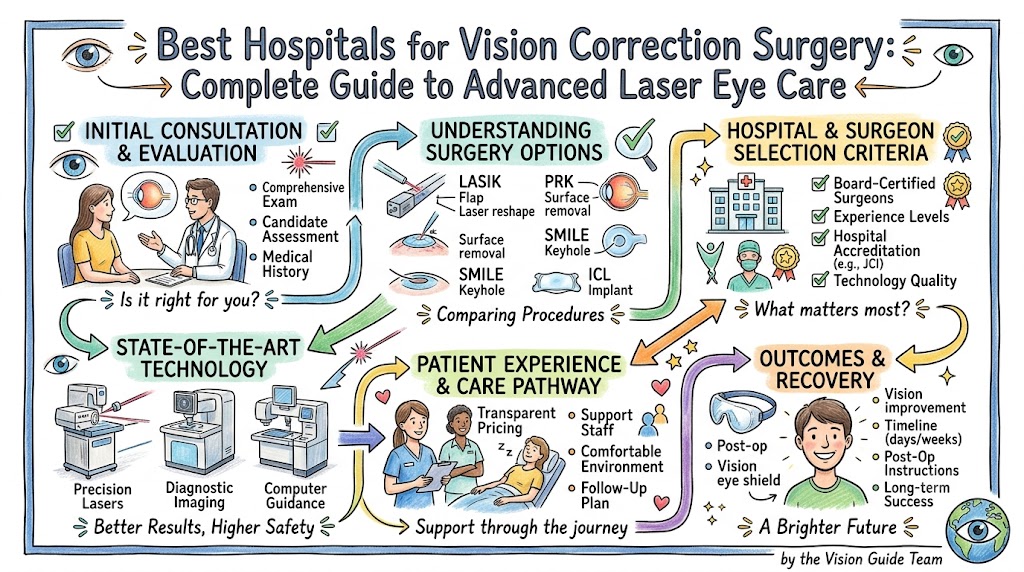
Introduction
For millions of people, the daily routine of reaching for glasses before your feet touch the floor or carefully inserting contact lenses is simply a way of life. While these tools have helped us navigate the world for decades, the desire for natural, unencumbered vision remains a top priority for those struggling with refractive errors. Vision correction surgery has fundamentally transformed modern eye care, turning what was once a dream into a safe, routine reality for countless patients.
However, the precision required to reshape the cornea—the transparent front window of your eye—cannot be overstated. Choosing the right hospital for your vision correction surgery is perhaps the most critical decision you will make in your healthcare journey. A leading eye hospital provides more than just the latest laser technology; it offers the expertise of board-certified surgeons, meticulous safety protocols, and a comprehensive commitment to your long-term eye health.In this comprehensive guide, we will explore the different surgical options available, the markers of a high-quality eye center, and how you can prepare for a life of clearer vision. If you are beginning your research and want to ensure you are connecting with top-rated professionals, you can visit BESTEYEHOSPITALS to explore resources designed to help you make an informed choice. Let’s look at how you can secure the best care for your eyes.
Quick Answer
The best hospitals for vision correction surgery are defined by their combination of board-certified refractive surgeons, state-of-the-art laser platforms, and rigorous patient safety protocols. These centers prioritize a thorough pre-surgical evaluation to determine if you are a suitable candidate, rather than just performing the procedure. A leading facility will offer a range of technologies like LASIK, SMILE, and PRK, ensuring your treatment is personalized to your unique corneal anatomy. Look for hospitals that emphasize transparent patient education, advanced diagnostic imaging, and dedicated post-operative follow-up care to ensure long-term visual success.
Understanding Vision Correction Surgery
What Is Vision Correction Surgery?
Vision correction surgery, also known as refractive surgery, is a group of procedures designed to correct common vision problems such as nearsightedness, farsightedness, and astigmatism by reshaping the cornea.
How Laser Vision Correction Works
Most laser procedures work by using an excimer or femtosecond laser to remove microscopic amounts of tissue from the cornea. This process changes the shape of the eye, allowing light to focus correctly on the retina at the back of the eye.
Common Vision Problems It Treats
These surgeries are primarily used to treat refractive errors:
- Myopia (Nearsightedness): Difficulty seeing objects in the distance.
- Hyperopia (Farsightedness): Difficulty seeing objects up close.
- Astigmatism: Blurred vision caused by an irregularly shaped cornea.
Benefits of Reducing Dependence on Glasses
Beyond the obvious convenience, many patients experience a significant boost in confidence and quality of life, allowing them to engage in sports, travel, and daily activities without the limitations of corrective lenses.
Importance of Professional Evaluation
Not every eye is suitable for every procedure. A professional evaluation includes mapping your cornea and assessing your tear film quality to determine if surgery is both safe and effective for you.
Who May Be a Candidate for Vision Correction Surgery?
Nearsightedness (Myopia)
Most patients with mild to moderate myopia are excellent candidates. Advanced technology has also expanded the range of treatment for higher degrees of nearsightedness.
Farsightedness (Hyperopia)
Patients with farsightedness can often achieve significant vision improvement, though the eligibility criteria may differ slightly from those with myopia.
Astigmatism
Laser technology is highly effective at smoothing out irregular corneal surfaces, allowing for crisp, clear vision for those who previously relied on specialized toric lenses.
Stable Vision Requirements
Your prescription should be relatively stable for at least one year before surgery. If your vision is still changing, the results of the surgery may not be permanent.
Age and Eye Health Considerations
Patients must generally be at least 18 years old. Additionally, you must have healthy corneas free of significant scarring, inflammation, or diseases like keratoconus.
When Surgery May Not Be Recommended
Surgery might not be recommended if you have severe dry eye disease, uncontrolled autoimmune conditions, or certain types of thin corneas. A thorough consultation will reveal these factors.
Types of Vision Correction Procedures
LASIK Surgery
The most well-known procedure, LASIK (Laser-Assisted In Situ Keratomileusis), involves creating a thin flap on the cornea, folding it back, and using a laser to reshape the underlying tissue.
SMILE Eye Surgery
Small Incision Lenticule Extraction (SMILE) is a minimally invasive procedure where a laser creates a small disc (lenticule) of tissue inside the cornea, which is then removed through a tiny opening.
PRK (Photorefractive Keratectomy)
In PRK, the thin outer layer of the cornea (the epithelium) is removed rather than creating a flap. The laser then reshapes the cornea, and the surface heals naturally over a few days.
Implantable Contact Lenses (ICL)
For patients who are not candidates for laser surgery due to high prescriptions or thin corneas, an ICL involves placing a permanent corrective lens inside the eye, behind the iris.
Refractive Lens Exchange (RLE)
This procedure replaces the eye’s natural lens with an artificial intraocular lens (IOL). It is often used for patients who are not suitable for laser surgery or who are experiencing early age-related vision changes.
Customized Wavefront-Guided Treatments
These treatments use computer-generated maps of your entire eye to correct even the tiniest imperfections, often resulting in vision that is sharper than what can be achieved with glasses.
Why Choosing the Right Eye Hospital Matters
Experienced Ophthalmologists
The surgeon’s skill is the most significant variable in your outcome. Surgeons at leading hospitals have performed thousands of successful procedures and understand how to manage complex anatomical variations.
Advanced Diagnostic Equipment
Before the laser even touches your eye, highly sophisticated diagnostic machines must map your cornea. Leading hospitals invest heavily in this technology to ensure surgical precision.
Modern Surgical Technology
The difference between a 10-year-old laser and the latest platform can be significant in terms of comfort, healing time, and visual outcomes.
Comprehensive Pre-Surgical Assessment
A safe surgery is one that you should never have had in the first place if you weren’t a perfect candidate. Leading hospitals will not hesitate to turn away patients who do not meet their strict safety criteria.
Patient Safety Protocols
Top-rated hospitals maintain high standards for sterility, laser calibration, and emergency preparedness.
Long-Term Follow-Up Care
Vision correction is a medical procedure. Your hospital should be committed to seeing you for your post-operative check-ups to monitor healing and visual stability.
What Makes a Vision Correction Hospital the Best?
Board-Certified Eye Surgeons
Look for surgeons who have specialized fellowships in refractive surgery and are recognized by major ophthalmological boards.
Advanced Laser Platforms
Top hospitals often utilize multiple types of laser platforms, allowing them to choose the specific machine best suited for your unique eye profile.
Personalized Treatment Planning
Your surgery should not be a “standard” package. It should be a custom plan built on the specific measurements of your eyes.
High Standards of Patient Care
From the front desk staff to the surgical nurses, every person at the hospital should prioritize patient comfort and clear communication.
Dedicated Refractive Surgery Centers
Hospitals that have a wing or a specific center dedicated to refractive surgery often have more streamlined, optimized workflows for these procedures.
Transparent Patient Education
The best hospitals will walk you through the potential risks as clearly as the benefits, ensuring you have realistic expectations before signing up for surgery.
Comparison Table: LASIK vs SMILE vs PRK
| Feature | LASIK | SMILE | PRK |
| Invasiveness | Flap creation | Minimal incision | No flap/Surface removal |
| Recovery | Very fast (1-2 days) | Very fast (1-2 days) | Slower (several days) |
| Best For | Mild to moderate prescriptions | Myopia/Astigmatism | Thin corneas/Active lifestyles |
| Dry Eye Risk | Moderate | Lower | Low |
Comparison Table: General Eye Clinic vs Specialized Vision Correction Hospital
| Feature | General Eye Clinic | Specialized Refractive Hospital |
| Primary Focus | General eye health/exams | Vision correction/Refractive surgery |
| Tech Level | Standard diagnostics | Cutting-edge laser platforms |
| Surgical Volume | Low to moderate | High |
| Staff Expertise | General optometrists | Refractive specialists |
| Follow-Up | Standard care | Specialized post-refractive monitoring |
Advanced Technologies Used in Vision Correction Hospitals
Femtosecond Laser Technology
This advanced tool allows surgeons to create corneal flaps or incisions with incredible precision and minimal tissue trauma.
Excimer Laser Systems
These lasers use cool ultraviolet beams to precisely remove corneal tissue, reshaping the surface for perfect focus.
Wavefront-Guided Mapping
This technology acts like a fingerprint for your vision, detecting tiny distortions that standard vision tests miss.
Corneal Topography
This diagnostic tool creates a 3D elevation map of your cornea, which is essential for identifying irregular shapes that could complicate surgery.
AI-Assisted Treatment Planning
Newer software uses data from thousands of previous successful cases to suggest the most optimized treatment path for your specific eyes.
Advanced Diagnostic Imaging
High-resolution scans allow doctors to visualize the layers of the cornea in cross-section, ensuring the structural integrity of your eye.
Benefits of Vision Correction Surgery
Improved Visual Clarity
Many patients achieve 20/20 vision or better, often experiencing sharper sight than they ever did with glasses.
Reduced Dependence on Glasses
Even if you eventually need reading glasses as you age, the freedom from distance glasses in daily life is transformative.
Convenience in Daily Activities
Swimming, jogging, traveling, and even just waking up in the morning become simpler without the need for visual aids.
Enhanced Quality of Life
For many, the psychological impact of feeling “unrestrained” by glasses is a significant boost to self-esteem.
Long-Term Vision Improvement
Refractive surgery provides permanent results for the majority of patients, saving them from the ongoing cost of glasses and contact lens supplies.
The Patient Journey
Initial Eye Consultation
You will meet with a refractive counselor to discuss your history and what you hope to achieve.
Diagnostic Testing
Your eyes are mapped using multiple machines. Your pupil size, corneal thickness, and tear film quality are all measured.
Surgical Eligibility Assessment
The surgeon reviews your data to ensure you are a candidate. This is the stage where your safety is prioritized above all else.
Personalized Treatment Planning
The surgeon designs a customized laser pattern based on your unique eye measurements.
Procedure Scheduling
You will receive information on pre-surgery instructions, such as stopping contact lens wear to let your cornea return to its natural shape.
Recovery Planning
The team discusses how to care for your eyes in the first few days, including medication and activity restrictions.
What Happens During Vision Correction Surgery?
Pre-Procedure Preparation
Numbing drops are applied to the eye, ensuring you won’t feel pain. You may be offered a light sedative to help you relax.
Anesthesia and Comfort Measures
No needles or injections are typically required. The procedure is almost entirely painless.
Surgical Procedure Steps
Depending on the surgery, the surgeon will either create a thin flap or a small opening. The laser is then used for a few seconds to reshape your cornea.
Immediate Post-Procedure Care
Your eyes are inspected immediately, and you are given protective shields to wear to prevent you from rubbing your eyes.
Same-Day Recovery Expectations
You will likely be able to go home within an hour or two. You will need someone else to drive you, and you will be advised to rest for the remainder of the day.
Recovery After Vision Correction Surgery
First 24 Hours
Most patients notice significant improvement within the first day. Your eyes may feel slightly gritty, like you have sand in them, which is normal.
First Week Recovery
You will use prescribed medicated drops to prevent infection and inflammation. Most people return to work and light exercise within a few days.
Managing Dry Eyes
Dryness is the most common temporary side effect. Using preservative-free artificial tears as directed will help your healing process.
Vision Stabilization
While your vision will be much better immediately, it may fluctuate slightly over the first few weeks as the cornea settles.
Follow-Up Appointments
You will have scheduled visits, usually at the one-day, one-week, and one-month marks, to ensure everything is healing correctly.
Returning to Work and Activities
Most activities, including office work, can be resumed within 2-3 days. Strenuous sports should be avoided for a few weeks to prevent injury.
Risks and Potential Complications
Dry Eye Symptoms
Almost everyone experiences temporary dryness. It is usually manageable with drops and resolves as the eye heals.
Glare and Halos
Some patients notice halos around lights at night, especially in the first few weeks. This typically improves as the eye adjusts.
Under-Correction or Over-Correction
In rare cases, the laser might remove slightly too much or too little tissue. This can usually be addressed with a simple “enhancement” procedure.
Infection Risks
Though very rare, infections can occur. Following your post-op eye drop regimen is the best way to prevent this.
Rare Surgical Complications
Complications involving the corneal flap or healing process are extremely rare in high-volume, quality hospitals.
How Leading Hospitals Reduce Risks
By using advanced diagnostic imaging and meticulous screening, leading hospitals ensure that only patients with optimal eye structure undergo surgery.
How to Choose the Best Hospital for Vision Correction Surgery
Surgeon Experience
Ask how many procedures the surgeon performs per year and how many they have performed in their career.
Available Technology
Ensure the hospital offers modern laser platforms rather than older, outdated systems.
Safety Standards
Look for centers that are transparent about their complication rates and hold themselves to high national standards of care.
Patient Reviews and Satisfaction
Look for patterns in feedback. Do patients feel heard? Is the care personalized?
Follow-Up Care Programs
Ensure that post-operative visits are included in your surgical package and that they are easy to schedule.
Questions Patients Should Ask
- “Am I a candidate for LASIK, or would another procedure be better for my eyes?”
- “What are the specific risks for a patient with my prescription?”
- “What is your enhancement policy if I don’t achieve 20/20 vision?”
- “Who will be performing my post-op check-ups?”
Cost and Financial Considerations
Factors Affecting Procedure Costs
Costs are influenced by the technology used, the surgeon’s experience, and the level of personalized customization.
Technology Used
Advanced wavefront-guided or “all-laser” procedures are often priced higher than standard procedures due to the precision they provide.
Surgeon Expertise
Highly sought-after, board-certified surgeons may charge more, which is often a reflection of the security and expertise they provide.
Follow-Up Expenses
Check if your package includes all follow-up visits for the first year, as these are critical for your success.
Financing and Payment Options
Many hospitals offer zero-interest financing plans or accept health savings accounts (HSAs) to make the procedure more affordable.
Life After Vision Correction Surgery
Maintaining Eye Health
Even if you have perfect vision, continue to see an eye doctor for annual health checks to monitor for conditions like glaucoma or cataracts.
Routine Eye Examinations
Your eyes still require standard health screenings to ensure they remain healthy as you age.
Protecting Vision Long-Term
Wear high-quality UV-blocking sunglasses, as your eyes will be more sensitive to light after laser correction.
Healthy Lifestyle Habits
A balanced diet rich in vitamins A, C, and E is great for long-term eye health. Stay hydrated to maintain proper tear film quality.
Managing Age-Related Vision Changes
Remember that laser surgery corrects your distance vision. You will likely still need reading glasses when you reach your mid-40s due to presbyopia, a natural aging process of the eye.
Future of Vision Correction Surgery
AI in Ophthalmology
AI is helping surgeons plan procedures with unprecedented accuracy, minimizing human error and maximizing visual outcomes.
Next-Generation Laser Systems
Lasers are becoming faster, more precise, and even more gentle on the surrounding eye tissue, leading to even shorter recovery times.
Personalized Vision Correction
We are moving toward treatments that account for the unique way light travels through your entire visual system, not just the cornea.
Smart Diagnostic Technologies
Future diagnostic tools may be able to scan your eye and print a 3D simulation of your expected post-op vision in real-time.
Emerging Refractive Surgery Innovations
New techniques are constantly being researched to treat complex conditions that were previously untreatable, expanding the circle of people who can benefit.
Key Takeaways
- Vision correction surgery is a safe, effective, and transformative medical procedure.
- Not everyone is a candidate; a thorough pre-op assessment is the first step.
- LASIK, SMILE, and PRK are the most common procedures, each with unique benefits.
- The surgeon’s experience and the hospital’s technology are the most vital factors for success.
- Recovery is generally fast, but following your post-op drop regimen is essential.
- Temporary dry eye is common and manageable with lubricating drops.
- Age-related reading vision (presbyopia) can still occur after laser surgery.
- High-quality hospitals provide transparent, realistic expectations about risks and benefits.
- Always prioritize your safety over the lowest price.
- Post-operative follow-up is critical to monitor your healing and visual stability.
- A healthy lifestyle and regular eye exams are vital for lifelong vision health.
FAQ Section
1.Is vision correction surgery permanent?
Yes, the results of the surgery on the cornea are generally permanent. However, your eyes can still experience natural age-related changes, such as the need for reading glasses.
2.Does the surgery hurt?
The procedure is virtually painless. Numbing drops are used throughout, and most patients describe a sensation of pressure but not pain.
3.How long does the actual laser treatment take?
The laser usually works for less than 60 seconds per eye. The entire visit lasts about an hour, including prep and post-op checks.
4.Can I have both eyes done on the same day?
Yes, it is standard practice to have both eyes corrected during the same surgical session, which is convenient and helps your brain adapt to the new vision faster.
5.What if I blink during the procedure?
You cannot blink during the surgery because an instrument is used to hold your eyelids open. Furthermore, advanced lasers have tracking systems that follow your eye’s micro-movements.
6.Can I wear contact lenses after the surgery?
Most people do not need to wear contact lenses anymore. However, if an enhancement is needed in the future, you can still wear contact lenses if your doctor approves.
7.What is the difference between LASIK and PRK?
LASIK involves a corneal flap, which allows for faster healing. PRK involves removing the surface layer of the cornea, which takes longer to heal but is better for patients with thin corneas.
8.When will I be able to drive?
Most patients are cleared to drive after their one-day post-op check-up, provided their vision meets the legal driving requirements.
9.Can I go back to work the next day?
Many patients do return to office-based work the next day. However, it is recommended to take a day or two off to allow your eyes to rest.
10.What if my vision is not 20/20 after surgery?
While most achieve 20/20, some may have a minor residual prescription. Enhancements are available for a small percentage of patients to “fine-tune” their vision.
Conclusion
Choosing to undergo vision correction surgery is an investment in your independence and your quality of life. The ability to wake up, go for a swim, or travel without the constant worry of misplacing your glasses or dealing with irritating contact lenses is a life-changing experience for millions. By understanding the different surgical technologies, the recovery process, and, most importantly, the criteria for selecting a high-quality eye hospital, you are well on your way to a future defined by clarity and comfort.
Remember that the success of your surgery is a team effort. It relies on the skill of your surgeon, the sophistication of the laser technology used, and your commitment to following post-operative care instructions. Never rush the decision-making process. Take the time to meet with your potential surgeons, ask the hard questions about their experience and their complication rates, and ensure that you feel comfortable and fully informed before moving forward. You only have one set of eyes, and they deserve the highest standard of care available.