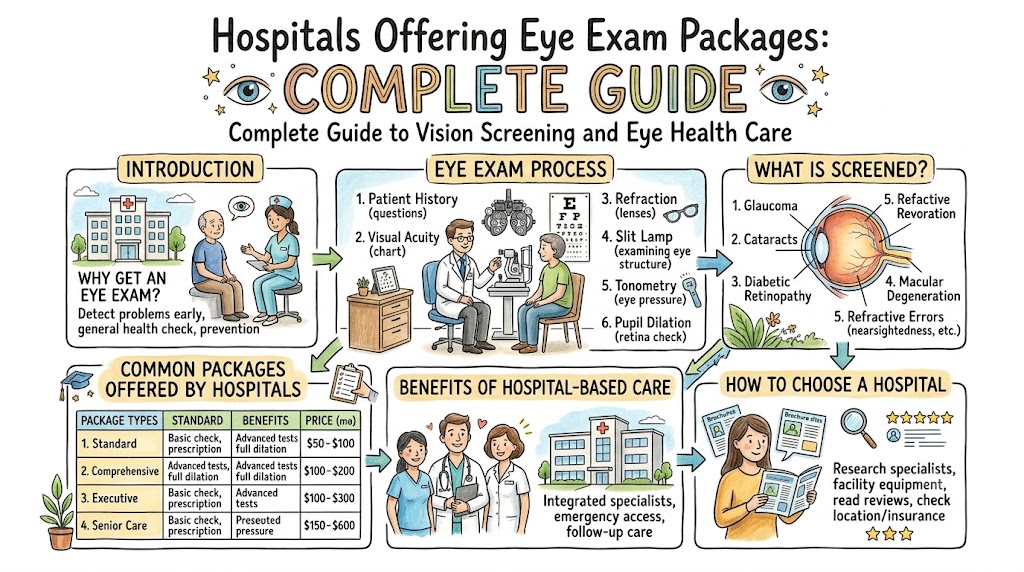
Introduction
Your vision is one of your most precious assets, acting as your primary window to the world. Many people take their sight for granted, often waiting until they notice a decline in clarity or persistent discomfort before seeking professional help. However, many sight-threatening conditions develop silently, showing no symptoms until permanent damage has already occurred. This is why consistent, professional eye care is the single most effective way to preserve your vision for a lifetime.
Regular eye exams do much more than determine if you need glasses; they provide a comprehensive look at your overall ocular health. Hospitals that offer structured eye exam packages simplify this process, bundling essential screenings and diagnostic tests into convenient, cost-effective services. By choosing a hospital-based program, you gain access to high-level clinical expertise and state-of-the-art technology that standard screenings may lack.
In this guide, we will explore the different types of eye exam packages available, what these screenings look for, and how to select the right care to suit your specific health needs. For resources to help you locate reputable care, visit BESTEYEHOSPITALS to find the specialized support you deserve. Taking charge of your eye health today is the best investment you can make in your future independence.
Quick Answer
Eye exam packages are bundled healthcare services offered by hospitals to provide comprehensive vision screening and ocular health monitoring. These packages typically include visual acuity tests, internal pressure checks, and detailed retinal imaging to detect conditions like glaucoma, cataracts, and diabetic retinopathy early. Choosing a hospital-based eye exam package is important because it ensures access to board-certified ophthalmologists and advanced diagnostic technology, providing a higher level of accuracy, specialized risk assessment, and integrated follow-up care that simple walk-in vision screenings often cannot match.
Understanding Eye Exams
What Is an Eye Exam?
An eye exam is a series of tests performed by an eye care professional to assess your vision and the health of your eyes. It is a multi-step process that evaluates how your eyes work together, how clearly you see, and whether there are any physical signs of disease or structural abnormalities inside the eyeball.
Why Regular Eye Exams Matter
The structures of the eye are delicate and complex. Over time, factors like aging, environmental stress, and underlying systemic health issues can alter these structures. Regular exams act as a “check-up” for these changes, allowing for small adjustments to your prescription or early intervention for emerging health problems.
How Eye Exams Help Prevent Vision Loss
Prevention is the core of modern ophthalmology. Many diseases, such as glaucoma, cause peripheral vision loss that patients don’t notice until it is advanced. During a comprehensive exam, doctors use precise imaging to detect these conditions before they ever impact your daily life, effectively stopping vision loss in its tracks.
Common Eye Conditions Detected Early
Beyond needing glasses, exams are essential for catching conditions like cataracts (clouding of the lens), diabetic retinopathy (damage from high blood sugar), macular degeneration (loss of central vision), and elevated intraocular pressure, which is the primary indicator of glaucoma.
Importance of Preventive Eye Care
Preventive care reduces your long-term medical costs and preserves your quality of life. By monitoring your eyes at scheduled intervals, you and your doctor build a “history” for your eyes, making it much easier to identify when something is truly abnormal versus just a normal part of the aging process.
What Are Eye Exam Packages?
Basic Vision Screening Packages
These are entry-level packages focused on assessing how well you see. They typically involve a standard eye chart test to measure your visual acuity and a simple refraction test to determine if you need corrective lenses for nearsightedness, farsightedness, or astigmatism.
Comprehensive Eye Health Packages
These are the most common hospital-based packages. They go beyond simple vision tests to include a full inspection of the eye’s internal structures. This includes dilating the pupils to see the retina and using specialized lights to inspect the health of the lens and cornea.
Pediatric Eye Exam Packages
Children require different testing than adults because their eyes are still developing. These packages often include assessments of eye teaming (how the eyes work together), focus ability, and color perception, which are critical for learning and school performance.
Senior Eye Care Packages
As we age, the risk for cataracts and macular degeneration increases. Senior packages are tailored to detect age-related changes, often including specific tests for contrast sensitivity and macular function that are not prioritized in younger patient screenings.
Specialized Diagnostic Eye Packages
For patients with known risks—such as a family history of eye disease—hospitals offer specialized packages. These may include advanced imaging like OCT (Optical Coherence Tomography) to look at the nerve fibers at the back of the eye in microscopic detail.
Pre-Surgical Eye Assessment Packages
If you are considering laser vision correction or cataract surgery, you need a highly specific set of measurements. Pre-surgical packages use corneal topography and biometric measurements to ensure your eyes are healthy enough for intervention and to guide the surgeon’s plan.
Common Tests Included in Eye Exam Packages
Visual Acuity Testing
This is the classic test where you read letters of varying sizes from a distance. It determines your “Snellen” score, such as 20/20, and provides a baseline for how clearly your eyes resolve images at different distances.
Refraction Assessment
This test determines the exact lens prescription you need. The doctor uses a phoropter (the machine with many lenses) to find the combination that provides the sharpest, most comfortable vision.
Eye Pressure Testing
Also called tonometry, this test measures the fluid pressure inside your eye. High pressure is a key risk factor for glaucoma, a condition that can damage the optic nerve if left untreated.
Retinal Examination
By dilating the pupil, the doctor gets a wide-angle view of the retina at the back of the eye. This is where they look for signs of systemic diseases like diabetes, hypertension, and retinal detachments.
Slit Lamp Examination
A slit lamp is a high-intensity light source that allows the doctor to view the front part of your eye (the cornea, iris, and lens) in extreme detail. It is excellent for detecting surface scratches, infections, or early cataracts.
Color Vision Testing
Often performed during initial screenings, this test uses plates with hidden numbers composed of different colored dots. It is used to identify color blindness or deficiencies, which can sometimes indicate nerve-related eye issues.
Peripheral Vision Testing
This test measures your “side vision.” Glaucoma, in particular, affects side vision first. By mapping out your visual field, doctors can determine if there are any blind spots that need further investigation.
Optical Coherence Tomography (OCT)
OCT is like an ultrasound, but it uses light waves to take cross-section pictures of your retina. It is the gold standard for detecting early macular degeneration and retinal swelling.
What Makes a Hospital’s Eye Exam Package Comprehensive?
Experienced Ophthalmologists
In a hospital, your exam is often overseen by a medical doctor (ophthalmologist). This means if the exam reveals a disease, you are already in the right place to start treatment, ensuring a seamless transition from screening to care.
Advanced Diagnostic Equipment
Hospitals invest in the latest technology that private optical shops may not have. From AI-enhanced cameras to high-frequency ultrasound, you are receiving the most accurate diagnostic data currently available in medicine.
Personalized Risk Assessment
A comprehensive package includes a review of your lifestyle, environment, and genetics. If you spend 10 hours a day on a screen, the hospital team will provide specific recommendations for digital eye strain that generic screenings ignore.
Digital Eye Imaging
Instead of just looking at your eye, the hospital captures high-resolution digital images. These images are stored in your medical file, allowing the doctor to compare them year-over-year to detect even tiny changes.
Comprehensive Reporting
You will receive a clear, written report that summarizes your eye health. This document is invaluable for your records and can be shared with your primary care physician to provide a full picture of your health.
Follow-Up Care and Monitoring
The greatest benefit of a hospital package is the follow-up. If a test returns a borderline result, you are put into a monitoring program. You aren’t just given a result; you are given a plan for the future.
Benefits of Choosing Hospitals Offering Eye Exam Packages
Early Disease Detection
Because these packages combine multiple tests, they are far more likely to catch a disease at an early, treatable stage than a single, isolated test would be.
Better Vision Management
When your vision is managed by a team that sees the full picture, your prescription is more accurate and your eye comfort is prioritized, leading to a much higher quality of life.
Personalized Eye Care
You aren’t just a number in a database. Hospital packages are built on the principle of individualized care, where the doctor adjusts the testing protocol based on what they see during the exam.
Convenient Preventive Screening
Bundled packages remove the guesswork. You know exactly what is included, how much it costs, and what the goals of the session are, making it easy to prioritize your health annually.
Improved Long-Term Eye Health
By keeping up with annual hospital-based packages, you ensure that you are staying ahead of the aging process and maintaining the best possible vision for as long as possible.
Access to Advanced Diagnostics
If the screening shows a potential issue, you already have access to the hospital’s specialty clinics for cornea, retina, or glaucoma, saving you the stress of finding a new specialist.
Comparison Table: Basic Eye Exam vs Comprehensive Eye Exam Package
| Test/Feature | Basic Vision Screening | Comprehensive Eye Exam Package |
| Visual Acuity | Yes | Yes |
| Refraction (Prescription) | Yes | Yes |
| Pupil Dilation | Rarely | Yes |
| Retinal Imaging | No | Yes |
| Intraocular Pressure | Sometimes | Yes |
| Glaucoma Risk Test | No | Yes |
| Follow-up Plan | No | Yes |
| Expert Oversight | Optician/General | Ophthalmologist (MD) |
Comparison Table: Eye Exam Packages by Age Group
| Age Group | Focus Area | Recommended Package Frequency |
| Children (5–17) | Eye teaming, focus, school performance | Every 1–2 years |
| Young Adults (18–39) | Digital eye strain, contact lens care | Every 2 years |
| Adults (40–64) | Early signs of aging, glaucoma risk | Every 1–2 years |
| Seniors (65+) | Cataracts, macular degeneration | Yearly |
Common Eye Conditions Detected Through Eye Exams
Refractive Errors
This is the most common finding, including nearsightedness (myopia), farsightedness (hyperopia), and astigmatism. These are easily managed with glasses, contacts, or, in some cases, refractive surgery.
Cataracts
Cataracts are a normal part of aging where the lens inside the eye becomes cloudy. Regular exams help the doctor determine exactly when the cataract begins to interfere with your quality of life.
Glaucoma
Often called the “silent thief of sight,” glaucoma is caused by high pressure in the eye. Early detection through regular eye exams is the only way to prevent permanent nerve damage.
Diabetic Retinopathy
High blood sugar can damage the delicate blood vessels in the retina. If you have diabetes, annual comprehensive exams are mandatory to prevent this condition from leading to blindness.
Macular Degeneration
This condition affects the center of your vision. It is more common in older adults, and early detection is vital to slow down its progression and maintain your ability to read and drive.
Dry Eye Syndrome
While often considered a nuisance, chronic dry eye can cause significant discomfort and even damage the surface of the eye. Exams help determine the root cause and provide specialized treatment.
Retinal Disorders
These range from retinal tears to detachments. An ophthalmologist can see these issues during a dilated exam and often treat them with laser therapy before they cause permanent vision loss.
Who Should Get Regular Eye Exams?
Children and Teenagers
Children may not know their vision is blurry because they have never seen the world any other way. Early screening is essential for academic and athletic development.
Adults
Even if you have “perfect” vision, adults should have exams to screen for silent diseases that can begin appearing in the late 30s and 40s.
Older Adults
After 65, the frequency of eye changes increases. Annual exams are the best tool to preserve independence and ensure you can continue to enjoy your favorite activities.
People with Diabetes
Diabetes affects the eyes even if you have no symptoms. Comprehensive annual eye exams are a standard requirement for all diabetic patients to manage retinal health.
Individuals with Family History of Eye Disease
Genetics play a huge role in eye health. If your parents had glaucoma or macular degeneration, you are at a higher risk and should follow a more aggressive screening schedule.
Contact Lens Users
Contacts sit directly on the cornea. Regular exams ensure the lenses are still fitting properly and that your cornea is not showing signs of oxygen deprivation or irritation.
Preparing for an Eye Examination
Medical History Review
Be ready to discuss your general health, including any medications you take. Many systemic drugs, such as steroids or blood pressure medications, can have side effects on the eyes.
Current Vision Concerns
Make a list of any symptoms: headaches, blurriness at night, double vision, or flashes of light. These specific details help the doctor focus their diagnostic efforts.
Medication Information
Bring a list of all your current prescriptions, including eye drops and over-the-counter supplements, as these can affect pupil size or eye pressure results.
Questions to Ask During the Exam
Ask your doctor: “What is the health of my retina?”, “Are there any risks I should be watching for?”, and “How does my digital screen use impact my eye strain?”
What to Bring to Your Appointment
Bring your current glasses or contact lens prescription, your health insurance card, a list of your medications, and a pair of sunglasses for your drive home, as your pupils may be dilated.
What Happens During an Eye Exam?
Registration and Consultation
The process starts with your vision history and a brief talk about your current lifestyle and any specific visual goals you have, such as better vision for work or sports.
Vision Testing
You will perform various tasks, such as reading letters or identifying shapes, which allow the technician to map out your initial prescription needs.
Diagnostic Evaluations
The doctor will perform the core tests, such as checking your eye pressure and examining the health of your iris, cornea, and lens using the slit lamp.
Specialist Assessment
If you chose a comprehensive package, this is the stage where the ophthalmologist performs the dilated retinal exam to ensure the back of the eye is healthy.
Discussion of Results
The doctor will sit down with you to explain every finding in plain language, answering any questions you may have about your eye health or your prescription.
Treatment Recommendations
You will receive a clear plan. This might include an updated prescription, a plan for dry eye management, or, if needed, a referral to a sub-specialty clinic for advanced monitoring.
Advanced Technologies Used in Eye Exam Packages
OCT Imaging
This non-invasive scan is a game-changer. It shows the layers of the retina in 3D, allowing doctors to detect diseases like macular degeneration in their earliest, most treatable forms.
Digital Retinal Photography
High-resolution cameras capture a snapshot of your retina. These photos act as a permanent record, allowing the doctor to see if a spot or blood vessel has changed size over time.
Corneal Topography
This technology maps the shape of the surface of your eye. It is essential for fitting contact lenses and planning for refractive surgeries like LASIK.
AI-Assisted Eye Screening
New AI tools can analyze retinal images and flag signs of diabetic retinopathy or glaucoma in seconds, providing an extra layer of diagnostic certainty to your exam.
Automated Visual Field Testing
This test tracks your eye movements to see exactly what you can see. It is highly effective for catching the subtle peripheral vision loss associated with neurological or ocular disease.
Teleophthalmology Support
In some modern hospitals, your eye data is sent to a remote center of excellence for a second opinion, ensuring that you receive the highest level of diagnostic accuracy.
Understanding Eye Exam Results
Vision Prescription Results
Your prescription is measured in diopters. A negative number indicates nearsightedness, while a positive number indicates farsightedness. Your doctor will explain how these numbers impact your daily vision.
Eye Pressure Findings
Normal eye pressure is generally between 10 and 21 mmHg. If your pressure is outside this range, your doctor will discuss whether you need further testing or preventive drops.
Retinal Health Assessment
A healthy retina will look uniform and clear of any suspicious lesions or fluid. If the doctor finds an issue, they will explain the nature of the finding and the next steps.
Risk Factors Identified
Based on your exam, the doctor might label you as “low risk” or “at risk.” This helps you know how often you should return for your next eye exam package.
Follow-Up Recommendations
You will leave with a clear plan, whether that means a return visit in six months to monitor a small spot or simply returning next year for your routine annual screening.
How to Choose the Right Eye Exam Package
Age and Risk Factors
Always start by matching the package to your age. If you are over 40 or have diabetes, prioritize comprehensive packages that include retinal imaging.
Existing Eye Conditions
If you already have a diagnosed condition like glaucoma, ensure the hospital package you choose specifically addresses the monitoring requirements for that condition.
Technology Available
Call the hospital and ask if they have an OCT scanner or digital retinal photography. These pieces of equipment represent the modern gold standard for comprehensive care.
Experience of Specialists
The ophthalmologist is the captain of your eye health ship. Check the hospital’s website to ensure they have board-certified specialists available on-site.
Follow-Up Services
A good hospital offers “continuum of care.” If your exam package detects an issue, you want to know that you are already in the system for treatment, rather than being referred elsewhere.
Questions Patients Should Ask
Ask: “Is this package fully comprehensive?”, “Does this include imaging of the retina?”, and “Will the doctor personally review my results?”
Cost and Financial Considerations
Factors Affecting Package Costs
Costs vary depending on the level of technology included and whether the exam is performed by an optometrist or a medical ophthalmologist.
Diagnostic Test Requirements
Some tests are add-ons. If you need a specialized topography or an OCT scan, clarify if these are included in the package price to avoid surprise fees.
Follow-Up Evaluation Costs
Ask if the package includes a brief follow-up consultation or if that is billed separately, so you know exactly what your total budget should be.
Insurance and Coverage Considerations
Many medical insurance plans cover comprehensive exams if there is a medical diagnosis, while vision plans cover routine exams. Verify which your hospital package falls under.
Long-Term Eye Care Planning
Consider buying a multi-year package if the hospital offers one. This often provides a discount and ensures you stay on track with your annual screening schedule.
Future of Eye Screening and Vision Care
AI-Powered Eye Diagnostics
AI will soon be able to look at your retinal images and predict your risk for systemic diseases like Alzheimer’s or heart disease, as the eye is a direct window into the body’s vascular health.
Remote Vision Monitoring
Future apps will allow you to do basic vision testing at home and send the data to your hospital, flagging changes that require an immediate in-person visit.
Personalized Eye Care Programs
Eye care will become highly customized. Your “eye profile” will include your DNA, your environment, and your screen time, all of which will dictate the frequency of your exams.
Digital Health Integration
Your eye health data will be linked directly to your primary care electronic health records, ensuring that your other doctors always have access to the status of your vision.
Emerging Eye Care Technologies
New treatments for macular degeneration and retinal diseases are appearing every year. Your hospital’s role will be to keep you updated on which of these therapies you might be a candidate for.
Key Takeaways
- Regular eye exams are the best way to prevent vision loss, not just update your prescription.
- Hospitals offer comprehensive packages that provide higher-level diagnostic accuracy than basic screenings.
- Comprehensive exams check for silent diseases like glaucoma and diabetic retinopathy.
- Children, adults, and seniors all require different testing schedules tailored to their age-related risks.
- Advanced technology like OCT imaging is a hallmark of high-quality hospital eye care.
- Digital retinal photography provides a permanent record to track changes in your eye health.
- Preparing for your exam includes bringing your medication list and current glasses.
- Early detection is often the difference between a simple treatment and permanent vision loss.
- AI-assisted diagnostics are making eye exams faster and more accurate than ever.
- Choose a hospital that offers a continuum of care, ensuring you have a partner for the long term.
FAQ Section
1.How often do I really need an eye exam?
For healthy adults, every 1–2 years is recommended. If you are over 65, have diabetes, or have a family history of eye disease, annual exams are the standard.
2.Does a vision screening replace a comprehensive eye exam?
No. A screening only checks your ability to see clearly. A comprehensive exam looks at the structure and health of the eye, which is essential for detecting diseases.
3.Why do they dilate my pupils?
Dilation opens the pupil wide, allowing the doctor to see the entire retina. This is the only way to examine the back of the eye for early signs of disease.
4.Is an eye exam package worth the extra cost?
Yes. The peace of mind and the accuracy of the diagnostic data in a package far outweigh the cost, especially if it detects a condition early when it is still easily treatable.
5.Can I drive after an eye exam?
If your pupils are dilated, your vision will be blurry, and you will be sensitive to light for a few hours. It is best to arrange for a driver or use public transport.
6.What should I look for in an ophthalmologist?
Look for a board-certified professional who has experience in your specific areas of concern, such as glaucoma or retinal health, and who uses modern hospital-grade technology.
7.Does insurance cover comprehensive eye exam packages?
It depends on the package. If the exam is for a medical concern, it may be covered by your health insurance. If it is routine, it may fall under a vision plan. Always call ahead.
8.What is the most common condition found during an exam?
Refractive errors (nearsightedness or farsightedness) are the most common. However, the most important findings are often early signs of cataracts or high eye pressure.
9.Are eye exams painful?
Not at all. Most tests are non-invasive and painless. The most you will feel is a bright light during the examination, and you may feel a slight puff of air during the pressure test.
10.What should I do if I find out I have an eye disease?
Don’t panic. Most eye diseases, when caught early via a comprehensive package, have highly effective treatments available. Your doctor will create a care plan to manage your vision long-term.
Conclusion
Your eyes are the gateway to your world, and their health is a reflection of your overall well-being. By choosing a comprehensive eye exam package at a reputable hospital, you are doing more than checking your vision—you are ensuring the longevity of your sight and catching potential issues before they cause harm. The combination of expert ophthalmological care and cutting-edge diagnostic technology provides a level of security that is simply unmatched by basic screenings.
We encourage you to take the proactive step of scheduling your comprehensive eye exam today. Whether you are due for a routine check-up or are concerned about specific vision changes, a professional screening is the best path forward. For additional resources and to connect with high-quality eye care professionals in your area, visit to start your journey toward clearer, healthier vision for years to come.