Introduction
The human eye is an incredibly complex instrument, requiring perfect synchronization between six different muscles to move in unison and provide a clear, singular image. When this synchronization is lost, a condition known as strabismus—commonly referred to as a “squint” or “crossed eyes”—occurs. This misalignment is more than just a cosmetic concern; it affects how the brain processes depth, creates significant eye strain, and can lead to permanent vision impairment if not addressed correctly. For patients and parents navigating this journey, the primary goal is finding a healthcare facility that combines surgical precision with a compassionate, patient-centered approach to pediatric and adult ophthalmology.
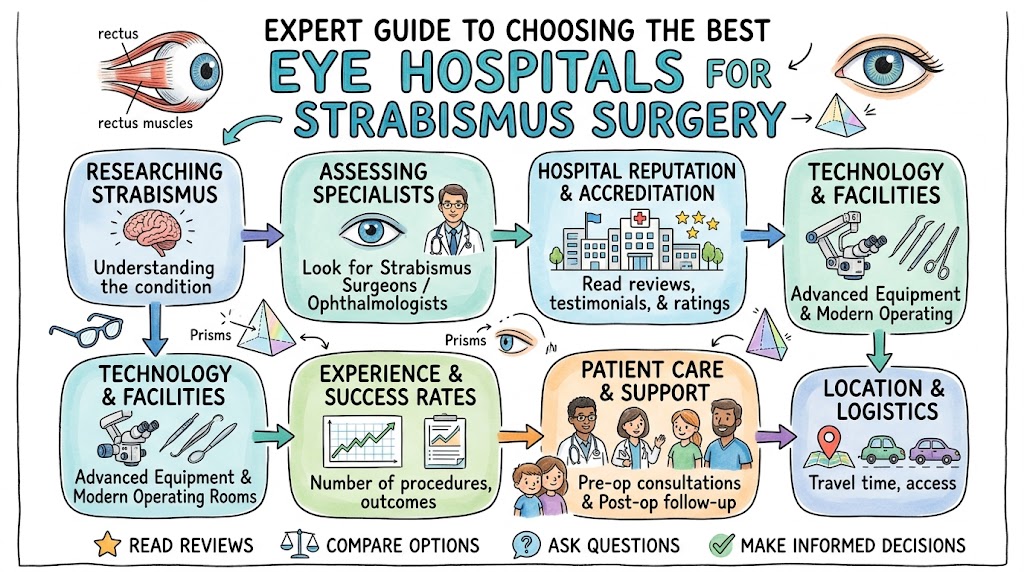
At BESTEYEHOSPITALS we understand that seeking treatment for eye misalignment is a significant decision. The process involves much more than finding a surgeon; it requires access to a specialized facility that offers comprehensive diagnostic testing, advanced surgical equipment, and a robust rehabilitation program. Whether you are dealing with congenital strabismus in a child or a sudden onset of double vision as an adult, the hospital you choose will play a pivotal role in the success of your outcome. This comprehensive guide is designed to educate you on the complexities of strabismus, the various treatment pathways available, and the critical features you must look for when evaluating an eye hospital to ensure the highest standard of care for your vision.
What is Strabismus?
Strabismus is a clinical condition characterized by the inability of both eyes to focus simultaneously on the same point in space. Instead of working together as a team, one eye may turn inward (esotropia), outward (exotropia), upward (hypertropia), or downward (hypotropia). This lack of coordination disrupts binocular vision—the process by which the brain combines the images from both eyes to create a 3D perception of depth.
In many cases, the misalignment is constant, meaning it is present at all times. In other instances, it may be intermittent, appearing only when the patient is tired, stressed, or focusing on a specific distance. Because the eyes are misaligned, the brain often receives two different images, which can lead to double vision (diplopia). To compensate, the brain may eventually learn to “ignore” the signal from the misaligned eye, which, if left untreated, leads to a permanent loss of vision in that eye, a condition known as amblyopia or “lazy eye.”
Causes of Strabismus
Understanding the underlying cause of strabismus is the first step in creating an effective treatment plan. The most common causes stem from issues within the delicate neuromuscular control system that manages eye movement.
- Muscle Imbalance: If one of the six extraocular muscles is stronger or weaker than its counterpart, the eye will naturally drift.
- Nerve Problems: The muscles are controlled by cranial nerves. Any disruption in the signal from the brain to these muscles—whether due to an injury, stroke, or congenital abnormality—can cause misalignment.
- Genetics: Strabismus often has a familial component, suggesting that genetic factors play a significant role in the development of eye alignment issues.
- Vision Development Issues: In children, if one eye has a significant refractive error (like extreme nearsightedness) that is not corrected, the brain may prioritize the clearer eye, causing the other to drift over time.
Symptoms of Strabismus
The symptoms of strabismus vary depending on the patient’s age and the type of deviation. Children with strabismus may not complain of symptoms because their brains adapt quickly, but parents might notice that the child tilts their head to see better, blinks frequently in sunlight, or seems to have difficulty judging distances.
In adults or older children, the symptoms are often more pronounced. These include:
- Crossed or misaligned eyes: The most visible sign.
- Double Vision: Seeing two images instead of one.
- Eye Strain: A feeling of tension or fatigue around the eyes, especially after reading or computer work.
- Poor Depth Perception: Difficulty with activities that require accurate judgment of distance, such as sports, driving, or climbing stairs.
Diagnosis Methods
A precise diagnosis is the hallmark of a leading eye hospital. An ophthalmologist will perform a series of tests to map the movement of the eyes and determine the severity of the misalignment.
- Eye Alignment Tests: The doctor uses lights and prisms to measure how the eyes behave under different conditions.
- Cover-Uncover Test: A classic examination where the doctor covers one eye at a time to see how the other eye adjusts, which reveals the extent of the drift.
- Motility Examination: This checks the range of movement for all six muscles in each eye to ensure no specific muscle is paralyzed or overly restricted.
- Vision Testing: Crucial for determining if one eye has become “lazy” (amblyopic) due to the misalignment, which changes the priority of the treatment.
Treatment Options
Treatment for strabismus is not “one size fits all.” It is highly dependent on the cause and the patient’s age.
- Glasses: If the misalignment is caused by an uncorrected vision problem, strong prescription glasses can sometimes help the eyes align naturally.
- Prism Therapy: Prisms can be added to glasses to bend light, which helps align the images the eyes see, effectively treating double vision without surgery.
- Eye Exercises (Vision Therapy): These are structured exercises designed to improve the brain’s control over the eye muscles and improve coordination.
- Strabismus Surgery: For many, surgery is the definitive solution. It involves adjusting the length or tension of the extraocular muscles to align the eyes properly.
TABLE 1 — STRABISMUS TREATMENT COMPARISON TABLE
| Treatment | Purpose | Procedure Type | Recovery Time | Effectiveness |
| Glasses | Correct refractive error | Non-invasive | Immediate | Moderate |
| Prism Therapy | Align vision images | Non-invasive | Immediate | Moderate |
| Vision Therapy | Improve coordination | Non-invasive | Weeks–months | Moderate |
| Surgery | Correct muscle alignment | Surgical | Few weeks | Very High |
TABLE 2 — BEST EYE HOSPITAL FEATURES
| Hospital Feature | Importance | Benefit for Patients |
| Experienced Ophthalmologists | Very High | Accurate diagnosis & surgery |
| Pediatric Strabismus Care | High | Better child outcomes |
| Advanced Surgical Equipment | Very High | Safer eye surgery |
| Post-op Vision Therapy | High | Better long-term results |
| Emergency Eye Care | Critical | Safe complication handling |
Why Specialized Eye Hospitals Matter
General hospitals are capable of handling a wide range of needs, but specialized eye hospitals function as centers of excellence. These facilities are designed from the ground up for ophthalmology—they have the specific lighting, imaging sensors, and sterile suites required for delicate eye surgery.
Furthermore, a specialized hospital offers a team-based approach. The surgeons, pediatric specialists, and physical therapists (for vision therapy) work in the same environment. This collaboration is invaluable. If a surgical correction needs to be fine-tuned with vision therapy later, the transition is seamless. In these centers, you aren’t just a patient file; you are part of a program that understands the unique developmental, aesthetic, and functional challenges of strabismus.
Strabismus Surgery Overview
Strabismus surgery is a sophisticated procedure, yet it is often performed as an outpatient operation. The surgeon gains access to the eye muscles—which are hidden behind the white layer of the eye (the conjunctiva)—by making a very small incision. They do not remove the eye from the socket; instead, they carefully loosen, tighten, or reposition one or more of the eye muscles to adjust their “pulling power.”
For children, this is typically done under general anesthesia. For adults, it can sometimes be performed with local anesthesia, though general is still more common for comfort. The goal is simple: to reset the tension so that the eyes move in synchronization. It is a highly precise surgery, often lasting less than an hour, but it requires an surgeon with an exceptional understanding of the mechanical relationship between the six eye muscles.
Recovery After Surgery
The recovery process for strabismus surgery is surprisingly quick compared to other surgical procedures. Most patients experience some redness and mild discomfort, which is managed with prescribed eye drops and, if necessary, over-the-counter pain relievers.
The eyes may feel “scratchy” or gritty for a few days, similar to having a small speck of dust in the eye. Most patients are back to their daily routine within a few days to a week. However, the brain takes longer to adjust. Because you are used to seeing in a misaligned way, the brain may struggle with the “new” alignment for several weeks, meaning double vision may temporarily persist before the brain learns to fuse the images together.
Risks & Limitations
Like all surgeries, strabismus surgery carries risks, though they are statistically low when performed by an expert. The most common complications include an over-correction or under-correction, meaning the eyes remain slightly misaligned and may require a second, “fine-tuning” surgery.
Other risks include temporary redness, swelling, or, very rarely, infection or damage to the delicate tissue around the eye. In some cases, adults who have lived with strabismus for a long time may find it difficult for the brain to adapt to the new alignment, resulting in permanent, albeit mild, double vision. A thorough pre-operative consultation will help you understand your specific risks based on your history and the severity of your condition.
Key Takeaways
- Strabismus is a structural/neurological issue that requires expert diagnosis, not just guesswork.
- Early intervention, especially in children, is vital to prevent permanent vision loss (amblyopia).
- Surgery is the most definitive treatment, but it should be supported by pre- and post-operative vision care.
- Always choose a hospital that specializes in ophthalmology to ensure the use of modern surgical technology.
- Recovery is generally fast, but patience is required while the brain adjusts to the corrected eye position.
FAQ SECTION
1. Is strabismus surgery only for children?
No. While it is more common in children, many adults seek surgery to resolve double vision or for cosmetic alignment.
2. Does insurance cover squint surgery?
Often, yes, especially when the surgery is medically necessary to resolve double vision or functional sight issues.
3. Will I need surgery more than once?
In some cases, a second, smaller surgery is needed to achieve perfect alignment, especially if the deviation is severe.
4. How long does the operation take?
Most strabismus procedures last between 30 to 90 minutes.
5. What is the success rate of this surgery?
The success rate is very high, with the vast majority of patients achieving significantly better alignment and improved vision.
6. Can strabismus be cured without surgery?
In some cases involving refractive errors or minor muscle weakness, glasses or vision therapy can resolve the issue, but surgery is the only fix for structural alignment.
7. How old should a child be for surgery?
There is no “perfect” age, but surgeons often recommend earlier intervention to allow the eyes to develop the ability to work together as a team.
8. Are there any restrictions after surgery?
For the first few weeks, you should avoid swimming or any contact sports that could result in an injury to the eye.
9. Is double vision normal after surgery?
It is relatively common for the brain to take a few days or weeks to adapt, during which time mild double vision may be present.
10. How do I choose the best surgeon?
Look for a surgeon who is board-certified, specializes in pediatric or adult strabismus, and operates in a facility with dedicated ophthalmic surgical suites.
CONCLUSION
Strabismus is a condition that affects your interaction with the world on a fundamental level, influencing everything from how you read a book to how you navigate your daily environment. Making the decision to undergo surgery is a commitment to improving your quality of life, and it is a path that deserves the highest level of care. By selecting a specialized eye hospital, you are ensuring that your procedure is guided by experts who understand the intricate mechanics of your vision and who are dedicated to your long-term success.
Remember that while surgery is the catalyst for change, your journey doesn’t end when you leave the operating room. Follow-up appointments, diligent post-operative care, and a commitment to any recommended vision therapy are the pillars of a successful outcome. The goal is not just an alignment of the eyes, but an alignment of your vision with the needs of your life. We encourage you to take the time to evaluate your options, ask your surgeon difficult questions about their experience, and choose a facility where you feel supported and informed. With the right team behind you, you can look forward to a future of clearer, coordinated, and more comfortable vision.