Introduction
The growth of tissue on the surface of the eye, known as a pterygium, can be more than just a cosmetic concern. For many, it starts as a feeling of grit or dryness, eventually progressing to redness, irritation, and even blurry vision if the growth advances toward the center of the eye. Recognizing these signs early is crucial for maintaining both the comfort and the health of your eyes.
When symptoms become persistent or vision is threatened, professional intervention becomes necessary. Choosing a facility with specific expertise in ocular surface disorders is the most important decision you can make in your treatment journey. By researching hospitals offering pterygium surgery, you ensure access to the latest microsurgical techniques and experienced cornea specialists who focus on minimizing recurrence. To explore specialized eye care and expert surgical options, you can visit BESTEYEHOSPITALS.
Understanding Pterygium
What Is Pterygium?
A pterygium is a non-cancerous, wedge-shaped growth of the conjunctiva, which is the thin membrane that covers the white part of your eye. Over time, this growth can extend onto the cornea, the clear front part of the eye, potentially causing distortion.
Why Is It Called Surfer’s Eye?
The term “surfer’s eye” is frequently used because the condition is common among people who spend long hours outdoors in bright, sunny conditions. Exposure to intense sunlight and reflective surfaces like water or sand significantly increases the risk of developing these growths.
How Pterygium Affects Vision
While mild growths may only cause irritation, a pterygium that grows large enough to cover part of the cornea can alter the eye’s shape, leading to astigmatism. This results in blurred or distorted vision, which necessitates professional removal.
Who Is Most at Risk?
Risk factors include prolonged UV exposure, dry eye syndrome, and working in dusty or windy environments. Outdoor occupations, such as farming, fishing, or construction, also place individuals at a higher risk due to chronic exposure to environmental irritants.
Common Symptoms of Pterygium
- Eye Redness: Chronic inflammation caused by the growth.
- Eye Irritation: A feeling of constant dryness or soreness.
- Foreign Body Sensation: The persistent feeling that something is stuck in your eye.
- Burning and Itching: Often worsening in dry or windy air.
- Blurred Vision: Occurring if the growth obstructs the pupil or causes astigmatism.
- Cosmetic Concerns: Many patients seek removal because the growth is highly visible to others.
Pterygium Symptoms and Recommended Treatment Approach
| Symptom | Severity Level | Recommended Medical Response | When Surgery May Be Needed |
| Eye Redness | Mild | Artificial tears | If chronic and worsening |
| Irritation | Mild | Lubricating eye drops | If interfering with daily life |
| Burning Sensation | Moderate | Anti-inflammatory drops | If recurring frequently |
| Foreign Body Feeling | Moderate | Regular eye exams | If obstructing movement |
| Blurred Vision | Severe | Specialist consultation | If growth reaches cornea |
| Corneal Involvement | Severe | Immediate evaluation | If vision is compromised |
| Recurring Symptoms | Moderate | Advanced monitoring | If growth is rapid |
| Cosmetic Concerns | Varies | Patient consultation | At patient’s discretion |
The table above illustrates that while some symptoms can be managed with basic lubrication, others signal the need for more advanced intervention. If you find yourself frequently reaching for eye drops without lasting relief, it is time to seek a formal evaluation.
Surgical intervention is generally considered when the growth interferes with your daily activities, causes significant discomfort, or begins to encroach on the visual axis. Modern surgical techniques are highly effective and focused on long-term prevention of regrowth.
Causes and Risk Factors
The primary driver of pterygium development is ultraviolet (UV) radiation. Chronic exposure to sunlight, particularly near the equator or at high altitudes, damages the surface cells of the eye.
Beyond UV light, environmental factors such as wind and dust act as constant irritants, causing the conjunctiva to thicken and grow. Individuals with pre-existing dry eye syndrome are also more susceptible, as a healthy tear film is necessary to protect the eye from external elements. Genetics may also play a role, as some individuals appear more prone to these growths than others.
When Is Pterygium Surgery Necessary?
Surgery is typically recommended when conservative treatments, such as lubricating drops or mild anti-inflammatory medications, fail to provide relief. If the pterygium causes recurrent inflammation that is difficult to control, surgery becomes a viable path forward.
Furthermore, if the growth causes induced astigmatism or threatens to cover the visual axis, removal is essential to protect your vision. Finally, many patients choose surgery for cosmetic reasons, as the growth can be quite noticeable and impact self-confidence in professional or social settings.
Advanced Pterygium Surgery Techniques
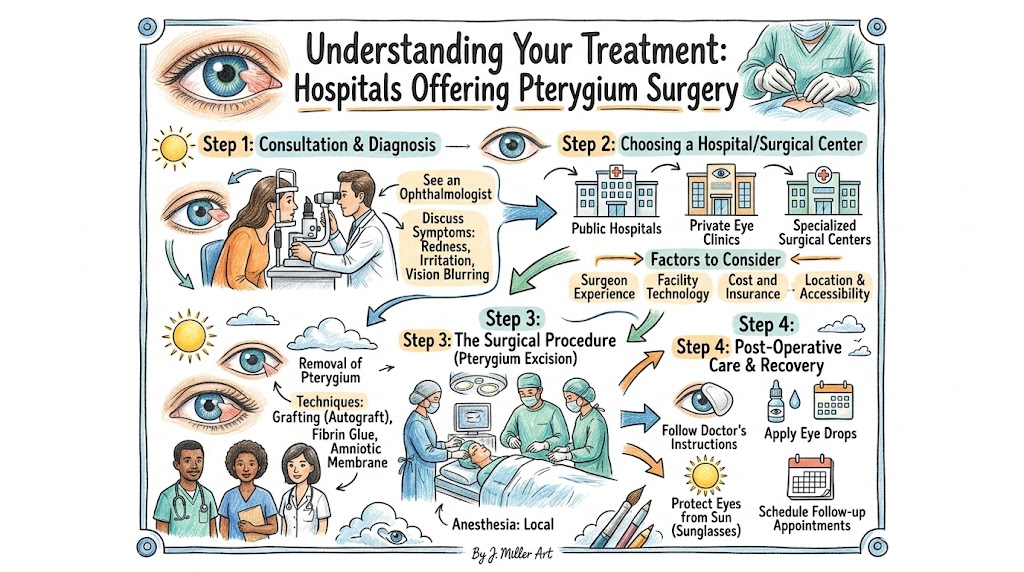
Modern ophthalmology has moved beyond simple excision, which historically had high recurrence rates. Today, surgeons utilize the conjunctival autograft technique. This involves taking a thin piece of healthy tissue from under the eyelid and grafting it onto the site where the pterygium was removed.
This graft acts as a biological barrier, significantly reducing the chance of the growth returning. Surgeons also utilize sutureless approaches, using fibrin glue instead of traditional stitches. This results in less post-operative redness, faster healing, and significantly greater patient comfort.
Benefits of Choosing Hospitals Offering Pterygium Surgery
Specialized eye hospitals provide access to cornea specialists who possess the high-volume experience needed to perform these delicate procedures. These surgeons are experts in microsurgical techniques, which are critical for the clean removal of the growth and the precise placement of the graft.
Additionally, leading hospitals utilize advanced diagnostic imaging to map the eye’s surface before surgery. This ensures that the surgeon has a clear plan, which improves visual outcomes and drastically lowers the recurrence rate compared to non-specialized general clinics.
How to Choose the Best Hospital for Pterygium Surgery
Look for hospitals that feature a dedicated corneal department. The expertise of the surgeon is paramount, so ask about their volume of pterygium surgeries performed annually.
Review their diagnostic capabilities; a facility that uses high-resolution ocular surface imaging will be better equipped to manage your case. Finally, ensure the hospital provides a comprehensive aftercare plan. You need to know exactly how your follow-up visits will be scheduled and what kind of post-surgical support is available should any complications arise.
What to Expect During Pterygium Surgery
The procedure is typically performed on an outpatient basis using local anesthesia, meaning you are awake but feel no pain. The surgeon carefully removes the growth and then secures the graft using fine instruments.
The entire surgery is usually completed in under an hour. Because the procedure is minimally invasive, most patients are discharged shortly afterward, provided they have someone to drive them home. You will be provided with specific instructions on how to protect the eye immediately following the procedure.
Recovery and Aftercare
The first few days involve managing mild discomfort, which is easily controlled with prescribed eye drops and pain medication. You may notice some redness, which is a natural part of the healing process as the graft integrates with the surface of the eye.
It is crucial to avoid rubbing the eye and to keep the area clean. Most patients can return to work within a week, though heavy lifting or dusty environments should be avoided for a bit longer. Adhering to your follow-up schedule allows your doctor to monitor the graft and ensure the eye is healing correctly.
Common Mistakes Patients Make
A major mistake is ignoring early symptoms, which allows the growth to become larger and more complex to remove. Another common error is failing to protect the eyes from UV light after surgery; without proper sunglasses, the risk of recurrence increases significantly.
Some patients also stop using their prescribed eye drops once the initial discomfort fades, which can lead to inflammation or graft rejection. Lastly, delaying a specialist consultation in favor of self-medication often delays the inevitable need for surgery while the eye sustains unnecessary long-term damage.
Eye Health and Prevention Tips
- Wear high-quality, polarized sunglasses whenever you are outdoors.
- Use a wide-brimmed hat to provide an extra layer of shade for your eyes.
- Keep your eyes lubricated with artificial tears if you work in dry or air-conditioned environments.
- Avoid rubbing your eyes, as this can irritate the conjunctiva.
- If you work in dusty conditions, wear protective safety goggles.
- Get regular comprehensive eye exams to catch early signs of growth.
- Stay hydrated to support a healthy tear film.
- Eat a diet rich in leafy greens and antioxidants.
- Manage any underlying dry eye conditions under a doctor’s guidance.
- Quit smoking, as it is linked to many ocular surface diseases.
- Keep your workspace well-humidified if possible.
- Never share eye cosmetics or drops to prevent infection.
- Follow the 20-20-20 rule if you spend a lot of time on screens.
- Ensure your environment is free of smoke and other chemical irritants.
- Always attend your post-operative checkups if you have had eye surgery.
Latest Advances in Pterygium Treatment
Current trends focus on surgical techniques that minimize scarring and discomfort. Sutureless methods using medical-grade glues have largely replaced traditional stitching, drastically improving post-operative comfort. Additionally, researchers are exploring targeted topical treatments to prevent the growth from returning, even after surgery. Advancements in corneal imaging also allow surgeons to see the depth of the pterygium with precision, ensuring a complete removal that preserves the healthy cornea underneath.
Frequently Asked Questions (FAQ)
- How fast does a pterygium grow?Growth rates vary significantly between individuals. Some growths remain stable for years, while others can progress rapidly over a few months, depending on your environment and genetic predisposition.
- Can I prevent a pterygium from returning?While no surgery guarantees 100% prevention, modern techniques like the conjunctival autograft significantly lower the recurrence rate. Consistent UV protection after surgery is also vital.
- Is pterygium surgery painful?The procedure is performed under local anesthesia, so you will not feel pain during the surgery. Post-operatively, you might feel a scratchy sensation, which is managed with drops.
- Will I need stitches?Most modern eye hospitals use fibrin glue instead of traditional stitches. This approach is “sutureless,” which promotes faster healing and significantly more comfort for the patient.
- How long is the recovery period?Most patients feel comfortable enough to return to office work within a week. However, complete healing of the eye surface can take several weeks of consistent drop use.
- Can I drive home after the surgery?No, you should not drive immediately after the surgery. Your eye will be patched for protection, and the effects of the anesthesia can make driving unsafe. Arrange for a ride home.
- Are there non-surgical treatments for pterygium?Yes, but they only treat the symptoms (irritation/redness), not the growth itself. Drops can lubricate the eye, but only surgery can remove the actual tissue.
- Is a pterygium a cancer?No, it is a benign (non-cancerous) growth. However, it should always be evaluated by an ophthalmologist to ensure it is not something else that might require different treatment.
- What happens if I delay surgery?If a pterygium is allowed to grow too large, it may cause permanent astigmatism or scarring on the cornea, which can lead to vision loss that is harder to treat later.
- Do I need to wear sunglasses forever after surgery?Yes, UV protection is your best defense against recurrence. Make it a daily habit, regardless of the season, to protect your eye health for the long term.
- Can I wear contact lenses after surgery?Your surgeon will advise you on when it is safe to resume contact lens wear, usually once the eye has fully healed and the surface is stable.
- What if the growth comes back?If a pterygium recurs, your surgeon may recommend a repeat surgery using an even more advanced graft or specialized medications to stop the growth.
- Is this surgery covered by insurance?In most cases, if the pterygium is causing functional issues or vision impairment, it is considered medically necessary and is covered by insurance. Check with your provider first.
- How do I know if I have a pterygium or something else?Only an ophthalmologist can diagnose this through a slit-lamp examination. Do not attempt to self-diagnose based on photos; visit a specialist for an accurate assessment.
- Why should I choose a specialized eye hospital?Specialized hospitals perform these surgeries frequently, possess advanced imaging tools for planning, and are better prepared to handle complex cases with a higher success rate.
Final Conclusion
A pterygium may be a common condition, but it requires serious attention to ensure your vision remains clear and your comfort is maintained. While mild cases can be managed, those that progress require the expertise of an ophthalmologist to prevent complications. Pterygium surgery has evolved into a highly precise, comfortable, and effective procedure, especially when performed at hospitals equipped with modern microsurgical technology and graft techniques.
Choosing the right facility is the single most important step in your treatment journey. A specialized eye hospital offers not just the surgical skill required to remove the growth effectively, but also the diagnostic tools to plan for your unique eye anatomy. By committing to follow-up care and lifelong UV protection, you can significantly reduce the risk of recurrence and enjoy healthy, comfortable vision for years to come.