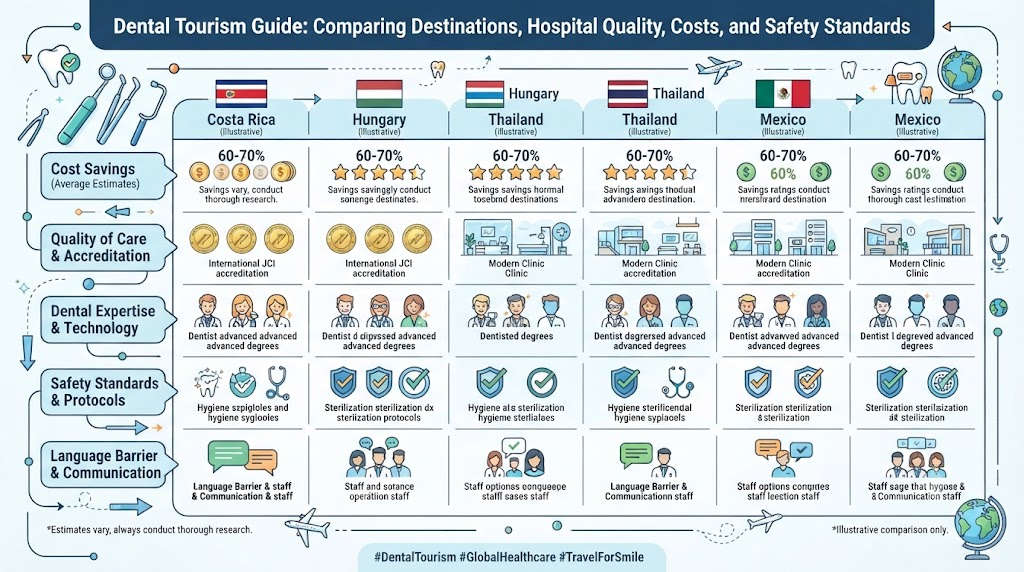
Traveling across international borders for medical and dental procedures has transformed from a niche trend into a established global movement. Dental tourism represents one of the largest segments of cross-border healthcare. Every year, hundreds of thousands of individuals leave their home countries in search of accessible, timely, and affordable treatment solutions without sacrificing clinical standards.This comprehensive guide serves as an educational framework for evaluating international dental providers, understanding treatment protocols—from individual dental implants to full-mouth rehabilitations—and managing the practical logistics of receiving care abroad.
What is Dental Tourism?
Dental tourism is the practice of seeking dental treatment abroad outside one’s native healthcare system. It combines medical travel with leisure or cultural travel, though for most patients, the primary driver is access to necessary dental procedures.
+-------------------------------------------------------------------+
|                        DENTAL TOURISM MODEL                       |
+-------------------------------------------------------------------+
|  [Home Country]                               [Destination]       |
|  • High Local Costs          ---- Travel ---> • Accredited Care   |
|  • Extended Waitlists        <--- Return ---- • Lower Overhead    |
|  • Limited Coverage                           • Specialized Care  |
+-------------------------------------------------------------------+
Categorization of Overseas Dental Care
The scope of treatment ranges from simple preventive procedures to complex surgical interventions:
- Routine Dental Travel: Basic restorations, hygiene maintenance, simple extractions, and single crowns. Often undertaken during business travel or vacations.
- Cosmetic Dental Tourism: Elective aesthetic enhancements including composite or porcelain veneers, professional whitening, and minor smile aligners.
- Implant Tourism: Surgical placement of titanium or zirconia implant fixtures, abutments, and single crowns to replace missing teeth.
- Full-Mouth Rehabilitation: Comprehensive reconstruction involving multiple specialty areas—prosthodontics, periodontics, and oral surgery—to restore complete jaw functionality.
- Complex Restorative Treatment: Advanced interventions such as sinus lifts, major bone grafting, full-arch fixed bridges, and maxillofacial surgery.
Why Do People Seek Dental Treatment Abroad?
Understanding the underlying motivations helps contextualize why millions participate in cross-border dentistry every year.
                      PRIMARY DRIVERS OF DENTAL TRAVEL
                                     │
         ┌───────────────────────────┼───────────────────────────┐
         ▼                           ▼                           ▼
  Economic Factors            Operational Factors         Clinical Options
  • 40–70% cost delta         • Direct appointment access • Advanced diagnostic tools
  • Lower labor overhead      • Minimal wait times        • Integrated lab facilities
  • Reduced operational tax   • Turnkey treatment plans   • Specialist teams
- Cost Disparities: Differences in operational overhead, mal-practice insurance premiums, laboratory fabrication costs, and living standards allow international facilities to offer clinical procedures at 40% to 70% lower prices than those in the US, UK, Canada, or Australia.
- Specialist Availability: Certain destinations feature centralized, multi-specialty centers where oral surgeons, periodontists, and endodontists collaborate under one roof.
- Minimized Waiting Periods: In countries with public health systems like the UK or Canada, non-emergency restorative work can entail long waiting lists. Foreign private clinics often schedule comprehensive procedures within days.
- Advanced Technology Integration: Many high-volume international centers adopt modern infrastructure—such as 3D Cone Beam Computed Tomography (CBCT), CAD/CAM intraoral scanners, and 3D printing labs—faster than smaller private practices in home markets.
Important Clinical Note: Cost savings should never serve as the sole criterion for selecting a facility. Patient safety, clinician expertise, strict sterilization protocols, and long-term aftercare infrastructure must take precedence over financial considerations.
How to Choose the Best Dental Hospital
Identifying the best dental hospitals requires a systematic evaluation framework. Patients should evaluate facilities across thirteen key parameters:
                            FACILITY SELECTION MATRIX
─────────────────────────────────────────────────────────────────────────────
 Clinical Standards           Facility Infrastructure      Patient Support
 ├─ Dentist Credentials       ├─ Diagnostic Suite          ├─ Language Support
 ├─ Hospital Accreditation    ├─ Infection Protocols       ├─ Clear Warranties
 └─ Surgical Specialization   └─ Integrated Dental Lab     └─ Emergency Pathways
─────────────────────────────────────────────────────────────────────────────
1. Dentist Qualifications
Ensure clinicians hold formal specialist degrees from accredited universities. Verify their memberships in recognized professional bodies, such as the International Congress of Oral Implantologists (ICOI) or regional dental boards.
2. Hospital or Clinic Experience
Prioritize facilities with a documented history of handling international patients and complex surgical cases, rather than newly established practices.
3. Treatment Specialization
Verify that the facility matches your specific clinical needs. Complex full-arch implants require dedicated oral surgeons and prosthodontists rather than general practitioners.
4. Accreditation
Look for formal certifications from national healthcare bodies or international organizations such as Joint Commission International (JCI) or ISO (e.g., ISO 9001 for quality management).
5. Infection Control Protocols
Confirm adherence to international sterilization procedures, such as hospital-grade autoclaving, single-use disposables, and negative-pressure surgical rooms.
6. Diagnostic Technology
The facility must feature on-site 3D CBCT imaging, digital radiography, and CAD/CAM systems to enable precise planning and placement.
7. Implant Systems and Materials
The clinic should utilize internationally recognized implant systems (e.g., Straumann, Nobel Biocare, Zimmer Biomet, BioHorizons). These brands ensure global availability of replacement components if repairs are needed later.
8. Emergency Support
Check for written protocols detailing emergency handling during recovery and clear pathways for complications after returning home.
9. Verified Patient Reviews
Review long-term, independent patient experiences across non-affiliated platforms, focusing on clinical outcomes rather than hotel amenities.
10. Transparent Pricing
A trustworthy facility provides fully itemized price breakdowns without hidden fees for diagnostics, extractions, or temporary prosthetics.
11. Treatment Warranty or Follow-Up Policy
Inquire about written policies regarding implant failure or prosthetic breakage, specifying what repairs are covered and who pays for travel costs during remedial work.
12. Communication and Language Support
Ensure seamless communication with fluent English-speaking clinical staff or dedicated patient liaisons to prevent miscommunications during consent and instructions.
13. International Patient Services
Comprehensive centers offer dedicated logistical coordination, including airport transfers, hotel accommodations, and local transportation.
Best Countries for Dental Tourism
Selecting among the best countries for dental tourism requires balancing travel distance, overall budget, regional regulations, and specific clinical requirements.
Disclaimer: Suitability depends entirely on individual health status, clinical needs, travel capacity, and personal preferences. No single country is universally superior.
| Destination | Primary Specialties | Typical Cost Savings | Specialist Availability | Regional Target Audience | Clinical Considerations |
| Mexico | Implants, Crowns, All-on-4 | 50% – 70% | High density in border hubs | US, Canada | Ideal for drive-in patients; border towns feature high-volume implant centers. |
| Turkey | Veneers, Crowns, Full-Arch | 50% – 70% | High concentration in major cities | UK, Europe, Middle East | Popular for comprehensive aesthetic smile makeovers and full-mouth rehabilitation. |
| Hungary | Complex Implants, Restorative | 40% – 60% | Exceptional European standards | UK, Western Europe | Known as Europe’s historical dental hub, featuring specialized university-affiliated centers. |
| Thailand | Cosmetic, Restorative, Implants | 40% – 60% | JCI-accredited medical centers | Australia, NZ, North America | Features large hospital-based dental wings with international hospitality standards. |
| India | Full-Mouth Implants, Maxillofacial | 60% – 80% | Highly qualified specialists | Global, Middle East, UK | Excellent value for complex, multi-stage surgical procedures due to low overheads. |
| Spain / Poland | Restorative, Endodontics, Implants | 30% – 50% | High EU regulatory alignment | UK, Northern Europe | Subject to strict EU clinical directives; conveniently short flight times for Europeans. |
Dental Implants Abroad
Placing dental implants abroad involves a biophysiological process that cannot be rushed. A dental implant consists of a titanium or zirconia post anchored into the jawbone, serving as a root substitute for a prosthetic crown, bridge, or denture.
                         TYPICAL DENTAL IMPLANT TIMELINE
                                     │
         ┌───────────────────────────┼───────────────────────────┐
         ▼                           ▼                           ▼
      VISIT 1                     HEALING                     VISIT 2
   (3 to 7 Days)             (3 to 6 Months)               (5 to 10 Days)
 ├─ 3D CBCT Scan            ├─ Osseointegration           ├─ Healing Abutment
 ├─ Surgical Placement      ├─ Bone Fusion Period         ├─ Intraoral Scanning
 └─ Temporary Crown         └─ Unloaded Healing           └─ Final Crown Delivery
The Osseointegration Timeline
- Initial Assessment & 3D Imaging: Pre-operative CBCT scans evaluate bone density, height, and anatomical structures (nerves, sinus cavities).
- Surgical Placement: The implant fixture is surgically driven into the alveolar bone under local anesthesia or sedation.
- Healing Phase (Osseointegration): Over 3 to 6 months, the surrounding bone fuses with the implant surface. Patients typically return home during this period.
- Abutment Placement & Impression: After integration, an abutment is attached to connect the implant to the final prosthetic. Digital or traditional impressions are created.
- Final Crown Delivery: The final custom ceramic or zirconia crown is permanently attached and adjusted for proper bite function.
Dental Implant Cost Comparison
A proper dental implant cost comparison must account for regional differences, component types, surgical complexity, and auxiliary treatments.
                  TOTAL COST BREAKDOWN FOR IMPLANT CARE
 ┌─────────────────────────────────────────────────────────────────┐
 │ ■ Primary Fixture & Abutment (40%)                              │
 │ ■ Final Custom Prosthetic/Crown (30%)                           │
 │ ■ Diagnostics, CBCT Scans & Consults (10%)                      │
 │ ■ Auxiliary Procedures: Bone Grafting / Sinus Lifts (20%)       │
 └─────────────────────────────────────────────────────────────────┘
Estimated Cost Guidance: The figures below represent estimated ranges for single-tooth implants (fixture, abutment, and standard crown). Actual quotes vary by brand, bone condition, and clinic position.
| Country | Estimated Cost Range (Per Tooth) | Typical Base Inclusions | Common Exclusions / Additional Costs |
| United States | $3,000 – $5,500 | Consultation, basic placement | CBCT scans, extractions, bone grafts, high-tier crowns |
| United Kingdom | £2,000 – £4,000 | Basic placement, crown | Diagnostic 3D scans, bone augmentation, sedation |
| Mexico | $800 – $1,800 | Implants, abutment, standard crown | Complex bone grafting, sinus lifts, IV sedation |
| Turkey | $600 – $1,500 | Implant, standard abutment, crown | Premium implant brands, CBCT, temporary crowns |
| Hungary | $900 – $1,900 | Surgical placement, standard prosthetic | Specialized bone membranes, sinus elevation |
| India | $500 – $1,200 | Complete single unit package | Premium zirconia upgrades, travel insurance |
Note: Ultra-low initial quotes often cover only the implant fixture itself, leaving abutments, crowns, diagnostic scans, and extractions to be billed separately.
How to Compare Dental Implant Quotes
When requesting treatment plans from international providers, insist on an itemized estimate. A complete quote should clearly detail all components and potential added costs.
                      ITEMIZED QUOTE CHECKLIST
───────────────────────────────────────────────────────────────────
 [ ] Initial Consultation Fee       [ ] Bone Grafting (if required)
 [ ] 3D CBCT Diagnostic Scanning    [ ] Sinus Lift (if required)
 [ ] Implant Fixture (Brand/Type)   [ ] Anesthesia / Sedation
 [ ] Custom Abutment (Titanium/Zir) [ ] Post-Op Medications
 [ ] Temporary Prosthetic / Crown   [ ] Airport Transfers / Logistics
 [ ] Final Permanent Crown (Material)[ ] Written Warranty Details
───────────────────────────────────────────────────────────────────
Key Cost Factors to Evaluate:
- Surgical Additions: Bone grafting or sinus lifts can add $300 to $1,500 per site.
- Material Specifications: Premium implant brands (e.g., Straumann, Nobel Biocare) cost more than regional brands, but offer longer clinical tracking and global support.
- Prosthetic Upgrades: Monolithic Zirconia crowns cost more than Porcelain-Fused-to-Metal (PFM), but offer superior strength and aesthetics.
Best Dental Implant Hospitals
Selecting from among the best dental implant hospitals requires looking beyond basic marketing claims. Confirm key clinical and operational indicators before committing:
┌─────────────────────────────────────────────────────────────────┐
│                 CRITICAL FACILITY EVALUATION                    │
├─────────────────────────────────────────────────────────────────┤
│ 1. Dedicated Implantology Department (Not general dentistry)    │
│ 2. Board-Certified Oral Surgeons / Periodontists                │
│ 3. On-Site 3D CBCT & Digital CAD/CAM Laboratory                 │
│ 4. Tracked Implant Traceability (Serial numbers provided)       │
│ 5. Formal Quality Management Certifications (ISO/JCI)           │
└─────────────────────────────────────────────────────────────────┘
Avoid clinics that rely on general dentists for complex surgical interventions. Highly regarded implant facilities employ specialized teams where oral surgeons handle placement and prosthodontists design the final restoration.
All-on-4 Dental Implants Abroad
All-on-4 dental implants abroad offer a streamlined alternative for edentulous patients (those missing all teeth in an arch) or those with severe, non-restorable dental decay.
                          ALL-ON-4 TECHNIQUE
     ┌─────────────────────────────────────────────────────────┐
     │                     Fixed Arch Bridge                   │
     └───────┬─────────────┬─────────────┬─────────────┬───────┘
             │             │             │             │
          [Straight]   [Tilted]       [Tilted]    [Straight]
          Anterior     Posterior      Posterior   Anterior
          Implant      (30-45°)       (30-45°)    Implant
Clinical Concept
The technique anchors a full-arch fixed prosthesis using four strategically placed implants:
- Two Straight Anterior Implants: Placed vertically in the front where bone density is usually highest.
- Two Angled Posterior Implants: Tilted up to 45 degrees to optimize existing bone usage and avoid anatomical structures like the sinus cavity.
Advantages & Limitations
- Pros: Often avoids extensive bone grafting; allows for immediate provisional loading (fixed temporary bridge within 24–72 hours); reduces overall treatment duration.
- Cons: Higher mechanical load per implant; failure of a single implant requires rebuilding the entire framework; requires meticulous hygiene around the acrylic/zirconia bridge base.
Full Mouth Dental Implants Abroad
Choosing full mouth dental implants abroad involves a comprehensive reconstruction tailored to the individual patient’s anatomical conditions.
                         FULL MOUTH RESTORATION OPTIONS
                                       │
         ┌─────────────────────────────┴─────────────────────────────┐
         ▼                                                           ▼
   FIXED RECONSTRUCTION                                    REMOVABLE OVERDENTURES
  • All-on-4 / All-on-6 / All-on-8                         • Implant-Retained Overdenture
  • Permanently screwed/cemented                           • Snaps onto 2–4 implants
  • High stability, feel like natural teeth                • Removable for daily cleaning
  • Higher cost, complex bone requirements                 • More affordable, easier maintenance
Key Differences in Rehabilitation Types
- All-on-6 / All-on-8 Fixed Bridges: Uses 6 to 8 implants per arch to distribute bite forces more evenly across the jaw. Ideal for patients with adequate bone density seeking long-term stability.
- Implant-Retained Overdentures: Uses 2 to 4 implants per arch with locator attachments. The prosthetic snaps securely into place but can be removed for cleaning.
Cosmetic Dentistry Abroad
Cosmetic treatments demand a blend of dental artistry, structural awareness, and precision manufacturing. Seeking treatment at top-tier best cosmetic dentistry hospitals ensures access to conservative, aesthetically pleasing enhancements.
                        COSMETIC DENTISTRY OPTIONS
───────────────────────────────────────────────────────────────────────────
 Treatment Type    Ideal For                    Tooth Preparation Required
───────────────────────────────────────────────────────────────────────────
 Porcelain Veneers Discolored/Chipped/Gapped    Minimal enamel reduction
 E.max Crowns      Severely Damaged Teeth       Moderate-to-high reduction
 Composite Bonding Minor Edges/Minor Spacing    Non-invasive / Zero prep
 Smile Makeovers   Multi-issue Aesthetic Cases  Variable by procedure
───────────────────────────────────────────────────────────────────────────
Safety and Conservation Principles
Conservative cosmetic dentistry prioritizes preserving natural tooth enamel. Avoid clinics that routinely file healthy, intact teeth down to pegs for full crowns when less invasive porcelain veneers or bonding could achieve similar aesthetic results.
Dental Treatment Abroad: Complete Process
Following a clear, step-by-step workflow helps minimize risk when arranging dental treatment abroad.
                   11-STEP DENTAL TOURISM PROCESS
 ┌──────────────────────────────────────────────────────────────┐
 │ Step 1: Document issues & identify goals                     │
 │ Step 2: Obtain local X-rays & 3D CBCT scans                  │
 │ Step 3: Research accredited international destinations       │
 │ Step 4: Shortlist certified, specialized hospitals           │
 │ Step 5: Complete online consultations & share records        │
 │ Step 6: Review and compare proposed clinical plans           │
 │ Step 7: Calculate total costs (Treatment + Travel + Stay)    │
 │ Step 8: Verify practitioner credentials & warranties         │
 │ Step 9: Book travel, arrange accommodation & itinerary       │
 │ Step 10: Undergo primary surgical/restorative phase          │
 │ Step 11: Execute structured recovery & long-term follow-up   │
 └──────────────────────────────────────────────────────────────┘
- Identify Your Dental Problem: List your functional difficulties, pain points, or cosmetic concerns.
- Collect Dental Records: Secure current digital X-rays, CBCT scans, and diagnostic notes from a local provider.
- Research Destinations: Compare logistics, flight distances, travel regulations, and overall costs across potential countries.
- Shortlist Hospitals: Select 3 to 4 facilities with verified accreditations, specialist teams, and modern diagnostic capabilities.
- Request Online Consultations: Submit your imaging records to receive preliminary treatment assessments.
- Compare Treatment Plans: Evaluate the clinical strategies proposed by each provider, noting differences in materials, timelines, and surgical techniques.
- Compare Total Costs: Factor in travel expenses, hotel stays, recovery meals, time off work, and potential emergency funds alongside the medical estimate.
- Verify Credentials: Check practitioner licenses, hospital accreditations, and independent patient reviews.
- Plan Travel: Secure flight itineraries, local transit arrangements, medical visas (if required), and nearby accommodations.
- Receive Treatment: Complete pre-operative testing, sign informed consent forms, and proceed with planned care.
- Complete Follow-Up: Obtain post-operative instructions, digital copies of all surgical records, serial numbers for implant components, and establish a plan for follow-up care.
Risks of Dental Tourism
Understanding potential risks allows patients to take proactive measures to mitigate them.
                        RISK MITIGATION MATRIX
───────────────────────────────────────────────────────────────────
 Identified Risk            Mitigation Strategy
───────────────────────────────────────────────────────────────────
 Infection / Complications  Strict adherence to post-op antibiotics/hygiene
 Communication Breakdown    Confirm clear English fluency or explicit translation
 Inadequate Local Aftercare Pre-arrange a local dentist open to follow-up care
 Misaligned Expectations    Require detailed digital smile designs/CBCT plans
 Travel Delays / Costs      Purchase travel health insurance covering revisions
───────────────────────────────────────────────────────────────────
- Clinical Complications: Infection, implant failure, nerve injury, or bite misalignment can occur with any dental procedure, regardless of location.
- Follow-up Barriers: Resolving unexpected post-operative issues becomes more difficult once a patient returns to their home country.
- Variations in Care Standards: Regulatory oversight, infection protocols, and professional licensing requirements vary between countries.
- Limited Local Recourse: Malpractice litigation across international borders is often complex, expensive, and impractical.
Aftercare After Dental Treatment Abroad
Long-term treatment success depends heavily on proper post-operative care and daily oral hygiene routines.
                      POST-OPERATIVE RECOVERY PHASE
┌─────────────────────────────────────────────────────────────────┐
│ Immediate Phase (Days 1–7): Soft diet, prescribed rinses,       │
│ antibiotic coverage, zero heavy lifting.                        │
├─────────────────────────────────────────────────────────────────┤
│ Integration Phase (Months 1–6): Maintain non-smoking status,    │
│ strict interdental cleaning, avoid excessive biting forces.     │
├─────────────────────────────────────────────────────────────────┤
│ Long-Term Maintenance: Bi-annual professional cleanings,        │
│ nightguards (for bruxism), yearly radiographic checks.           │
└─────────────────────────────────────────────────────────────────┘
Prior to leaving the international clinic, ensure you receive:
- Written post-operative care instructions in your primary language.
- Copies of digital X-rays taken after the procedure.
- Original manufacturer passport cards listing the brand, line, batch, and serial numbers for all installed implant components.
- Emergency contact details for direct access to your treating surgeon.
Dental Tourism Travel Checklist
Ensure all essential travel, medical, and administrative items are prepared before departure:
                  PRE-DEPARTURE LOGISTICS CHECKLIST
 ┌──────────────────────────────────────────────────────────────┐
 │ [ ] Medical & Dental File (X-rays, CBCT scans, treatment plan)│
 │ [ ] Valid Passport (6+ months validity remaining)            │
 │ [ ] Necessary Medical/Travel Visas                            │
 │ [ ] Comprehensive Travel Insurance (Including medical options)│
 │ [ ] Prescription Medications & Emergency Antibiotics          │
 │ [ ] Hotel Accommodation Confirmations (Near treatment site)  │
 │ [ ] Airport Transfer & Local Ground Transport Details        │
 │ [ ] Hospital & Attending Physician Direct Contacts           │
 │ [ ] Itemized Treatment Quote & Written Guarantee Contracts    │
 │ [ ] Dual Payment Methods (Credit cards, local cash)          │
 │ [ ] Recovery Essentials (Soft foods guide, ice gel packs)    │
 └──────────────────────────────────────────────────────────────┘
Dental Tourism Cost Checklist
Calculating the true cost of international dental care requires accounting for all hidden and indirect expenses:
$$\text{Total Cost} = \text{Treatment} + \text{Diagnostics} + \text{Flights} + \text{Lodging} + \text{Transfers} + \text{Medications} + \text{Contingency Buffer}$$
                    COST COMPONENT ANALYSIS
 ┌──────────────────────────────────────────────────────────────┐
 │ 1. Clinical Treatment (Implants, Abutments, Prosthetics)     │
 │ 2. Diagnostics (3D CBCT, Panoramic X-Rays, Impressions)       │
 │ 3. Consultations (Pre-operative and post-operative)          │
 │ 4. Travel Logistics (Roundtrip flights, train passes)         │
 │ 5. Accommodations (Hotel/Apartment during recovery phase)    │
 │ 6. Local Transport (Taxis, shuttles between hotel/clinic)    │
 │ 7. Medications (Antibiotics, painkillers, specialized mouthwash)│
 │ 8. Emergency Buffer (15-20% extra set aside for changes)     │
 └──────────────────────────────────────────────────────────────┘
Dental Tourism: Price vs Quality
The principle “Lowest price does not equal best treatment” should guide all decisions in international healthcare.
                          PRICE VS. QUALITY TENSION
       [ CHEAPEST OFFER ]                         [ VALUE-ORIENTED OFFER ]
 ┌───────────────────────────┐               ┌───────────────────────────┐
 │ • Generic/Unbranded Implants│             │ • Recognized Global Brands│
 │ • Rapid/Rushed Timelines  │      VS     │ • Adequate Osseointegration│
 │ • Generalist Practitioners│               │ • Specialized Surgeons    │
 │ • Omitted Diagnostic Scans│               │ • Full 3D CBCT Planning   │
 └───────────────────────────┘               └───────────────────────────┘
Sacrificing quality for a lower initial price often leads to higher long-term costs. Correcting a failed implant, managing tissue damage, or replacing a poorly fitted prosthetic requires complex corrective procedures that far exceed the initial savings. Focus on identifying fair value rather than chasing the absolute lowest bid.
Comparison Table
Evaluate key clinical and facility factors before making a final commitment:
| Evaluation Factor | Critical Checklist Items | Why It Matters for Long-Term Outcomes |
| Dentist Credentials | Board certification, specialist degrees, international memberships | Ensures advanced surgical training and expertise in managing complex complications. |
| Hospital Quality | ISO certifications, international hospital accreditation | Confirms verified safety standards, clinical protocols, and facility hygiene. |
| Diagnostic Tech | In-house 3D CBCT scanning, digital intraoral optical scanners | Enables precise implant planning, reducing the risk of nerve damage or misaligned prosthetics. |
| Component Quality | Recognized global implant lines (Straumann, Nobel, etc.) | Guarantees component durability and long-term availability of spare parts worldwide. |
| Price Transparency | Fully itemized breakdowns including scans, extractions, and temporary teeth | Prevents hidden fees or unexpected costs after treatment begins. |
| Verified Reviews | Long-term reviews on independent platforms | Offers realistic insights into patient care, recovery experiences, and clinic communication. |
| Aftercare Protocol | Written treatment guarantees and established post-op recovery plans | Defines clear accountability and financial responsibilities if remedial care is needed. |
How to Identify a Trustworthy Dental Provider
Distinguish between reliable international dental facilities and high-volume, profit-driven operations by looking for these clear indicators:
                     PROVIDER EVALUATION FRAMEWORK
 ┌─────────────────────────────────┬─────────────────────────────────┐
 │        POSITIVE SIGNALS         │          WARNING SIGNS          │
 ├─────────────────────────────────┼─────────────────────────────────┤
 │ ✔ Itemized, transparent pricing │ ✖ Unexplained ultra-low prices  │
 │ ✔ Detailed pre-op 3D CBCT scans │ ✖ High pressure to book sales   │
 │ ✔ Fully verified specialist team│ ✖ Vague or missing treatment plan│
 │ ✔ Clear component brand names   │ ✖ Guarantees of 100% success    │
 │ ✔ Realistic healing timelines   │ ✖ Rush to skip healing periods  │
 │ ✔ Structured post-op follow-up  │ ✖ Unnamed implant materials     │
 └─────────────────────────────────┴─────────────────────────────────┘
Dental Tourism for Different Patient Needs
Treatment approaches must be tailored to individual clinical requirements:
                     PATIENT NEED CATEGORIZATION
───────────────────────────────────────────────────────────────────────────
 Patient Scenario          Primary Treatment Approach    Key Consideration
───────────────────────────────────────────────────────────────────────────
 Single Missing Tooth      Single Implant + Crown         Preserves adjacent teeth
 Multiple Missing Teeth    Implant-Supported Bridge       Reduces total implants
 Edentulous Arch           All-on-4 / All-on-6           Evaluates bone density
 Discolored/Misassembled   Porcelain Veneers/Bonding      Focuses on minimal prep
 Severe Traumatic Loss     Full Reconstruction            Requires multi-specialty
───────────────────────────────────────────────────────────────────────────
- Single Missing Tooth: A single implant preserves adjacent healthy teeth, avoiding the grinding required for traditional three-unit bridges.
- Multiple Missing Teeth: An implant-supported bridge uses two or more implants to anchor multiple connected teeth, restoring functionality efficiently.
- Full-Mouth Rehabilitation: Combines oral surgery, periodontics, and prosthodontics to rebuild both upper and lower arches from the ground up.
- Cosmetic Makeovers: Emphasizes smile design, soft tissue alignment, and conservative tooth preparation to deliver natural-looking results.
Common Mistakes to Avoid
Avoid these frequent pitfalls when arranging dental care abroad:
                     TEN COMMON PITFALLS TO AVOID
 ┌──────────────────────────────────────────────────────────────┐
 │ 1. Selecting a provider based solely on the lowest price     │
 │ 2. Confirming travel bookings before a full consultation      │
 │ 3. Failing to verify hospital accreditations                 │
 │ 4. Overlooking surgeon qualifications and specialized degrees │
 │ 5. Failing to check specific implant brands and materials     │
 │ 6. Underestimating required travel and healing times         │
 │ 7. Disregarding post-operative rest requirements             │
 │ 8. Failing to secure a local dentist for long-term care      │
 │ 9. Accepting vague, lump-sum treatment quotes                │
 │ 10. Assuming all complex care can be completed in one trip   │
 └──────────────────────────────────────────────────────────────┘
Expert Tips for Dental Tourists
- Get an Independent Initial Diagnosis: Obtain a full evaluation and digital X-rays from a local dentist before seeking quotes abroad.
- Request Itemized Quotes: Require clinics to provide written, line-by-line cost breakdowns.
- Verify Component Traceability: Ensure the clinic provides official manufacturer identification cards for all implant hardware.
- Research Surgeon Qualifications: Confirm your surgeon specializes in periodontics, prosthodontics, or oral surgery.
- Plan Extra Recovery Time: Add two to three extra days to your stay in case post-operative adjustments are needed.
- Prioritize Language Support: Ensure you can communicate comfortably with your clinical team.
- Secure Medical Travel Insurance: Look for policies that cover non-emergency travel changes or medical adjustments.
- Keep Complete Records: Maintain digital copies of all treatment plans, consent forms, and post-op imaging.
- Coordinate Local Follow-Up Care: Identify a domestic dentist willing to manage long-term hygiene and maintenance.
- Focus on Long-Term Value: Prioritize clinical safety, surgeon expertise, and material quality over short-term savings.
FAQ Section
1. What is dental tourism?
Dental tourism is the practice of traveling to another country to receive dental care, typically driven by lower costs, shorter waiting times, or access to specialized treatments.
2. Is dental treatment abroad safe?
Dental treatment abroad is generally safe when performed at accredited facilities by certified, experienced specialists who follow international sterilization and clinical standards. Thoroughly researching facilities and practitioners is essential.
3. Which countries are popular for dental tourism?
Popular destinations include Mexico, Turkey, Hungary, Thailand, India, Spain, Poland, and Colombia. The ideal country depends on your budget, travel distance, and specific clinical needs.
4. How much can dental implants abroad cost?
Single dental implants abroad typically range from $500 to $1,900 per tooth, compared to $3,000 to $5,500 in the US or UK. Total costs vary based on component materials, diagnostic requirements, and auxiliary procedures like bone grafting.
5. Are dental implants abroad worth considering?
Dental implants abroad can offer significant savings, especially for complex or full-mouth procedures. However, success depends on selecting a qualified provider, using reputable implant systems, and allowing adequate time for healing and follow-up care.
6. How do I choose the best dental hospital?
Evaluate facilities based on hospital accreditation, practitioner specialization, diagnostic technology (like 3D CBCT), transparent itemized pricing, infection control standards, and verified patient feedback.
7. What should I check before choosing an implant hospital?
Verify surgeon qualifications, international hospital accreditations, standard implant brands, digital diagnostic tools, written warranty policies, and clear post-operative care plans.
8. What are All-on-4 dental implants?
All-on-4 is a surgical technique that replaces an entire arch of missing teeth using four strategically placed implants—two straight in the front and two angled in the back—to support a fixed full-arch bridge.
9. Can I get full-mouth dental implants abroad?
Yes, full-mouth implant treatments are widely available at international centers. Treatment plans are customized to individual bone density and functional needs, utilizing options like All-on-4, All-on-6, or implant-supported overdentures.
10. How long does dental implant treatment take?
Implant treatment typically requires two trips over 3 to 6 months. The first visit covers surgical placement (3 to 7 days), followed by a fusion healing period at home, and a second visit (5 to 10 days) to attach the permanent crown or bridge.
11. What does a dental implant quote usually include?
A complete quote should itemize consultation fees, 3D CBCT scans, the implant fixture, abutment, provisional prosthesis, final crown, local anesthesia, and follow-up visits.
12. What risks are associated with dental tourism?
Potential risks include surgical complications, infection, misaligned bite, communication difficulties, limited local recourse, and challenges arranging follow-up care after returning home.
13. How should I plan dental treatment abroad?
Start by gathering local dental records, researching accredited facilities, requesting itemized quotes, verifying practitioner credentials, and planning a travel itinerary that allows sufficient recovery time.
14. What documents should I take?
Bring valid identification, medical and dental records (including digital X-rays/scans), medication lists, travel insurance policies, itemized treatment quotes, and written clinic confirmations.
15. How do I arrange aftercare after returning home?
Before traveling, locate a local dentist willing to oversee routine hygiene, maintenance, and long-term checkups for international restorations. Ensure you carry all original treatment and component records from your foreign clinic.
Conclusion
Dental tourism offers a viable option for patients seeking quality, affordable dental care, ranging from individual implants to full-mouth restorations. However, achieving successful long-term outcomes requires careful planning, realistic expectations, and prioritized safety over short-term savings.By thoroughly evaluating practitioner credentials, facility accreditations, component quality, and aftercare plans, patients can navigate international healthcare options confidently. Always consult with qualified dental professionals, review itemized treatment plans, and ensure comprehensive follow-up arrangements before committing to care abroad.