Introduction
The retina helps your eyes see clear images. It is a thin layer at the back of the eye.Some retinal problems can harm vision without quick medical care. Others may need surgery from a trained retinal specialist.An advanced retinal surgery unit focuses on serious problems inside the eye. It may offer special tests, surgery, monitoring, and follow-up care.BestEyeHospitals can help people research eye hospitals and retinal care options. Patients should still discuss their needs with a qualified eye specialist.
Understanding Advanced Retinal Surgery Units
A retinal surgery unit treats problems affecting the retina and nearby parts of the eye. A retinal specialist has special training in these conditions.The retina changes light into signals for the brain. Damage to this layer can cause blurred vision, flashes, floaters, or vision loss.Some units have vitreoretinal surgeons. These surgeons treat problems involving the retina and the clear gel inside the eye.Advanced retinal surgery units may support diagnosis and treatment in one setting. They may also provide regular checks after surgery.Special equipment helps doctors see the retina clearly. It can also help them plan and perform delicate eye procedures.However, every hospital has different services. Patients should ask which tests, procedures, and emergency services are available.
Conditions That May Need Retinal Surgery
Several serious retinal problems may need surgery or specialist treatment. The right treatment depends on the condition and its severity.A retinal detachment happens when the retina pulls away from its normal position. This can cause sudden vision changes.A retinal tear is a break in the retina. It may sometimes need laser treatment or another procedure.Vitreous hemorrhage means blood enters the clear gel inside the eye. Severe cases may need specialist treatment.Tractional retinal detachment can happen when scar tissue pulls on the retina. It may occur with advanced diabetic eye disease.A macular hole is a small opening in the center of the retina. An epiretinal membrane is a thin layer that can affect central vision.Not every retinal problem needs surgery. A retinal specialist decides treatment after a detailed eye examination.
Common Retinal Surgery Procedures
- Retinal surgery includes several different procedures. Each one treats a different type of retinal problem.
- Vitrectomy removes some or all of the clear gel inside the eye. This can help the surgeon reach and treat the retina.
- Retinal detachment repair uses different methods to put the retina back in place. The method depends on the type of detachment.
- Scleral buckle places a small support around the outside of the eye. It can help close a retinal tear and support the retina.
- Pneumatic retinopexy uses a small gas bubble inside the eye. The bubble helps push the retina back into position.
- Laser treatment can seal certain retinal tears or weak areas. It may prevent a tear from causing more serious problems.
- Membrane peeling removes a thin layer that pulls on the retina. This may help in selected macular conditions.
- A gas or silicone oil bubble may support the retina during healing. Your surgeon will explain if this is needed.
Advanced Technology Used in Retinal Care
- Modern retinal units may use several tools to examine the eye. These tools help doctors see retinal problems more clearly.
- Optical coherence tomography, or OCT, creates detailed pictures of retinal layers. It can help doctors check the macula and other retinal areas.
- Wide-field retinal imaging shows a larger part of the retina. This can help doctors check areas outside the center of vision.
- Fundus photography takes pictures of the inside back part of the eye. Doctors can use these images to monitor changes.
- Ultrasound may help when blood or other problems block a clear view. It can give doctors useful information about the inside of the eye.
- Special surgical microscopes help surgeons see tiny eye structures. Small surgical tools can also support delicate retinal procedures.
- Not every eye hospital has every tool. Ask the hospital which equipment is available for your planned care.
How to Choose a Hospital for Retinal Surgery
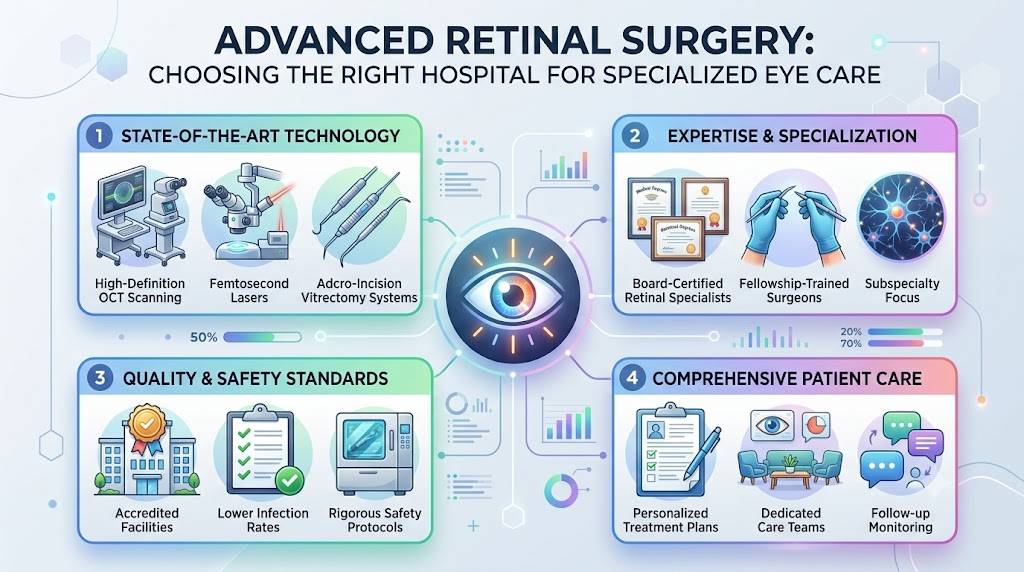
Choosing a retinal surgery hospital involves more than looking at equipment. The care team, safety systems, and follow-up services also matter.
Before choosing a hospital, patients can check:
- Experience of retinal specialists
- Availability of vitreoretinal surgeons
- Retinal imaging and testing
- Surgical equipment
- Emergency retinal care
- Anesthesia support
- Infection-control practices
- Follow-up services
- Patient communication
- Recovery support
- Insurance information
- Clear cost details
Ask who will perform the surgery. Also ask what happens if an urgent retinal problem occurs after treatment.
Clear communication can make medical care easier to understand. Patients should feel comfortable asking questions about their care.
What to Expect Before Retinal Surgery
Preparation starts with a detailed eye examination. Your specialist may check vision, eye pressure, and the retina.Retinal imaging may also be needed. These scans can help the surgeon understand the problem and plan treatment.Your doctor may review your medical history and current medicines. Blood tests may be needed for some patients.The surgeon should explain the planned procedure and possible care steps. You can also ask about anesthesia and recovery.Some procedures may use local anesthesia with sedation. Other cases may need a different form of anesthesia.Food and drink rules may apply before some procedures. Follow the exact instructions given by your surgical team.Arrange transport and caregiver support when needed. You may need help getting home after surgery.
What Happens During Retinal Surgery
Retinal surgery treats the problem inside or around the eye. The exact steps depend on the condition and procedure.The surgeon may make very small openings in the eye. Special tools allow the surgeon to reach the retina.During a vitrectomy, the surgeon may remove the clear gel inside the eye. This creates space to treat the retinal problem.The surgeon may repair a tear or place the retina back into position. Laser treatment may also be used when needed.Some procedures use a gas bubble or silicone oil. These materials can help support the retina during healing.Your surgeon will explain what happens during your specific procedure. Surgery steps can vary greatly between patients.
Recovery and Aftercare
Retinal surgery recovery differs from person to person. It also depends on the procedure and the condition being treated.You may have temporary blurry vision after surgery. Mild discomfort can also occur during early healing.Your doctor may prescribe eye medicines. Use them exactly as instructed by your eye care team.Follow-up visits help the doctor check healing. These visits can also identify problems that need attention.Some patients must keep their head in a certain position. This may be needed when a gas bubble supports the retina.If a gas bubble is present, air travel may be unsafe. Tell other doctors about the gas bubble before receiving medical care.Avoid heavy activity until your surgeon allows it. Return to normal activities only after receiving medical advice.
Warning Signs After Retinal Surgery
Some symptoms after surgery need prompt medical attention. Contact your eye specialist if you notice concerning changes.Sudden loss of vision is an important warning sign. A large increase in floaters can also need urgent assessment.New flashes of light may signal a retinal problem. A dark curtain or shadow across vision also needs urgent care.Severe or worsening eye pain should not be ignored. Significant redness or new eye swelling also needs medical attention.New discharge from the eye can also be concerning. Contact your eye team promptly when these symptoms appear.Do not wait for a routine visit when symptoms suddenly become severe. Seek urgent medical help for serious or rapid vision changes.
Cost and Insurance Considerations
Retinal surgery cost can vary between patients and hospitals. The condition and procedure can affect the total cost.Other factors may include surgeon fees and hospital charges. Diagnostic tests and anesthesia may also add to the total.Medicines and follow-up care can create additional costs. Some patients may also need another procedure.Insurance coverage depends on the plan and treatment. Ask the hospital which costs your insurance may cover.Request a clear cost breakdown before treatment. This can help you understand expected charges and possible extra costs.
A Simple Way to Compare Retinal Surgery Hospitals
Patients can use simple questions when comparing retinal surgery hospitals. The goal is to understand the care available for their needs.
| Factor | What to Check |
|---|---|
| Specialist care | Retinal or vitreoretinal specialist availability |
| Diagnosis | Retinal scans and imaging services |
| Surgery | Available retinal procedures and equipment |
| Emergency care | Support for sudden retinal problems |
| Follow-up | Post-surgery checks and recovery support |
| Cost | Clear fees and insurance information |
Frequently Asked Questions About Retinal Surgery Hospitals
1. What is an advanced retinal surgery unit?
It is a hospital unit focused on serious retinal problems. It may provide special testing, surgery, and follow-up care.
2. Which conditions may need retinal surgery?
Retinal detachment, some retinal tears, and severe vitreous bleeding may need surgery. Other complex retinal problems may also need treatment.
3. What does a retinal specialist do?
A retinal specialist diagnoses and treats diseases affecting the retina. Some specialists also perform vitreoretinal surgery.
4. What is vitrectomy?
Vitrectomy removes some or all of the clear gel inside the eye. It can help the surgeon treat certain retinal problems.
5. How is retinal detachment treated?
Treatment can include laser, a gas bubble, scleral buckle, or surgery. The choice depends on the type of detachment.
6. How long does retinal surgery recovery take?
Recovery time varies by procedure and patient. Your surgeon can explain what recovery may involve.
7. Can vision improve after retinal surgery?
Vision may change after treatment, but results vary. Your specialist can explain the expected outlook for your condition.
8. What factors affect retinal surgery cost?
The condition, procedure, surgeon fees, hospital charges, tests, and follow-up care can affect cost.
9. What should patients look for in a retinal surgery hospital?
Check specialist experience, diagnostic tools, surgery services, emergency care, follow-up support, and clear cost information.
10. When should a patient seek urgent retinal care?
Sudden vision loss, new flashes, many new floaters, or a dark curtain need prompt eye care.
Final Thoughts
Retinal problems can affect vision and may need specialist assessment. Advanced retinal surgery units can provide detailed testing, delicate procedures, and follow-up care.Patients should ask about specialist experience, available technology, emergency support, and costs. Recovery also needs careful follow-up and clear instructions.Sudden vision changes need prompt medical attention. Discuss symptoms and treatment choices with a qualified retinal specialist.BestEyeHospitals can help patients research retinal care options. However, your eye specialist should guide your personal treatment decisions.