Introduction
Diabetes can affect many parts of the body. The eyes can also be affected.Some diabetic eye problems may start without clear signs. This is why regular eye care is important.A diabetic eye care program may include eye exams and retinal tests. It may also include specialist care, treatment, and follow-up.If you are comparing eye hospitals, BestEyeHospitals can help you explore eye care information and hospital services.A proper eye check can help doctors find changes early. It can also help guide future care.
What Is Diabetic Eye Care?
Diabetic eye care focuses on eye problems linked with diabetes. It helps doctors watch for changes in the eyes.The retina is a thin layer at the back of the eye. It senses light and helps create vision.High blood sugar can harm tiny blood vessels in the retina. This damage can lead to diabetic retinopathy.Not everyone with diabetes develops eye disease. Regular checks help doctors watch for possible changes.
How Diabetes Can Affect the Eyes
Diabetes can affect small blood vessels in the retina. These vessels may leak fluid or become blocked.Blood flow can also change inside the retina. In some cases, new blood vessels may grow in an abnormal way.These changes can affect vision. Early eye disease may have few or no clear symptoms.
What Is Diabetic Retinopathy?
Diabetic retinopathy means damage to retinal blood vessels. It can develop when diabetes affects these small vessels over time.Doctors often describe it as non-proliferative or proliferative. These terms describe different patterns of retinal damage.Patients should not try to identify their own stage. An eye specialist can check the retina and explain the findings.
What Is Diabetic Macular Edema?
The macula helps provide sharp central vision. Diabetes can sometimes cause fluid to collect near this area.This swelling is called diabetic macular edema. It can affect central vision.Eye doctors may use retinal scans to check for swelling. The right test depends on the patient’s eye findings.
Why Regular Diabetic Eye Screening Matters
- Diabetic eye screening can help find retinal changes early. This matters because some changes may start before vision becomes blurry.
- Screening may include a detailed eye exam and retinal pictures. Some patients may also need other eye tests.
- The timing of eye checks can vary. It may depend on diabetes type, eye findings, pregnancy, and medical advice.
- Regular follow-up can also help doctors track changes. It can support treatment planning when treatment becomes needed.
What a Diabetic Eye Care Program May Include
A hospital program can offer several eye care services. But services can differ from one hospital to another.
Common services may include:
- Vision testing
- Dilated eye exams
- Retinal photography
- OCT scans
- Other retinal tests
- Retina specialist visits
- Treatment
- Follow-up care
- Patient education
A complete program may connect screening with specialist care. This can make long-term eye monitoring easier.
| Service | What It May Help With |
|---|---|
| Eye exam | Checks overall eye health |
| Retinal photography | Records retinal images |
| OCT scan | Checks retinal layers and swelling |
| Specialist visit | Reviews retinal problems |
| Follow-up | Tracks changes over time |
Dilated Eye Examination
A dilated eye exam helps the doctor see more of the retina. Special eye drops make the pupil wider.This gives the doctor a better view inside the eye. Vision may stay blurry or light-sensitive for a short time.The doctor can then look for possible retinal changes. The need for dilation depends on the eye exam.
Retinal Photography
Retinal photography takes detailed pictures of the back of the eye. These pictures can help doctors check retinal blood vessels.Images can also help track changes over time. Doctors may compare older and newer images.Photography is useful but does not show every eye problem. Other tests may be needed in some cases.
OCT Scans
OCT means Optical Coherence Tomography. It uses light to create detailed pictures of retinal layers.An OCT scan can help doctors look for retinal swelling. It may also show other changes in the retina.Not every person with diabetes needs an OCT scan. The eye doctor decides when it may help.
Other Retinal Tests
Some patients may need extra retinal tests. These can include angiography or wide-field retinal imaging.Such tests can give doctors more information about retinal blood vessels. They can also help with certain treatment decisions.These tests are not needed for every patient. The specialist chooses tests based on the patient’s eye condition.
The Role of Retina Specialists
- A retina specialist is an eye doctor with advanced retinal training. Retina specialists care for many serious retinal conditions.
- They may treat diabetic retinopathy and diabetic macular edema. They may also manage retinal bleeding or complex retinal problems.
- A hospital with retina services may offer both testing and treatment. BestEyeHospitals.com can help readers research retina care and related hospital services.
- Patients should still discuss their needs with a qualified eye professional. A website cannot replace an eye examination.
Treatment Options for Diabetic Eye Disease
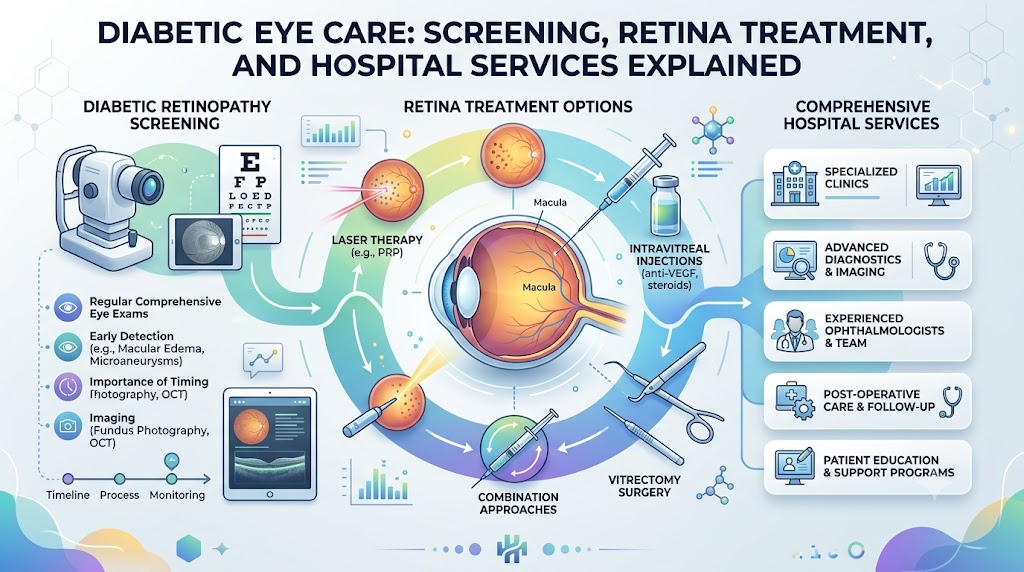
Treatment depends on the eye condition and its severity. Some people may only need regular monitoring.Other patients may need laser treatment or eye injections. Surgery may also be considered for some serious retinal problems.Diabetes care is also important for overall eye health. Eye doctors may work with other healthcare professionals when needed.Treatment should always follow a professional eye examination. No single treatment is right for every patient.
Laser Treatment
Laser treatment may help manage certain retinal problems. The purpose depends on the type of eye disease.Laser care is not needed for every person with diabetes. An eye specialist decides when it may be useful.Laser treatment also does not guarantee normal vision. Doctors discuss possible benefits and limits before treatment.
Eye Injection Treatment
Some retinal problems may need medicine given by injection into the eye. This treatment is performed by a qualified eye specialist.The doctor decides when injections may be suitable. The choice depends on the retinal findings.Patients should not assume that injections are needed. A proper eye exam must come first.
Retinal Surgery
Some advanced retinal problems may require surgery. Surgery is not a routine need for every person with diabetes.A retina specialist can assess the problem and explain available options. Specialized hospitals may have retinal surgery facilities when needed.The decision depends on the eye examination. Doctors can also explain the possible benefits and risks.
Coordinating Eye Care With Diabetes Care
Eye care is one part of diabetes care. Other health factors can also affect eye health.Patients may work with diabetes doctors, primary care doctors, and eye specialists. This teamwork can support complete care.Blood sugar and blood pressure can affect overall health. Patients should follow their own medical care plan.Eye doctors can focus on retinal health. Other doctors can manage wider diabetes needs.
What Makes a Good Diabetic Eye Care Program?
A useful program should offer clear care and communication. Patients should know who will examine their eyes.
Important factors include:
- Qualified eye doctors
- Retina specialist access
- Retinal imaging
- Treatment services
- Follow-up systems
- Emergency support
- Clear communication
- Patient education
BestEyeHospitals.com can help readers learn about eye hospitals and available services. Patients should still confirm services directly with the hospital.
Hospital Technology and Diagnostic Equipment
- Modern eye hospitals may use several types of equipment. These tools can help doctors study the retina in more detail.
- Examples include retinal cameras, OCT, and wide-field imaging. Some hospitals may also offer angiography and laser systems.
- Technology can support better clinical assessment. But more equipment does not always mean better care.
- The skill of the eye team also matters. Patients should consider both technology and specialist experience.
Follow-Up and Long-Term Monitoring
Diabetic eye care often continues over time. One eye check may not be enough for every patient.Follow-up visits can help doctors track retinal changes. They can also help check how treatment is working.Follow-up timing depends on the patient’s eye condition. A doctor can suggest the right schedule for each patient.Keeping eye reports can also help during future visits. This gives doctors useful information about earlier findings.
Family and Caregiver Support
Family members can help people manage regular eye care. Simple support can make appointments easier.
Families can help with:
- Keeping appointment dates
- Organizing eye reports
- Supporting follow-up visits
- Writing down questions
- Supporting diabetes care plans
- Noticing major vision changes
Family members should not make medical decisions for the patient. The patient and healthcare team should make care decisions together.
Cost and Insurance Considerations
Diabetic eye care costs can vary between hospitals. The total may depend on the services needed.Costs may include eye exams, scans, specialist visits, laser care, injections, or surgery. Follow-up visits may also have separate charges.Insurance coverage can also differ. Patients should ask what their plan covers.Before treatment, ask for clear cost details. An itemized estimate can help prevent confusion later.
Emergency Warning Signs
Some sudden eye changes need urgent professional care. Do not ignore major changes in vision.
Seek urgent eye care for signs such as:
- Sudden loss of vision
- A sudden increase in floaters
- Flashes of light
- A dark curtain or shadow
- A sudden major change in vision
These signs can have different causes. Only an eye professional can assess the cause.
How BestEyeHospitals.com Can Help
- BestEyeHospitals.com can help readers research eye hospitals and retina services. It also provides educational information about eye conditions and treatments.
- Readers can explore information about diabetic eye care, retinal tests, and specialist services. This can help them prepare for a discussion with an eye professional.
- The platform does not replace an ophthalmologist. It also does not diagnose eye problems or decide which treatment a patient needs.
- Patients should confirm hospital services, specialist availability, and treatment options before booking care.
Frequently Asked Questions About Diabetic Eye Care Programs
1. What is a diabetic eye care program?
It is a group of eye services for people with diabetes. It may include screening, retinal tests, specialist care, treatment, and follow-up.
2. Why do people with diabetes need regular eye checks?
Some diabetic eye changes may start without clear symptoms. Regular checks can help doctors find and track these changes.
3. What is diabetic retinopathy?
Diabetic retinopathy is damage to retinal blood vessels linked with diabetes. It can affect vision when it becomes more advanced.
4. What tests may be used during diabetic eye screening?
A program may use eye exams, retinal photography, or OCT scans. Other tests may be used when needed.
5. What does an OCT scan check?
OCT creates detailed pictures of retinal layers. It can help doctors look for swelling and other retinal changes.
6. When might a retina specialist be involved?
A retina specialist may help with retinal disease or complex eye problems. They can assess findings and discuss suitable care.
7. What treatments may be used for diabetic eye disease?
Treatment may include monitoring, laser care, eye injections, or surgery. The choice depends on the eye condition.
8. How often should diabetic eye care be followed?
There is no single schedule for everyone. Follow-up timing depends on the patient’s health and eye findings.
9. What should I check when choosing an eye hospital?
Check specialist access, retinal tests, treatment services, follow-up, safety, communication, and costs. Confirm which services the hospital actually provides.
10. When should sudden vision changes receive urgent care?
Sudden vision loss, flashes, many new floaters, or a dark shadow need urgent eye care. A qualified eye professional should assess these symptoms.
Final Thoughts
Diabetic eye care focuses on regular checks and early detection. It may also include retinal imaging, specialist care, treatment, and follow-up.A good diabetic eye care program should match the patient’s needs. Patients can compare specialist access, testing, treatment options, safety, follow-up, and costs.Sudden vision changes should receive urgent professional attention. Regular eye care is also important even when vision feels normal.BestEyeHospitals.com can help readers research eye hospitals and diabetic eye care information. Before making care decisions, speak with a qualified eye professional.