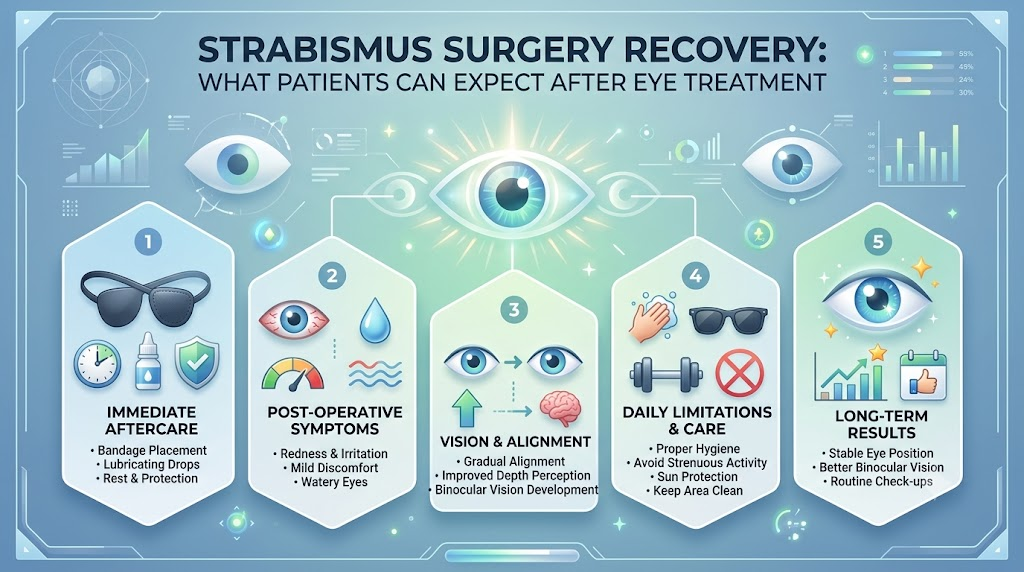
Strabismus means the eyes do not stay aligned. One eye may turn inward, outward, up, or down. This can happen at different ages. Some people have crossed eyes or a squint. Surgery may help improve eye alignment in some cases. Recovery continues after the procedure. Follow-up visits help the eye team check healing and alignment. Hospitals offering strabismus surgery recovery can provide this support. BESTEYEHOSPITALS helps families research eye hospitals and services.
What Is Strabismus?
Strabismus is a problem with eye alignment. The eyes may not point in the same direction. One eye may look straight while another turns. The turn may be inward, outward, upward, or downward.Some people notice double vision or eye strain. Others may notice an uneven eye position. Children may show different signs than adults. These signs can have many possible causes.Only an eye doctor can assess the condition. A proper eye exam helps explain what is happening. It also helps the doctor plan suitable care. This is why diagnosis should come before treatment decisions.
What Is Strabismus Surgery?
Strabismus surgery is also called eye muscle surgery. It works on muscles that move the eyes. The goal is to improve how the eyes line up. The exact surgery depends on the person’s eye condition.The surgery does not promise perfect alignment. Results can differ between people. Some patients may need more care later. Your eye surgeon can explain the expected treatment plan.Recovery starts after the procedure ends. The eye muscles and nearby tissues need time to heal. The medical team checks this healing during follow-up visits. This makes strabismus surgery aftercare an important part of care.
Why Does Recovery Care Matter?
Recovery does not end when surgery is over. The eyes need time to settle and heal. Doctors also need to check eye movement and alignment. Follow-up visits help them watch these changes.Symptoms can change during the recovery period. Some may improve as healing continues. Others may need another medical review. Your surgeon can explain what is normal for your case.Recovery also differs between patients. Age, eye condition, and surgery details can affect recovery. This is why fixed recovery promises are not helpful. Your own eye team should guide your care.
What Can Patients Expect Right After Surgery?
Some patients have red eyes after surgery. Mild discomfort can also happen. The eye may feel scratchy or irritated. Watery eyes and light sensitivity may occur too.Temporary blurry vision can happen in some cases. Some people may also notice double vision. Not everyone will have the same symptoms. Symptoms can change as the eyes heal.The surgical team will explain expected changes. Follow those instructions closely. Do not compare your recovery with another person. Your eye surgery recovery may follow a different path.
The First Days After Strabismus Surgery
The first days focus on healing and comfort. Rest may be part of the care plan. The team may also give eye protection advice. Follow the exact instructions from your medical team.Redness can take time to settle. Mild eye discomfort may also continue for a while. These changes can be part of recovery. However, worsening symptoms need medical attention.Do not rub or press on the healing eye. Avoid changing your care plan yourself. Your surgeon knows the details of your procedure. Follow the advice given by the hospital.
Strabismus Surgery Recovery Timeline
Strabismus recovery happens in stages. The early period focuses on healing. Later visits focus on eye alignment and movement. Your doctor may check how the eyes are settling.Eye alignment can change during healing. This does not mean the final result is known. The eye muscles need time to adjust. Follow-up checks help the doctor track progress.There is no single recovery timeline for everyone. Some people may need more follow-up than others. Children and adults can also recover differently. Always use your surgeon’s advice for your own recovery.
Eye Redness and Discomfort After Surgery
Eye redness is common after some eye muscle surgeries. The white part of the eye may look red. Mild irritation can also occur. The eye may feel gritty for a while.These symptoms can change during healing. Some patients may have watery eyes too. Light sensitivity may also occur. Your medical team can explain what to expect.Do not use new eye products without medical advice. Do not change prescribed treatment on your own. If symptoms become severe or worse, contact your eye team. They can check the eye properly.
Temporary Double Vision After Surgery
Double vision means seeing two images. Doctors may also call it diplopia. It can happen after eye alignment surgery. The brain may need time to adjust to the new eye position.Temporary double vision does not happen to everyone. It may also change during recovery. Your eye doctor can check eye movement and alignment. This helps them understand the change.Ongoing or worsening double vision needs medical review. Tell your eye team about new or changing symptoms. Do not assume that every vision change is normal.
Follow-Up Visits After Strabismus Surgery
Follow-up visits are an important part of recovery. The doctor may check eye alignment first. Eye movement may also be reviewed. The doctor may check healing and redness.Vision changes may also be discussed. You can share any new symptoms. The doctor can then decide if more checks are needed. Follow-up timing can vary between patients.Attend every appointment advised by your surgeon. These visits support proper postoperative monitoring. They also give you a chance to ask questions. Good communication can make recovery easier to understand.
What Does a Hospital Recovery Program Include?
Recovery services can differ between hospitals. Some hospitals provide planned postoperative eye checks. Others may offer detailed alignment testing. Vision checks may also form part of follow-up care.
Patient education is another useful service. It can explain expected symptoms and warning signs. Some hospitals also provide direct communication with the care team. Emergency support may be available in some settings.Not every hospital offers the same services. Ask what is included before treatment. This can help families understand the full care process. It can also help with an eye hospital comparison.
Recovery Care for Children
Children may have special recovery needs. Young children may not explain discomfort clearly. Parents or caregivers often help notice changes. They can also help with follow-up appointments.
A pediatric ophthalmologist may be involved when needed. This specialist focuses on children’s eye care. Some hospitals may also have orthoptist support. Orthoptists can help assess eye movement and binocular vision.Every child has different needs. Recovery instructions should come from the treating team. Parents should ask questions when symptoms change. Clear communication can help support the child’s recovery.
Recovery Care for Adults
Adult recovery can also vary from person to person. Temporary double vision may affect some adults. Eye discomfort and redness may also occur. The treating eye team can explain the expected course.Returning to work or normal activities depends on recovery. The surgeon may give activity advice for your case. Driving also needs individual medical guidance. Do not use a general timeline for these decisions.
Some adults may need more follow-up checks. Others may have different recovery needs. Your eye surgeon can explain what applies to you.
Returning to Daily Activities
Daily activities should resume based on medical advice. This can include work, school, screens, and exercise. Recovery needs can differ between people. Your treating team can explain when activities are suitable.Do not push yourself because another person recovered quickly. Your eyes may need a different amount of healing time. Follow your hospital’s activity advice instead.Driving needs special care after eye surgery. Vision changes can affect safe driving. Ask your eye doctor before returning to driving. Do not rely on a fixed number of days.
Eye Protection During Recovery
Healing eyes need careful protection. Avoid rubbing or pressing on the eye. Your hospital may give specific protection advice. Follow that advice as closely as possible.Do not add new eye products without medical guidance. Also avoid changing your care routine yourself. The surgical team understands your procedure details. Their instructions should guide your recovery.Eye protection needs can vary between patients. Your surgeon can explain what you need. Ask questions if any instruction seems unclear.
Medicines and Eye Drops After Surgery
Some patients may receive prescribed eye drops or medicines. These treatments can vary between people. They should come from the treating medical team. Do not copy another person’s treatment.
Do not change medicine use without medical advice. Do not start or stop treatment on your own. Follow the exact plan given by your hospital.Ask the team what each medicine is for. Also ask what to do if you miss a planned treatment. Clear instructions can help avoid mistakes during recovery.
What Makes a Hospital Suitable for Strabismus Recovery?
Start by checking the eye team’s qualifications. Ask about strabismus experience and follow-up care. A hospital may also have pediatric eye services. This can matter when children need treatment.
Eye alignment testing is another useful service. Vision assessment can also support follow-up. Postoperative monitoring helps doctors track healing. Clear communication can make care easier to manage.Emergency access is also worth asking about. Ask how the hospital handles urgent concerns. Accessible follow-up care can help after surgery. No single feature makes a hospital right for everyone.
How to Compare Hospitals Offering Strabismus Surgery Recovery
Families can compare several practical factors. Start with surgeon qualifications and strabismus experience. Then ask about follow-up services and testing. Check if the hospital offers suitable eye care.
Pediatric support may matter for children. Location can also affect follow-up visits. Appointment access may be important during recovery. Cost information should be clear as well.BESTEYEHOSPITALS.COM can support this research process. It can help users explore eye hospitals and services. The goal is to collect useful facts. Final treatment choices should come from the medical team.
Strabismus Surgery Recovery for International Patients
International patients may need extra planning. Follow-up care is an important point to discuss. Ask how future eye checks will be handled. Also ask how to contact the surgical team.Medical records can help support later care. Communication support may also matter. Families should understand the hospital’s follow-up process before travel.Travel plans should be discussed with the eye surgeon. Do not assume a fixed travel time is safe. Recovery needs can differ between patients. Your medical team can provide advice based on your case.
A Simple Hospital Comparison
Imagine a family comparing two eye hospitals. Both hospitals offer strabismus surgery services. The family checks specialist availability at each hospital. They also ask about follow-up care.Next, they compare eye alignment testing. They check pediatric support when needed. They also ask about emergency access and costs. This gives them useful information before choosing care.The family does not use a simple ranking. Instead, they compare services that match their needs. This approach can support a more informed discussion. It also keeps the focus on individual care.
| Hospital Recovery Feature | What to Check | Why It Matters |
|---|---|---|
| Follow-up care | Planned eye checks | Helps monitor healing |
| Strabismus expertise | Relevant eye specialists | Supports condition-specific care |
| Eye alignment checks | Alignment and movement assessment | Helps track recovery |
| Patient support | Clear recovery instructions | Helps patients understand care |
| Emergency access | Suitable urgent eye care | Helps address concerning symptoms |
Possible Warning Signs
Some symptoms after eye surgery need medical attention. Severe or worsening eye pain is one concern. Sudden vision changes also need prompt review. Significant swelling may need medical assessment.
Increasing redness can also need attention. Unusual discharge should not be ignored. Severe or worsening double vision also needs review. Fever with concerning eye symptoms needs medical care.
Mild redness or discomfort can occur after surgery. However, severe or changing symptoms are different. Contact your eye team when you are concerned. For serious symptoms, seek urgent medical care.
Cost and Recovery Planning
Strabismus surgery costs can vary between hospitals. Surgeon fees may affect the total cost. Hospital fees can also vary. Anesthesia may be part of the treatment cost.Diagnostic tests may add to the total. Follow-up visits may also have separate costs. Recovery support can differ between hospitals. Additional treatment may also affect the final cost.Ask for a clear cost breakdown before treatment. Ask which visits and tests are included. Do not assume every hospital uses the same pricing. Clear cost details can help with planning.
How BESTEYEHOSPITALS.COM Can Help
BESTEYEHOSPITALS.COM can help patients research eye hospitals. Families can explore hospitals, specialists, and eye services. The platform can also support research about recovery care.Patients can use this information before a consultation. They can prepare questions about follow-up and testing. They can also compare hospital services and support. This can make early research easier.The platform does not replace medical advice. It does not guarantee treatment quality or surgical results. A qualified eye doctor should guide treatment decisions. Patients should also follow their own surgeon’s advice.Clear information supports SEO and patient search needs. It can also support AEO and GEO. Simple answers help LLMO and AISEO goals. Clear medical content also supports E-E-A-T when it stays factual.
Frequently Asked Questions About Strabismus Surgery Recovery
1. What is strabismus surgery recovery?
Strabismus surgery recovery is the healing period after surgery. The eyes may be red or irritated. Follow-up visits help check healing and alignment. Recovery can differ between patients.
2. How long does recovery after strabismus surgery take?
There is no fixed recovery time for everyone. Early healing happens first. Later visits check eye alignment and movement. Your surgeon can explain your expected recovery.
3. Is redness normal after strabismus surgery?
Redness can occur after eye muscle surgery. Mild redness may change during healing. Severe or increasing redness needs medical review. Contact your eye team if concerned.
4. Can double vision happen after strabismus surgery?
Some patients may have temporary double vision. The brain may need time to adjust. Ongoing or worsening double vision needs review. Tell your eye doctor about vision changes.
5. What happens during a strabismus surgery follow-up visit?
The doctor may check eye alignment and movement. Healing and redness may also be checked. Vision changes can be discussed. Follow-up timing varies between patients.
6. What should I look for when choosing a hospital for recovery care?
Check specialist qualifications and follow-up services. Ask about alignment testing and vision checks. Also ask about emergency support and communication. Cost information should be clear.
7. Can children have different recovery needs after strabismus surgery?
Yes, children can have different needs. They may not explain discomfort clearly. Pediatric eye specialists may help when needed. Parents should follow the child’s medical plan.
8. Can adults return to normal activities after strabismus surgery?
Adults can often return to activities as healing allows. The timing differs between patients. Work, exercise, screens, and driving need individual advice. Follow your eye surgeon’s guidance.
9. When should I contact my eye doctor after surgery?
Contact your doctor for severe or worsening symptoms. Sudden vision changes need prompt review. Severe pain, swelling, or unusual discharge also need attention. Seek urgent care for serious symptoms.
10. Can BESTEYEHOSPITALS.COM help me research eye hospitals?
Yes, the platform can support eye hospital research. It can help users explore hospitals and specialists. It can also help families compare useful care factors. It does not replace medical advice.
Final Thoughts
Strabismus surgery recovery is an important part of care. Healing can differ between children and adults. Redness, irritation, or double vision may occur. Follow-up visits help doctors check healing and alignment.
Patients and families should compare specialist care carefully. Look at follow-up services and eye alignment testing. Also check communication and emergency support. Cost and appointment access may matter too.Always follow the instructions from your own eye surgeon. Do not change medicines or care plans yourself. BESTEYEHOSPITALS.COM can help you research eye hospitals and recovery services before a medical consultation.