Introduction
Cataract surgery removes a cloudy lens from the eye. A clear artificial lens then helps improve vision. But recovery continues after the procedure. The eye needs time to heal and settle. This makes cataract surgery post-care very important. Follow-up visits help the eye team check recovery. They can also review vision and eye health. BestEyeHospitals helps patients learn about eye hospitals and care. Patients can use this information before choosing a hospital. This article explains cataract surgery aftercare in simple words. It covers follow-up care, eye protection, daily activities, and warning signs. It also explains what to look for in a cataract surgery hospital.
What Is Cataract Surgery Post-Care?
Cataract surgery post-care means care after surgery. It includes follow-up visits and eye checks. The eye team checks how the eye heals. They may also check changes in vision.
Post-care can include vision tests and eye examinations. The doctor may check pressure inside the eye. They may also review prescribed eye drops.
The goal is to monitor recovery safely. It also helps the doctor review new symptoms. Each patient’s recovery can be different. So, post-care plans may differ too.
Good cataract recovery care does not end after surgery. Patients should follow their own eye doctor’s advice. Follow-up care is part of the full treatment process.
Why Is Post-Care Important After Cataract Surgery?
The eye needs time to heal after surgery. Vision may also change during recovery. Some patients notice clearer vision quickly. Others may notice changes more slowly.
Follow-up visits let doctors check the healing eye. They can also review vision changes. Eye pressure may be checked when needed.
The new lens may also need monitoring. This lens is called an intraocular lens, or IOL. It stays inside the eye after cataract surgery.
Post-operative cataract care helps doctors review recovery. It does not prevent every possible problem. It also does not mean every patient needs the same care.
What Can Patients Expect After Cataract Surgery?
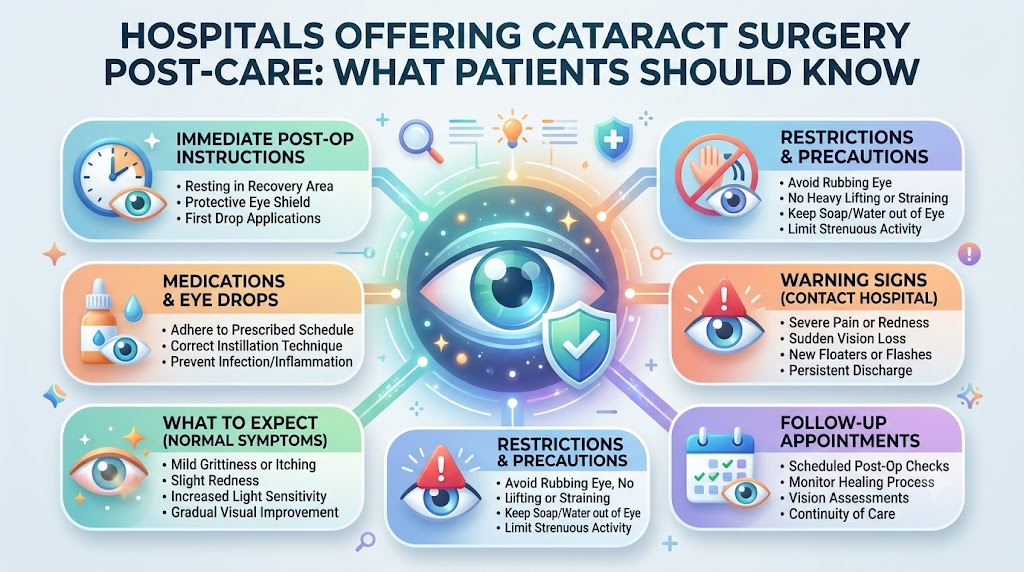
Some patients notice mild blurred vision. Others may notice mild eye discomfort. Light sensitivity or watery eyes may also occur.
These changes can vary between patients. Not every symptom should be assumed normal. New or worsening symptoms should be discussed with an eye professional.
Vision may improve as the eye heals. The timing can differ from person to person. Follow-up visits help the doctor review these changes.
Patients may also have questions after surgery. They may wonder about reading, screens, or daily tasks. The eye doctor can give advice based on the recovery.
Common Parts of Cataract Surgery Post-Care
Follow-Up Eye Exams
Follow-up visits help doctors check healing. The doctor examines the operated eye. They may also review symptoms and vision changes.
Vision Checks
Vision tests show how sight is changing. The results can help the doctor monitor recovery. Glasses may also be discussed when needed.
Eye Pressure Checks
Eye pressure means pressure inside the eye. A doctor may check it during follow-up care. This check can support overall eye monitoring.
Eye Examination
The doctor may examine the healing eye. They may check different eye structures during this visit. The exact checks depend on the patient’s care needs.
Medication Review
Some patients receive prescribed eye drops. The doctor may review how these medicines are being used. Patients should follow their own doctor’s instructions.
Patients should not change medicines on their own. They should ask their eye doctor about any concerns.
Eye Protection During Recovery
Eye protection can be important after surgery. Patients should avoid unnecessary rubbing of the operated eye. They should also take care around children and pets.
Dust and accidental bumps can bother a healing eye. Patients should follow the hospital’s advice about eye protection. A protective eye shield may be advised in some cases.
The eye doctor decides how long protection is needed. Patients should not follow a fixed timeline from another person. Recovery needs can vary.
Keeping the Eye Area Clean
Good eye hygiene supports safe post-surgery eye care. Patients should keep their hands clean before touching the face. They should also avoid unnecessary touching around the eye.
Patients should take care with water and cosmetics. The hospital may give specific hygiene advice. That advice should be followed carefully.
Patients should never put household products into the eye. They should also avoid using unapproved substances near the operated eye.
Simple care can help patients feel more confident. Questions about cleaning should be discussed with the eye team.
Daily Activities During Recovery
Daily activity may change during cataract recovery. Patients may have questions about reading or screen use. They may also ask about bending or lifting.
Exercise and outdoor activities may need discussion too. Driving should also be discussed with the eye doctor. Swimming may have special restrictions after surgery.
There is no single activity timeline for everyone. The eye doctor should decide when activities are safe. This depends on surgery and individual recovery.
Patients should follow the advice given by their hospital. They should also report concerning changes during recovery.
Follow-Up Visits After Cataract Surgery
Cataract surgery follow-up helps monitor the healing eye. An early visit may check vision and eye health. Later visits may review further changes.
The doctor may check eye pressure when needed. They may also review the lens position. Symptoms and prescribed eye care may be discussed.
The timing of visits can differ between patients. There is no universal follow-up schedule. The surgeon decides the plan based on the surgery and recovery.
| Post-Care Area | What It Means | Why It Matters |
|---|---|---|
| Follow-up visit | Doctor checks the healing eye | Tracks recovery |
| Vision check | Vision is tested | Shows how sight is changing |
| Eye pressure check | Pressure inside the eye is measured | Helps monitor eye health |
| Medication review | Prescribed eye care is reviewed | Helps patients follow their plan |
| Activity guidance | Doctor discusses safe activities | Supports safer recovery |
Follow-up care may continue after early recovery. Regular eye checks can support long-term eye health.
Warning Signs After Cataract Surgery
Some symptoms need prompt professional assessment. Sudden loss of vision is one important warning sign. Severe or increasing eye pain also needs attention.
Increasing redness should also be checked. New or worsening swelling may need review. Significant discharge from the eye should not be ignored.
Sudden flashes of light can also need assessment. A sudden increase in floaters needs attention too. Dark shadows in vision should be reported promptly.
Rapid changes in vision can also be concerning. These symptoms do not always mean the same problem. An eye professional must assess the cause.
Patients should contact their eye care team promptly. They should not try to diagnose the problem themselves.
Possible Post-Surgery Concerns
Some patients may notice temporary blurry vision. Dry or irritated eyes can also occur. These symptoms can vary during recovery.
Eye pressure can change after eye surgery. Inflammation can also affect the healing eye. Infection is another concern that needs professional assessment.
Posterior capsule clouding is another possible later concern. It means a thin layer behind the new lens becomes cloudy. An eye doctor can assess this condition.
Patients should not assume that every concern is serious. They should also not ignore new or worsening symptoms. Professional assessment helps explain what is happening.
How Hospitals Support Cataract Recovery
A cataract surgery recovery hospital may offer several services. These may include qualified ophthalmologists and eye examinations. Follow-up appointments can also be part of care.
Some hospitals may provide vision testing and eye equipment. They may also offer access to other eye specialists. Clear discharge information can help patients understand aftercare.
Good communication is also important. Patients should know who to contact about urgent concerns. Long-term eye care may also be available.
Not every hospital provides the same services. Patients should confirm available post-care before choosing a hospital.
What Should Patients Look for in an Eye Hospital?
Patients can compare several factors before choosing care. They can ask about cataract surgery experience and doctor qualifications. They can also ask about follow-up services.
Other useful points include:
- Ophthalmologist qualifications
- Cataract specialist access
- Follow-up examination services
- Emergency eye care
- Diagnostic equipment
- Post-care instructions
- Access to eye specialists
- Communication support
- Hospital cleanliness
- Treatment costs
- Included care services
- Long-term follow-up options
Patients should confirm details with the hospital. A hospital should not be chosen only by name. Good communication and suitable follow-up support also matter.
Questions to Ask Before Cataract Surgery
Patients can prepare questions before their consultation. Useful questions include:
- What type of cataract surgery is planned?
- What type of lens may be used?
- What should I expect during recovery?
- When will my first follow-up visit happen?
- What symptoms should concern me?
- What activities should I avoid at first?
- When can I return to normal activities?
- Who should I contact if I have a problem?
- What follow-up care is included?
- What costs are included in the care plan?
These questions can help patients understand their care. They can also make discussions with the eye team easier.
Why Follow-Up Care Should Continue
Cataract surgery is part of wider eye care. Patients may still need regular eye examinations later. These checks can help monitor overall eye health.
Doctors may also check for other eye conditions. Glasses may be updated when needed. New eye changes can also be reviewed.
Cataract surgery does not remove the need for future eye care. Long-term eye health still needs attention. Regular checkups can support ongoing vision care.
How BestEyeHospitals.com Can Help
BestEyeHospitals.com helps readers learn about eye care. Patients can explore information about cataract surgery and post-care. They can also learn about eye hospitals and specialties.
The platform can help patients prepare questions for ophthalmologists. It can also help them understand different eye procedures. Patients can compare hospital information before a consultation.
However, the platform does not diagnose patients. It also does not guarantee hospital quality or surgical results. Services can differ between hospitals, so patients should confirm details directly.
The goal is to help patients make informed choices. A qualified eye team should guide personal care decisions.
Practical Patient Example
A patient has cataract surgery and returns home. The patient follows the eye doctor’s instructions. The patient also attends planned follow-up visits.
During each visit, the eye team checks vision. They also review the healing eye. If concerns appear, the patient discusses them with the eye team.
This simple example shows why follow-up matters. Recovery does not end when surgery is complete.
Frequently Asked Questions
1. Why is post-care important after cataract surgery?
Post-care helps doctors monitor healing and vision. It also helps review new symptoms during recovery.
2. How long does cataract surgery recovery take?
Recovery time can differ between patients. The eye doctor can explain what to expect.
3. What can I expect after cataract surgery?
Some people notice blurry vision or mild discomfort. Vision may change as the eye heals.
4. When should I attend my follow-up visit?
Follow-up timing depends on the surgery and recovery. Your eye doctor will provide the care plan.
5. Can vision stay blurry after cataract surgery?
Some blurry vision may occur during recovery. Ongoing or worsening changes should be discussed with an eye professional.
6. What warning signs should I watch for after surgery?
Watch for sudden vision loss or severe eye pain. Increasing redness, swelling, or major vision changes need prompt assessment.
7. Why should I avoid rubbing the operated eye?
Rubbing can disturb a healing eye. Patients should follow their eye doctor’s advice about eye protection.
8. What should I look for in a cataract surgery hospital?
Look for qualified eye doctors and follow-up services. Also ask about equipment, communication, costs, and long-term care.
9. Can cataract surgery patients need long-term eye checkups?
Yes, future eye checks may still be needed. Cataract surgery does not replace regular eye care.
10. How can BestEyeHospitals.com help me research eye hospitals?
BestEyeHospitals.com provides information about eye hospitals and services. It can also help patients prepare questions for eye consultations.
Final Thoughts
Cataract surgery recovery continues after the procedure. Follow-up care helps doctors monitor healing and vision. Patients should follow their own eye doctor’s advice.
Warning signs need prompt professional attention. Choosing an eye hospital with suitable follow-up support also matters. Long-term eye care remains important after cataract surgery.
BestEyeHospitals.com can help patients learn about eye care. It can also help families prepare for better conversations with eye professionals.