Introduction
Pediatric eye surgery helps treat some eye problems in children. Children may need special eye care before and after surgery. Surgery is only one part of the care journey. Recovery and follow-up can also play an important role. Parents need clear information during this process. helps parents learn about eye hospitals, pediatric ophthalmology services, specialists, and eye-care facilities. BestEyeHospitals can help families understand hospital services and care options.
What Is Pediatric Eye Surgery?
Pediatric eye surgery means surgery for infants, children, and teenagers. It may treat selected eye conditions that affect vision or eye health. Children’s eyes are still growing and developing. So, their eye care needs can differ from adult care. Some children may need cataract surgery, strabismus surgery, or tear duct procedures. Selected children may need glaucoma, eyelid, retinal, or injury-related surgery. Not every child with an eye problem needs surgery. A qualified pediatric eye specialist decides after a proper assessment.
Why Do Children Need Specialized Eye Care?
Children need eye care that matches their age and development. Young children may find eye tests harder than adults. Some children may also struggle to explain their symptoms. Child-friendly testing can make examinations easier. Pediatric ophthalmologists understand children’s eye development and vision needs. Children may also need special support around surgery. Pediatric anesthesia teams can provide care when needed. Parents also play an important role during the process. Their support can help children feel calm and understood.
What Is a Pediatric Eye Surgery Recovery Program?
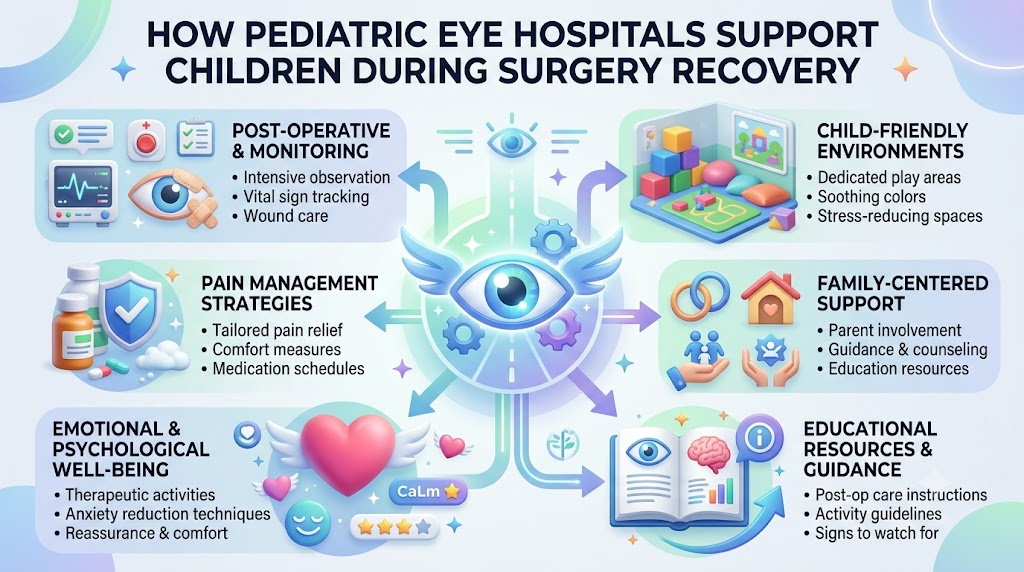
A pediatric eye surgery recovery program supports children after surgery. It may include care before surgery, early recovery, follow-up, and long-term vision checks. Recovery monitoring helps the team watch the child’s condition. Follow-up visits help check healing and eye health. Vision checks may also track visual development. Parent education can explain what to expect during recovery. Families may also receive information about warning signs. Services can differ between pediatric eye surgery hospitals. Parents should ask what each hospital includes.
Common Pediatric Eye Surgeries
Pediatric Cataract Surgery
A cataract makes the eye lens cloudy. This can affect how clearly a child sees. Surgery may be used for selected childhood cataract cases. Follow-up care can help monitor the child’s vision and eye health.
Strabismus Surgery
Strabismus means the eyes do not align properly. Surgery may help improve eye alignment in selected cases. Follow-up can help the specialist check eye position. Ongoing vision checks may also be needed.
Tear Duct Procedures
Some children have blocked tear ducts. Persistent blockage may need a procedure. The specialist decides when treatment may be needed. Follow-up can help check the child’s recovery.
Pediatric Glaucoma Surgery
Childhood glaucoma can affect eye pressure and eye health. Selected cases may need surgical care. Eye pressure monitoring may be part of follow-up. The specialist decides which checks are needed.
Eyelid or Ptosis Surgery
Ptosis means a drooping upper eyelid. Some eyelid problems may affect vision. Surgery may be considered after specialist assessment. Follow-up helps monitor healing and eye health.
Retinal or Injury-Related Surgery
Some serious retinal conditions need specialist surgery. Serious eye injuries may also need surgical care. These cases can need specialized pediatric eye services. Recovery may involve close specialist follow-up.
How Hospitals Prepare Children for Eye Surgery
Preparation usually starts with a medical history. The team may also perform an eye examination. Child-friendly testing can help collect useful information. Parents can ask questions about the planned care. An anesthesia assessment may also be part of preparation. The team reviews the child’s health and procedure needs. Hospital paperwork and recovery planning may follow. Exact preparation depends on the child and procedure. Parents should follow instructions given by the hospital team.
What Happens Immediately After Surgery?
After surgery, the child may move to a recovery area. The care team monitors the child’s basic condition. They may check comfort and observe the eye. The team also watches for early concerns. The child may need time as anesthesia wears off. Parents may receive information about recovery and follow-up. The team decides when the child is ready to leave. Some children may need more observation. This depends on the procedure and the child’s condition.
Why Pediatric Recovery Monitoring Matters
Recovery monitoring helps the team check early healing. It also allows them to watch for unexpected concerns. The team may check comfort and the eye condition. They can also plan suitable follow-up care. Recovery needs can differ between surgeries. A simple procedure may need different support than complex surgery. Hospitals should explain the recovery plan clearly. Good communication helps parents understand what happens next.
| Recovery Program Area | What It May Include | Why It Matters |
|---|---|---|
| Immediate Monitoring | Basic recovery checks | Supports safe early recovery |
| Eye Follow-Up | Eye and vision reviews | Tracks healing |
| Parent Support | Clear care information | Helps families understand the plan |
| Vision Monitoring | Vision development checks | Tracks visual progress |
| Long-Term Care | Ongoing eye reviews | Supports growing eyes |
What Can Recovery Feel Like for a Child?
Recovery can differ by procedure and age. Some children may have mild discomfort. Watery eyes or temporary redness may also occur. Some children may feel tired after surgery. Light sensitivity or temporary vision changes may also occur. These experiences can vary between children. Parents should follow the surgeon’s specific instructions. They should contact the care team about concerning changes.
Follow-Up After Pediatric Eye Surgery
Follow-up visits help doctors check healing and eye health. They may also review the child’s vision. Eye alignment may need review after some surgeries. Eye pressure may also need checking in selected cases. The team may review the treatment response. Further care can be planned when needed. Follow-up timing depends on the surgery and child. Parents should attend visits as advised by the care team.
Long-Term Vision Development
Children’s vision continues to develop as they grow. Surgery may address one specific eye problem. Ongoing vision care may still be needed afterward. Regular checks can help track visual development. The specialist may monitor vision in each eye. Eye alignment can also need ongoing review. Prescription changes may happen as children grow. Some children may need glasses or amblyopia management. These needs depend on the child’s eye condition.
How Parents Can Support Recovery
Parents can help by keeping follow-up appointments. They should follow instructions from the hospital team. They can also watch for unusual changes. Keeping the recovery routine calm may help. Parents should keep communication open with the care team. They should ask questions when something seems unclear. The surgical team provides child-specific recovery instructions. Parents should not change the care plan on their own.
Warning Signs After Pediatric Eye Surgery
Parents should know which changes may need prompt attention. Severe or worsening eye pain can need medical review. Sudden major vision changes also need prompt attention. Heavy swelling or significant bleeding can be concerning. Increasing redness or unusual discharge may need medical advice. Fever with other concerning symptoms also needs attention. Major changes in the child’s behavior can also matter. Parents should contact the surgical team when concerned. Serious symptoms may require urgent medical care.
Choosing a Hospital With Pediatric Eye Surgery Recovery Services
Start by checking for pediatric ophthalmologists. Ask about experience with children’s eye surgery. Pediatric anesthesia support may also be important. Child-friendly facilities can make hospital visits easier. Ask about pediatric recovery areas and monitoring. Check whether diagnostic services are available. Follow-up services should also be clear. Emergency support may be useful for some families. Long-term vision monitoring can also matter. Good family communication is another useful factor. BestEyeHospitals.com can help parents understand these selection factors. Parents should compare hospitals based on their child’s needs.
Understanding Pediatric Eye Surgery Costs
Costs can vary between hospitals and procedures. The type of surgery can affect the total cost. Surgeon fees may also form part of the cost. Hospital facilities can affect the overall expense. Anesthesia and diagnostic tests may also have costs. Follow-up visits can add to the total expense. Recovery support may also vary between hospitals. Additional treatment needs can change the final cost. Hospital location can also affect pricing. Parents should request a clear cost breakdown. They should ask what the quoted amount includes.
When a Child May Need Ongoing Eye Care
Surgery does not always end a child’s eye care. Some children may need regular eye examinations. Vision checks may continue as the child grows. Prescription updates may also be needed. Some children may need glasses after surgery. Others may need care for amblyopia. Eye alignment may also need monitoring. Long-term specialist follow-up depends on the child’s condition.
How BestEyeHospitals Can Help
BestEyeHospitals helps parents learn about pediatric eye care. It explains pediatric eye surgery in simple terms. Parents can also learn about pediatric ophthalmology services. The site can help families explore hospital facilities. It can also help parents prepare questions for specialists. Families can learn about recovery programs and follow-up care. They can explore factors for choosing an eye hospital. The website does not diagnose children. It also does not perform eye surgery or guarantee results.
FAQs About Pediatric Eye Surgery Recovery
1. What is pediatric eye surgery?
Pediatric eye surgery treats selected eye problems in children. It can involve infants, children, and teenagers. A specialist decides when surgery may be needed.
2. Why do children need specialized eye surgery care?
Children’s eyes are still developing. Their testing and communication needs can differ. Pediatric teams understand these special care needs.
3. What types of eye surgery can children need?
Children may need different types of eye surgery. Examples include cataract and strabismus surgery. Tear duct, glaucoma, eyelid, and retinal surgery may also occur.
4. What is a pediatric eye surgery recovery program?
It is a planned system of recovery support. It may include monitoring, follow-up, and vision checks. Parent education can also be part of the program.
5. What happens after a child’s eye surgery?
The child usually moves to a recovery area. The team checks the child’s condition and comfort. Parents receive information about the next care steps.
6. How long does pediatric eye surgery recovery take?
Recovery time differs between children and procedures. Some procedures need less recovery support. Others may need closer monitoring and follow-up.
7. Why are follow-up visits important after eye surgery?
Follow-up helps doctors check healing and eye health. They may also monitor vision development. Further care can be planned when needed.
8. What should parents look for in a pediatric eye hospital?
Parents can check specialist care and hospital facilities. They can also ask about recovery monitoring. Follow-up support and emergency services may matter too.
9. When should parents contact the hospital after surgery?
Parents should contact the care team about concerning changes. Severe pain or major vision changes need prompt attention. Serious symptoms may need urgent medical care.
10. Can children need long-term eye care after surgery?
Yes, some children may need ongoing eye care. Vision can continue developing after surgery. Regular checks may help monitor that development.
Final Thoughts
Pediatric eye surgery is only one part of care. Recovery monitoring and follow-up can also matter. Children may need special support during healing. Long-term vision checks can support growing eyes. Parents should look for qualified pediatric eye professionals. Safe facilities and clear communication are also important. BestEyeHospitals.com can help parents learn about these factors. Medical decisions should always involve qualified pediatric eye professionals.