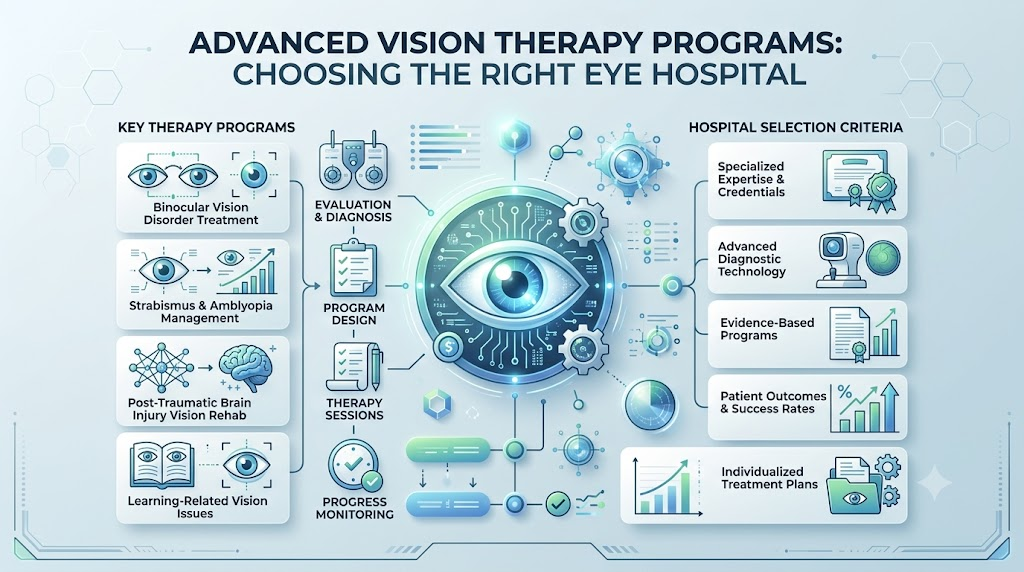
Introduction
Good vision is not only about seeing clearly. The eyes and brain must work together for reading, focusing, tracking words, judging distance, and many daily activities. Some people may have clear eyesight but still find reading, close work, or eye coordination difficult. These concerns may be linked to certain visual skills that need closer assessment. Advanced vision therapy programs may support selected visual skill problems after a proper examination by a qualified eye-care professional. These programs may focus on eye teaming, focusing, tracking, visual attention, or visual processing. Children and adults may have different needs, so their care should be planned carefully. BESTEYEHOSPITALS helps readers explore eye hospitals and understand different vision therapy services. More information is available at .
What Are Advanced Vision Therapy Programs?
Vision therapy is a planned form of care that focuses on selected visual skills. It is not the same as a routine eye examination. A routine eye exam mainly checks eyesight and general eye health, while a vision therapy assessment may look more closely at how the eyes work together during different tasks.
For example, a person may see a page clearly but still have trouble keeping both eyes working together while reading. Another person may have difficulty changing focus from a book to a distant object. Vision therapy programs may address such concerns when a qualified professional finds that they are suitable for this type of care. The goals can vary from person to person, so professional assessment should come before a therapy plan.
Visual Skills That May Be Assessed
Several visual skills help people manage reading, learning, work, sports, and everyday tasks. Eye teaming means both eyes work together on the same object. Focusing helps the eyes adjust when looking at objects at different distances. Tracking helps the eyes follow words across a page or follow a moving object.
Convergence means the eyes move inward for close work. Depth perception helps a person understand distance and position. Visual attention helps a person stay focused on what they see. Eye movement control supports smooth and accurate viewing. Visual processing helps the brain understand the information received from the eyes. A hospital may check some or all of these skills based on the person’s concerns.
| Visual Skill | What It Means | Why It May Matter |
|---|---|---|
| Eye teaming | Both eyes work together | Supports binocular vision |
| Focusing | Eyes adjust for different distances | Helps with reading and close work |
| Tracking | Eyes follow words or moving objects | Supports reading and visual tasks |
| Convergence | Eyes move inward for near work | Helps with close viewing |
| Depth perception | Helps judge distance | Supports movement and hand-eye tasks |
| Visual attention | Helps maintain focus | Supports reading and learning |
| Eye movement | Controls how eyes move | Helps with accurate visual tasks |
| Visual processing | Brain understands visual information | Helps make sense of what is seen |
These skills are related, but they are not identical. A person may have difficulty with one visual skill while other skills work normally. This is why a proper assessment can be more useful than assuming that one type of therapy will suit everyone.
Who May Be Considered for Vision Therapy?
Some people may be considered for vision therapy when they have certain binocular vision or eye coordination concerns. These may include convergence problems, focusing difficulties, selected tracking concerns, and some reading-related visual problems. Certain cases involving amblyopia, commonly called lazy eye, may also need careful visual assessment.
Some people with strabismus may have functional concerns that need closer review. Vision rehabilitation may also be considered in selected cases after certain eye or neurological conditions. However, blurred vision alone does not mean that someone needs vision therapy. Many eye problems have different causes and may need other forms of care. A qualified ophthalmologist, optometrist, orthoptist, or other suitable eye-care professional should assess the concern first.
Vision Therapy for Children
Children depend on good visual skills for many school and play activities. Reading words across a page, copying from a board, drawing, writing, playing sports, and using both eyes together can all require good visual coordination. Some children may complain of eye strain or headaches during close work. Others may lose their place while reading or avoid tasks that require long periods of visual attention.These signs do not always mean that a child has a vision problem. Learning difficulties can have many causes, so parents should not assume that vision is the only reason for a child’s struggles. A proper eye assessment can help identify whether visual skills may be involved. Parents can then discuss the findings and possible care options with a qualified eye-care professional.
Vision Therapy for Adults
Vision therapy is not only for children. Adults can also experience visual skill concerns that affect reading, work, screen use, or other daily activities. Eye strain, focusing difficulty, double vision, or problems with eye coordination may make some tasks uncomfortable.Selected adults may also need vision rehabilitation after certain eye or neurological conditions. The right form of care depends on the person’s condition and assessment. Adults should not begin a vision therapy program based only on online information or another person’s experience. Professional evaluation helps determine whether vision therapy or another type of eye care is more appropriate.
What Happens During a Vision Assessment?
A vision assessment usually begins with a discussion about the person’s vision history and daily concerns. The specialist may ask about reading discomfort, eye strain, headaches, double vision, focusing problems, or previous eye care. A basic eye examination may then check visual acuity and general eye health.Further testing may examine eye movement, focusing, eye alignment, and binocular vision. Visual function testing may be used when the specialist needs more information. The exact tests can vary based on age, symptoms, medical history, and clinical findings. The purpose is to understand the person’s visual needs before deciding whether a therapy program is suitable.
What May an Advanced Program Include?
Services can differ between hospitals and between patients. Some specialized vision therapy programs may include structured sessions that focus on selected visual skills. Depending on the assessment, care may include work related to eye teaming, focusing, tracking, or eye coordination.Some hospitals may also provide orthoptic care, computer-based visual tasks, or in-clinic monitoring. Follow-up assessments can help the care team review changes in the visual skills being assessed. Home activities may sometimes be included when prescribed by a professional. Patients should not copy clinical therapy exercises from online sources because the right activity depends on the person’s assessed needs.
Role of Specialists in Vision Therapy Care
Vision therapy care may involve different eye-care professionals. An ophthalmologist is a medical eye doctor who can assess eye health and manage many eye conditions. An optometrist can examine vision and assess several visual functions. An orthoptist focuses on eye movement, eye alignment, and related concerns.Pediatric eye specialists may provide care for children with specific needs. Vision rehabilitation professionals may support selected patients with visual function concerns. The exact roles can differ between hospitals and locations. Patients should ask who will perform the assessment, who will provide therapy, and what qualifications the care team has.
Technology and Diagnostic Support
Some hospitals use modern tools to support visual assessment. These may include digital eye examination systems, eye movement assessment tools, binocular vision testing, visual field testing, and imaging when clinically needed. Some programs may also use computer-based systems for selected assessment tasks.Technology can provide useful information, but advanced equipment alone does not guarantee better care. The right test depends on the person’s needs. A skilled care team should explain why a test is needed and how its findings may support the overall assessment. Good communication remains an important part of quality eye care.
How to Choose a Hospital for Vision Therapy
Choosing among hospitals for advanced vision therapy programs requires more than looking for a hospital with modern equipment. Patients should first check whether qualified specialists provide the type of assessment they need. Families should also check whether the hospital provides children’s vision therapy, adult vision therapy, or both.Other useful factors include diagnostic services, therapy facilities, follow-up support, family communication, accessibility, and clear pricing information. Some people may also prefer a hospital with wider eye-care services if another concern is found during assessment. Hospital reputation can be considered when it comes from reliable information rather than unsupported online claims.BESTEYEHOSPITALS can help readers research eye hospitals and understand different eye-care services before contacting a hospital. It can also help people prepare questions and compare practical factors. Patients should still confirm current services, specialists, costs, and appointment details directly with the hospital.
Common Mistakes to Avoid
Choosing a program only because it sounds advanced is one common mistake. New equipment or impressive wording does not mean that a program is suitable for every patient. Another mistake is assuming that every vision problem needs therapy. A complete eye examination remains important because some problems may require other forms of eye care.Patients should also avoid expecting instant results or comparing their progress with someone else’s experience. Choosing only by price may also leave out important factors such as specialist care and follow-up. Online exercises should not replace professional assessment. Regular follow-up is also important when it is part of the recommended care plan.
When to Seek Urgent Eye Care
Vision therapy should never replace urgent eye care. Sudden loss of vision, a sudden major change in vision, severe eye pain, or a serious eye injury needs prompt professional assessment. These symptoms may have different causes and should not be ignored.New flashes of light, a sudden increase in floaters, or a curtain-like shadow in vision also need urgent attention. Severe redness with major vision changes should receive prompt eye care as well. These warning signs are different from routine visual skill concerns and should not wait for a regular therapy appointment.
A Fictional Example
Fictional example: A child often loses their place while reading and becomes tired during close work. The parents do not assume that the problem is caused by poor study habits. They arrange a professional eye assessment to understand the concern.The eye-care team reviews the child’s vision and checks selected visual skills. The assessment may show that focusing, tracking, or eye coordination needs closer attention. The family can then discuss the findings with the specialist and learn whether vision therapy or another form of care may be suitable.
Frequently Asked Questions
What is advanced vision therapy?
Advanced vision therapy is planned care for selected visual skill concerns. It may focus on eye teaming, focusing, tracking, eye movement, or other visual functions. A qualified professional should assess the person first because therapy is not suitable for every vision problem.
Who may benefit from vision therapy programs?
Some people with selected binocular vision, focusing, tracking, or eye coordination problems may be considered. Certain cases involving amblyopia or functional concerns may also need this type of assessment. Professional evaluation is important because visual needs differ between people.
What visual skills can vision therapy address?
Programs may address eye teaming, focusing, tracking, convergence, depth perception, and eye movement. Visual attention, hand-eye coordination, and some visual processing skills may also be assessed. The exact areas depend on the person’s concerns and professional findings.
Is vision therapy only for children?
No. Adults may also have visual skill concerns. They may experience eye strain, focusing problems, double vision, or selected rehabilitation needs. Children may have reading or coordination concerns. Both groups should receive professional assessment before starting a vision therapy program.
What happens during a vision therapy assessment?
The assessment may include a vision history, basic eye examination, and visual acuity check. The specialist may also assess focusing, eye movement, alignment, and binocular vision. Additional tests may be used when needed. The exact process depends on the person’s concerns.
What specialists provide vision therapy care?
Ophthalmologists, optometrists, orthoptists, pediatric eye specialists, and vision rehabilitation professionals may have different roles. The care team can vary between hospitals. Patients should ask which professional will perform the assessment and who will provide the recommended therapy or follow-up care.
Can vision therapy help with binocular vision problems?
It may help selected people with certain binocular vision problems. Binocular vision means both eyes work together during visual tasks. The cause and type of the problem matter. A professional assessment should come first before deciding whether vision therapy is suitable.
How do I choose a hospital for vision therapy?
Compare the qualifications of the care team, assessment services, therapy options, follow-up support, and communication. Check whether the hospital provides care for the age group you need. Clear pricing and access to wider eye-care services can also help with the decision.
How is progress checked during vision therapy?
Progress may be reviewed during follow-up visits. The care team may repeat checks of the visual skills assessed earlier. The exact method depends on the therapy goals and the person’s needs. Follow-up can help the team decide whether the current care remains suitable.
When should I seek urgent eye care instead of therapy?
Sudden vision loss, major sudden vision changes, severe eye pain, serious eye injury, new flashes, many new floaters, or a curtain-like shadow need prompt eye care. Severe redness with major vision changes also needs attention. These symptoms should not wait for routine therapy.
Final Thoughts
Visual skills support many important parts of life. Reading, learning, working, playing sports, and moving safely can all depend on how well the eyes and brain work together. Clear eyesight is important, but it is only one part of good visual function.Proper assessment can help identify whether focusing, tracking, eye teaming, or another visual skill needs closer attention. Qualified specialists can explain the findings and discuss suitable care options. When comparing hospitals for advanced vision therapy programs, consider the specialists, assessment services, therapy facilities, follow-up care, communication, accessibility, and costs.BESTEYEHOSPITALS can help readers research eye hospitals and prepare useful questions before contacting an eye-care team. Most importantly, people with new or serious vision changes should seek timely professional attention. Vision therapy decisions should always be made with qualified eye-care professionals.