Introduction
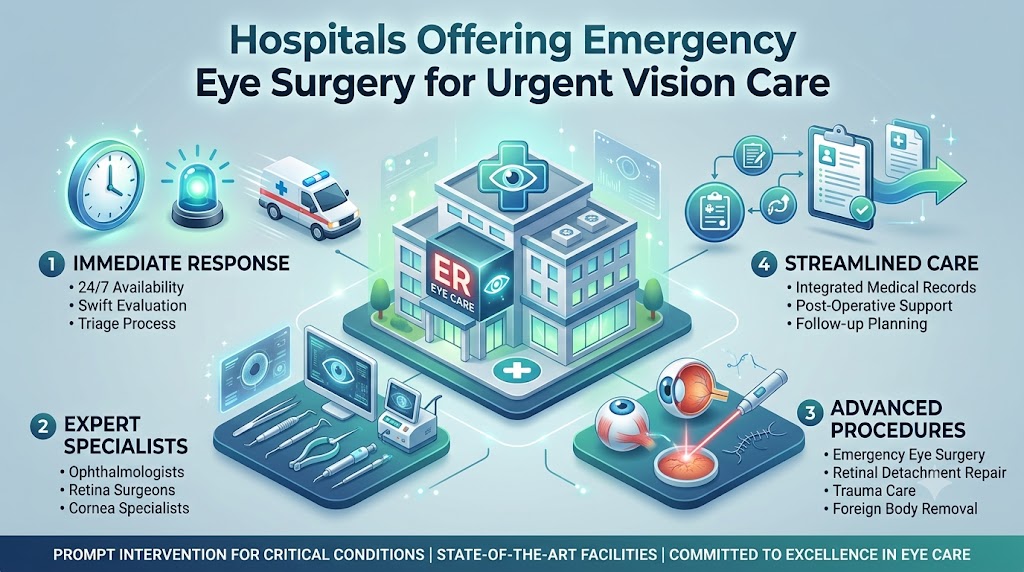
Some eye problems need medical attention without delay. A serious injury or sudden vision change can threaten the eye. Emergency eye surgery may be needed in some urgent cases. Hospitals offering emergency eye surgery can provide rapid assessment, specialist care, and surgical support when needed. BestEyeHospitals.com can help readers learn about eye hospitals and emergency care options. The website BESTEYEHOSPITALS can be used to explore general information before an emergency occurs.
What Is Emergency Eye Surgery?
Emergency eye surgery means urgent surgery for a serious eye problem. Doctors decide how quickly treatment is needed after checking the eye and the person’s condition. The goal may be to protect the eye, treat damage, or manage a condition that could threaten vision.Emergency surgery differs from planned eye surgery. Routine surgery often allows time for detailed scheduling and preparation. An emergency may need faster action because damage can become worse without timely care.
Not every eye emergency needs surgery. Some conditions may need urgent examination and medical care instead. A qualified ophthalmologist must assess the eye before deciding whether surgery is needed.
Eye Emergencies That May Need Urgent Surgical Care
Some serious eye injuries can damage important parts of the eye. A penetrating injury may require urgent specialist care. Certain retinal problems may also need rapid treatment. Retinal detachment is one example of a condition that needs prompt medical assessment.Damage around the eye can also require surgical attention. Injuries may affect the eyelids, tear ducts, eye socket, or nearby facial areas. The treatment depends on which structures are affected and how serious the injury is.
A serious symptom does not always show how much damage exists. Some injuries may look small from the outside. This is why professional assessment matters after a major eye injury or sudden vision change.
Warning Signs That Need Immediate Medical Attention
Sudden loss of vision needs urgent medical attention. A major change in vision should also be taken seriously. Severe eye pain after an injury can be another warning sign. A serious blow to the eye also needs prompt assessment.Chemical exposure to the eye requires immediate attention. A suspected object entering the eye is also an emergency concern. Sudden flashes and many new floaters, especially with a shadow over vision, may signal a serious retinal problem.Symptoms can vary from person to person. A serious eye injury may not always look severe. People should seek emergency medical help when these warning signs appear. They should not delay care while trying to identify the exact condition themselves.
What to Do While Seeking Emergency Eye Care
After a serious eye injury, avoid pressing or rubbing the eye. Do not try to remove an object that appears stuck in the eye. Protecting the eye from pressure can help while emergency care is arranged.Chemical exposure needs fast action. Immediate irrigation is generally important after many chemical exposures. However, serious penetrating injuries or embedded objects need special care. In complex situations, emergency professionals should guide the next steps.Do not delay emergency care to search for home treatments. Avoid placing unapproved products or substances into an injured eye. The safest choice is prompt professional assessment when serious symptoms or injuries occur.
Why Hospital Emergency Eye Services Matter
Emergency eye care needs quick access to trained professionals. A hospital may provide an ophthalmologist, emergency staff, imaging, operating facilities, and recovery support. These services can help the team assess serious problems and plan urgent treatment.Some cases may also need anesthesia support. Complex injuries can involve the face or other parts of the body. In such cases, other medical specialists may need to join the care team.0Not every hospital provides round-the-clock eye surgery. A hospital may need to transfer a patient to another center with the right service. Fast referral can be important when a required specialist or facility is not available.
Specialists Involved in Emergency Eye Surgery
An ophthalmologist is a doctor who treats eye conditions and diseases. An emergency eye surgeon may have additional training for certain surgical problems. The specialist reviews the eye and helps decide whether urgent surgery is needed.Emergency doctors may assess the patient first. Nurses help with monitoring and support during emergency care. An anesthesia professional may be involved when surgery requires anesthesia.Other specialists may help when an injury affects the eye socket, face, or other body areas. Good teamwork helps different parts of the injury receive proper attention. Patients or family members can ask who is leading care when circumstances allow.
Common Types of Emergency Eye Procedures
Emergency eye procedures depend on the problem. Serious eye injuries may need surgery to repair damaged eye structures. Eyelid or tear-duct injuries may also need specialist repair in selected cases.Some retinal emergencies may require a procedure to manage the damaged retina. Other urgent problems may need surgery when complications threaten the eye. The exact procedure depends on the location and type of damage.Doctors choose treatment after examining the patient. They consider the eye structures involved, the person’s health, and the urgency of the problem. One procedure does not suit every emergency, so patients should avoid comparing treatments without professional guidance.
Emergency Eye Assessment and Tests
The emergency team may first ask what happened and when symptoms began. They may check vision and examine the eye carefully. The team may also review medical history and earlier eye problems.Suitable imaging or other tests may help the team understand hidden damage. These tests can provide information about the eye and nearby structures. The choice of test depends on the suspected problem.Some examinations may need to change when a serious injury is suspected. Doctors use safe methods based on the situation. Patients should not try to perform eye tests at home or interpret medical images themselves.
Hospital Facilities and Emergency Readiness
Eye surgery hospital facilities should support safe emergency care. Suitable operating rooms, trained staff, imaging access, anesthesia support, and recovery areas can all matter. Infection prevention is also an important part of surgical safety.
Emergency readiness involves more than having equipment. Hospitals also need trained teams and clear systems for urgent cases. Staff should know when a patient needs specialist review or transfer to another center.Transfer arrangements can matter when a hospital lacks a required service. Patients choosing a hospital before an emergency can ask about emergency ophthalmology services. They can also ask whether urgent eye assessment is available and how referrals are handled.
Risks and Possible Outcomes
Emergency eye surgery can involve risks. These may include infection, bleeding, scarring, changes in vision, or the need for further treatment. The risks depend on the procedure and the person’s health.The original injury or illness may also have already damaged the eye. This can affect the final outcome even when treatment is provided quickly. For this reason, doctors cannot promise that surgery will restore normal vision.Patients should ask about possible benefits and risks before treatment when time allows. They can also ask about other treatment choices. In an emergency, the medical team will focus first on safe and timely care.
Recovery and Follow-Up Care
Recovery depends on the eye problem, procedure, and general health. Some people may need several follow-up visits. These visits allow the care team to check healing and monitor vision.The team may give instructions about eye care during recovery. Patients may also receive guidance about activities, food, and other daily needs. These instructions should come from the treating professionals because every case can be different.New or worsening symptoms should be reported to the care team. Follow-up care can help doctors identify problems early. Patients should keep planned appointments even when the eye seems to be improving.
How to Choose a Hospital Offering Emergency Eye Surgery
When choosing a hospital before an emergency, check whether it offers urgent eye assessment. Look for access to qualified ophthalmologists and relevant eye surgeons. Ask whether emergency operating facilities are available when required.
Imaging, anesthesia, and recovery support are also useful factors to review. Patients can ask about referral arrangements if a complex case needs another center. Clear communication with patients and families is another important part of emergency care.
Follow-up services should also be considered. Ask how patients can contact the care team after treatment. However, during an active emergency, do not delay care while comparing hospitals. Seek the nearest appropriate emergency service first.
Costs, Insurance, and Emergency Planning
Emergency eye care costs can vary widely. The total amount may depend on the injury, tests, surgery, hospital care, medicines, and follow-up visits. A hospital stay may also affect the final cost.Insurance coverage depends on the policy and provider. Some plans may have different rules for emergency treatment. Patients or family members can ask about coverage when it is safe to do so.Financial questions should never delay emergency assessment. A potentially sight-threatening problem needs medical attention first. Cost details can be reviewed with the hospital and insurer after urgent care has started.
How BestEyeHospitals.com Can Help Readers Explore Eye Care
Learning about eye hospitals before an emergency can help families prepare. BestEyeHospitals.com can provide a starting point for learning about eye hospitals and specialist services. Readers can use this information to understand the types of care they may need.An online resource cannot replace emergency medical care. It also cannot determine whether a person needs surgery. Patients should confirm hospital services, specialist availability, and emergency arrangements directly.Planning ahead can make urgent decisions less stressful. People can learn which hospitals provide eye care and what services they offer. In an actual emergency, professional medical assessment should always come first.
A Fictional Emergency Eye Care Example
Fictional example: An adult suddenly experiences a serious eye injury. The person seeks urgent medical help instead of waiting for symptoms to improve. The emergency team checks the person’s condition and arranges an eye specialist assessment.
The ophthalmologist examines the eye and reviews suitable test results. The specialist explains the possible treatment choices and why urgent care may be needed. Other specialists may join the team if nearby facial areas are also affected.
The patient and family ask about risks, hospital care, and follow-up. The medical team explains the next steps in simple language. This example is fictional and does not represent a real patient or promise a particular outcome.
Frequently Asked Questions
1. What is emergency eye surgery?
Emergency eye surgery is urgent surgery for certain serious eye problems. Doctors decide if surgery is needed after assessing the eye and the patient’s condition.
2. Which eye problems may need emergency surgery?
Serious eye injuries, selected retinal emergencies, and some complications may need urgent surgery. The exact treatment depends on the problem.
3. When should someone seek emergency eye care?
Seek urgent care for sudden vision loss, serious eye injury, severe pain after trauma, chemical exposure, or other major vision changes.
4. Do all eye emergencies require surgery?
No. Some emergencies need urgent examination or medical treatment instead. A qualified eye specialist must decide what care is needed.
5. What should someone avoid after a serious eye injury?
Avoid rubbing or pressing the eye. Do not remove an embedded object. Seek professional emergency care without delay.
6. What specialists may take part in emergency eye surgery?
An ophthalmologist, emergency doctor, anesthesia professional, nurses, and other specialists may take part. The team depends on the injury.
7. What hospital facilities matter during an eye emergency?
Operating rooms, imaging, trained staff, anesthesia support, recovery areas, and emergency referral systems can be important for urgent eye care.
8. Can emergency eye surgery restore lost vision?
Sometimes treatment can help protect or improve vision, but results vary. The original damage may limit recovery, so no result can be guaranteed.
9. How can patients choose an emergency eye hospital?
Check specialist access, emergency services, surgical facilities, imaging, anesthesia support, follow-up care, and referral arrangements. During an active emergency, seek care first.
10. Does insurance cover emergency eye surgery?
Coverage depends on the insurance plan and treatment. Patients should confirm benefits with their insurer and hospital when possible.
Final Thoughts
Hospitals offering emergency eye surgery can provide important support for serious eye problems. Quick assessment can help specialists understand the condition and decide on suitable care. Qualified eye specialists, suitable hospital facilities, and clear teamwork all matter during urgent treatment.People should take sudden vision changes and serious eye injuries seriously. Emergency symptoms should not be managed through online information alone. BestEyeHospitals.com can help readers learn about eye hospitals before an emergency happens. When urgent symptoms appear, timely professional care should always come first.