Introduction
Eye allergies can cause itching, redness, and watery eyes. Some people also feel burning or irritation. These symptoms can have different causes. Some people may need follow-up eye care. Follow-up can help check changing or ongoing symptoms. BESTEYEHOSPITALS can help people explore eye hospitals.
What Are Eye Allergies?
Eye allergies happen when the eyes react to allergens. An allergen is something that can trigger a reaction. Common examples include pollen, dust, and pet dander. Mold can also trigger eye symptoms. This condition is often called allergic conjunctivitis. It affects the clear surface around the eye. Not every red eye comes from an allergy. A professional eye check can help find the cause.
What Does Eye Allergy Post-Care Mean?
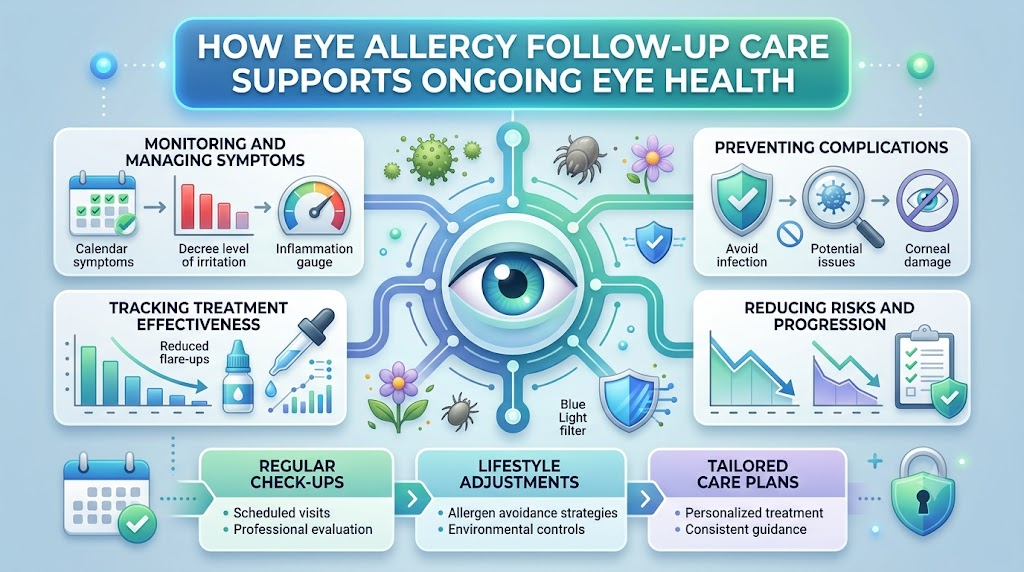
Eye allergy post-care means care after an eye visit. It may include follow-up checks and symptom reviews. The eye team may also monitor changes over time. Follow-up needs can differ between patients. Some people may need one follow-up visit. Others may need more checks. The plan depends on symptoms and clinical findings. It should come from a qualified eye professional.
Why Can Follow-Up Care Matter?
Some eye allergy symptoms may continue or return. Follow-up can help review these changes. It may also help the care team assess eye irritation. Contact lens use may need discussion too. Some symptoms may need closer eye assessment. Possible corneal involvement can also require professional attention. Corneal means related to the clear front part of the eye. Follow-up needs depend on each person’s situation.
What May Happen During an Eye Allergy Follow-Up?
A follow-up visit may start with a symptom review. The eye professional may ask about recent changes. They may review your medical history. A vision check may also be included. The eye surface may be examined closely. The care team may discuss possible triggers. They may also review previous care. The exact visit can differ between patients.
Symptoms Patients Should Discuss With an Eye Doctor
People should discuss ongoing eye symptoms with an eye professional. These may include itching, redness, and watery eyes. Burning and swelling may also need attention. Some people notice light sensitivity or discomfort. Blurred vision should also be reported. These symptoms can have many possible causes. They do not prove an eye allergy. A professional assessment can help identify the next step.
Eye Allergy Post-Care for Recurring Symptoms
Some eye allergies can return after symptoms improve. Recurring symptoms may need further professional review. The care team may ask about possible triggers. They may also review changes in daily life. This can help them understand the pattern. Patients should not assume the cause themselves. Different eye conditions can cause similar symptoms. Ongoing care should follow professional advice.
Eye Allergy Care for Contact Lens Users
Contact lenses can matter when eye symptoms occur. Allergies may make lenses feel less comfortable. Dust and other allergens may also affect comfort. Some people notice more eye irritation while wearing lenses. Contact lens concerns should be discussed with an eye professional. The care team can review the person’s symptoms. They can also explain suitable care based on the situation. Do not change lens use based only on online advice.
Children and Eye Allergy Follow-Up
Children can also experience allergic eye symptoms. Some eye allergy problems may return often. Parents should discuss repeated symptoms with an eye professional. Children may describe eye discomfort in different ways. Parents can share changes they notice at home. A professional can decide what assessment may be needed. Do not assume every red or itchy eye is an allergy.
What Tests May Be Used During Follow-Up?
An eye visit may include several simple assessments. Visual acuity testing checks how clearly someone sees. A slit-lamp exam allows close eye inspection. The eye surface may also receive careful assessment. Tear-related tests may be used when needed. Other tests can depend on the symptoms. Not every patient needs every test. The eye professional decides what may be useful.
What Makes a Hospital Suitable for Eye Allergy Post-Care?
A suitable eye hospital should have qualified ophthalmologists. Ocular surface care can also be useful. Ocular means related to the eye. Allergy-related eye services may support some patients. Good diagnostic facilities can help during follow-up. Access to cornea specialists may also matter. Child eye-care support can help families when needed. Clear communication and easy appointments are also useful. Emergency eye care can matter for serious symptoms.
How to Compare Eye Allergy Post-Care Programs
Start by checking which eye specialists are available. Review the follow-up appointment options. Check whether suitable diagnostic services are offered. Ask about ocular surface care when relevant. Consider the hospital location and access. Communication should also be clear and easy. Check emergency support and payment information. Ask how medical records are handled. Access to related specialists may also matter. BESTEYEHOSPITALS.COM can support this hospital research process.
Eye Allergy Post-Care vs One-Time Eye Visit
A one-time visit often focuses on a current concern. The eye professional may assess symptoms during that visit. Post-care can involve continued monitoring when needed. It may help when symptoms return or change. However, not every eye allergy needs long-term care. Some patients may only need limited follow-up. The right plan depends on personal findings. A qualified eye professional can explain the expected follow-up.
One-Time Eye Visit vs Eye Allergy Post-Care
| Factor | One-Time Eye Visit | Eye Allergy Post-Care |
|---|---|---|
| Main purpose | Assess a current concern | Monitor ongoing or changing concerns |
| Typical focus | Current symptoms | Symptoms and changes over time |
| Follow-up | May not be needed | May include planned checks |
| Symptom monitoring | Limited to the visit | May continue when needed |
| Specialist involvement | Depends on the concern | May involve related specialists |
| Patient benefit | Initial assessment | Continued review when appropriate |
What Questions Should Patients Ask a Hospital?
Patients can ask which eye allergy services are available. They can ask which specialist handles these concerns. They can ask about follow-up appointment options. They can ask what tests may be used. Patients can ask which symptoms should be reported. They can ask about recurring allergy monitoring. Contact lens users can ask about lens concerns. It is also useful to ask about emergency care. Cost and follow-up arrangements should be discussed too.
When Eye Symptoms Need Urgent Attention
Not every red or itchy eye comes from allergies. Some symptoms need prompt professional assessment. Significant eye pain can be concerning. Sudden vision changes also need quick attention. Major light sensitivity may need urgent review. Serious eye injuries need prompt medical care. Severe swelling can also need assessment. Symptoms that worsen quickly should not be ignored. Seek appropriate urgent eye care when these signs occur.
How BESTEYEHOSPITALS.COM Can Help
BESTEYEHOSPITALS.COM can help users research eye hospitals. Users can explore eye-care services and hospital information. They can also research specialists and treatment areas. This can make early hospital research easier. Patients should confirm current services with the hospital. They should also discuss personal symptoms with an eye professional. The platform cannot diagnose eye allergies. It also cannot guarantee treatment results.
Practical Example
General example: A person may have recurring itchy eyes. They may look for an eye hospital with follow-up care. They can compare available specialists and testing services. They may also review follow-up options and hospital location. Contact lens support may matter to some people. They can then prepare questions for an eye consultation. This example only shows a general research process.
Using AEO, GEO, LLMO, AISEO, and E-E-A-T
Clear healthcare content should answer patient questions directly. This supports AEO with simple answers. GEO helps people find useful local information. LLMO helps language models understand clear health content. AISEO supports content made for AI search systems. E-E-A-T also matters in eye-care content. It supports experience, expertise, authority, and trust. Simple wording helps readers understand important information.
Preparing for Better Follow-Up Care
Patients can prepare by noting symptom changes. They can remember when symptoms started or returned. They can share concerns about contact lens use. They can also bring relevant medical records when needed. A list of questions can make visits easier. Patients should report sudden or serious changes promptly. They should follow the care plan given by their eye professional. Personal follow-up needs can vary greatly.
10 Frequently Asked Questions
1. What is eye allergy post-care?
Eye allergy post-care means follow-up after an eye visit. It may include symptom reviews and eye checks. The exact plan depends on the patient.
2. Why may eye allergies need follow-up care?
Some symptoms can continue or return. Follow-up may help review changing symptoms. It can also help assess ongoing eye irritation.
3. What happens during an eye allergy follow-up visit?
The eye professional may review symptoms and history. They may check vision and examine the eye surface. Other tests may be used when needed.
4. Can every red eye be caused by an allergy?
No. Red eyes can have different causes. A qualified eye professional can assess the symptoms.
5. Should contact lens users discuss eye allergies?
Yes. Contact lens use can affect eye comfort. Discuss recurring irritation with an eye-care professional.
6. Can children need eye allergy follow-up care?
Yes, some children may need follow-up. Parents should discuss recurring symptoms with an eye professional. Children may need age-appropriate eye assessment.
7. What tests may be used for eye allergy follow-up?
Possible tests include vision checks and eye exams. A slit-lamp exam may also be used. Testing depends on the symptoms and findings.
8. When should eye symptoms receive urgent attention?
Seek prompt care for serious eye pain or sudden vision changes. Major light sensitivity and serious injuries also need attention. Rapidly worsening symptoms should not be ignored.
9. Can BESTEYEHOSPITALS.COM diagnose eye allergies?
No. BESTEYEHOSPITALS.COM can support hospital research. Diagnosis requires assessment by a qualified eye professional.
10. How can patients choose a hospital for eye allergy follow-up care?
Compare specialists, follow-up services, testing support, location, and communication. Also check emergency access and cost information. Confirm current services with the hospital.
Final Thoughts
Eye allergy symptoms can have different causes. Some people may need follow-up eye care. Follow-up can help review symptoms that continue or return. Patients should seek professional care for concerning changes. They should compare hospitals using clear and reliable information. BESTEYEHOSPITALS.COM can support this eye hospital research. Personal eye-care decisions should follow professional assessment.