Introduction
Glaucoma can slowly damage the optic nerve. This nerve carries visual information to the brain. Some types of glaucoma develop very slowly. Many people do not notice early vision changes at all. That is why regular eye checks matter so much. These checks help doctors track small changes over time. BestEyeHospitals can help you research eye hospitals and specialists. This guide explains glaucoma monitoring in simple terms.
What Is Glaucoma?
Glaucoma is a group of eye diseases. These diseases can damage the optic nerve over time. Eye pressure is one important factor doctors consider. But high eye pressure does not always mean glaucoma. Glaucoma can also happen with normal eye pressure. This is why doctors look at several factors together. This article does not diagnose your personal eye health.
Why Glaucoma Monitoring Matters
Glaucoma often progresses slowly over many years. Early changes can be hard to notice on your own. Regular testing gives doctors useful, detailed information. Repeat tests help show changes as they happen. This information can support future treatment decisions. Monitoring does not guarantee that vision loss will be prevented. But it gives doctors a clearer picture over time.
Who May Need Glaucoma Monitoring?
Several groups may need regular monitoring. This includes people already diagnosed with glaucoma. It also includes those with suspected glaucoma. People with high eye pressure may need monitoring too. A strong family history of glaucoma is another factor. Certain other eye conditions can also play a role. Previous eye injuries may matter as well. Some medical or treatment-related factors can increase the need. The right schedule always depends on the individual person.
What Happens During a Glaucoma Check?
A typical visit starts with your medical history. Your eye pressure is usually measured next. Vision testing often follows this step. The doctor may then examine your optic nerve closely. Visual field testing checks your side vision too. Eye imaging may be used when needed. Doctors often compare these results to past visits. Not every test is needed at every single appointment.
Eye Pressure Testing for Glaucoma
This test is called tonometry. Intraocular pressure means the pressure of fluid inside your eye. Tonometry simply measures this pressure level. Doctors may use different devices for this test. No single device is always the better choice. Eye pressure is just one part of a full glaucoma assessment.
Visual Field Testing
This test checks what you can see around your central vision. It focuses closely on your side, or peripheral, vision. Side vision often matters a lot in glaucoma care. Repeat testing helps doctors watch for any changes. The test itself is simple and easy to understand.
OCT and Eye Imaging
OCT stands for optical coherence tomography. It is a special eye scan. This scan creates detailed pictures of structures inside your eye. Doctors often use it to study areas linked to the optic nerve. Repeated scans help track changes over time. OCT alone cannot diagnose or rule out glaucoma completely.
Checking the Optic Nerve
The optic nerve carries visual signals to your brain. Doctors closely examine its appearance during eye visits. They look for any changes over time. Photographs or imaging often support these comparisons. One single test rarely tells the full story.
How Doctors Track Glaucoma Over Time
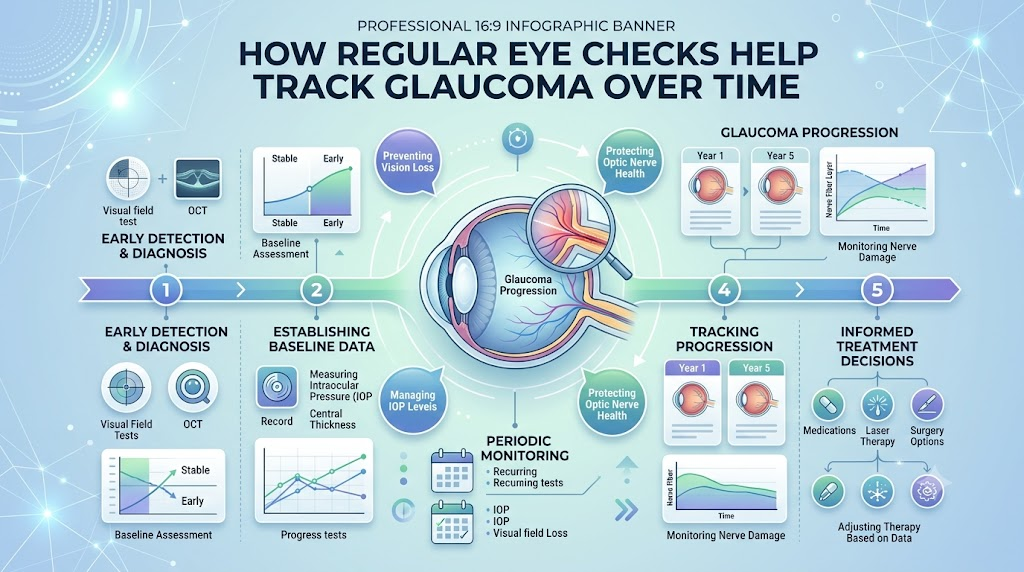
Doctors often use trend monitoring for glaucoma care. This means comparing results across several visits. Eye pressure readings are compared over time. Visual field results are reviewed for changes too. OCT images help show structural differences. Optic nerve findings are also compared closely. Changes over time often matter more than one single result. Every patient’s results are interpreted based on their own history.
What Makes a Hospital Suitable for Glaucoma Monitoring?
Several features can support strong glaucoma care. Glaucoma specialists and qualified ophthalmologists are important. Eye pressure testing should be reliably available. Visual field testing and OCT imaging matter too. Optic nerve assessment adds another useful layer. Retinal and general eye imaging can also help. Laser services may be needed in some cases. Glaucoma surgery support matters for certain patients. Regular follow-up clinics support long-term care. Emergency eye care adds an extra safety net. Clear communication from the care team matters throughout.
Glaucoma Monitoring Services to Compare
| Service | What It Checks | Why It May Matter |
|---|---|---|
| Tonometry | Eye pressure level | Helps track pressure changes |
| Visual field testing | Side vision | Detects vision field changes |
| OCT imaging | Eye structure detail | Shows structural changes over time |
| Optic nerve examination | Optic nerve appearance | Supports overall assessment |
| Follow-up assessment | Comparison across visits | Reveals patterns over time |
How Often Should Glaucoma Be Monitored?
Follow-up timing depends on several factors. This includes the type of glaucoma involved. The stage of the condition also matters. Eye pressure levels play a role too. Previous test results help guide the schedule. How you respond to treatment matters as well. Other personal risk factors are considered too. There is no single schedule that fits everyone. Always follow the plan set by your own eye specialist.
Preparing for a Glaucoma Appointment
A few simple steps can help your visit. Bring any previous eye reports you have. Carry a list of your current medicines. Mention any vision changes you have noticed. Share your family history if you know it. Bring details about your glasses or contact lenses. Write down any questions beforehand. Let your doctor know about any missed visits too. Honest, complete information helps your care team the most.
Questions to Ask a Glaucoma Specialist
What type of glaucoma do I have? What tests do I need at this visit? What does my eye pressure reading mean? What does my visual field test show? Do I need OCT imaging this time? How often should I come back? Has anything changed since my last visit? What warning signs need urgent care? Do I need another specialist involved? What should I do between visits?
Long-Term Glaucoma Care
Glaucoma often needs ongoing, long-term monitoring. This usually means regular appointments over time. Repeat testing helps track your eye health. Your treatment plan may be reviewed periodically. Eye pressure and vision are checked consistently. Test changes are reviewed carefully at each visit. Care may be adjusted when truly needed. Following your care plan closely really does matter. Never change your treatment without medical advice first.
When Glaucoma Needs Urgent Eye Care
Some symptoms need urgent professional attention. Sudden, severe eye pain is one example. Sudden major vision loss is another serious sign. A severe headache with eye symptoms also needs review. A red, seriously painful eye is concerning too. Nausea or vomiting with severe eye pain matters as well. Sudden halos appearing around lights is another sign. These symptoms can have several different causes. Seek urgent professional eye care if you notice them.
How BestEyeHospitals.com Can Help
BestEyeHospitals.com helps people research eye hospitals and glaucoma specialists. You can explore general eye conditions and treatments too. Diagnostic services and hospital facilities are covered as well. Specialist departments and eye-care information are also included. The platform presents itself as a place to find eye hospitals and specialists. It does not diagnose patients or interpret personal test results. It also does not guarantee the quality of any hospital listed.
Practical Example of Glaucoma Monitoring
Here is a general example, not a real patient story. Imagine someone has been told they may have glaucoma. They attend regular follow-up eye visits over time. Their doctor compares eye pressure, visual field results, and scans. Using this full picture, the doctor plans the next follow-up steps.
Common Mistakes During Glaucoma Monitoring
A few common mistakes are worth knowing about. Skipping follow-up visits is one example. Ignoring slow, gradual vision changes is another. Forgetting to bring previous eye reports can cause gaps. Not sharing current medicine information can also be an issue. Assuming normal eye pressure always means no glaucoma is a common mistake. Relying on just one test alone is another. Stopping treatment without medical advice is important to avoid too. These are common, understandable slips, not personal failures.
Frequently Asked Questions About Glaucoma Monitoring
1. What is glaucoma monitoring?
Glaucoma monitoring means regularly checking your eyes for changes. It helps doctors track your condition over time.
2. Why do glaucoma patients need regular eye checks?
Regular checks help catch slow changes early. This supports better long-term eye care decisions.
3. What tests are used to monitor glaucoma?
Common tests include eye pressure checks and visual field testing. OCT imaging and optic nerve exams are also used.
4. What is an eye pressure test?
This test, called tonometry, measures fluid pressure inside your eye. It is one part of a full glaucoma check.
5. What is a visual field test for glaucoma?
This test checks your side vision carefully. It helps doctors notice changes in your peripheral sight.
6. What is an OCT test for glaucoma?
OCT is a detailed eye scan. It creates clear images of structures linked to the optic nerve.
7. How often should glaucoma be monitored?
This depends on your specific condition and risk factors. Your eye specialist will set the right schedule for you.
8. Can glaucoma monitoring detect changes early?
Regular monitoring can help doctors notice changes over time. It does not guarantee that every change will be caught early.
9. What should I look for in a glaucoma hospital?
Look for glaucoma specialists and a range of testing options. Follow-up support and clear communication also matter.
10. How can BestEyeHospitals.com help me research glaucoma care?
BestEyeHospitals.com helps you explore eye hospitals and glaucoma specialists. This can support informed conversations with your own doctor.
Final Thoughts
Glaucoma monitoring is about watching your eye health closely over time. Regular testing helps doctors track meaningful changes as they happen. Different tests offer different pieces of the full picture. Following your eye specialist’s follow-up plan remains important. BestEyeHospitals.com can support your research into eye hospitals and glaucoma care options.