Making decisions about cardiovascular care can feel overwhelming. Whether you are managing coronary artery disease, preparing for coronary artery bypass graft (CABG) surgery, or evaluating treatment options for a loved one, selecting the right medical institution is critical. Finding the best cardiac hospitals involves analyzing hospital accreditations, clinical outcomes, medical technologies, and specialist expertise.This educational guide helps you navigate the complex process of comparing the best heart hospitals in the world. We explore clinical standards, highlight the rising role of medical tourism, detail options like the best cardiac hospitals in India, and provide actionable checklists to help you and your family make informed, confident healthcare decisions.
Why Choosing the Right Cardiac Hospital Matters
The hospital you choose directly impacts your treatment experience and recovery journey. Cardiovascular treatments range from non-invasive diagnostic cardiology—such as an electrocardiogram (ECG) or echocardiogram—to complex surgical interventions.
High-performing best cardiology hospitals offer multidisciplinary care, combining the expertise of a non-interventional cardiologist, an interventional cardiologist, and a skilled cardiac surgeon. When a hospital features integrated teams, patients benefit from comprehensive evaluations, accurate diagnostic pathways, and customized care plans that prioritize patient safety and long-term recovery.
Key Factors to Compare Cardiac Hospitals
When searching for the best heart surgery hospitals, you should look beyond basic marketing and evaluate objective performance indicators.
1. Clinical Quality and Accreditations
Accreditations from independent bodies prove that a hospital meets rigorous global standards. Look for approvals from:
- Joint Commission International (JCI): The gold standard for global healthcare quality.
- National Accreditation Board for Hospitals & Healthcare Providers (NABH): The premier accreditation standard in India.
2. Volume of Procedures and Success Rates
In cardiac care, experience correlates with quality. Hospitals performing a high volume of angioplasties or bypass surgeries typically have highly standardized protocols, specialized intensive care units (ICUs), and lower complication rates.
Types of Cardiac Treatments and Procedures
Cardiac care is broadly divided into interventional procedures and surgical therapies. Understanding these options helps you identify the specialized infrastructure your treatment requires.
                  ┌────────────────────────────────────────┐
                  │        Cardiovascular Treatments       │
                  └───────────────────┬────────────────────┘
                                      │
             ┌────────────────────────┴────────────────────────┐
             ▼                                                 ▼
┌──────────────────────────┐                      ┌──────────────────────────┐
│ Interventional Cardiology│                      │     Cardiac Surgery      │
├──────────────────────────┤                      ├──────────────────────────┤
│ • Diagnostic Angiography │                      │ • Bypass Surgery (CABG)  │
│ • Angioplasty & Stenting │                      │ • Valve Replacement      │
│ • Minimally Invasive     │                      │ • Open Heart Surgery     │
└──────────────────────────┘                      └──────────────────────────┘
Minimally Invasive Heart Surgery vs. Open Heart Surgery
While traditional open-heart surgery requires dividing the breastbone, modern developments allow for minimally invasive heart surgery. This approach uses smaller incisions, reducing physical trauma, minimizing scarring, and shortening your hospital stay and recovery time.
Comparison Tables for Heart Care Decisions
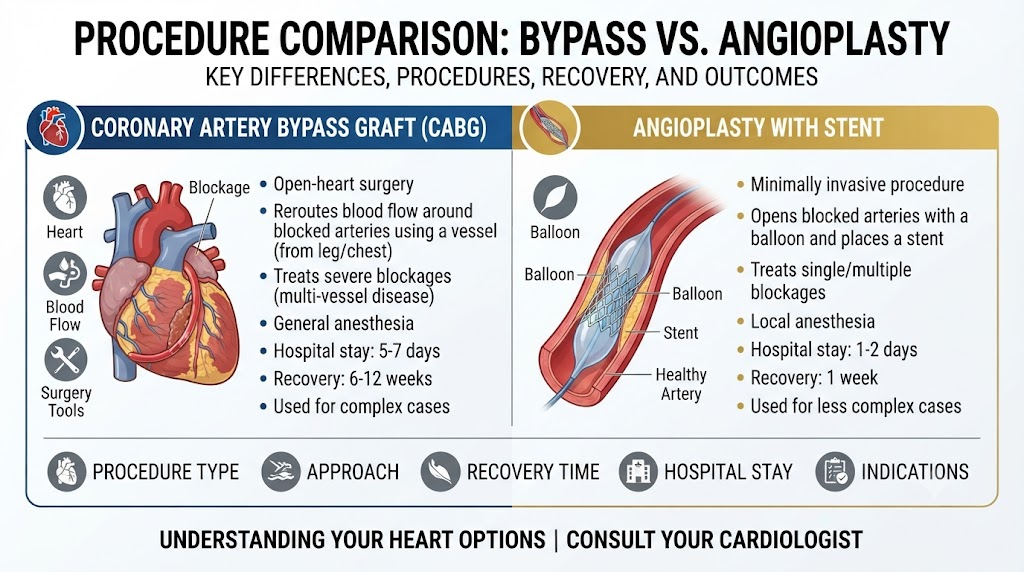
Table 1: Bypass Surgery vs. Angioplasty
| Feature | Bypass Surgery (CABG) | Angioplasty (PCI) |
| Primary Goal | Redirects blood flow around clogged arteries using a healthy vessel graft. | Opens narrowed coronary arteries using a balloon and stent. |
| Advantages | Highly durable; ideal for complex, multi-vessel blockages. | Minimally invasive; rapid recovery; local anesthesia. |
| Limitations | Major surgery; longer recovery; requires general anesthesia. | Risk of restenosis (re-narrowing); less suitable for diffuse disease. |
| Suitable Patients | Patients with severe, multi-vessel coronary artery disease. | Patients with localized, single or double-vessel blockages. |
| Cost Considerations | Higher overall cost due to OR time, ICU stay, and recovery. | Moderate cost; shorter hospital stay minimizes ancillary expenses. |
Table 2: Government vs. Private Cardiac Hospitals
| Feature | Government Cardiac Hospitals | Private Cardiac Hospitals |
| Advantages | Highly affordable; experienced doctors managing diverse cases. | State-of-the-art technology; shorter wait times; personalized care. |
| Limitations | Long waiting lists; crowded facilities; limited personalized attention. | Significantly higher out-of-pocket costs. |
| Suitable Patients | Budget-conscious patients seeking standard care. | Patients seeking immediate, highly comfortable, advanced care. |
| Cost Considerations | Extremely low to subsidized rates. | Higher pricing; premium billing for private rooms and custom services. |
Table 3: Heart Surgery in India vs. Western Countries
| Feature | Heart Surgery in India | Heart Surgery in Western Countries (US/UK) |
| Advantages | Extremely cost-effective; world-class accredited hospitals. | Access to cutting-edge research trials and local medical networks. |
| Limitations | Requires international travel and coordination. | Prohibitively expensive without comprehensive insurance. |
| Suitable Patients | Uninsured, underinsured, or international medical tourists. | Local residents with comprehensive health insurance coverage. |
| Cost Considerations | Save up to 70-80% compared to US private healthcare rates. | High baseline costs for procedures, ICU care, and consultations. |
Treatment Cost Considerations and Medical Tourism
Cardiovascular procedures can represent a major financial commitment. Many patients seek alternative options globally to manage these expenses.
Medical Tourism for Heart Surgery in India
India has emerged as an international hub for cardiac care. By choosing the best cardiac hospitals in India, patients gain access to infrastructure comparable to premium Western institutions at a fraction of the cost.
Average Coronary Artery Bypass Graft (CABG) Cost Comparison (USD):

United States:  $120,000 - $150,000  [████████████████████████████████]
United Kingdom: $35,000 - $50,000     [██████████]
India:          $5,500 - $8,500       [█]
Factors driving the popularity of the best heart surgery hospitals in India include:
- Highly qualified, English-speaking clinical teams.
- The presence of the best cardiac surgeons in India, many of whom have trained or practiced in top Western healthcare systems.
- Substantial savings, even when accounting for travel, lodging, and post-operative recovery care.
Expert Tips for Choosing Your Hospital and Surgeon
When choosing clinical care, use these expert tips to verify the credentials of both the hospital and your specialist:
- Confirm Surgeon Specialties: Verify that your specialist is board-certified. A cardiologist performs diagnostics and interventional procedures (like angioplasty), whereas a cardiac surgeon performs physical surgeries (like CABG or valve replacements).
- Evaluate the ICU Infrastructure: Complex surgeries require dedicated cardiac ICUs with 24/7 coverage by specialized intensivists and cardiac nurses.
- Request Second Opinions: Reputable specialists always support your decision to seek a second medical opinion. Comparing opinions helps clarify your diagnostic path and therapeutic options.
Best Practices for Patient Safety and Planning
Planning your cardiac treatment carefully helps ensure patient safety and supports a smooth recovery:
- Review Hospital Infection Rates: Inquire about the hospital’s surgical site infection (SSI) rates and readmission statistics.
- Prepare a Detailed Medical Dossier: Keep digital copies of your diagnostic reports, including recent ECGs, echocardiograms, coronary angiographies, and blood panels.
- Establish a Post-Discharge Recovery Plan: Arrange local medical support or a dedicated rehabilitation program to monitor your recovery once you leave the hospital.
Common Mistakes to Avoid
- Focusing Solely on Cost: Choosing a facility based only on the lowest price can compromise safety. Always balance cost against international accreditations and clinical track records.
- Confusing Cardiologists with Cardiac Surgeons: Make sure you consult the correct specialist for your recommended procedure.
- Ignoring Travel Logistics: When traveling for care, patients must secure clearance from their clinical team before flying home to prevent complications like deep vein thrombosis (DVT).
Frequently Asked Questions
1. What are the signs of a top-tier cardiac hospital?
Top hospitals hold international accreditations (like JCI), feature advanced diagnostic laboratories, utilize dedicated cardiac ICUs, and maintain transparent, highly successful clinical outcome registries.
2. How do I find the best cardiac surgeons in India?
Look for board-certified cardiothoracic surgeons with over 10–15 years of experience, high procedural success rates, and active memberships in international cardiac societies.
3. What is the average heart surgery cost in India?
A standard coronary artery bypass surgery in India typically ranges from $5,500 to $8,500 USD, depending on the hospital, room category, and specific patient needs.
4. What is the difference between a cardiologist and a cardiac surgeon?
A cardiologist diagnoses heart conditions and performs minimally invasive, catheter-based treatments, while a cardiac surgeon performs complex physical surgeries like bypasses and valve replacements.
5. Why should I consider medical tourism for heart surgery in India?
India provides world-class clinical expertise, advanced medical technologies, JCI-accredited hospitals, and fluent English-speaking staff at a fraction of Western healthcare costs.
6. What diagnostic tests are required before undergoing heart surgery?
Standard pre-operative assessments typically include an electrocardiogram (ECG), an echocardiogram, a coronary angiography, chest X-rays, and comprehensive blood panels.
7. How long is the recovery period after bypass surgery?
Most patients remain in the hospital for 5 to 7 days, with complete physical recovery and a return to normal daily activities taking between 6 and 12 weeks.
8. Is minimally invasive heart surgery better than open-heart surgery?
Minimally invasive options offer smaller incisions, less pain, and faster recovery times, but they are only suitable for specific anatomical conditions and patient profiles.
9. How do I verify a hospital’s clinical success rates?
You can request verified clinical outcome data, patient safety reports, and quality indicators directly from the hospital’s international patient service department.
10. Does health insurance cover cardiac treatments abroad?
Some international insurance providers cover overseas treatments, while others do not. You should always consult your insurance representative to check your policy’s out-of-network coverage.
11. What is CABG, and when is it necessary?
Coronary Artery Bypass Grafting (CABG) is a surgery that restores blood flow to the heart. It is recommended when multiple coronary arteries are severely narrowed or blocked.
12. How safe is it to travel by air after receiving heart surgery?
Patients typically need to wait 2 to 4 weeks after surgery before flying. You must obtain a formal “fit-to-fly” clearance certificate from your treating cardiac surgeon.
13. What support services do Indian hospitals offer international patients?
Accredited Indian hospitals provide dedicated international desks that assist with medical visa invitations, airport transfers, language interpretation, and local accommodation.
14. What are the most common risks associated with angioplasty?
While generally very safe, potential risks of angioplasty include localized bleeding at the catheter insertion site, damage to the artery, or a recurrence of blockages (restenosis).
15. Can I get a second medical opinion before scheduling my surgery?
Yes, obtaining a second medical opinion is a standard best practice that helps confirm your diagnosis and ensures you are choosing the most appropriate treatment pathway.
Conclusion
Selecting the right hospital and specialist is one of the most important decisions you will make for your cardiovascular health. By comparing key performance metrics—such as hospital accreditations, procedure volumes, specialist credentials, and the overall cost of care—you can find a facility that fits your unique medical and financial needs.
Whether you are looking for the best hospitals for angioplasty close to home or exploring medical tourism for heart surgery in India, taking an active, informed approach to your healthcare planning is the best way to support a safe treatment journey and a complete, healthy recovery.