Introduction
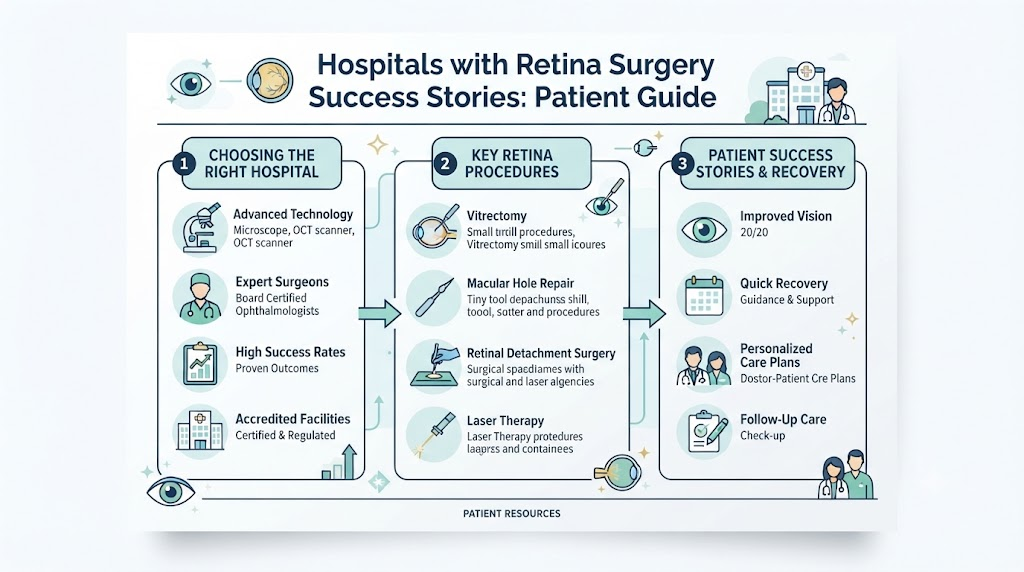
Maintaining optimal eye health is essential for experiencing the world and preserving independence. Among the various components of the eye, the retina plays a vital role by capturing light and converting it into neural signals that the brain translates into images. When retinal conditions develop, they often require delicate medical or surgical intervention. Understanding these success stories requires looking beyond isolated testimonials to appreciate the clinical variables that influence individual medical outcomes. Retina surgery outcomes depend on several factors, including the type and severity of retinal disease, timing of treatment, surgeon expertise, patient health condition, and post-operative care, as noted by the American Society of Retina Specialists. For reliable resources, hospital comparisons, and educational guidance, patients can explore BESTEYEHOSPITALS, a platform dedicated to supporting informed healthcare decisions.
3. What Is Retina Surgery?
Retina surgery encompasses a specialized category of delicate microsurgical procedures performed on the retina and the vitreous gel inside the eye. The retina functions much like the film in a camera, lining the back inner wall of the eye and housing millions of light-sensitive cells.When retinal tissue tears, detaches, swells, or develops abnormal blood vessels, vision can become severely compromised. Early diagnosis and timely surgical intervention are critical because retinal tissue has limited natural healing capacity, making professional care essential for preserving sight.
Common Retina Conditions Requiring Surgery
Retinal Detachment
- Causes: Occurs when the thin retina pulls away from its underlying layer of supportive tissue, often due to fluid passing through a retinal tear.
- Symptoms: Sudden appearance of new floaters, flashes of light in the peripheral vision, or a dark shadow resembling a curtain spreading across the visual field.
- Importance of Urgent Treatment: Retinal detachment is a medical emergency requiring prompt surgical evaluation to prevent permanent vision loss.
Diabetic Retinopathy
- Diabetes-Related Retinal Damage: High blood sugar levels damage delicate blood vessels in the retina, leading to leakage, swelling, or the growth of abnormal new vessels.
- Monitoring Importance: Regular screening examinations are vital for detecting early changes before vision is noticeably affected.
- Available Treatments: Laser photocoagulation, intravitreal injections, or vitrectomy surgery for advanced proliferative stages.
Macular Hole
- Vision Impact: A small break that develops in the macula—the central part of the retina responsible for sharp, detailed straight-ahead vision.
- Surgical Management: Vitrectomy surgery combined with gas bubble placement to gently close the hole as the eye heals.
Epiretinal Membrane
- Causes: Formation of a delicate, scar-like membrane over the surface of the macula, often caused by normal aging changes within the vitreous gel.
- Symptoms: Blurred or distorted central vision, where straight lines may appear wavy.
- Treatment Options: Microsurgical peeling of the membrane (membrane peel vitrectomy) when vision impairment affects daily activities.
Retinal Tears
- Warning Signs: Sudden flashes of light or a burst of new floaters.
- Importance of Timely Evaluation: Treating retinal tears promptly with laser therapy or cryotherapy can prevent them from progressing into full retinal detachments.
Types of Retina Surgery Procedures
Vitrectomy Surgery
- Purpose: Removing all or part of the vitreous gel from the middle of the eye to access the retina directly.
- Common Uses: Treating retinal detachments, severe diabetic retinopathy complications, macular holes, and removing scar tissue or intraocular infections.
- Recovery Considerations: Patients may need to maintain specific head positioning postoperatively if a gas or silicone oil bubble is placed inside the eye.
Retinal Detachment Repair
- Scleral Buckle: Placing a flexible silicone or sponge band around the outside of the eye (sclera) to indent the wall and relieve pulling forces on the retina.
- Pneumatic Retinopexy: Injecting a gas bubble into the eye combined with laser or cryotherapy to press the detached retina back into place.
- Vitrectomy Approaches: Internal realignment and laser sealing of retinal breaks.
Laser Retinal Procedures
- Purpose: Applying targeted thermal laser energy to seal retinal tears or shrink abnormal blood vessels.
- Role in Management: Highly effective for preventing retinal detachment and managing non-proliferative diabetic eye disease complications.
Intravitreal Treatments
- Medication-Based Care: Delivering therapeutic drugs directly into the vitreous cavity via ultra-fine needle injections.
- Conditions Treated: Used extensively for macular degeneration, diabetic macular edema, and retinal vein occlusions to reduce swelling and abnormal vessel growth.
Retina Surgery Procedure Comparison Table
| Procedure | Used For | Purpose |
| Vitrectomy | Retinal detachment, macular hole, diabetic complications | Removes vitreous gel and allows internal retinal repair or scar tissue removal. |
| Laser Treatment | Retinal tears, diabetic eye disease | Helps prevent or manage retinal problems by creating microscopic scar seals. |
| Scleral Buckle | Retinal detachment | Supports retinal reattachment by indenting the outer wall of the eye externally. |
| Injection Therapy | Certain retinal diseases (e.g., macular degeneration) | Helps manage abnormal retinal changes and reduce fluid accumulation using specialized medications. |
Understanding Retina Surgery Success Stories
Patient success stories shared by medical centers often provide encouragement to individuals facing frightening diagnoses. However, it is essential to understand what these narratives represent:
- Representing Diverse Clinical Scenarios: Success stories highlight what is medically possible under optimal conditions, but every patient’s baseline health, eye anatomy, and disease progression are unique.
- Importance of Realistic Expectations: Success does not always mean 20/20 uncorrected vision; for many serious conditions, success is defined by stabilizing vision, preventing total blindness, or preserving functional independence.
- Diverse Clinical Outcomes: Examples range from patients regaining functional reading vision after macular hole repair to individuals preserving remaining sight through timely diabetic retinopathy management.
As emphasized by reports from the American Society of Retina Specialists, timely specialist care helps patients manage serious retinal conditions and preserve vision effectively.
Factors That Influence Retina Surgery Outcomes
Achieving favorable surgical outcomes relies on a coordinated medical framework:
- Early Diagnosis: Recognizing warning signs early and undergoing prompt comprehensive eye examinations significantly improves the prognosis for conditions like retinal detachment.
- Retina Surgeon Experience: Vitreoretinal surgery requires extraordinary micro-instrument precision, specialized fellowship training, and vast experience in managing unpredictable intraoperative challenges.
- Advanced Eye Hospital Facilities: Access to state-of-the-art operating microscopes, vitrectomy consoles, and sterile surgical suites ensures safety and precision.
- Post-Surgery Follow-Up: Strict adherence to postoperative medication schedules, activity restrictions, and scheduled follow-up visits ensures proper internal healing.
Features of Hospitals Offering Advanced Retina Care
Experienced Retina Specialists
Top-tier ophthalmic centers house surgeons who hold sub-specialty fellowships in vitreoretinal surgery, combining advanced clinical knowledge with extensive hands-on operational volume.
Modern Diagnostic Technology
Precise surgical planning requires sophisticated imaging modalities:
- Optical Coherence Technology (OCT): Providing cross-sectional microscopic scans of retinal tissue layers.
- Retinal Imaging: High-resolution digital fundus photography documenting structural changes.
- Fluorescein Angiography: Tracking blood circulation within retinal vessels using specialized fluorescent dyes.
- Eye Ultrasound (B-Scan): Visualizing internal eye structures when media opacities like cataracts or vitreous hemorrhage block direct view.
Advanced Surgical Facilities
Equipped with high-speed vitrectomy systems, wide-field viewing microscopes, and laminar airflow sterile operating environments.
Comprehensive Eye Care Team
A multidisciplinary network consisting of retina specialists, general ophthalmologists, ophthalmic nurses, certified technicians, and low-vision rehabilitation support teams.
How to Choose the Right Retina Surgery Hospital
When evaluating eye hospitals for vitreoretinal care, patients should consider:
- Specialist Experience: Look for board-certified ophthalmologists with dedicated fellowship training in vitreoretinal diseases.
- Hospital Infrastructure: Verify that the facility maintains 24/7 emergency eye care capabilities, advanced diagnostic imaging, and dedicated ophthalmic surgical operating rooms.
- Patient Support: Assess the clarity of preoperative consultations, the thoroughness of risk explanations, and the availability of structured postoperative guidance.
Retina Surgery Hospital Selection Checklist
| Factor | Why It Matters |
| Retina Specialist Expertise | Ensures precise microsurgical execution and expert management of complex retinal disorders. |
| Advanced Imaging | Provides accurate preoperative mapping and diagnostic clarity using OCT and angiography. |
| Surgical Facilities | Guarantees sterile operating environments and modern vitrectomy equipment. |
| Patient Safety Standards | Adheres to strict infection control and rigorous perioperative monitoring protocols. |
| Follow-up Care | Ensures continuous outpatient monitoring and timely management of healing milestones. |
| Rehabilitation Support | Assists patients in adapting to visual changes and maximizing residual functional sight. |
Recovery After Retina Surgery
Postoperative recovery varies depending on the type of surgery performed, the underlying retinal condition, and individual healing responses:
- Eye Protection: Wearing protective shields or glasses, especially while sleeping, to prevent accidental trauma.
- Medication Use: Administering prescribed antibiotic and anti-inflammatory eye drops precisely as directed.
- Follow-up Visits: Attending all scheduled evaluations to monitor intraocular pressure and retinal reattachment status.
- Activity Restrictions: Avoiding heavy lifting, strenuous exercise, bending over, or flying if an intraocular gas bubble has been placed.
- Gradual Vision Improvement: Understanding that visual recovery can take weeks or months as internal swelling subsides and tissues heal.
Common Mistakes Patients Should Avoid
- Delaying Treatment After Vision Changes: Waiting days or weeks after noticing flashes, floaters, or dark shadows before seeking professional care.
- Ignoring Symptoms: Passing off sudden visual disturbances as normal fatigue rather than scheduling urgent evaluations.
- Choosing Only Based on Cost: Selecting an eye care facility solely on the cheapest price rather than surgeon expertise and facility safety.
- Skipping Follow-up Appointments: Missing critical postoperative checkups where early complications can be identified and treated.
- Expecting Identical Results: Comparing one’s personal surgical outcome to another patient’s success story without accounting for disease severity differences.
Myths vs Facts Table
| Myth | Fact |
| Retina surgery always restores perfect vision. | Outcomes depend heavily on condition severity, duration of detachment, and individual healing factors. |
| Retina problems only affect older people. | Retinal conditions, tears, and detachments can occur across various age groups due to trauma, genetics, or diabetes. |
| Surgery is the only retina treatment option. | Many conditions are successfully managed with laser therapy, intravitreal injections, or close monitoring. |
| Recovery is identical for every patient. | Healing varies widely depending on the specific surgical procedure, gas bubble use, and personal health. |
| If only one eye has a retinal tear, the other eye is completely immune. | Certain degenerative retinal changes can occur bilaterally, making comprehensive examinations of both eyes necessary. |
| Eye floaters always require immediate surgery. | While new floaters warrant an urgent check for retinal tears, most common floaters are harmless vitreous strands. |
| Vitrectomy surgery is painful and requires a long hospital stay. | Modern micro-incision vitrectomy is typically performed on an outpatient basis under local anesthesia with minimal discomfort. |
How BESTEYEHOSPITALS Helps Patients
Navigating ophthalmic care options requires access to reliable, objective information. Platforms like BESTEYEHOSPITALS assist individuals by providing:
- Comprehensive eye hospital discovery resources and directory listings
- Retina care awareness guides and educational articles
- Specialist background information highlighting vitreoretinal qualifications
- Treatment education explaining various surgical and medical interventions
- Hospital comparison support to help patients evaluate facility capabilities and make informed healthcare decisions.
FAQs
1.What is retina surgery?
Retina surgery involves specialized microsurgical procedures performed on the retina and vitreous gel to treat conditions like retinal detachment, macular holes, and severe diabetic eye disease.
2.Which conditions require retina surgery?
Common indications include retinal detachment, retinal tears, proliferative diabetic retinopathy, macular holes, epiretinal membranes, and severe eye trauma.
3.What does a retina specialist do?
A retina specialist is an ophthalmologist who has completed advanced fellowship training focused specifically on medical and surgical disorders of the retina and vitreous.
4.How do I choose a retina surgery hospital?
Evaluate the facility’s advanced diagnostic equipment, operating room infrastructure, emergency eye care support, and the credentials of its vitreoretinal surgeons.
5.Is retina surgery safe?
Yes, when performed by trained retina specialists in properly equipped, sterile surgical facilities, though like all surgeries, it carries potential risks.
6.What is vitrectomy surgery?
A surgical procedure where the vitreous gel inside the eye is removed to provide access to the retina for repairing tears, removing scar tissue, or treating detachments.
7.What are common symptoms of retinal problems?
Warning signs include sudden flashes of light, a sudden burst of new floaters, a shadow or curtain moving across the field of vision, and blurred central vision.
8.How important is early retina treatment?
Extremely important; early intervention—especially for retinal detachments—significantly improves the likelihood of preserving functional vision.
9.How long does recovery after retina surgery take?
Initial healing takes several weeks, but full visual recovery can span several months depending on the complexity of the procedure and gas bubble absorption.
10.Can retina surgery improve vision?
Surgery aims to repair structural damage, halt disease progression, and restore or preserve as much vision as possible based on the underlying condition.
Final Conclusion
Retina surgery outcomes are influenced by a complex combination of medical, technological, and individual factors. Choosing an experienced retina specialist and an advanced eye hospital plays a vital role in navigating serious vision challenges. Early diagnosis, timely surgical intervention, and diligent postoperative follow-up support better eye health management. While patient success stories provide encouragement, they should always be understood in the context of individual medical conditions.