Introduction
Diabetic retinopathy remains one of the leading causes of preventable blindness in adults worldwide. For those living with diabetes, the eyes are often the first to signal underlying vascular changes. Managing this condition requires more than just standard care; it demands precision, advanced diagnostic technology, and the expertise of dedicated retina specialists.At BESTEYEHOSPITALS, we provide a centralized resource for patients seeking clarity in their healthcare journey. Our platform enables you to compare top-tier facilities, evaluate the track records of retina specialists, and gain the necessary insight to secure the best hospitals for diabetic retinopathy treatments. Making informed choices today is the most effective way to safeguard your vision for tomorrow.
What Is Diabetic Retinopathy?
Diabetic retinopathy is a complication of diabetes that damages the small blood vessels inside the retina—the light-sensitive tissue at the back of the eye. Over time, high blood sugar causes these vessels to swell, leak, or close off completely, potentially leading to the growth of abnormal new vessels that can permanently impair sight.
How Diabetes Affects Eye Health
Chronic hyperglycemia (high blood sugar) damages the structural integrity of retinal capillaries. When these vessels break down, fluid leaks into the retina, causing swelling (edema) and blocking blood flow. This systemic damage can manifest as:
- Capillary Aneurysms: Small bulges in the vessels.
- Retinal Ischemia: Areas of the retina not receiving adequate blood supply.
- Neovascularization: The growth of fragile, abnormal vessels that bleed easily.
Causes and Risk Factors
The progression of diabetic eye disease is influenced by several key factors:
- Duration of Diabetes: The longer you have had the disease, the higher the risk.
- Blood Sugar Control: Consistently high HbA1c levels accelerate vascular damage.
- Blood Pressure & Cholesterol: Hypertension and high lipids exacerbate vessel fragility.
- Pregnancy: Hormonal changes can trigger rapid progression.
Early Signs and Symptoms
Patients should monitor for these symptoms, even if they seem minor:
- Blurred Vision: Difficulty focusing or reading.
- Floaters: Dark spots or strings drifting in your field of vision.
- Fluctuating Vision: Sight that changes from blurry to clear.
- Dark Spots/Empty Areas: Gaps in your central or peripheral vision.
- Night Vision Issues: Difficulty seeing in low-light environments.
Importance of Early Detection
Diabetic retinopathy is often asymptomatic in its early stages. By the time a patient notices vision loss, permanent damage may have already occurred. Annual dilated eye exams are the gold standard for catching early-stage changes before they necessitate invasive intervention.
Table 1: Stages of Diabetic Retinopathy
| Stage | Symptoms | Recommended Action |
| Mild Non-Proliferative | None (micro-aneurysms) | Annual monitoring |
| Moderate Non-Proliferative | Minimal blurring | Strict blood sugar control |
| Severe Non-Proliferative | Blocked vessels, bleeding | Frequent specialist visits |
| Proliferative (PDR) | Floaters, severe vision loss | Urgent laser or anti-VEGF therapy |
Best Hospitals for Diabetic Retinopathy Treatments: Key Features
When selecting a healthcare facility, ensure they possess the following:
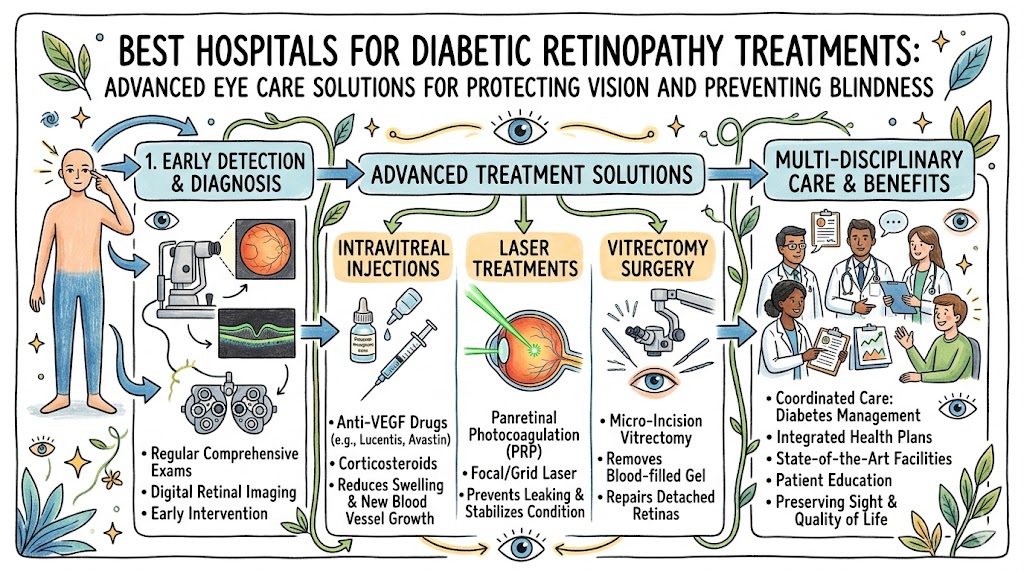
- State-of-the-Art Imaging: Availability of high-definition OCT and angiography.
- Specialized Retina Teams: Access to board-certified retina surgeons.
- Collaborative Care: Integration between endocrinologists and eye surgeons.
- Evidence-Based Protocols: Use of the latest FDA-approved anti-VEGF therapies.
- Emergency Protocols: Rapid-response systems for retinal detachment or hemorrhage.
Diagnostic Tests for Diabetic Retinopathy
- Dilated Eye Exam: Drops widen the pupil to allow full view of the retina.
- OCT (Optical Coherence Tomography): Provides cross-sectional maps of the retina to detect swelling.
- Fluorescein Angiography: A dye is injected to highlight leaking blood vessels.
- Retinal Photography: Digital mapping to track disease progression over time.
Table 2: Diagnostic Tests for Diabetic Retinopathy
| Test | Purpose | Benefits |
| Dilated Exam | Direct visualization | Immediate broad assessment |
| OCT | Detect retinal swelling | Precise measurement of edema |
| Angiography | Identify leaky vessels | Pinpoints source of blood flow issues |
| Photography | Document progression | Comparison over months/years |
Treatment Options
Effective management often involves a combination of strategies:
- Blood Sugar Management: The cornerstone of preventing further damage.
- Anti-VEGF Injections: Medications injected into the eye to stop abnormal vessel growth.
- Laser Photocoagulation: Sealing leaking vessels with targeted laser light.
- Vitrectomy: Surgical removal of blood or scar tissue from the vitreous gel.
Table 3: Treatment Options and Benefits
| Treatment | Purpose | Benefits |
| Anti-VEGF Injections | Reduce fluid leakage | Improves or stabilizes vision |
| Laser Therapy | Seal off leaking vessels | Prevents advanced complications |
| Vitrectomy | Clean vitreous hemorrhage | Clears cloudy field of vision |
| Steroid Implants | Manage chronic inflammation | Long-term edema reduction |
Lifestyle Changes and Diabetes Management
Protecting your eyes starts with systemic health:
- Control Blood Glucose: Aim for time-in-range.
- Monitor Blood Pressure: Keep hypertension in check to protect vascular health.
- Quit Smoking: Smoking restricts blood flow and increases retinal damage risk.
- Regular Exercise: Helps improve insulin sensitivity.
Table 4: Diabetes Eye Care Checklist
| Activity | Frequency | Benefits |
| Comprehensive Eye Exam | Annually | Early detection of changes |
| Blood Sugar Check | Daily | Prevents vascular damage |
| Blood Pressure Check | Weekly | Reduces retinal stress |
| Review Vision Changes | Daily | Immediate reporting of symptoms |
Frequently Asked Questions
- Is diabetic retinopathy permanent? It can be managed, but damage is often permanent once it reaches advanced stages.
- What is the best treatment? Depends on the stage; your specialist will decide between injections, lasers, or surgery.
- How often do I need an eye exam? At least once a year, or as directed by your retina specialist.
- Are injections painful? They are quick and typically performed with numbing drops.
- Can diet reverse the condition? Diet helps manage blood sugar, which stops progression, but won’t “reverse” existing damage.
- What are floaters? Tiny spots that move; they can indicate bleeding in the vitreous.
- Is surgery a last resort? Vitrectomy is usually reserved for advanced or complicated cases.
- Can I lose my sight entirely? Without management, yes; but with early intervention, risk is significantly lowered.
- How do I find a retina specialist? Use platforms like [suspicious link removed].
- Does stress affect my eyes? Stress can spike blood sugar, indirectly affecting eye health.
- Are glasses enough? No, glasses only correct refractive errors; they cannot fix retinal vascular disease.
- What is macular edema? Swelling in the central part of the retina, causing blurry vision.
- Can pregnancy worsen eye health? Yes, it is a high-risk period requiring extra eye monitoring.
- Is laser surgery risky? It is a standard, safe, and highly effective outpatient procedure.
- What if my vision feels fine? Many people with early-stage disease have perfect vision; don’t skip checkups.
- How do anti-VEGF injections work? They block the signal that causes abnormal blood vessel growth.
- Can I drive with retinopathy? Depends on your vision level; always consult your doctor.
- Is this condition hereditary? While diabetes has a genetic component, vascular damage is primarily behavior/control-driven.
- What is a vitrectomy? A surgery to remove the gel in the eye that has become clouded by blood.
- Is there new research? Yes, gene therapy and long-acting implants are currently in development.
Conclusion
Diabetic retinopathy is a formidable challenge, but it is not an inevitable path toward vision loss. As outlined in this guide, the journey toward protecting your eyesight is rooted in three fundamental pillars: early detection, meticulous blood sugar control, and access to world-class medical expertise. By selecting the best hospitals for diabetic retinopathy treatments, you ensure that you are not merely managing a diagnosis, but actively preserving your quality of life.
The advanced diagnostics available today—from high-resolution OCT imaging to sophisticated retinal photography—allow specialists to intervene long before sight is compromised. When you choose a facility through [suspicious link removed], you are connecting with institutions that prioritize these diagnostic standards and offer comprehensive care plans tailored to your specific disease progression. Whether your treatment plan involves lifestyle modifications, anti-VEGF injections, or advanced laser surgery, the goal remains the same: stabilizing your retinal vascular health.