INTRODUCTION
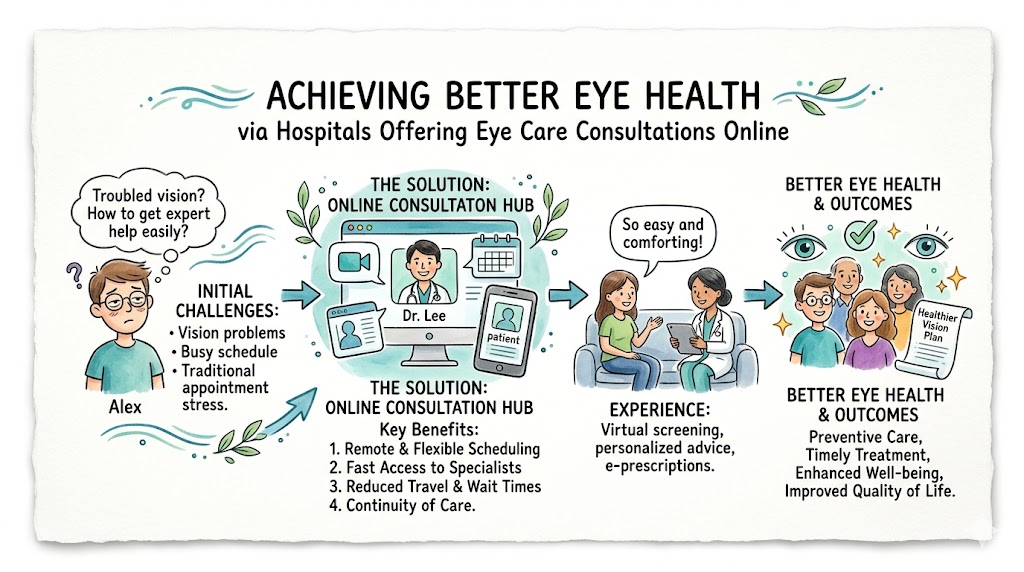
In our rapidly evolving digital world, the way we access healthcare has shifted significantly. For many, the traditional journey of scheduling an appointment, battling traffic, waiting in a lobby, and finally seeing a specialist is becoming less necessary for routine concerns. This is particularly true in the field of ophthalmology, where the rise of teleophthalmology has bridged the gap between patients and medical experts. Today, hospitals offering eye care consultations online are providing a lifeline to those who need professional guidance, whether they are managing chronic conditions or seeking quick advice for sudden eye irritation.Imagine this scenario: you are working at your desk, and your eyes begin to feel gritty, red, and exhausted. You know you need professional advice, but your calendar is packed, and the thought of traveling to a clinic feels overwhelming. This is where virtual eye care shines. It offers the ability to connect with a qualified eye specialist online, share your symptoms, and receive expert recommendations without ever leaving your home or office. This accessibility is not just a luxury; it is a fundamental improvement in how we manage public health.The importance of accessible eye care cannot be overstated. From the elderly who struggle with mobility to patients living in remote regions far from urban medical centers, the ability to consult a doctor virtually ensures that preventative care and symptom management are never out of reach. Reputable platforms like BESTEYEHOSPITALS are at the forefront of this movement, connecting patients with experienced ophthalmologists who are skilled in digital diagnostics and remote patient care.
WHAT ARE ONLINE EYE CARE CONSULTATIONS?
Online eye care consultations, often referred to as teleophthalmology, involve the use of telecommunication technology to provide clinical eye health services from a distance. Unlike a simple web search for symptoms, these consultations connect you directly with a licensed ophthalmologist or optometrist through secure video conferencing platforms, phone calls, or encrypted messaging systems.
The fundamental goal is to provide accessible, high-quality care that mirrors the diagnostic reasoning used during a physical visit, albeit within the constraints of a virtual environment. During these sessions, the doctor reviews your medical history, discusses your current symptoms, and provides clinical advice, education, and—where appropriate—a treatment plan or prescription.
These services have expanded beyond basic advice. They now include triaging, medication follow-ups, and the monitoring of chronic eye diseases. By leveraging digital platforms, hospitals can offer a “first line of defense” that helps determine whether a patient requires immediate emergency care or can manage their condition at home with directed support.
HOW ONLINE EYE CONSULTATIONS WORK
The process of an online eye consultation is designed to be as seamless as possible for the patient.
- Appointment Scheduling: You book a slot through a hospital’s digital portal, selecting a time that fits your schedule.
- Medical History Collection: Before the call, you provide information regarding your current symptoms, pre-existing conditions, and any medications you are taking. Providing clear, accurate data is the cornerstone of a successful virtual visit.
- Video Consultation: You connect with the specialist at the scheduled time. The doctor will perform a “visual exam” by asking you to perform simple tasks, such as moving your eyes in certain directions or using a light to highlight areas of redness.
- Assessment and Recommendations: Based on the conversation and visual cues, the doctor will provide a diagnosis (if possible), offer management tips, or write a digital prescription.
- Follow-Up: The doctor may suggest a follow-up call to monitor progress or request that you visit an in-person clinic if the condition requires a deeper physical examination.
| Step | Purpose | Outcome |
| Appointment | Schedule visit | Consultation booking |
| History Review | Understand symptoms | Personalized evaluation |
| Video Call | Doctor interaction | Assessment |
| Follow-Up | Ongoing care | Monitoring |
CONDITIONS THAT CAN BE MANAGED ONLINE
While not every eye concern can be addressed virtually, many common conditions are well-suited for teleophthalmology.
- Dry Eye Syndrome: Often managed through lifestyle changes and lubricating drops. An ophthalmologist can guide you on the best practices to manage your environment and medication.
- Eye Allergies: If you have recurring red, itchy, or watery eyes, a specialist can confirm the diagnosis and prescribe appropriate drops or antihistamines.
- Digital Eye Strain: In the modern age, “computer vision syndrome” is rampant. Specialists can provide ergonomic advice and rule out underlying issues.
- Post-Surgical Follow-Ups: After procedures like LASIK or cataract surgery, virtual check-ins can monitor healing and answer recovery questions without the need for travel.
- Contact Lens Concerns: If your contacts are causing discomfort, an expert can help determine if it’s a fitting issue or an infection, guiding you on whether to discontinue use.
| Condition | Suitable Online? | In-Person Needed? |
| Dry Eyes | Yes | Sometimes |
| Eye Allergy | Yes | Sometimes |
| Post-Surgery Follow-Up | Often | As Directed |
| Cataract Evaluation | Limited | Usually Yes |
WHEN TO SEEK IN-PERSON EYE CARE
There are clear boundaries to what can be managed virtually. If you experience any of the following, do not wait for an online appointment—seek emergency in-person care immediately:
- Sudden Vision Loss: Any abrupt loss of sight is a medical emergency.
- Eye Trauma: Penetrating injuries or blunt force trauma to the eye require physical assessment to rule out internal damage.
- Severe Pain: Intense, unrelenting pain in or around the eye.
- Acute Glaucoma Symptoms: Such as sudden blurred vision, intense pain, and halos around lights.
- Foreign Objects: If a physical object is embedded in the eye, immediate professional extraction is necessary.
BENEFITS OF ONLINE EYE CARE CONSULTATIONS
The primary benefit is convenience. Patients can receive expert advice without taking time off work or managing long commutes. For those in rural areas, it provides a bridge to specialists they might otherwise never be able to see.
Time and cost efficiency are also significant. By avoiding the travel and wait times associated with traditional clinics, patients can get the answers they need quickly. Furthermore, virtual consultations facilitate better follow-up care. Patients are more likely to keep a follow-up appointment if it is just a quick video call, leading to better compliance with treatment plans and better long-term health outcomes.
LIMITATIONS OF VIRTUAL EYE CARE
The most significant limitation is the lack of physical touch and specialized diagnostic equipment. An ophthalmologist in a clinic can use a slit-lamp microscope to see the microscopic structures of your eye—a tool that cannot be replicated via a webcam.
Diagnostic limitations mean that while a doctor can suspect a condition, they might not be able to confirm it without physical testing. Additionally, connectivity issues can sometimes interrupt the flow of information. Recognizing these limitations is crucial for both the doctor and the patient, ensuring that virtual care is treated as a component of, rather than a replacement for, comprehensive eye care.
TECHNOLOGY USED IN TELEOPHTHALMOLOGY
Modern teleophthalmology relies on a suite of digital tools. Video consultation platforms must be encrypted to ensure patient privacy. Digital imaging allows patients to upload high-quality photos of their eyes, which the doctor can zoom into for a better look. Electronic Health Records (EHR) ensure that the notes from your virtual visit are integrated into your overall medical history, while AI-assisted tools are increasingly helping doctors screen for common retinal issues by analyzing digital images before the actual consultation begins.
| Technology | Purpose |
| Video Calls | Doctor-patient interaction |
| Digital Imaging | Symptom review |
| EHR Systems | Patient records |
| AI Screening | Early detection support |
HOW TO CHOOSE THE BEST ONLINE EYE CARE HOSPITAL
When selecting a provider, verify that the hospital uses qualified, licensed ophthalmologists. Check their experience with telemedicine specifically; treating a patient through a screen requires a different communication style than treating them in person.
Ensure the platform is secure and HIPAA-compliant (or the local equivalent) to protect your personal data. Look for hospitals that have a clear process for follow-up care—if the doctor needs to see you in person, is there a physical clinic nearby, or a referral system in place? A hospital’s reputation and patient feedback are also excellent indicators of the quality of their virtual services.
ONLINE EYE CARE FOR CHILDREN & SENIORS
For parents, virtual consultations can be a lifesaver when trying to decide if their child’s red eye is just a temporary allergy or something that needs urgent care. It minimizes the stress on the child by keeping them in a familiar environment.
For seniors, especially those with limited mobility, virtual care removes the physical burden of travel. It also allows family members or caregivers to be present during the call, ensuring that instructions regarding medications or care routines are clearly understood by everyone involved.
REAL-LIFE PATIENT CONSULTATION STORIES
Take the case of Ananya, a 30-year-old software developer who suffered from severe digital eye strain. By consulting an eye specialist online, she learned simple “20-20-20” eye exercises and proper screen adjustments that drastically improved her comfort in just two weeks, all without ever needing a physical exam.
Conversely, consider Mr. Rao, an elderly gentleman who was worried about a post-cataract surgery sensation. A virtual follow-up allowed the surgeon to reassure him that his healing was on track, saving him a three-hour drive to the city. These stories underscore that virtual care is not just about the technology; it is about providing peace of mind and professional guidance when and where it is needed most.
FUTURE OF TELEOPHTHALMOLOGY
The future of digital eye care is bright. We are moving toward home vision monitoring tools that can track subtle changes in vision over time. Smart diagnostic tools will eventually become as common as blood pressure cuffs, allowing patients to collect data at home that is securely transmitted to their doctor. As AI continues to evolve, we will see even more precise screening capabilities, enabling early detection of conditions like diabetic retinopathy long before they become symptomatic.
| Feature | Why It Matters |
| Qualified Specialists | Accurate advice |
| Secure Platform | Patient privacy |
| Follow-Up Care | Better outcomes |
| Digital Records | Continuity of care |
| Telemedicine Expertise | Improved experience |
FAQS
1. What is an online eye consultation?
It is a virtual medical visit where you speak with an eye doctor via video or phone to discuss eye symptoms, receive advice, and get treatment plans without visiting a clinic.
2. Can eye problems be diagnosed online?
Many conditions, such as dry eye, allergies, or minor infections, can be diagnosed virtually. However, complex issues requiring physical examination may still need an in-person visit.
3. Are online eye consultations safe?
Yes, when conducted by licensed professionals on secure, encrypted platforms. Your privacy and clinical safety are the top priorities.
4. When should I visit a hospital instead?
For sudden vision loss, severe eye pain, trauma, or foreign bodies, you must visit an emergency eye facility immediately.
5. Can prescriptions be provided online?
In many jurisdictions, yes, if the doctor deems it clinically appropriate following a formal assessment.
6. Do I need special equipment?
Usually, you only need a smartphone or computer with a camera and a stable internet connection.
7. How much does it cost?
Costs vary by hospital. Many offer competitive rates, and some insurance providers now cover teleophthalmology.
8. Can I send images to the doctor?
Yes, most secure platforms allow you to upload images of your eyes, which helps the doctor in their assessment.
9. Is it good for children?
It is excellent for preliminary screenings or parental guidance, though a physical exam might be needed for complex pediatric issues.
10. How long does a consultation take?
Typically 15 to 30 minutes, depending on the complexity of your concerns.
11. Is follow-up included?
Most hospitals provide a clear plan for follow-up, either via another virtual call or an in-person appointment.
12. Can it help with dry eyes?
Absolutely. It is one of the most common conditions managed effectively through virtual consultations and lifestyle adjustments.
13. What if the internet disconnects?
Most platforms have protocols to switch to a phone call or reschedule your session to ensure you receive your care.
14. Are records kept?
Yes, your consultation is documented in your Electronic Health Record (EHR) to maintain continuity of care.
15. How do I get started?
Visit a reputable platform like BestEyeHospitals, book a time, and prepare your questions for the specialist.
FINAL CONCLUSION
Online eye care consultations have fundamentally changed the healthcare landscape, offering a level of convenience and accessibility that was once unimaginable. By bridging the distance between patients and specialists, teleophthalmology ensures that professional advice is always just a click away. Whether you are dealing with minor irritation, need advice on managing chronic dry eyes, or require a post-operative check-up, hospitals offering eye care consultations online provide a safe, effective, and efficient solution.However, it is essential to remember that digital tools are a supplement to, not a replacement for, full-scale clinical care. Knowing when to go virtual and when to visit a clinic in person is the key to maintaining your vision. Platforms like BestEyeHospitals remain dedicated to providing high-quality care that integrates both virtual convenience and the highest standards of medical rigor. As technology continues to advance, we look forward to even more sophisticated ways to support your eye health. Your vision is precious—take advantage of the modern tools available to protect it.