Introduction
Your eyesight is one of your most precious connections to the world, yet some of the most serious eye conditions do not present with obvious pain or warning signs in their early stages. Glaucoma is often referred to as the “silent vision threat” because it can slowly damage the optic nerve without the patient realizing that their sight is being compromised. Once vision is lost due to glaucoma, it is usually permanent, making early detection and expert management absolutely critical.Choosing the right facility for your eye care is the most effective way to safeguard your sight for the long term. Specialized hospitals provide the sophisticated diagnostics and expert intervention required to manage eye pressure and optic nerve health effectively. For those seeking reliable information and a path toward high-quality care, BESTEYEHOSPITALS serves as a vital resource to help you navigate your options. By prioritizing timely examinations and partnering with experienced specialists, you can take a proactive stance in protecting your vision and maintaining your quality of life.
What Is Glaucoma?
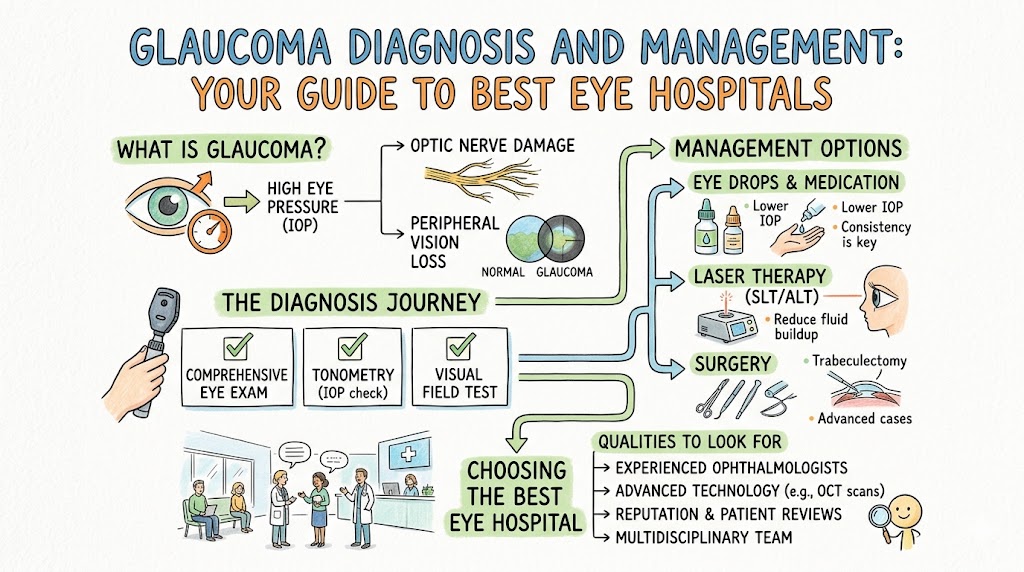
Glaucoma is a group of eye conditions that damage the optic nerve—the vital nerve that acts as the communication link between your eye and your brain. This damage is most commonly caused by abnormally high pressure within the eye, which occurs when fluid does not drain properly.
While it is distinct from cataracts, which cloud the lens of the eye, glaucoma is much more insidious. It often develops slowly and may not show symptoms until significant vision damage has already occurred. Because the loss of sight begins in the peripheral vision, many patients do not notice the change until they experience “tunnel vision.” This is why regular, comprehensive eye examinations are so important; they are often the only way to catch glaucoma in its earliest, most treatable stages.
Why Specialized Glaucoma Hospitals Matter
When it comes to glaucoma, precision is everything. Specialized eye hospitals are designed to provide a higher standard of care than general medical centers.
These institutions house dedicated ophthalmology departments where glaucoma specialists work with state-of-the-art diagnostic tools. They offer comprehensive monitoring, which is essential because glaucoma treatment is a lifelong journey. A specialized hospital doesn’t just treat the pressure in your eye; they monitor the health of your optic nerve over time, using data to adjust your care plan as needed. For example, a patient managed at a specialized center benefits from a team that can transition seamlessly from medical therapy to advanced laser or surgical options if the condition progresses, ensuring continuity of care that protects your vision long-term.
Types of Glaucoma
- Open-Angle Glaucoma: The most common form, where the eye’s drainage canals become clogged slowly over time, causing a gradual increase in pressure.
- Angle-Closure Glaucoma: A more sudden, serious condition where the iris is positioned in a way that blocks fluid drainage entirely, leading to a rapid spike in eye pressure.
- Normal-Tension Glaucoma: A form where the optic nerve is damaged even though eye pressure remains within the average range, requiring careful, personalized management.
- Congenital Glaucoma: Present at birth or developing in early infancy due to incorrect eye development that hinders fluid drainage.
- Secondary Glaucoma: Glaucoma that develops as a side effect of other conditions, such as eye injuries, severe diabetes, or long-term steroid use.
Symptoms and Warning Signs of Glaucoma
Glaucoma is notorious for being “silent,” but in some cases, symptoms do arise. Be mindful of these warning signs:
- Blurred vision: A gradual or sudden clouding of your sight.
- Peripheral vision loss: Difficulty seeing objects to your side while looking straight ahead.
- Eye pain: Particularly in cases of acute angle-closure glaucoma.
- Headaches: Frequent, unexplained pain behind or around the eyes.
- Halos around lights: Seeing colored rings or glare when looking at light sources at night.
- Sudden vision disturbances: A quick drop in vision quality or sudden difficulty focusing.
- Redness and nausea: Severe symptoms often associated with a sudden, dangerous spike in eye pressure.
How Glaucoma Is Diagnosed
A professional diagnosis is a structured process that looks beyond simple vision testing:
- Comprehensive Eye Examination: A full review of your eye health history and current vision.
- Tonometry: A test that measures the internal pressure of your eye.
- Optic Nerve Examination: The doctor looks directly at the back of the eye to check for physical signs of nerve damage.
- Visual Field Testing: A test to measure your peripheral vision and identify any “blind spots.”
- Corneal Thickness Measurement: Provides data that helps the doctor interpret your eye pressure readings more accurately.
- Retinal Imaging and OCT Scanning: Modern glaucoma hospitals commonly use advanced imaging systems to monitor optic nerve health and detect early changes before severe vision loss develops.
Modern Glaucoma Treatment Options
- Prescription Eye Drops: The first line of defense; they work by either reducing fluid production or increasing the fluid drainage from the eye.
- Oral Medications: Used if eye drops are not enough to manage pressure.
- Laser Glaucoma Treatment: Quick, in-office procedures that help open clogged drainage channels.
- Minimally Invasive Glaucoma Surgery (MIGS): Newer, safer surgical techniques designed to lower pressure with less recovery time than traditional surgery.
- Traditional Glaucoma Surgery: Procedures like trabeculectomy, which create a new drainage path for the fluid.
- Long-term pressure management: A collaborative approach that involves regular check-ins to ensure your chosen treatment remains effective.
Technology in Glaucoma Care
Innovation is redefining how we manage this condition:
- AI-assisted retinal imaging: Allows for the automated detection of subtle nerve changes that the human eye might miss.
- OCT (Optical Coherence Tomography) Scanning: Provides a 3D map of the optic nerve head, making early diagnosis possible.
- Digital visual field testing: More accurate and comfortable than older methods of testing peripheral vision.
- Laser-assisted procedures: High-precision tools that are minimally invasive and highly effective.
- Smart intraocular pressure monitoring: Emerging tech that allows for better tracking of pressure fluctuations throughout the day.
Benefits of Choosing the Right Eye Hospital
Selecting a specialized glaucoma hospital provides several key advantages:
- Earlier detection: Highly sensitive diagnostic equipment finds the condition before symptoms begin.
- Better vision preservation: Expert management slows the progression of the disease effectively.
- Access to specialists: You are treated by doctors who see and manage glaucoma cases daily.
- Personalized plans: Care is tailored to your eye pressure, nerve health, and lifestyle.
- Reduced complications: Specialists are highly experienced in surgical and laser techniques, ensuring the highest standards of safety.
Risks and Realistic Expectations
It is important to understand that glaucoma management is a long-term commitment.
- Damage is permanent: Treatment is aimed at preventing further vision loss rather than restoring what has already been lost.
- Lifelong monitoring: Glaucoma is a chronic condition that requires consistent, life-long medical attention.
- Medication adherence: The success of your treatment depends on your commitment to using prescribed drops or medications every single day.
- Gradual changes: Even with good treatment, some patients may experience very slow, gradual vision changes that require adjustments to their care plan.
Common Mistakes Patients Make
- Ignoring routine exams: Thinking your vision is “fine” because you can read clearly is a major error.
- Stopping medications: Thinking your eyes are “cured” because you feel no pain can lead to a dangerous pressure spike.
- Delaying specialist visits: Assuming a general eye check is enough when a specialist is needed to manage a progressive condition.
- Ignoring family history: If glaucoma runs in your family, you are at higher risk and should be screened regularly.
- Missing follow-ups: Missing even one checkup can delay the adjustment of a treatment plan that is no longer working as effectively.
Best Practices for Long-Term Eye Health
- Prioritize Comprehensive Exams: Schedule routine checks as advised by your ophthalmologist, not just when you notice a problem.
- Manage Systemic Health: Keep conditions like diabetes and high blood pressure well-controlled, as they impact eye health.
- Consistency: Take your eye drops exactly as prescribed, even if you feel no symptoms.
- Injury Prevention: Wear protective eyewear when working with tools or participating in sports.
- Lifestyle: Maintain a healthy diet and active lifestyle, which contribute to better overall vascular health.
Real-World Healthcare Use Cases
- Early Diagnosis: A patient with a family history of glaucoma undergoes a routine OCT scan at a specialized hospital, leading to the discovery of early optic nerve stress and the start of preventive treatment.
- Angle-Closure Emergency: An individual with sudden eye pain and halos is rushed to a specialized hospital, where immediate laser treatment prevents permanent vision loss.
- Long-term Monitoring: An elderly patient with stable glaucoma undergoes twice-yearly imaging at a specialized hospital, ensuring their pressure remains in the safe range for years.
Future of Glaucoma and Eye Care
The future of glaucoma management is incredibly promising. We are seeing the development of AI-driven prediction systems that can analyze your eye health and predict the risk of progression years into the future. There is significant research into regenerative medicine that may one day help repair optic nerve cells. Meanwhile, telemedicine and wearable monitoring devices are making it easier for patients to be managed without constant hospital visits. The focus is shifting toward personalized medicine, where treatment is tuned to the patient’s individual biological profile.
FAQs
- What is glaucoma? It is a group of conditions that damage the eye’s optic nerve, often due to high fluid pressure.
- Can glaucoma cause blindness? Yes, if left untreated, it is one of the leading causes of irreversible blindness.
- Is glaucoma curable? Currently, there is no cure, but it is highly manageable with early treatment.
- Are glaucoma treatments painful? Most treatments, including eye drops and laser procedures, are either painless or involve minimal, short-lived discomfort.
- Who is at high risk? Those over 60, people with a family history of glaucoma, and patients with diabetes or hypertension.
- How often should eye exams be done? Adults should have a comprehensive eye exam at least every two years, or more often if a specialist advises.
- Is glaucoma always caused by high eye pressure? No, some people develop damage at “normal” pressures, a condition known as normal-tension glaucoma.
- Can I drive with glaucoma? Depending on the severity of your vision loss, your doctor will advise if you meet the visual standards for driving.
- Are there natural ways to treat glaucoma? No; while lifestyle helps, it cannot replace medical or surgical management of eye pressure.
- Does eye pressure change throughout the day? Yes, it can fluctuate, which is why consistent follow-ups are necessary.
- Is it hereditary? Genetics play a significant role, so tell your doctor if your parents or siblings have the condition.
- Can diet help? A healthy diet supports eye health, but it is not a substitute for clinical treatment.
- Is laser surgery permanent? Its effects can last for years, though sometimes additional treatment is required later.
- What if my pressure is normal? You still need regular monitoring to ensure your optic nerve remains healthy.
- How do I choose a hospital? Look for a facility that specializes in ophthalmology and offers advanced diagnostic imaging like OCT and visual field testing.
Final Thoughts
Living with a glaucoma diagnosis can feel daunting, but it is important to remember that you are not alone and that modern medicine has provided us with remarkable tools to manage it. The most powerful weapon you have in the fight to preserve your sight is your commitment to regular care. By partnering with a specialized glaucoma hospital and staying consistent with your treatment, you are doing everything possible to keep your world clear and vibrant. Your vision is worth the effort of consistent care.