INTRODUCTION
The way a child views the world is not just about what they see; it is about how they learn, how they interact, and how they grow. Vision is the foundation of early education and physical development, yet it is one of the most silent factors in a child’s health. Because infants and young children cannot always tell us that their vision is blurry or that one eye is not working correctly, many vision problems go undetected until they start to impact school performance or social confidence.If you are a parent reading this, you may have noticed subtle cues: your child sitting unusually close to the television, squinting while reading, rubbing their eyes, or perhaps appearing a bit clumsy when catching a ball. It is completely natural to feel a sense of unease when you suspect something is not quite right. The good news is that we are living in an era of incredible advancements in pediatric eye care. With early screening and expert intervention, the vast majority of childhood vision issues can be corrected, ensuring your child has the clear, vibrant vision they deserve.Specialized pediatric eye care hospitals are vastly different from general eye clinics. They are designed to accommodate the unique needs of children, from the specialized diagnostic tools that require no verbal feedback to the child-friendly waiting areas that turn a daunting medical visit into a manageable experience. At BESTEYEHOSPITALS, we are dedicated to connecting families with the information they need to advocate for their children’s visual health.Consider the story of a young boy named Aryan. His parents noticed he was struggling to keep up with his classmates during reading time.
WHAT IS PEDIATRIC EYE CARE?
Pediatric eye care is a specialized field that focuses on the complex process of how a child’s vision develops from birth through adolescence. Unlike adult eye care, which focuses on maintaining eye health, pediatric eye care is about guiding development.
A pediatric ophthalmologist is a medical doctor who has undergone extensive training in both general ophthalmology and the specific conditions that affect young eyes. They understand that a child’s eye is constantly changing—the shape of the eyeball, the focus of the lens, and the way the brain interprets visual signals are all evolving.
Why is this different from a regular eye exam? Because pediatric eye care hospitals use diagnostic methods that don’t rely on the patient being able to read an eye chart. They use objective tests that look at the physical health of the retina, the alignment of the eyes, and the refractive state of the eye, even in non-verbal infants. This specialized approach is essential for preventing long-term damage during the critical years when the brain is “learning” how to see.
COMMON EYE PROBLEMS IN CHILDREN
Understanding the common conditions that can affect young eyes can help parents be more observant and proactive.
Refractive Errors
Myopia (nearsightedness), hyperopia (farsightedness), and astigmatism are very common. When these are not corrected, children may experience eye strain, headaches, and trouble concentrating in school.
Squint (Strabismus)
This is a condition where the eyes are misaligned—one might turn in, out, up, or down while the other looks forward. It is not just a cosmetic issue; if left untreated, the brain may eventually ignore the input from the misaligned eye, leading to deeper vision problems.
Lazy Eye (Amblyopia)
Amblyopia occurs when the vision in one eye does not develop correctly. It is often the result of the brain “turning off” the weaker eye because it receives a blurry image compared to the other eye. Early patching therapy can often reverse this.
Congenital Cataract
While we associate cataracts with the elderly, some children are born with them. They cause cloudy vision and, if not treated early, can lead to permanent vision loss.
Tear Duct Blockage
Very common in infants, this causes constant tearing and crusting. While often self-resolving, pediatric eye specialists monitor this to ensure it does not lead to chronic infections.
COMMON CHILD EYE PROBLEMS
| Condition | Symptoms | Treatment | Urgency Level |
| Squint | Misaligned eyes | Glasses/surgery | Medium |
| Lazy eye | Poor vision in one eye | Patching therapy | High |
| Myopia | Blurry distance vision | Glasses | Low |
| Cataract | Cloudy vision | Surgery | High |
| Infection | Red, watery eyes | Medication | Medium |
WHY PEDIATRIC EYE HOSPITALS MATTER
When it comes to a child’s vision, the “window of opportunity” is real. The brain is highly plastic during the first few years of life, meaning it is very receptive to correction, but also very susceptible to permanent deficits if a problem is ignored.
Specialized pediatric eye hospitals provide an environment where this “window” is treated with the urgency it deserves. These hospitals feature pediatric-specific exam lanes and equipment that allow the doctor to perform thorough evaluations without causing distress to the child. Furthermore, they are staffed by surgeons who are specifically trained to perform microsurgery on the small, delicate muscles of a child’s eye, a skill set that requires years of specialized focus.
EARLY VISION SCREENING & DIAGNOSIS
Early screening is the most powerful tool in pediatric eye care. The goal is to detect issues before they affect a child’s development.
- Infant Exam (6–12 months): The first checkup often occurs here to ensure the eyes are moving together correctly and that the physical structures are healthy.
- Toddler Exam (3 years): This is a key age to check for signs of squint or major refractive errors before the child enters a formal learning environment.
- School Screening (5–6 years): Essential for learning readiness. Most schools provide basic screenings, but a comprehensive exam by a pediatric eye doctor is recommended to catch subtle issues that school charts might miss.
VISION SCREENING TIMELINE
| Age | Checkup Type | Purpose |
| 6 months | Basic eye check | Early detection |
| 3 years | Vision test | Development check |
| 5–6 years | School screening | Learning readiness |
TREATMENT OPTIONS IN PEDIATRIC EYE CARE
Treatment is always tailored to the child’s age and the nature of the condition.
- Glasses and Contact Lenses: The first line of defense for refractive errors. Modern pediatric frames are durable and designed for active children.
- Patching Therapy: For lazy eye, patching the stronger eye forces the brain to use the weaker eye, effectively “training” it to see clearly.
- Surgery: For conditions like severe squint or congenital cataracts, surgery is often necessary to align the eyes or clear the visual pathway. These surgeries are highly specialized and focused on restoring function and symmetry.
- Vision Therapy: A series of exercises designed to improve eye tracking, focusing, and coordination, often used for children who struggle with reading or sports.
ADVANCED TECHNOLOGY IN CHILD EYE HOSPITALS
The days of needing a child to “cooperate” by sitting perfectly still for long periods are over, thanks to modern technology.
- Digital Retinal Imaging: High-resolution cameras can take pictures of the back of the eye in a fraction of a second, even in moving toddlers.
- Auto Refractors: These machines measure the eye’s prescription automatically by analyzing how light reflects off the retina.
- Eye Tracking Systems: These can analyze exactly how a child’s eyes move together during tasks, helping to diagnose subtle binocular vision issues.
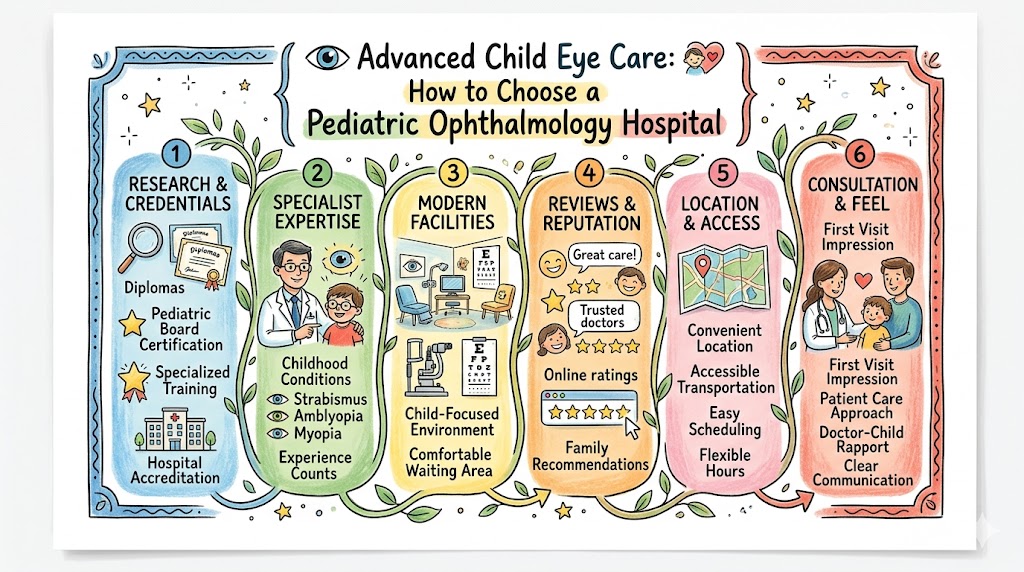
HOW TO CHOOSE THE BEST PEDIATRIC EYE HOSPITAL
Selecting the right hospital is about finding a balance between medical excellence and emotional comfort.
- Specialist Credentials: Verify that the primary doctor is a fellowship-trained pediatric ophthalmologist.
- Child-Friendly Vibe: Look for clinics with specialized areas for children and staff who have experience managing anxious or active kids.
- Advanced Diagnostics: Ensure they have modern imaging equipment specifically designed for pediatric patients.
- Emergency Protocol: Ask about their availability for emergencies. Eye injuries in children require fast, expert care.
- Parental Involvement: A good hospital will involve you in the treatment plan, explain every step, and respect your input as the child’s primary caregiver.
REAL-LIFE CHILD VISION SCENARIOS
- The School Struggle: A 6-year-old was labeled “inattentive” in class. A visit to a pediatric eye care center revealed that he had an undiagnosed astigmatism. With his first pair of glasses, his focus in class improved immediately.
- The Squint Repair: A parent noticed their 3-year-old’s eye was occasionally turning inward. After a successful, short surgical procedure at a pediatric eye hospital, the eyes were aligned, and the child’s self-esteem improved as they began kindergarten.
- The Emergency: A toddler suffered a small scratch on the eye from a toy. The parents took them to an emergency pediatric eye unit, where the cornea was treated successfully, preventing any long-term scarring.
HOME CARE & PREVENTION
Parents are the first line of defense.
- Control Screen Time: Follow the “20-20-20” rule—every 20 minutes, look at something 20 feet away for 20 seconds.
- Outdoor Play: Sunlight is essential for eye health. Research shows that children who spend more time outdoors have a lower risk of developing myopia.
- Good Lighting: Ensure your child has bright, even lighting when reading or doing homework.
- Safety First: Protect your child’s eyes during sports with appropriate protective eyewear.
FUTURE OF PEDIATRIC OPHTHALMOLOGY
The future of pediatric eye care is incredibly promising. AI is beginning to play a role in analyzing retinal images, allowing for even earlier detection of vision-threatening diseases. Smart devices are being developed to monitor children’s eye alignment and focus in real-time, potentially allowing for non-invasive treatments that could replace traditional patching or surgery in some cases.
FEATURES OF TOP PEDIATRIC EYE HOSPITALS
| Feature | Why It Matters |
| Pediatric specialists | Accurate diagnosis |
| Child-friendly setup | Less anxiety |
| Advanced tools | Better detection |
| Surgical expertise | Safe treatment |
| Follow-up care | Long-term vision health |
FAQs
1. When should my child first see an eye doctor?
By 6–12 months of age.
2. What is lazy eye in children?
It is a condition where one eye does not develop vision as strongly as the other.
3. Can squint be corrected?
Yes, it can be corrected through glasses, patching, or surgery.
4. How often should kids get eye checkups?
Once a year is standard, unless your doctor advises otherwise.
5. Are pediatric eye surgeries safe?
Yes, they are highly refined procedures with excellent outcomes in specialized settings.
6. Does reading in the dark hurt my child’s eyes?
It causes eye strain but generally does not cause permanent damage.
7. Can myopia be cured?
It cannot be “cured,” but it can be managed with glasses, contacts, or special drops to slow its progression.
8. What is a “patch”?
It is a small adhesive or fabric cover worn over the strong eye to force the weak eye to do the work.
9. Are digital eye exams accurate for kids?
Yes, they are often more accurate than traditional methods because they do not require the child to respond.
10. What if my child refuses to wear glasses?
This is common! Work with a specialist who can help you find a frame style that the child feels comfortable and confident wearing.
11. Is eye rubbing bad?
Yes, it can lead to infections and, in some cases, long-term corneal issues.
12. When should I worry about tearing?
If the eye is red, crusty, or the tearing doesn’t stop by the age of one.
13. Do school screenings replace eye exams?
No, school screenings are very basic. A comprehensive exam by a doctor is much more detailed.
14. Are eye drops for kids scary?
A good pediatric hospital will use numbing drops and friendly distraction to make the experience easy.
15. How do I choose the right hospital?
Look for a dedicated pediatric center, read patient reviews, and ask for a consultation.
FINAL CONCLUSION
Your child’s vision is their connection to the world around them. As a parent, taking the initiative to schedule regular, professional eye exams is one of the most important things you can do for their long-term development. By choosing a pediatric eye care hospital, you are ensuring that your child’s needs are met with precision, patience, and the highest standard of specialized care.Early diagnosis is truly the key to a lifetime of healthy vision. Whether you are addressing a known concern or simply ensuring that your child’s development is on track, the right expert can make all the difference.Your child’s future is bright, and with the right support, their vision will be too. Stay proactive, stay informed, and know that you are giving your child the best start possible by prioritizing their eye health today.