Our vision is our most vital window to the world. Protecting it requires more than just occasional checkups; it demands access to sophisticated diagnostics, world-class surgical expertise, and a patient-centered environment. For those facing vision challenges, selecting the right medical facility can make the difference between a lifetime of clarity and the long-term progression of preventable eye disease. This is why many patients are shifting toward top multispecialty hospitals with ophthalmology units for their vision health needs.Choosing the right facility is a significant decision.BESTEYEHOSPITALS simplifies this process, helping patients discover eye hospitals, compare vision care services, explore highly qualified specialists, and make informed healthcare decisions for themselves and their families. In this guide, we will explore the advantages of hospital-integrated eye care, the revolutionary technologies changing modern vision treatment, and actionable steps to preserve your eyesight for years to come.
Understanding Ophthalmology Units in Multispecialty Hospitals
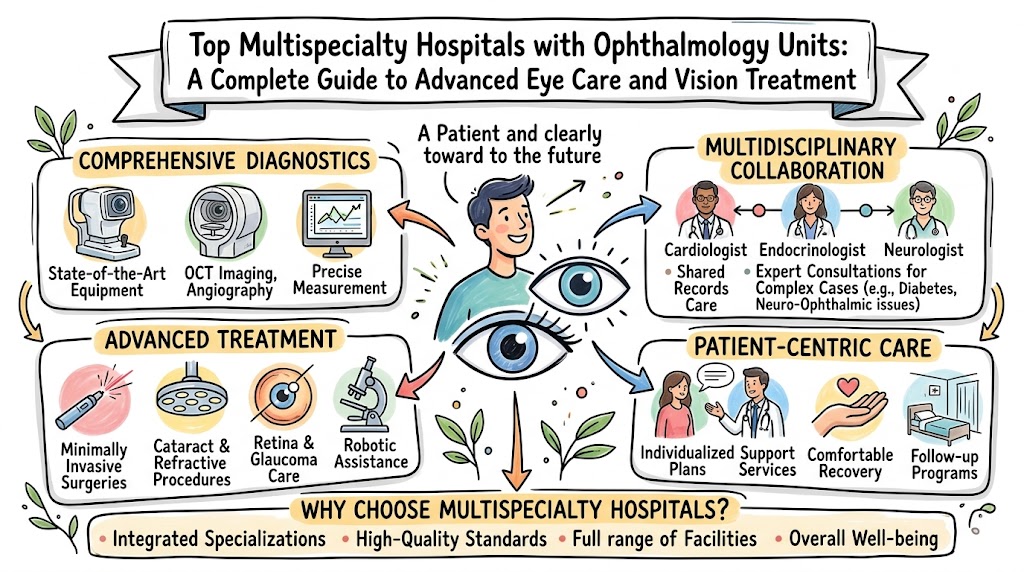
An ophthalmology unit integrated within a multispecialty hospital is a powerhouse of medical synergy. Unlike independent eye clinics, these hospital-based units function within a larger framework of medicine. This means they are supported by full-scale surgical suites, intensive care capabilities, and a network of medical specialists in fields such as internal medicine, neurology, and endocrinology.
If you have underlying health conditions like diabetes, hypertension, or autoimmune disorders—all of which can profoundly impact eye health—a hospital-based unit is the safest choice. The ability for your ophthalmologist to consult directly with your primary physician or a specialist ensures your treatment plan is not only effective for your eyes but also safe for your entire body.
Why Eye Health Matters
Vision health is intrinsically linked to your quality of life. From reading and driving to navigating daily environments, clear sight is essential. However, many vision-threatening conditions, such as glaucoma or macular degeneration, are “silent” in their early stages.
Proactive, high-quality care is your best defense against long-term impairment. Regular screenings and access to advanced intervention can prevent the progression of diseases that would otherwise lead to irreversible vision loss. By prioritizing expert care, you are protecting your independence and long-term well-being.
Benefits of Choosing Top Multispecialty Hospitals with Ophthalmology Units
When you choose a top multispecialty hospital, you are choosing a higher standard of integrated care. The primary benefits include:
- Multidisciplinary Collaboration: Ophthalmologists can consult with other hospital specialists instantly, which is vital for patients with complex systemic health histories.
- Emergency Infrastructure: In the event of sudden vision loss or traumatic eye injury, hospitals provide 24/7 emergency response and immediate access to surgical theatres.
- Hospital-Grade Sterilization: These units maintain the most rigorous infection-control protocols, ensuring a sterile environment that meets international medical standards.
- Comprehensive Diagnostics: You gain access to advanced hospital radiology and laboratory services for precise planning of delicate procedures.
- Sedation Options: For complex surgeries or patients with high levels of anxiety, hospitals offer safe sedation options managed by board-certified anesthesiologists.
Common Eye Conditions Treated
Table 1: Common Eye Conditions and Treatments
| Condition | Symptoms | Treatment Options |
| Cataracts | Blurry vision, glare, dull colors. | Cataract surgery with intraocular lens. |
| Glaucoma | Tunnel vision, high eye pressure. | Medication, laser, or drainage surgery. |
| Refractive Errors | Blurred distance/near sight. | LASIK, PRK, or corrective lenses. |
| Diabetic Retinopathy | Floaters, patchy vision. | Laser therapy, injections, or surgery. |
| Retinal Disorders | Flashes of light, distortion. | Vitrectomy or retinal laser surgery. |
| Corneal Diseases | Pain, sensitivity to light. | Corneal transplant (keratoplasty). |
| Dry Eye Syndrome | Gritty sensation, burning. | Specialized drops, lifestyle adjustments. |
Advanced Technologies Used in Modern Ophthalmology
The field of ophthalmology has moved into an era of digital precision, making eye treatments faster, safer, and incredibly accurate.
Table 2: Advanced Ophthalmology Technologies
| Technology | Purpose | Patient Benefits |
| OCT Imaging | High-res cross-sections of the retina. | Early detection of retinal disease. |
| Femtosecond Laser | Precision laser-assisted surgery. | Smoother, safer cataract/LASIK incisions. |
| Digital Retinal Imaging | Maps the back of the eye. | Monitors diabetic and retinal health. |
| AI-Assisted Diagnostics | Rapid analysis of eye images. | Faster identification of abnormalities. |
How to Choose the Right Ophthalmology Hospital
Your vision deserves careful planning. Use the following guide to identify the best fit for your specific needs.
Table 3: Factors to Consider When Choosing an Eye Hospital
| Factor | Importance | Questions to Ask |
| Surgeon Credentials | Ensures expert handling of delicate tissues. | “Is the ophthalmologist fellowship-trained?” |
| Accreditation | Guarantees adherence to safety standards. | “What safety certifications do you hold?” |
| Technology Access | Determines the precision of treatment. | “Do you use laser-assisted surgical systems?” |
| Emergency Coverage | Vital for sudden trauma or complications. | “What is your 24/7 emergency protocol?” |
Preventive Eye Care Checklist
Consistent care is the backbone of your vision journey.
Table 4: Preventive Eye Care Checklist
| Activity | Frequency | Benefits |
| Comprehensive Eye Exam | Annually | Detects early signs of silent eye diseases. |
| UV Protection | Daily (Sunglasses) | Prevents cataracts and sun damage. |
| Digital Screen Breaks | Every 20 minutes | Reduces eye strain and dry eyes. |
| Healthy Nutrition | Daily | Supports retinal and lens health. |
How Multispecialty Hospitals Improve Eye Care Outcomes
The multispecialty advantage is rooted in synergy. When you choose an elite hospital, you gain access to a culture of cross-departmental excellence. If a patient is diagnosed with glaucoma while being treated for systemic hypertension, the hospital’s integrated record system ensures that all doctors are aware of the treatment plan. This prevents conflicting medications and creates a cohesive care environment where your overall health is always the priority.
Role of Digital Technology in Vision Care
Modern vision care is driven by precision. Digital technology allows ophthalmologists to visualize the microscopic structures of the eye with stunning clarity. From AI-assisted analysis that can flag a diabetic eye exam in seconds to femtosecond lasers that can correct refractive errors with microscopic accuracy, these digital tools reduce surgical trauma, decrease the risk of post-operative infection, and dramatically shorten recovery times.
Long-Term Vision Health Management
Vision management is a lifelong commitment. The most successful patients are those who view their vision health as a proactive habit rather than a reactive necessity. This includes maintaining steady blood sugar levels, keeping a heart-healthy diet rich in antioxidants (like lutein and zeaxanthin), and adhering to a schedule of annual, comprehensive exams that include dilation to view the optic nerve and retina.
Patient Success Factors for Better Treatment Outcomes
Success in ophthalmology, especially after surgery, depends on patient compliance. Following the surgeon’s post-operative instructions—such as using prescribed anti-inflammatory drops, avoiding water exposure, and resting the eyes—is critical. Furthermore, patients who stay hydrated and avoid environments with excessive dust or smoke during the initial healing phase often report much faster and more predictable visual recovery.
Frequently Asked Questions
- What makes multispecialty hospitals better for ophthalmology? They provide integrated care and full-scale surgical emergency infrastructure.
- How often should I have an eye exam? Once a year is recommended, or more often if you have chronic health issues like diabetes.
- Is LASIK surgery safe? Yes, it is one of the most studied and successfully performed surgeries in the world.
- What constitutes an eye emergency? Sudden loss of vision, flashes of light, or trauma require immediate hospital care.
- Can I drive immediately after cataract surgery? No, you must arrange for transport and follow your surgeon’s specific timeline for driving.
- Are ophthalmologists better than optometrists? They serve different roles; ophthalmologists are medical doctors who can perform surgery and treat complex eye diseases.
- What is the role of AI in eye care? AI helps in scanning thousands of images to detect early stages of conditions like diabetic retinopathy.
- Is vision loss always permanent? Not always; early treatment for conditions like cataracts or glaucoma can often stabilize or restore vision.
- What are “floaters”? Floaters are spots in your vision; while common, sudden increases in them require an urgent eye checkup.
- Do I need a referral for a hospital eye unit? Often yes, check with your primary care provider or your insurance plan.
- How do I manage dry eyes? Use preservative-free lubricating drops and consider a humidifier in your home.
- Can kids be treated in a multispecialty eye unit? Yes, many have dedicated pediatric ophthalmology departments.
- Is UV protection really necessary? Absolutely; chronic exposure to UV radiation is a primary cause of cataracts.
- How long does cataract surgery take? The surgery itself usually takes about 15–30 minutes.
- What is a corneal transplant? It is a procedure to replace damaged corneal tissue with healthy donor tissue to restore vision.
- How do I know if I have glaucoma? Glaucoma is often asymptomatic until vision loss occurs, which is why regular pressure screenings are vital.
- Can diet improve my vision? A balanced diet supports overall eye health, though it won’t fix structural refractive errors.
- Where can I compare eye hospitals? Visit BESTEYEHOSPITALS for reliable comparisons and expert guidance.
- What if I’m nervous about eye surgery? Hospitals offer various sedation levels to ensure a comfortable and calm experience.
- Why are hospital-based units better for surgery? They offer the safest environment for complex surgeries with full anesthesia and ICU support.
Conclusion
Choosing the right partner for your vision health is an investment in your independence, safety, and long-term quality of life. As we have explored throughout this guide, top multispecialty hospitals with ophthalmology units serve as the gold standard for anyone seeking serious, comprehensive, and technologically advanced eye care. By opting for a hospital-integrated unit, you are not just selecting a place for a procedure; you are choosing an ecosystem of healing where medical excellence, emergency preparedness, and interdisciplinary collaboration are the standard, not the exception.The integration of advanced medical technology—from high-resolution OCT imaging to femtosecond laser systems—allows these hospitals to deliver precision results that minimize surgical trauma and maximize recovery speeds. Moreover, the ability for your ophthalmologist to work alongside other specialists ensures that your vision care is managed with a holistic perspective. This is particularly crucial if you are navigating other health challenges, as it guarantees that your treatment plan is not only effective for your eyes but fundamentally safe for your total physical well-being.