Introduction
An eye infection can be both distressing and physically uncomfortable, but more importantly, it is a condition that requires prompt and accurate medical attention. Because the eye is a delicate organ, what starts as a minor irritation can quickly escalate into a vision-threatening issue if not managed correctly.Choosing the right hospital is the most important step in safeguarding your vision and ensuring a faster, safer recovery. In this guide, we provide the essential information you need to navigate these healthcare decisions. For more resources to help you research facilities and ophthalmology specialists, visit BESTEYEHOSPITALS.
What Are Eye Infections?
An eye infection occurs when harmful microorganisms, such as bacteria, fungi, viruses, or parasites, invade any part of the eyeball or the surrounding tissue.
While “inflammation” is the body’s general response to injury or irritation (often resulting in redness), an “infection” specifically refers to the presence of these pathogens. Prompt treatment is critical because untreated infections can lead to corneal scarring, persistent pain, or even permanent vision loss.
Why Choose Hospitals Specializing in Eye Infection Treatments?
General urgent care facilities may not have the specialized equipment required for deep ocular examinations. Hospitals that specialize in eye care offer:
- Expert Specialists: Access to ophthalmologists, cornea specialists, and retina experts who see these conditions daily.
- Emergency Services: 24/7 capability to handle acute, vision-threatening infections.
- Advanced Diagnostics: Labs and imaging technology specifically calibrated for the eye.
- Safety Protocols: Sterile environments that prevent the spread of infections to other patients or family members.
Common Types of Eye Infections
| Eye Infection | Common Symptoms | Typical Treatment |
| Conjunctivitis | Redness, thick discharge | Eye drops and hygiene |
| Keratitis | Pain, blurred vision | Antimicrobial medication |
| Blepharitis | Inflamed, crusty eyelids | Eyelid hygiene and medication |
| Stye | Painful eyelid lump | Warm compresses and care |
| Endophthalmitis | Severe pain, vision loss | Emergency surgical/medical care |
Common Causes and Risk Factors
Infections are rarely spontaneous; they are usually introduced by:
- Contact Lenses: Improper cleaning or wearing them while sleeping.
- Poor Hygiene: Touching eyes with unwashed hands.
- Environment: Exposure to contaminated water or airborne pollutants.
- Cosmetics: Sharing makeup or using expired products.
- Systemic Factors: Diabetes, chronic health conditions, or weakened immune systems.
Symptoms That Need Immediate Medical Attention
If you experience any of the following, seek professional care from a specialized hospital immediately:
- Severe eye pain or a feeling of extreme pressure.
- Sudden changes in vision or blurriness that does not resolve.
- Extreme light sensitivity (photophobia).
- Thick, yellow, or green discharge.
- Visible swelling around the eye socket or eyelids.
Diagnostic Tests Used in Specialized Eye Hospitals
Specialized hospitals use precise tools to determine the nature of your infection.
Eye Diagnostic Tests Table
| Test | Purpose | Patient Benefit |
| Slit-Lamp Exam | Examine eye structures | Accurate, magnified diagnosis |
| Eye Culture | Identify infection source | Targeted, effective medication |
| Vision Test | Assess eyesight | Monitor for vision changes |
| Corneal Staining | Detect corneal injury | Early detection and treatment |
| OCT | Evaluate internal structures | Detect deeper complications |
Treatment Options Available at Specialized Eye Hospitals
Treatment is never “one size fits all.” Specialists may use:
- Medicated Drops: Antibiotic, antiviral, or antifungal drops.
- Anti-inflammatories: To reduce swelling and prevent long-term damage.
- Minor Procedures: Clearing blockages or draining abscesses safely.
- Hospital-Based Monitoring: For severe infections, inpatient care ensures your condition is tracked hour-by-hour.
Advanced Eye Care Technologies
Modern ophthalmology relies on high-resolution imaging that allows doctors to see the infection at a microscopic level.
Eye Care Technology Comparison Table
| Technology | Purpose | Benefit |
| OCT | High-res retinal imaging | Early disease detection |
| Corneal Topography | Maps corneal surface | Better treatment planning |
| Digital Retinal Imaging | Evaluates the retina | Improved, precise diagnosis |
| Slit-Lamp Imaging | Detailed exam recording | Precise longitudinal assessment |
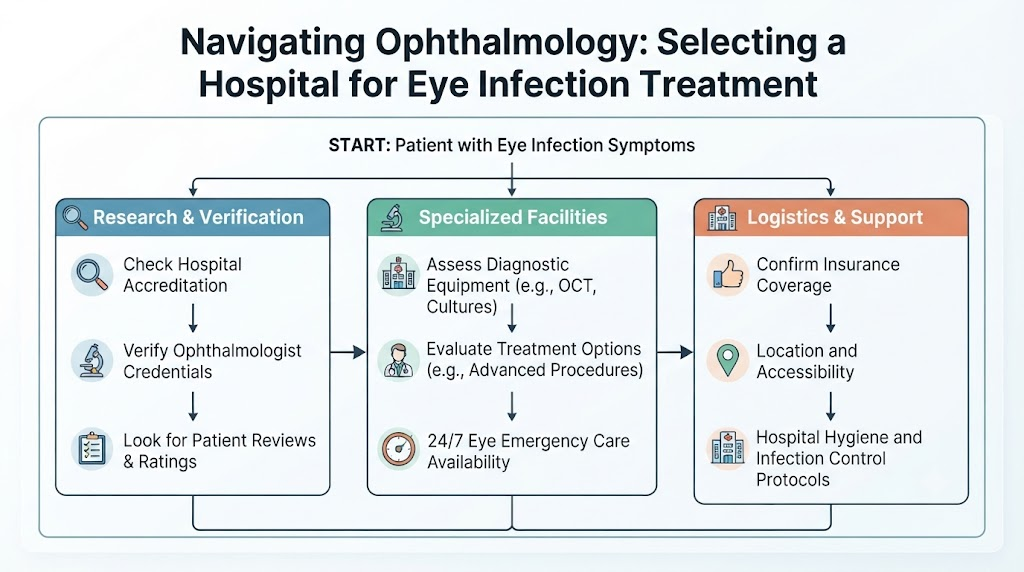
How to Choose the Right Eye Hospital
Look for facilities that offer a patient-centered approach. When you call or visit, ensure they prioritize:
- Speed of Care: Especially for urgent eye issues.
- Cleanliness: Hospital accreditation for infection control.
- Follow-Up: A clear plan for checking your progress after the initial treatment.
Hospital Selection Checklist
- Specialists: Look for fellowship-trained ophthalmologists.
- Emergency Services: Does the hospital have an ocular emergency department?
- Hygiene: Are they practicing strict, clinical-grade sterilization?
Recovery and Aftercare
Recovery relies on your dedication to the treatment plan.
- Complete the course: Even if the eye feels better, finish your medication to prevent recurrence.
- Hygiene: Change your pillowcases and towels daily during an infection.
- Contact Lenses: Do not wear contact lenses until your ophthalmologist explicitly clears you.
Tips to Prevent Eye Infections
- Hands: Wash your hands before and after touching your face.
- Lens Care: Follow the “no-topping-off” rule for contact lens solution.
- Makeup: Replace eye makeup every 3 months.
- Safety: Always wear protective eyewear when performing home repairs or sports.
Common Mistakes Patients Make
- Self-Medicating: Using leftover drops from a friend or a previous infection can cause severe, lasting damage.
- Ignoring Pain: Assuming it’s just an allergy or “dry eye” when an infection is present.
- Wearing Contacts: Continuing to wear lenses while your eye is red/irritated is the #1 cause of serious corneal ulcers.
- Skipping Follow-Ups: Thinking you’re “cured” just because the pain stopped.
Real-Life Patient Scenarios
- Timely Care: A patient with severe conjunctivitis sought treatment at a specialized facility within 24 hours. They were treated with appropriate antibiotics and avoided a deeper corneal infection.
- Complication Avoidance: A contact lens wearer noticed a small, painful spot on their cornea. By going to an emergency eye hospital instead of a general clinic, they caught a bacterial keratitis early, preventing permanent vision loss.
Frequently Asked Questions (FAQs)
- What causes eye infections?
Bacteria, viruses, fungi, and parasites. - Are eye infections contagious?
Many (like pink eye) are, but not all (like styes). - When should I see an ophthalmologist?
Whenever you experience pain, vision change, or unusual discharge. - Can infections affect vision permanently?
Yes, if left untreated or treated incorrectly. - Can contact lenses cause infections?
Yes, they are a primary risk factor. - What is the fastest way to treat one?
See a specialist for a culture-guided prescription. - Can viral infections resolve on their own?
Some can, but only a doctor can confirm it is truly viral. - How do hospitals diagnose them?
Via physical exams, slit-lamp imaging, and sometimes swabs. - Are children more likely to get them?
Yes, due to school environments and hand-to-eye contact. - What should I avoid?
Sharing towels, makeup, and rubbing your eyes. - Can they come back?
Yes, especially if the underlying cause (like poor contact lens care) isn’t addressed. - How do I choose a hospital?
Look for board-certified ophthalmologists and emergency eye capability. - Are they emergencies?
Any infection accompanied by severe pain or vision loss is a medical emergency. - How long does recovery take?
Varies from a few days to several weeks. - How can I reduce my risk?
Good hand hygiene and proper lens care.
Final Thoughts
Your vision is irreplaceable. While it is easy to dismiss eye redness or discomfort as a temporary nuisance, these symptoms are often your body’s way of asking for professional help. By choosing a specialized eye hospital, you ensure that you are receiving the most accurate diagnosis and the most effective treatment plan available.If you are experiencing eye discomfort, do not delay—contact a specialist today. For more information on navigating eye care, finding a facility, and understanding your treatment options, please explore BESTEYEHOSPITALS. Taking proactive steps today is the best way to ensure clear, healthy vision for the future.